
Miami-Dade · South Florida
Dacor repair in Brickell
High-rise living, which changes the logistics more than the repair. Service elevator windows, loading bays and building rules shape the schedule, so we confirm them before the visit instead of finding out on the day.
Brickell is a neighborhood of Miami, in Miami-Dade. We cover it on the same terms as the rest of the county: an on-site diagnostic first, the price agreed in writing, and the exact figure confirmed once we have seen the unit.
By unit
What we repair in Brickell, by Dacor unit
Start with whichever matches yours. How an appliance is installed shapes the visit as much as the repair does, which is why we ask about it when you book.
-
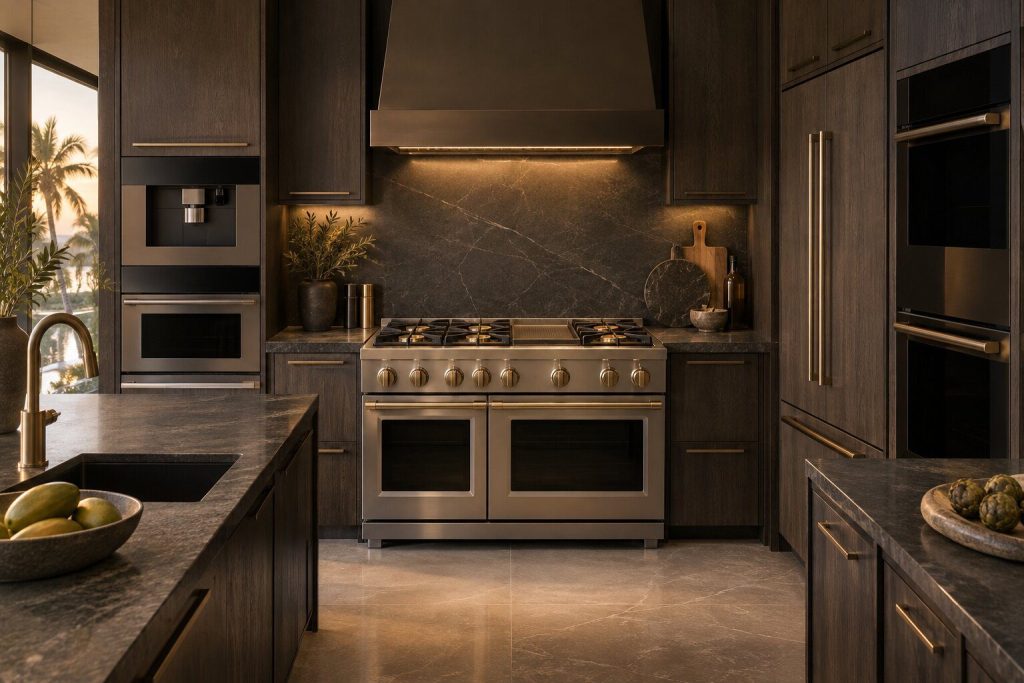
Dual-fuel at 30, 36 and 48 inches Dacor range repair in Brickell
Thirty, thirty-six and forty-eight inches, and dual fuel almost throughout: gas on top, electric in the oven below. The forty-eight adds an integrated griddle and, on the steam models, a water system in the cavity. The professional range in this line carries six burners, a flame system designed to relight itself, and a seven-inch screen on the front. Beside all of that, South Florida kitchens still hold the ER-series ranges from before 2016 — a platform with its own diagnostic table running from F1 to F95, and one that a technician who only knows the current machines will read wrongly.
- Dual-fuel at 30, 36 and 48 inches; the 48 carries an integrated griddle
- The pro range: six burners, self-relighting flame, a seven-inch panel
- Legacy ER30D, ER36D and ER48D report F1–F95 — the widest table this make has
-
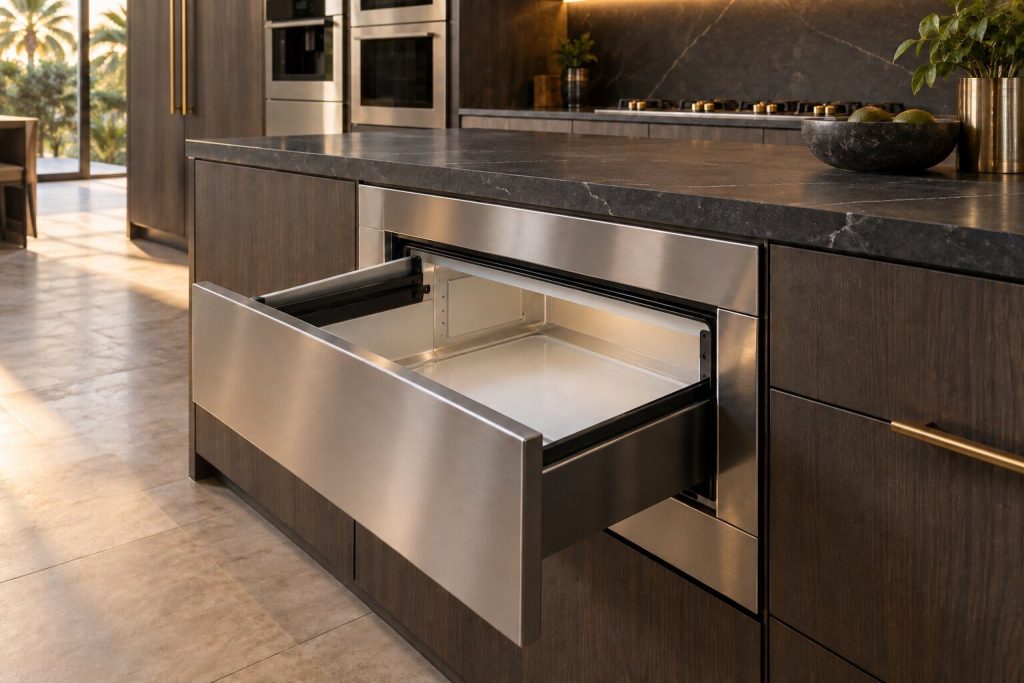
Drawer, over-range convection and countertop Dacor microwave repair in Brickell
Three quite different appliances share the word here. The drawer microwave sits below the worktop and opens downward — about 1.2 cubic feet and 950 watts, with sensor cooking. The over-range unit is a combination machine: a convection microwave and a ventilation hood in one 30-inch body, which means a problem in it can present as a cooking problem or a venting one. And there is a countertop machine, the one appliance in this catalog that can simply be replaced rather than repaired. Which of the three is in the kitchen decides whether this is a joinery job, a hood job, or neither.
- Drawer microwave: 1.2 cubic feet, 950 watts, sensor cooking, opens downward
- Over-range unit combines convection microwave and hood in one 30-inch body
- The countertop machine is genuinely replaceable — we will say so when it is
-
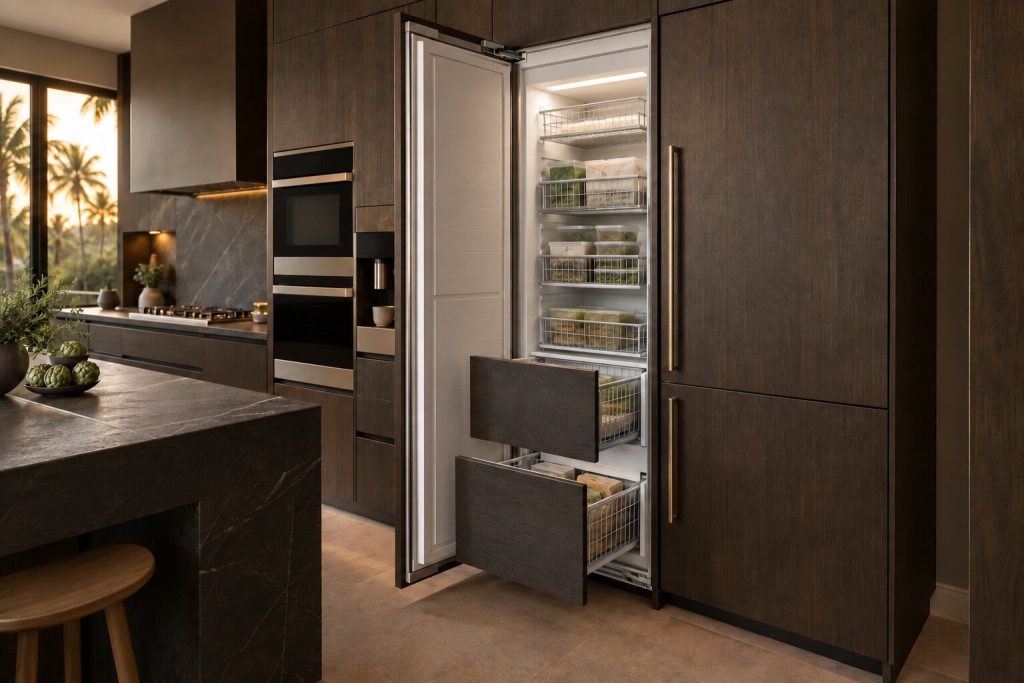
Column freezers · 18, 24, 30 and 36 inches Dacor freezer repair in Brickell
There is no chest freezer here, and no upright one standing in a garage. Every freezer this make builds is a column — 18, 24, 30 and 36 inches wide, panel-ready, designed to be installed beside a refrigerator column of matching height so the two read as cabinetry. The narrow one holds about nine and a half cubic feet and carries two ice makers of its own. That shape is the reason most calls about it are really calls about installation: a column has a defined air path through its base or top, and a blocked one imitates a failing sealed system exactly.
- Column-only: 18, 24, 30 and 36 inches, panel-ready, no freestanding cabinet in the line
- The 18-inch column carries dual ice makers and two freezer drawers in 9.4 cubic feet
- Power Freeze is a mode, not a problem — it will run the cabinet hard and sound wrong
-
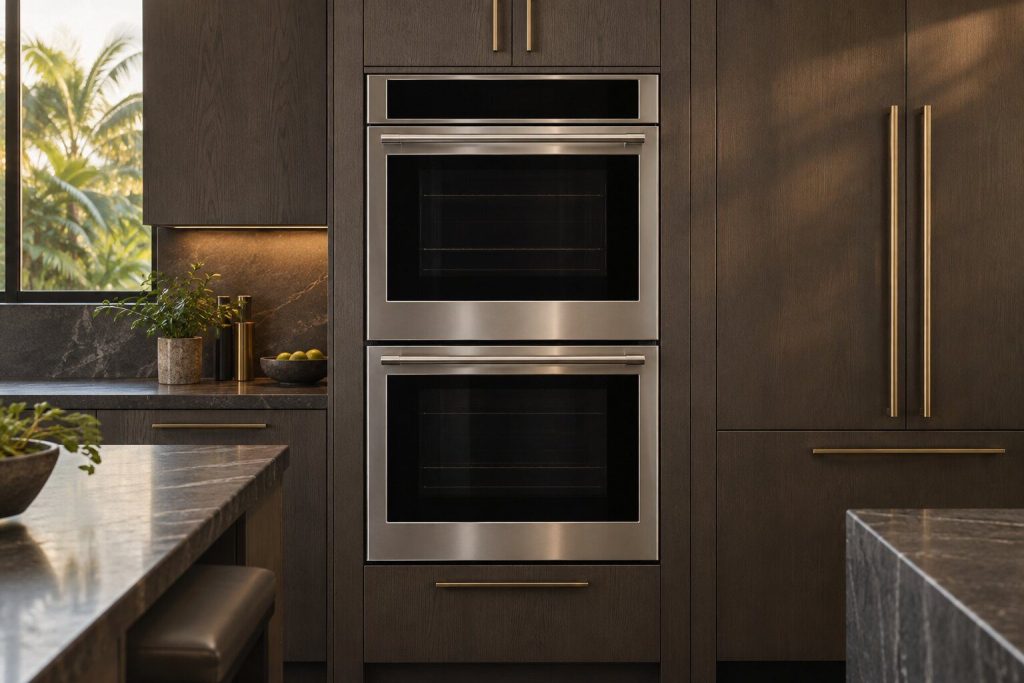
30-inch single and double · steam and non-steam Dacor wall oven repair in Brickell
Thirty inches, single or double, and the meaningful split is whether the cavity makes steam. The current ovens run a four-part convection arrangement, connect to the house network, and on the steam models add a water system that has to be filled, drained and descaled like any other. The style names — Contemporary, Transitional — change the hardware and the finish rather than the mechanism. Older kitchens hold the classic ERC ovens, and those report F0 through F8 from a board Dacor designed itself: a different oven, a different table, and a repair that begins with a different question.
- 30-inch single and double, with and without steam
- Four-part convection and a network connection on the current generation
- Classic ERC ovens report F0–F8 — and F1, F2 and F3 mean something else on a range
-
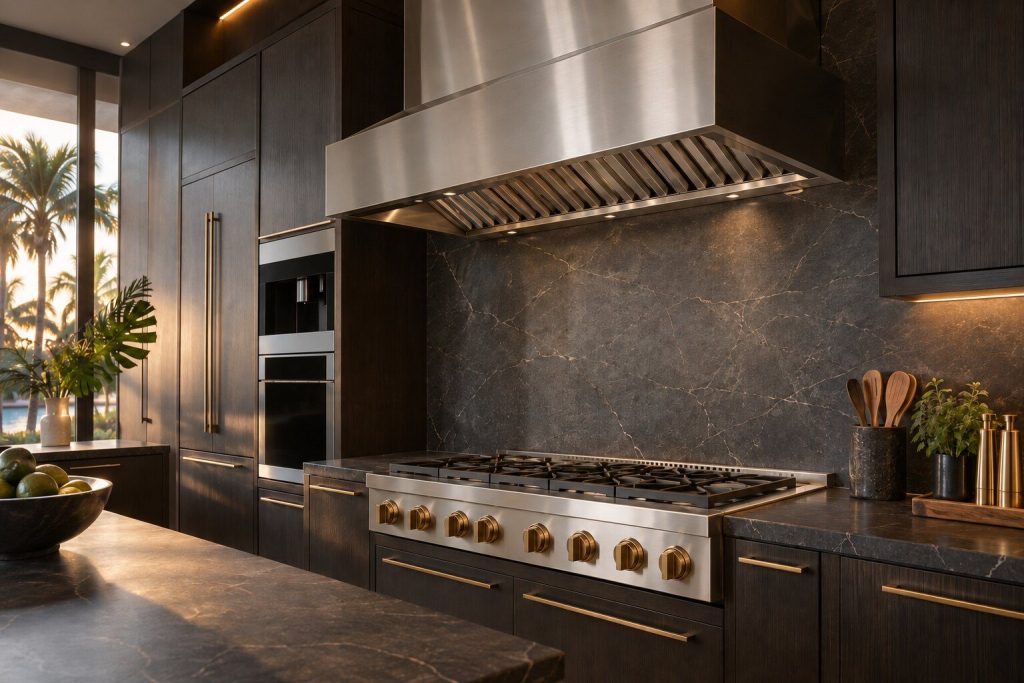
Pro-canopy at 36 and 48 · chimney and liner inserts Dacor range hood repair in Brickell
Three shapes, and which one is over the range decides everything about the repair. The pro canopies are 36 and 48 inches wide and about eighteen deep in the body, glass touch controls and LED light. The chimney hood is a 30-inch wall unit that extends up to the ceiling. The liners are inserts — five and a half inches tall — built to be hidden inside a joiner's custom hood, which means the appliance we are called to see is behind millwork nobody wants disturbed. Most hood calls are about the light, the fan speed control or the noise, and all three are reachable without touching the surround.
- Pro-canopy wall hoods at 36 and 48 inches; a 30-inch chimney hood
- Liner inserts at 30, 36 and 48 — about five and a half inches tall, built into custom millwork
- Light, speed control and noise are the three calls; none needs the joinery opened
-
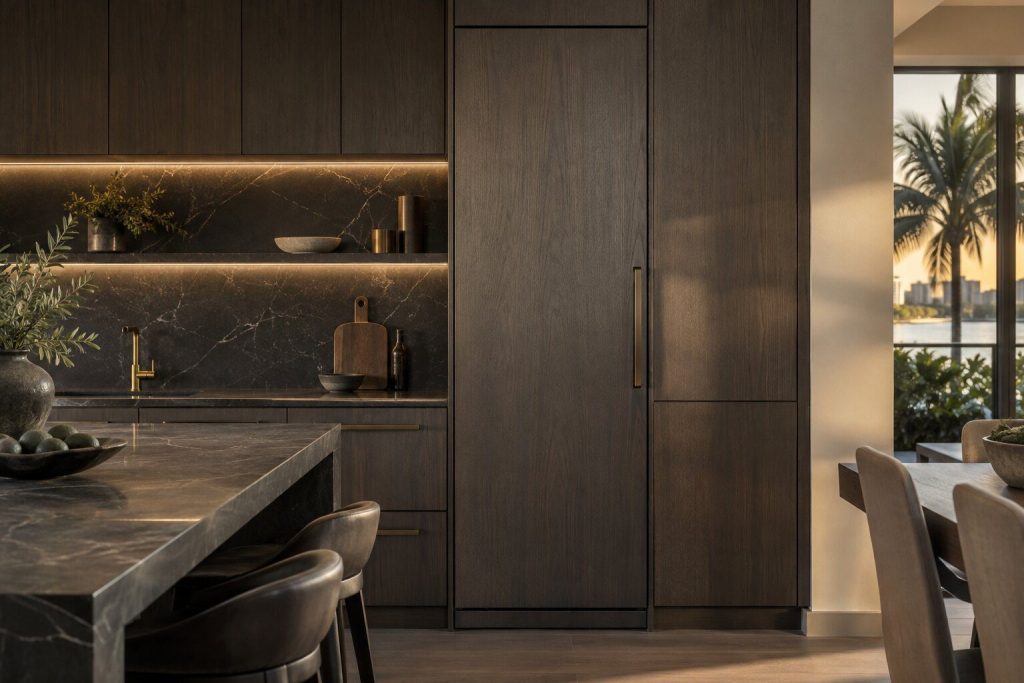
Panel-ready French door · 24, 30 and 36-inch columns Dacor refrigerator repair in Brickell
Two shapes, and the difference decides the visit. The French doors run 36, 42 and 48 inches wide and are built to take cabinet panels, so the box disappears into the joinery; the columns are 24, 30 and 36 inches of single-purpose refrigerator, meant to stand beside a freezer column of the same height and read as one run. Almost nothing here is freestanding in the ordinary sense. That changes the work before a part is named: the surround is tight, the panel and its handle come off first, and the air path the installer left is part of the diagnosis rather than a detail.
- French doors at 36, 42 and 48 inches; columns at 24, 30 and 36
- Panel-ready by default — the door furniture comes off before anything is opened
- PreciseCooling, the FreshZone drawer and iQ Remote View are the named parts people call about
By job
The repairs we are called out for in Brickell
Starting figures for this equipment in South Florida. What moves them is the model, the access and the part — the exact cost is confirmed after the on-site diagnostic.
-
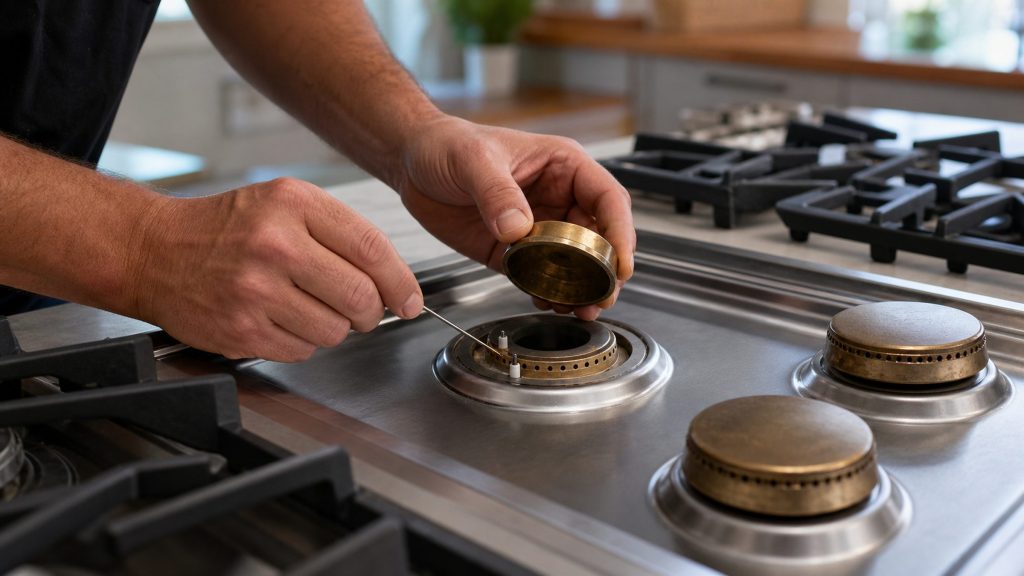
from $195 Rangetop service
The professional rangetops are 36 and 48 inches of sealed brass burners, illuminated knobs and a griddle or wok ring in place of grates, and they are worked harder than any other appliance in these kitchens. Service is mostly about restoring the range of the burners rather than fixing failures: simmer settings that have drifted, ports partially blocked by years of boil-over, knob illumination that has died on one burner, and the griddle plate's surface. It is a heavy appliance and a satisfying one to bring back.
- Six sealed brass burners built to sear and to genuinely simmer
- Illuminated knobs fail one at a time and are a separate small repair
- The griddle and wok ring are accessories that live where grates would
-
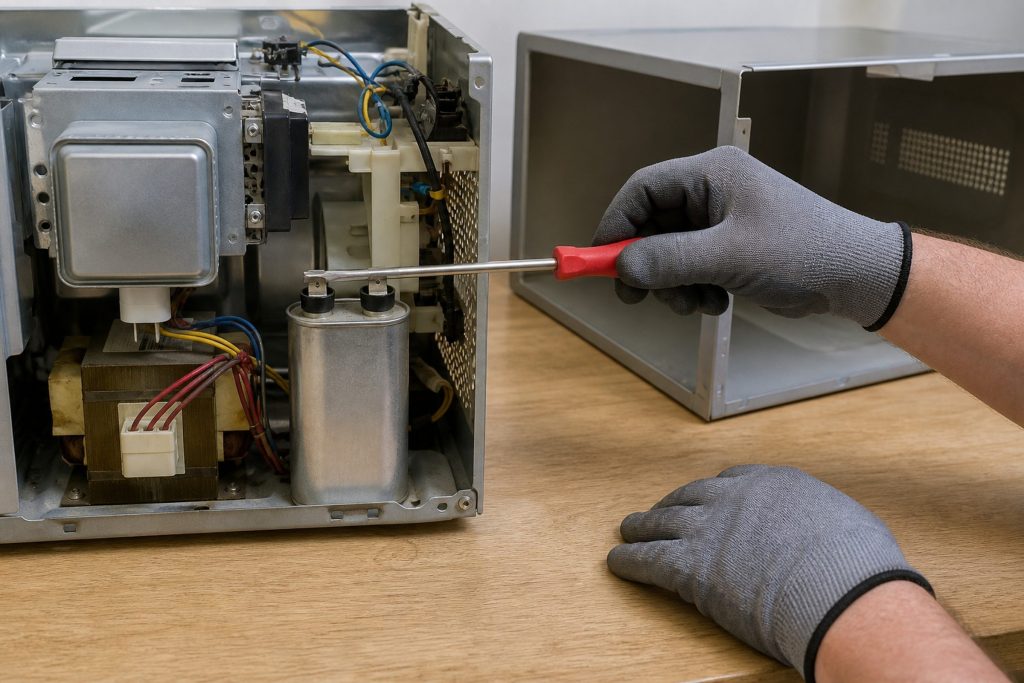
from $195 Built-in microwave repair
A built-in microwave is worth repairing where a countertop one is not: it is fitted, matched to the kitchen and expensive to replace, and the usual problems are ordinary. Doors and interlocks, control panels, turntable drives and cooling fans account for most calls. The one symptom we ask people to stop using the appliance for is a machine that runs, lights and turns while producing no heat — that is the high-voltage side, and it is a routine repair for somebody equipped for it and a genuinely dangerous one for anybody else.
- Fitted and matched — the economics are different from a countertop machine
- Doors, interlocks, panels, turntable drives and fans are most of the work
- Runs but does not heat: stop using it and call
-
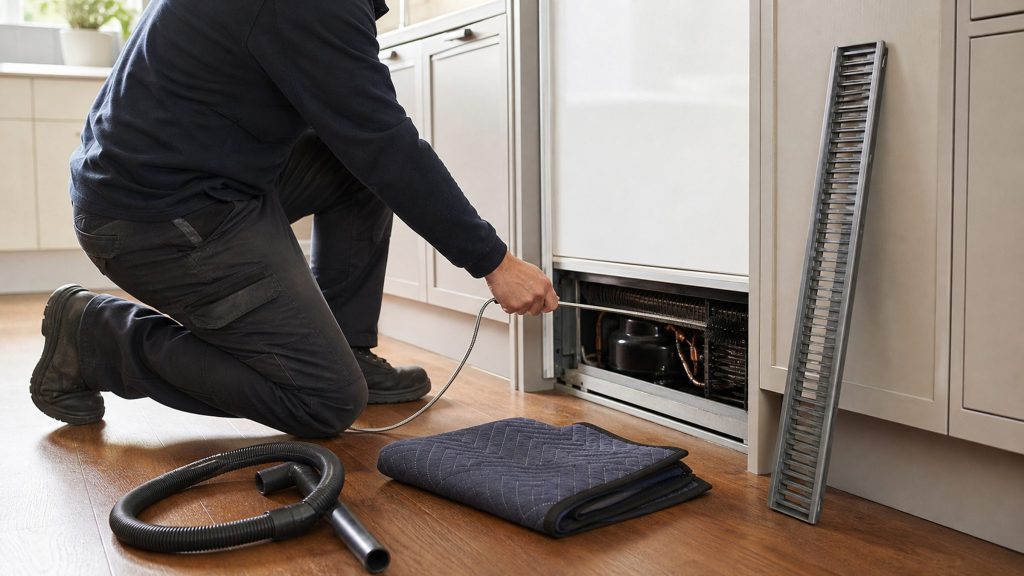
from $165 Appliance maintenance
The visit that keeps a built-in kitchen out of trouble, which on this make is mostly about air and water. Columns and panel-ready cabinets breathe through grilles that joinery and rugs slowly cover; the dishwasher softens its own water and that softener has a service interval; a steam oven has a reservoir and a descaling cycle; a hood liner fills with grease where nobody can see it. None of that is dramatic and all of it is cheaper than the failure it prevents. We do the lot in one visit rather than returning for each.
- Air paths first: column grilles, condenser coils, hood filters and blower
- Water next: the dishwasher softener, the steam reservoir, the coffee system's path
- One visit across the kitchen, not one visit per appliance
-
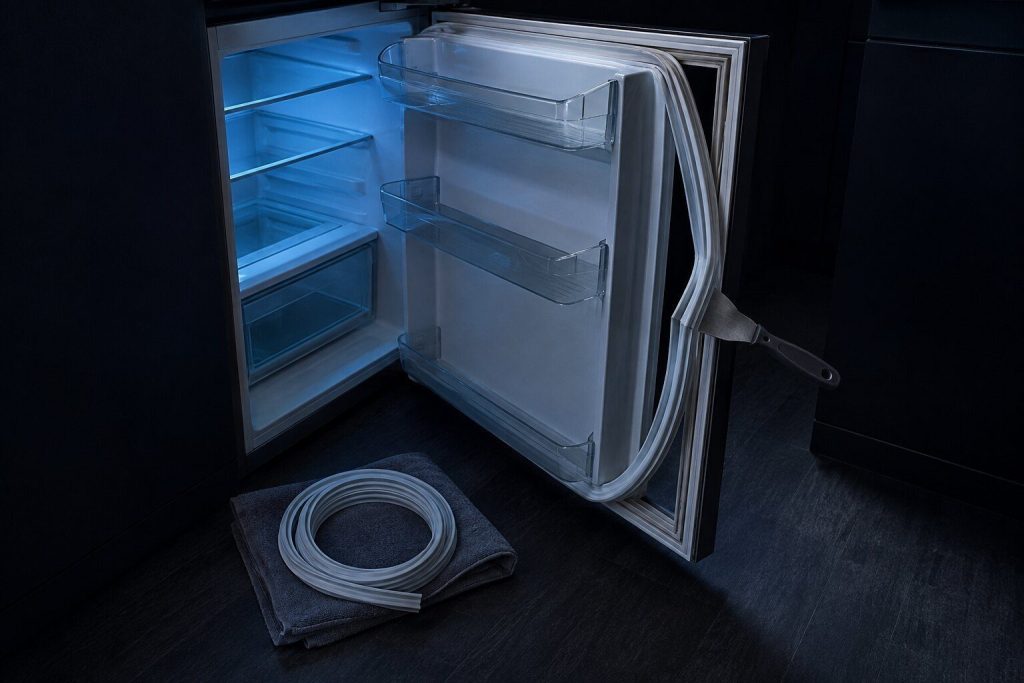
from $165 Door seal replacement
A gasket that no longer seals is a slow, expensive problem: the cabinet runs longer, the compartment nearest the leak drifts, and condensation appears where nobody expects it. Panel-ready doors make it likelier than on ordinary refrigeration, because the door carries the weight of a cabinet front and its hardware, and a hinge that has settled under that weight pulls the seal away from the frame along one edge. Replacing the gasket without correcting the door is how the same problem comes back within a year, so we do both or neither.
- Panel weight settles hinges — the seal is often the symptom, not the cause
- A dollar-bill test along all four edges, not a look at the worst corner
- Door alignment corrected at the same visit or the problem returns
-
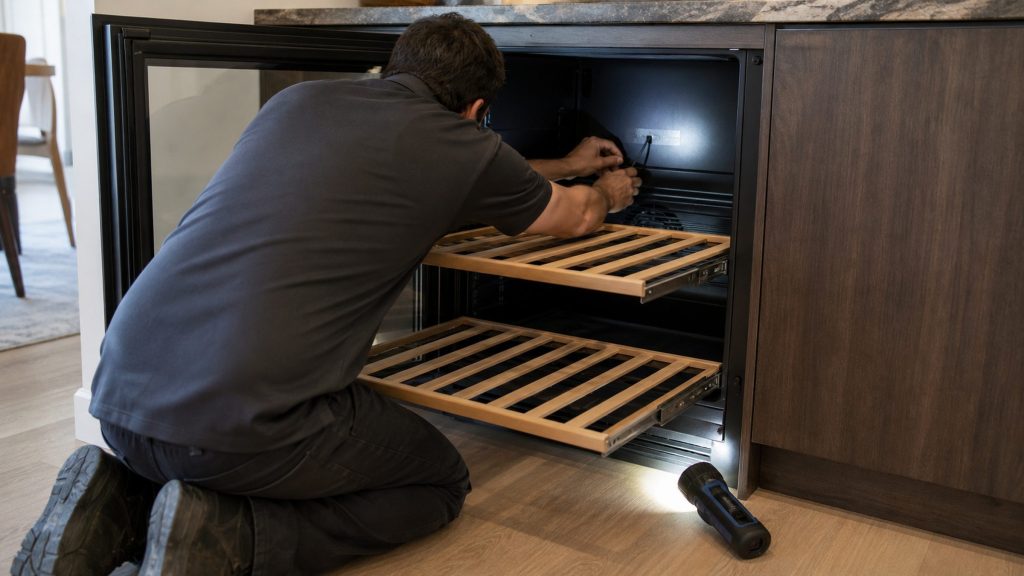
from $119 Glideracks and runner service
The oak racks in these columns glide out on runners so that bottles come forward in a tray rather than being reached for one at a time, and that mechanism is used more than any other part of the cabinet. Runners bind, a rack sits proud and stops the door sealing, a rail comes loose and a hundred bottles' worth of weight goes somewhere it should not. It is the smallest visit on this list and one of the more satisfying, because the result is immediate and visible the moment you pull a shelf.
- Used more than any other part of the cabinet, and wears accordingly
- A rack sitting proud is a door-seal problem waiting to be misdiagnosed
- Small visit, immediate result
-
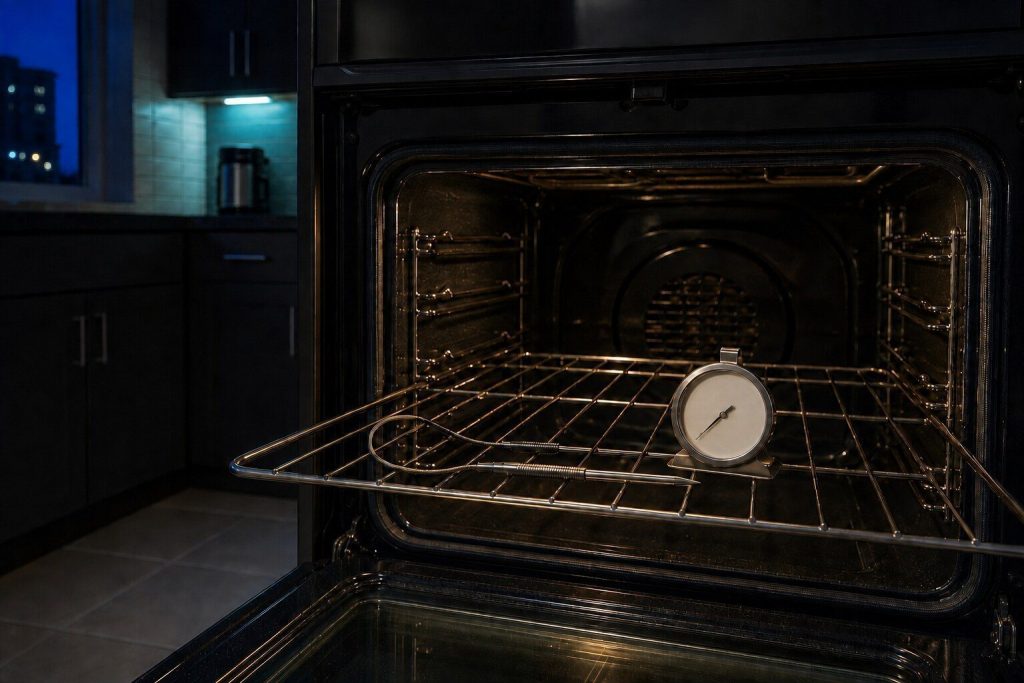
from $149 Temperature sensor and calibration
An oven that bakes badly while appearing to work is usually reading itself wrong. Sensors drift with age, and a cavity that is thirty degrees out sails through every self-test the appliance can perform because it believes its own reading. It is diagnosed with an independent probe and a logged preheat rather than by taste, and it is corrected either by calibration or by the sensor itself. On the steam models the same question is worth asking of the steam cycle separately, because it has its own sensing.
- An oven that is thirty degrees out passes its own self-test
- Independent probe and a logged preheat — not an oven thermometer left on a shelf
- Steam models sense the steam cycle separately and can drift separately
Nearby
Where else we work near Brickell
Every place below has its own page, with what the equipment and the access are like there.
Elsewhere in Miami-Dade
In more detail
Dacor repair in Brickell, in more detail
What Dacor equipment is like in Brickell
High-rise living, which changes the logistics more than the repair. Service elevator windows, loading bays and building rules shape the schedule, so we confirm them before the visit instead of finding out on the day.
Brickell is part of Miami, in Miami-Dade County, and we treat it as its own call rather than a line on a map: the buildings, the access and the age of the installations differ enough from the rest of the city to change how a visit is planned. What does not change is the work — Dacor coffee-machine, cooktop, dishwasher, diagnosed on site before anything is priced.
Salt, heat and storms — what they do to a kitchen full of appliances
Close to the water everything ages from the outside in. Salt corrodes the condenser coils and fan motors on the cold side and reaches burner caps, grates and igniters on the hot side, and both fail in the same way: a part that still works, slowly, until the day it does not. In Brickell that turns a cleaning interval into a seasonal job rather than an annual one, on both halves of the kitchen.
What that means for the appliances in Brickell
- Dishwashers — Tower kitchens are narrow, so an 18-inch dishwasher in a galley is a normal sight here rather than an unusual one — and a part for it comes up in the service elevator, which is booked before the visit rather than on the day.
- Wall ovens — A wall oven in a tower is trimmed into a cabinet run with the building behind it, so removing it is planned rather than improvised, and the association usually wants notice before it happens.
- Cooktops and rangetops — Induction is common in these buildings because a gas line often is not, and an induction top under a counter needs the ventilation gap the instructions specify — which a full drawer removes without anybody noticing.
- Door alarm chiming with the door shut
- Burner will not stay at a simmer
- Water under a built-in cabinet
- Range hood fan will not start
- Oven bakes unevenly or at the wrong temperature
Which Dacor series we work on around Brickell
We publish the error codes for every Dacor series this site covers — ER platform, Contemporary, Distinctive among them. Which one is in your kitchen changes the visit more than it changes the diagnosis: how the appliance was installed decides what has to come apart before anyone can reach it, and in Brickell that is a question about the room before it is a question about the appliance.
How a visit in Brickell is arranged
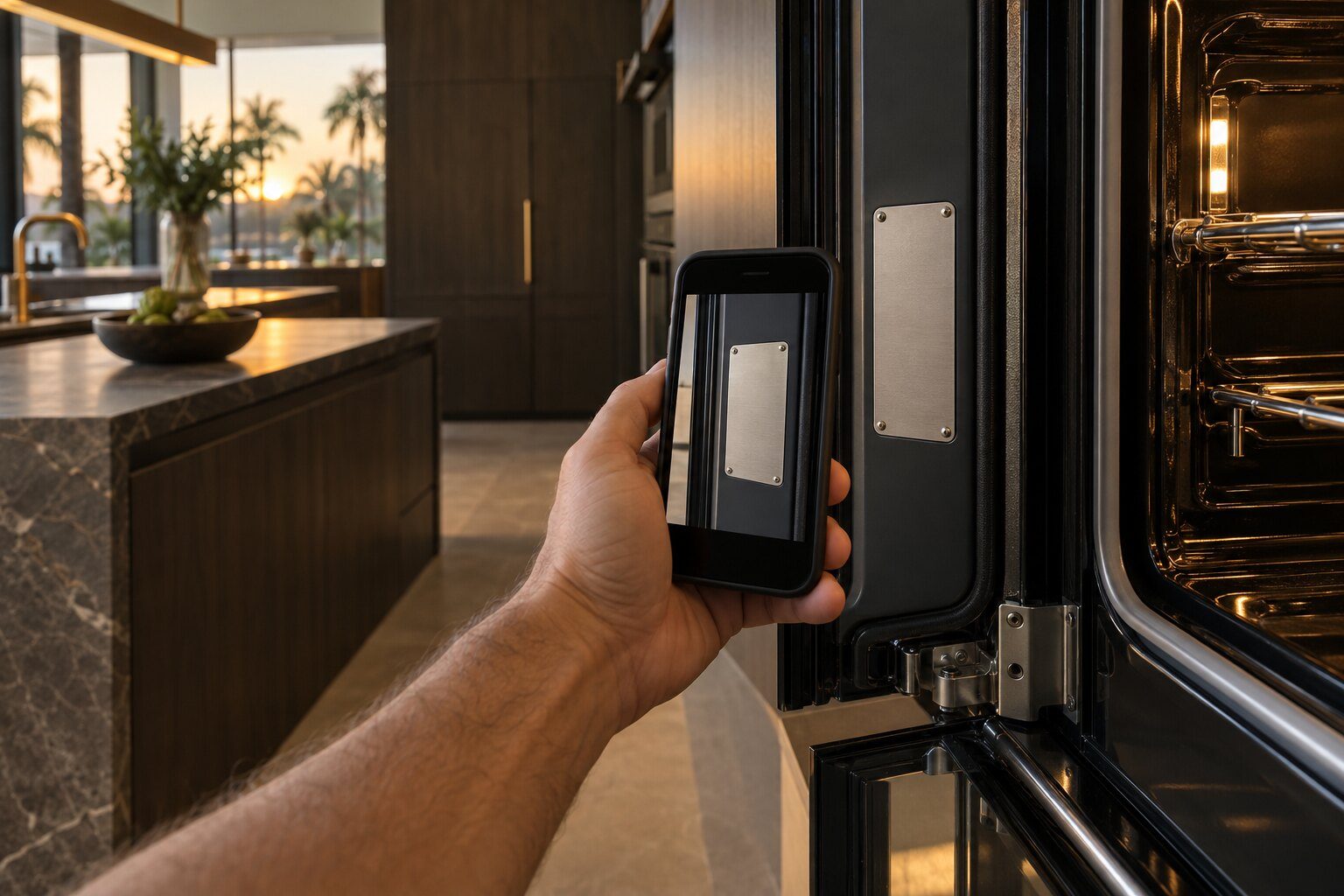
We ask for the model number from the plate inside the door and a line about what the appliance is doing. That decides which parts ride in the van, and it is the difference between one appointment and two.
- In a building: the service elevator window, the loading bay and the hours contractors are allowed to work
- Behind a gate: how visitors are cleared, arranged before the appointment rather than at it
- Whether the doors are paneled to match the cabinetry, which changes how they come off and go back
- The diagnosis first, then the scope and the price in writing, and your approval before anything is opened
What it costs, and what moves the figure
Prices in Brickell are the same as everywhere else we cover: a diagnostic from $95 that is credited toward the repair, and starting figures per job rather than one number for "a repair". What moves it is the model, how the appliance is built into the cabinetry, which part it needs and how quickly that part can be sourced — none of which can be judged over the phone. The repairs we carry out lists what each job involves and the figure it starts at, and the unit pages covers what tends to go wrong on each type.
The exact cost is confirmed after the on-site diagnostic and agreed with you before any work begins. We are an independent repair company — not affiliated with, authorized by, or endorsed by any manufacturer — and our warranty covers the labor we performed.
Before you book
Questions about a visit in Brickell
Do you cover Brickell?
Yes. Brickell is part of Miami, in Miami-Dade County, and it is inside the area we work every week. Give us the address when you book, and say how the Dacor is installed — what has to come apart to reach it matters as much as where it is.
How soon can you get to Brickell?
We will tell you the earliest slot we can genuinely keep rather than the earliest one that sounds good. Tell us the model number and what the unit is doing when you book: whether we can finish the same day depends on the part far more than on the drive.
Does it cost more because the job is in Brickell?
No. The diagnostic and the work are priced the same across Miami-Dade, Broward and Palm Beach. What moves the figure is the model, how the unit is built in and which part it needs — never the address. Where access takes longer, we say so before anything is agreed rather than after.
My building has rules about service calls. What do you need?
The building name when you book, and anything it requires — a service elevator window, a loading bay slot, approved hours or a certificate of insurance. We arrange those in advance; found out on the day, they cost the appointment.
Booking a visit in Brickell
Tell us the model number and what the unit is doing. We will bring the parts that problem usually needs, and you will have a firm price before we start.
This article is based on:
- Official manufacturer documentation
- Internal repair procedures
- Technician repair history
- Company quality standards