Appliance
Dacor built-in coffee systems
One platform, two ways of feeding it, and no longer in the catalog. The 24-inch built-in coffee system came plumbed to the water supply or with a tank behind the door, with a burr grinder, a steam wand and a hot-water tap; the machines in Miami kitchens today are from that generation and there is no successor. Two things follow. This appliance does not report error codes at all — it writes sentences on its display, which is genuinely more useful than a code — and every repair is a parts-availability question before it is a labor one. We answer that question before the visit, not after.
- 1 symptoms we are called out to
- From $95 diagnostic, credited to the repair
- 59 cities and neighborhoods covered
- OEM parts available on order
The short version
What this equipment is, for a repair
Configurations
24-inch built-in · plumbed and tank-fed
Access
Planned before the visit, not discovered on arrival
Parts
OEM, available on order
Diagnostic
From $95, credited to the repair
What goes wrong with it
Symptoms we are called out to on Dacor built-in coffee systems
Each one covers the likely causes in the order they are worth checking, and what to do in five minutes before booking anything.
-
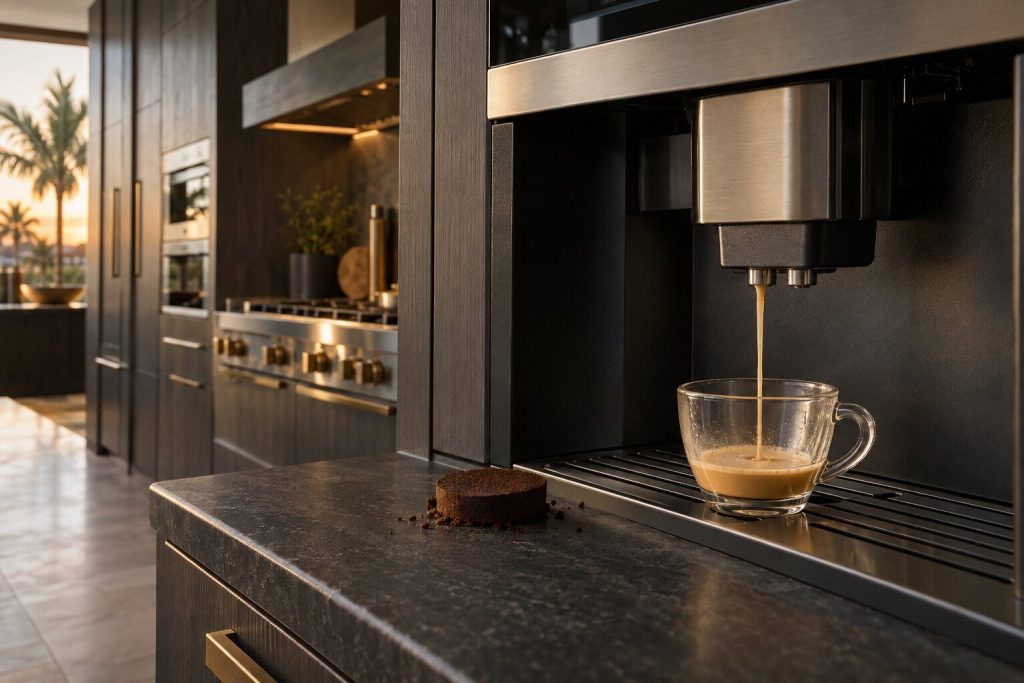
Both at once, and nothing on the machine has been changed Coffee has gone bitter and weak
Bitter and weak together is the classic complaint on a built-in coffee system, and it is almost never the beans or the settings. Burrs wear, the grind drifts coarse, and coarse grind under-extracts — which tastes weak. Meanwhile scale and old coffee oils in the brew group add the bitterness. Two causes, one symptom, and both are maintenance rather than failure. This appliance writes sentences rather than codes, so it will often have been asking for a clean for some time before anybody calls.
- Bitter and weak together is grind and group, not beans or settings
- The machine has probably been asking for a clean — read what the display says
- Discontinued platform: the parts answer comes before the labor
What we do on it
Repairs we carry out on Dacor built-in coffee systems
Starting figures for this equipment in South Florida. The exact cost is confirmed after an on-site diagnostic — and this is not the whole list of what can go wrong, so call if your problem is not here.
-
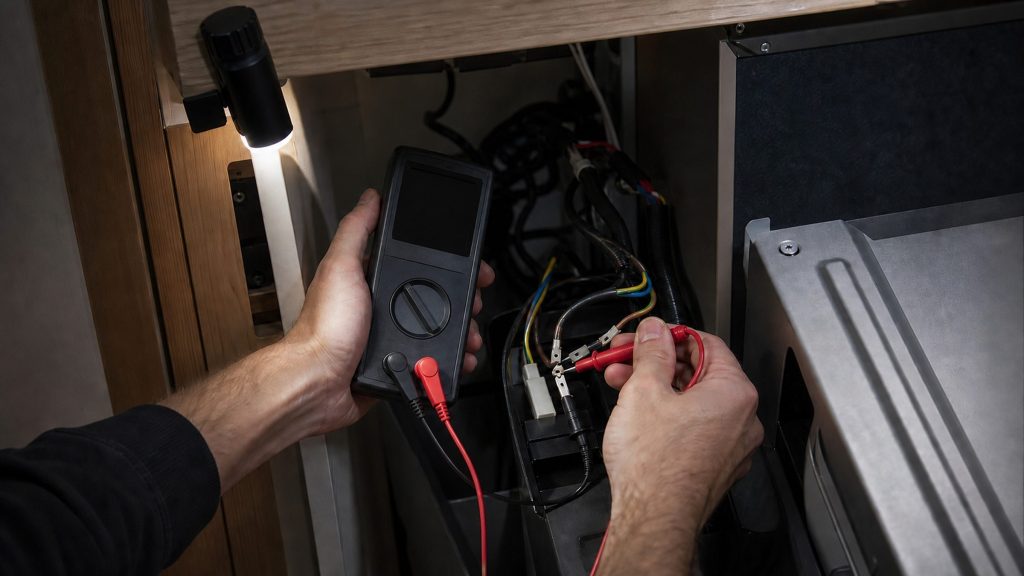
from $95 Diagnostic visit
Finding out what has actually gone wrong, before any part is named or priced. On this badge two questions come before the problem itself: how old the kitchen is, and how the appliance is held. The age decides which problem language the machine speaks — the pre-2016 boards and their F-codes, or the current platform and its letter codes — and the two share nothing. How it is held decides how long it takes to reach. The charge is credited against the repair if you go ahead, and if our honest recommendation is that the machine is not worth mending, you still get that recommendation and the charge does not change.
- The era comes first — it decides the code table, the board and the part number
- A written figure ahead of the work, credited against the repair
- If mending it is the wrong call we say so, rather than selling a part
-
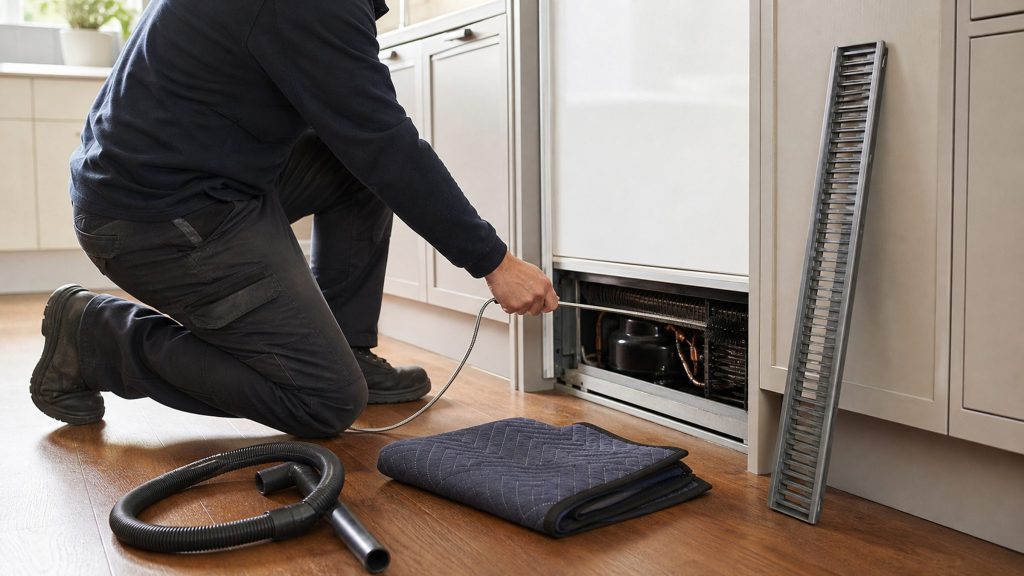
from $165 Appliance maintenance
The visit that keeps a built-in kitchen out of trouble, which on this make is mostly about air and water. Columns and panel-ready cabinets breathe through grilles that joinery and rugs slowly cover; the dishwasher softens its own water and that softener has a service interval; a steam oven has a reservoir and a descaling cycle; a hood liner fills with grease where nobody can see it. None of that is dramatic and all of it is cheaper than the failure it prevents. We do the lot in one visit rather than returning for each.
- Air paths first: column grilles, condenser coils, hood filters and blower
- Water next: the dishwasher softener, the steam reservoir, the coffee system's path
- One visit across the kitchen, not one visit per appliance
-
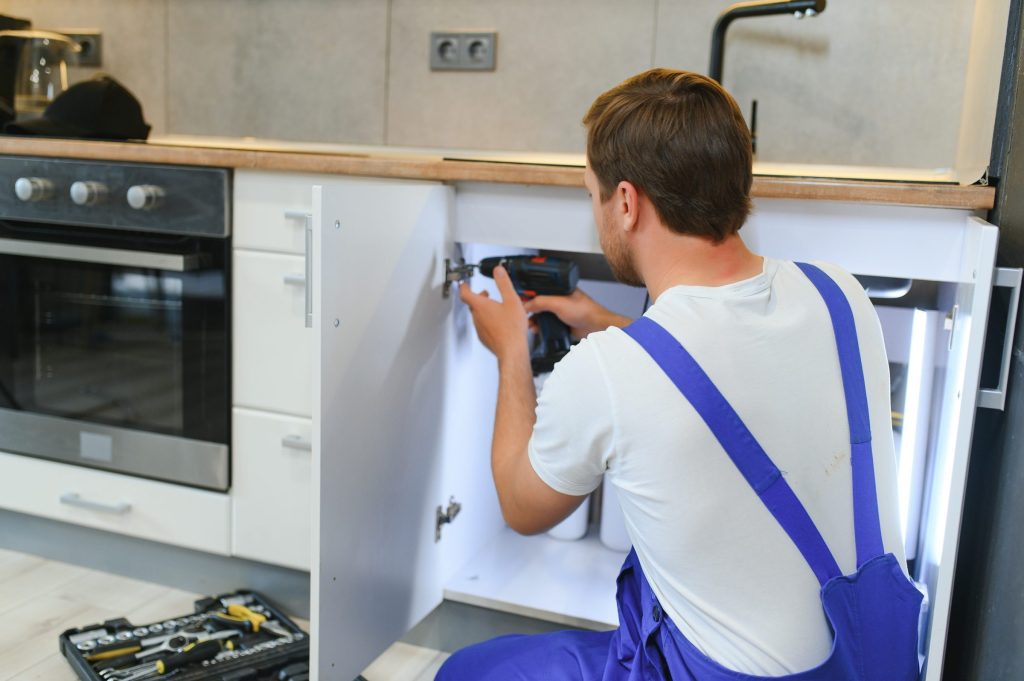
from $225 Appliance installation
Fitting equipment that was designed to disappear into cabinetry, which is a joinery job as much as a connection. Panel-ready columns and French doors take cabinet fronts and their hardware; wall ovens sit in tall units cut to a size; hood liners hide inside millwork built by somebody else; a rangetop drops into a worktop that has to be right before the appliance arrives. We measure the opening before delivery rather than after, because a cabinet that is a quarter inch out is a carpentry problem discovered on the wrong day.
- The opening is measured before the appliance is delivered, not on the day
- Panels, trim kits and handles fitted so the doors sit square and stay square
- Air path, water feed and power checked as part of the fit, not as an extra
-
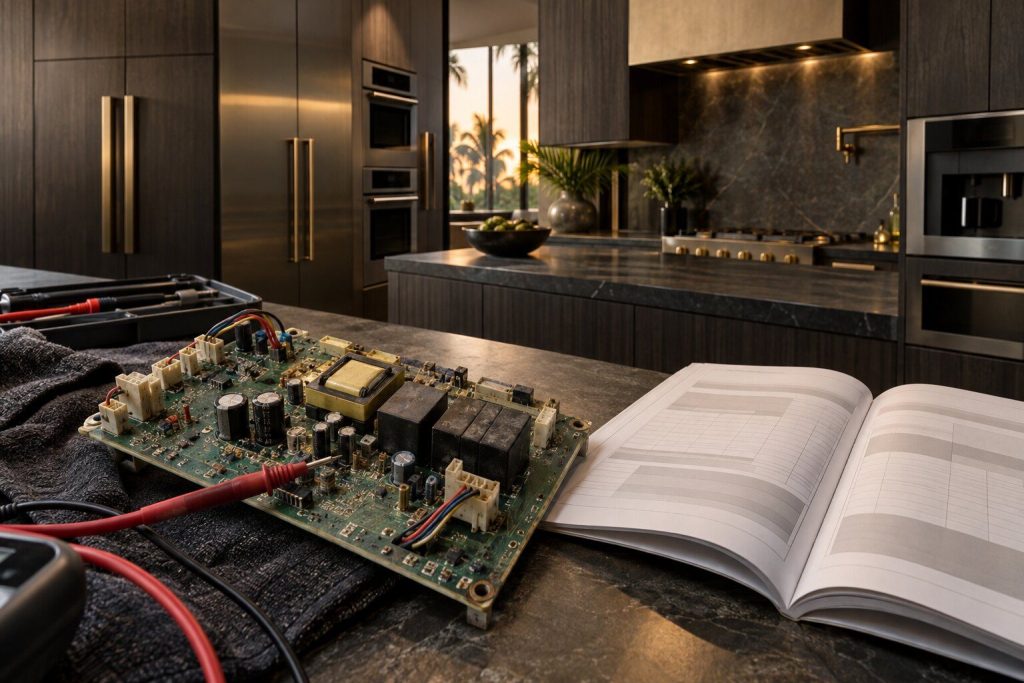
from $125 Legacy control diagnosis
The service that exists because this badge changed hands in 2016. Appliances made before that run Dacor's own boards and report F-codes — F0 to F8 on a Classic ERC oven, F1 to F95 on an ER-series range, F-1 to F-9 on an EDW or IDW dishwasher — and none of those strings exist on the current platform. A technician who only knows the current machines will read them wrongly or not at all, which is why owners of these appliances are so often told their machine is unfixable. It usually is not. What it needs is the right table and an honest answer about parts.
- Pre-2016 codes share nothing with the current platform
- F1, F2 and F3 mean different things on a Classic ERC oven and an ER range
- The honest part of this service is the parts answer, given before the visit
-
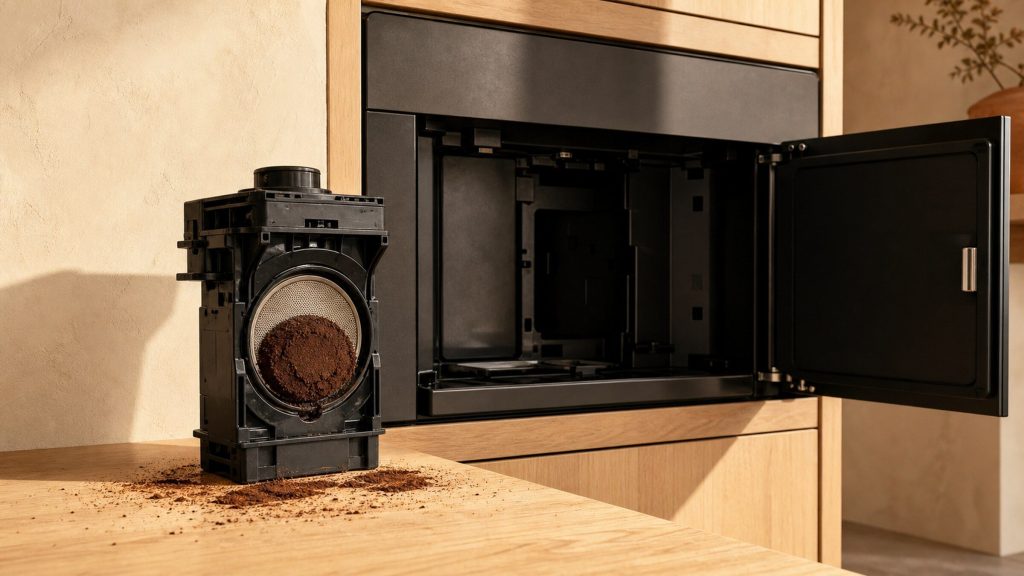
from $185 Coffee system brew group service
Coffee that has gone bitter and weak at the same time is the classic call, and it is almost always the grinder and the brew group rather than the beans or the settings. Burrs wear and the grind drifts coarse, which under-extracts; scale and old coffee oils in the group do the rest. On a discontinued platform the honest part of this service comes first: we establish that the parts exist before booking labor. Seals, burrs and the water path are the failures most likely to be solvable; boards are the difficult end.
- Bitter and weak together is grind and group, not beans or settings
- Discontinued platform — parts are checked before labor is booked
- Seals, burrs and the water path are the solvable failures
-
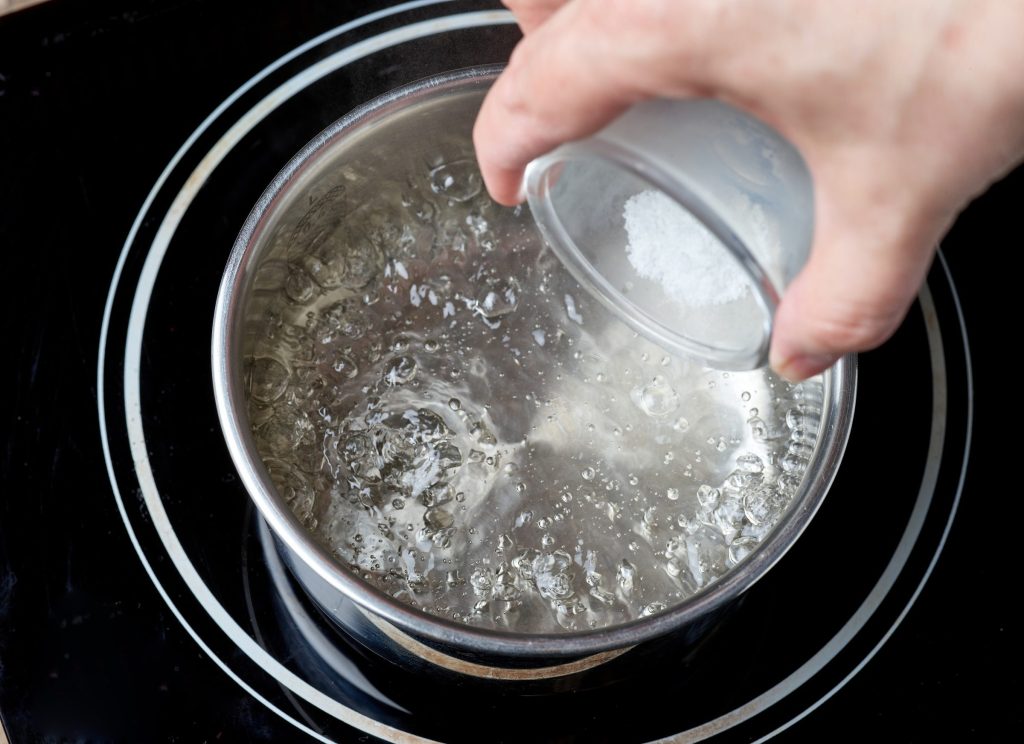
from $145 Coffee system descaling and water
Everything upstream of the coffee: the filter, the tank or the plumbed supply, and the scale that South Florida water leaves through all of it. A machine that takes longer and longer to deliver, or that has started to sound strained, is usually describing a water path narrowing rather than a pump failing — though ignored long enough, the second follows the first. On plumbed machines there is an additional reason to act early: the supply, its fittings and the drain sit behind a tall cabinet where a slow leak can run unseen for weeks.
- Slower delivery and a strained sound are a narrowing path, not yet a dead pump
- Plumbed machines hide their leaks behind the cabinetry
- Filter and descaling interval decide how long this platform lasts
In more detail
About Dacor built-in coffee systems
An appliance that writes sentences
This is the one machine on the site with no code table, and not because nobody has found it. It reports in plain language on its display, which means the owner can very often clear the message without anybody visiting. We would rather say that than book a call.
Discontinued is not the same as unrepairable
The line was dropped after this generation, and that makes parts the first question rather than the last. Seals, burrs and the water path are usually solvable; boards are the difficult end. Establishing which one you are facing before a visit is the whole of the honesty here.
A plumbed machine hides its leaks
Behind a tall cabinet, a supply fitting can weep for weeks unseen. If there is water on the floor in front of a built-in coffee system, the valve comes off first and the diagnosis second.
This article is based on:
- Official manufacturer documentation
- Internal repair procedures
- Technician repair history
- Company quality standards
Before you book
Questions about Dacor built-in coffee systems
The display is telling me something in words rather than a code.
That is how this machine communicates, and it is a better system than a code table. The message names what it wants — water, beans, a cleaning cycle, the grounds container — and in most cases it can be cleared without a visit. Read it to us on the telephone exactly as written and we will tell you honestly whether this is a service call or five minutes of your own time.
Can it still be repaired now that it is discontinued?
Often, and that depends entirely on which part has failed rather than on the age of the machine. Seals, brew-group wear, grinder burrs and the water path are the ordinary failures and the ones most likely to be solvable. Boards and some assemblies are the harder cases. We find out which of those you have before booking, because nobody should pay for a visit that ends in a shrug.
It was plumbed in and now leaks under the cabinet.
A plumbed machine has a supply line, fittings and a drain path behind a cabinet nobody looks into, and a slow leak there can run for weeks before it shows on the floor. Turn the supply off at the valve and call us. On this appliance in particular, the damage to the joinery is frequently worse than the problem causing it, and the sooner the water is off the smaller that problem stays.
The coffee has gone bitter and weak at the same time.
Almost always the grinder and the brew group rather than the beans or the settings. Burrs wear and the grind drifts coarse, which under-extracts; scale and old coffee oils in the group do the rest. It is a cleaning and parts job with a very obvious result, and it is the single most common reason anybody calls about one of these machines.
Where we do it
Across Miami-Dade, Broward, and Palm Beach
Same terms everywhere we go: an on-site diagnostic first, the price agreed in writing, and the exact figure confirmed once we have seen the unit.
Neighborhoods people ask for by name