- “Losing the low end is usually ports or a cap, not the burner”
- “It very often dates from the week the hob was deep-cleaned”
- “The pro brass burners are built to simmer — this is a problem, not a limitation”
Symptom
Dacor burner will not stay at a simmer
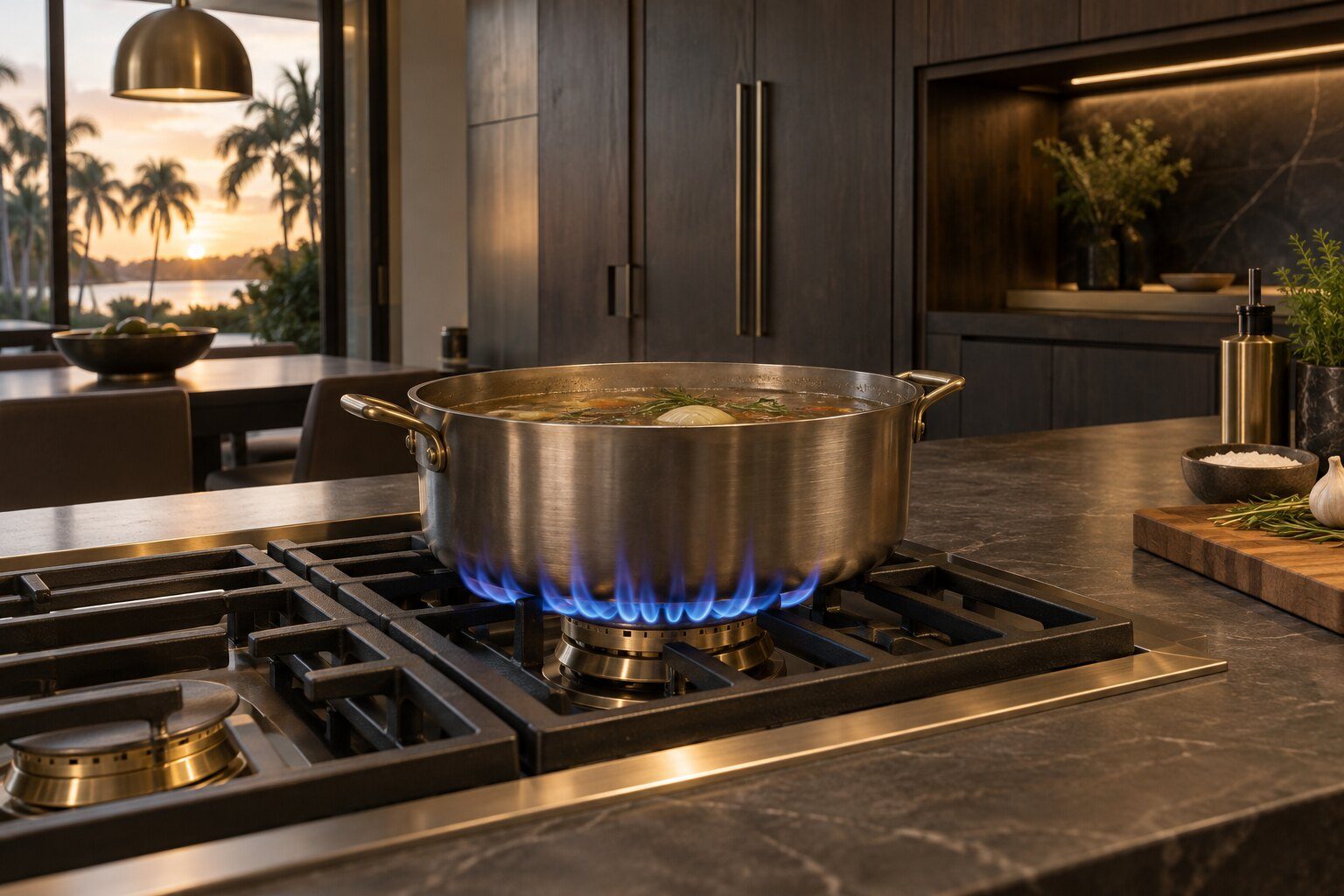
Losing the bottom of a burner's range is a specific and satisfying problem, because the cause is usually visible and the fix lasts. These are sealed brass burners built to run from a hard sear down to a genuine simmer, and when the low end goes it is nearly always a partly blocked port, a cap seated a fraction wrong after cleaning, or the simmer valve itself. It is also the clearest example of a problem that arrives the week the hob was scrubbed and gets blamed on the appliance.
- From $95 diagnostic, credited to the repair
- 59 cities and neighborhoods covered
- OEM parts available on order
- In writing the price, before anything is opened
Three ordinary causes
What this usually turns out to be
Cheapest and commonest first, which is also the order we check them in. They sit hundreds of dollars apart, and only the unit settles which one is yours.
-
The simmer ports are partly blocked
Years of boil-over, or a recent clean that pushed debris into the small ports rather than out of them. The sear ports stay clear because they are larger, which is exactly why the low end goes first.
Rangetop service from $195 -
The cap or head is seated wrong
A fraction out of position changes the flame pattern at low settings long before it affects a hard sear. Free to correct and very common after cleaning.
Gas burner and igniter repair from $155 -
The simmer valve has drifted
The valve's low-flame setting can be adjusted and does wander over years of use. It is a proper adjustment with an immediate and lasting result.
Rangetop service from $195
In five minutes
Before you call anybody
None of it needs tools, and all of it makes the visit shorter.
-
01
Look at the small ports
The inner ring does the simmering, and it blocks long before the outer one.
-
02
Reseat the cap on its pins
Flat and home. This alone resolves a fair share of these calls.
-
03
Say whether it followed a clean
The commonest trigger by a wide margin, and it changes what we check first.
How it shows up
What people describe when they call

A shortcut
Narrow it down before anybody arrives
A description of the behaviour leaves a few possible causes. A code names the subsystem before anybody opens anything, which is why it is worth photographing before it clears.
If there is no code at all
DOP30T940DS
DOP36T86DLS
DOP36C86DLS
DOP48C96DLS
DOP48T960DS
DOP48M96DL
DOP36M86D
HGPR30S
HIPR30S
DR30DNG
DR30GS
ER30D
The data plate is inside the cabinet, upper left wall or behind the grille. All models
In more detail
About Dacor burner will not stay at a simmer
What to do in the next ten minutes
Lift the cap and the head and look at the ports, particularly the smaller inner ring that does the simmering. Check the cap is seated flat on its locating pins and the head is fully home. Compare the burner with its neighbors at the same low setting. Note whether the trouble started after a clean, which is the single most useful fact you can give us.
Why the low end fails first
A hard sear pushes gas through large ports and will tolerate a great deal of obstruction. A simmer relies on a small, even flow through the smallest openings on the burner, and it stops working while everything else still looks perfect. A cook notices it immediately and a casual glance at the hob shows nothing at all.
What a rangetop service actually restores
Stripping, cleaning and reseating every burner, then setting each one across its full range from sear to simmer. On a hard-used rangetop that restores more performance than any single part would, and it is the visit that makes an eight-year-old hob behave like a new one.
This article is based on:
- Official manufacturer documentation
- Internal repair procedures
- Technician repair history
- Company quality standards
Before you book
Questions about Dacor burner will not stay at a simmer
Can I clear the ports myself?
Carefully, with a fine wire or a pin and never a drill bit — enlarging a port permanently changes the flame. If a gentle clean does not restore the simmer, leave it.
Only one burner does it.
That is the usual pattern and it keeps the repair to that burner. All of them at once points at the gas supply pressure instead, which is a different conversation.
Where we do it
Across Miami-Dade, Broward, and Palm Beach
Same terms everywhere we go: an on-site diagnostic first, the price agreed in writing, and the exact figure confirmed once we have seen the unit.
Neighborhoods people ask for by name