Service
Dacor appliance maintenance
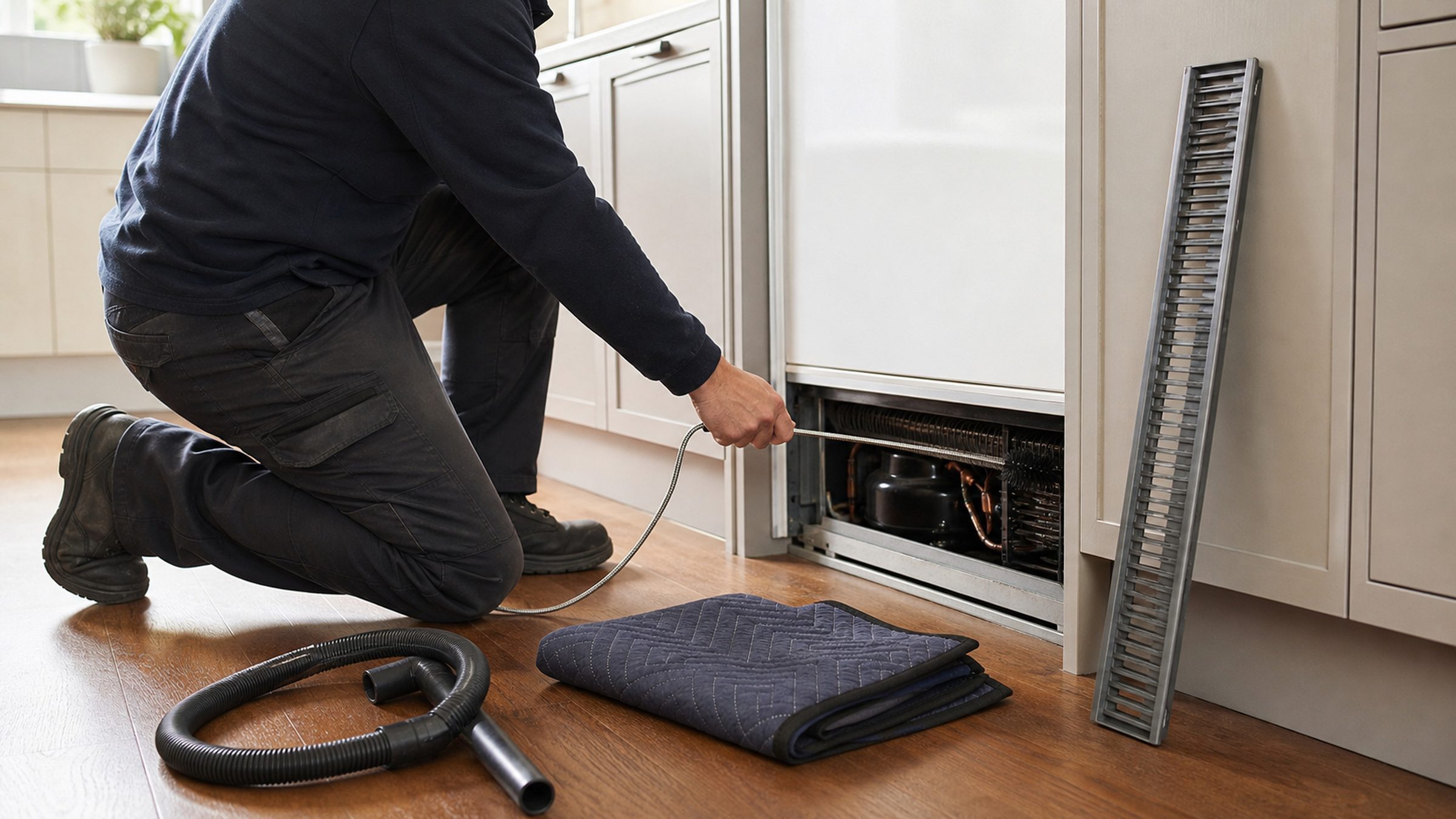
The visit that keeps a built-in kitchen out of trouble, which on this make is mostly about air and water. Columns and panel-ready cabinets breathe through grilles that joinery and rugs slowly cover; the dishwasher softens its own water and that softener has a service interval; a steam oven has a reservoir and a descaling cycle; a hood liner fills with grease where nobody can see it. None of that is dramatic and all of it is cheaper than the failure it prevents. We do the lot in one visit rather than returning for each.
- From $95 diagnostic, credited to the repair
- 59 cities and neighborhoods covered
- OEM parts available on order
- In writing the price, before anything is opened
Before you read on
What this job costs and how it is agreed
A starting figure, not a quote. What moves it is the model, how the unit is built in and which part it needs — settled after the on-site diagnostic.
Starts at
from $165
After a diagnostic from $95, which comes off the bill when you go ahead.
or call (305) 363-6067
Diagnostic
From $95, credited to the repair
The price
In writing, before anything is opened
Warranty
On the labor we performed
On the visit
How this visit actually goes
The same order every time, so nothing is opened and nothing is charged before you have seen the figure and said yes.
-
01
Clear what the cabinet breathes through
The base or top grille of every column, the condenser behind it, and the hood filters above the range. In Miami this is the single highest-value half hour in the house: a blocked column imitates a failing sealed system exactly, and the repair for that is free.
-
02
Service what handles water
The dishwasher's built-in softener, the steam oven's reservoir and descaling cycle, and the coffee system's filter and water path. Each has an interval, and each produces a slow decline that nobody notices on the day it starts.
-
03
Check the seals and the doors
Panel-ready doors carry weight that ordinary doors do not, and their hinges and gaskets show it first. A door that no longer closes squarely is a cooling complaint six months later.
Applies to
The Dacor units we carry this work out on
-
Panel-ready French door · 24, 30 and 36-inch columns Dacor refrigerator repair in Miami
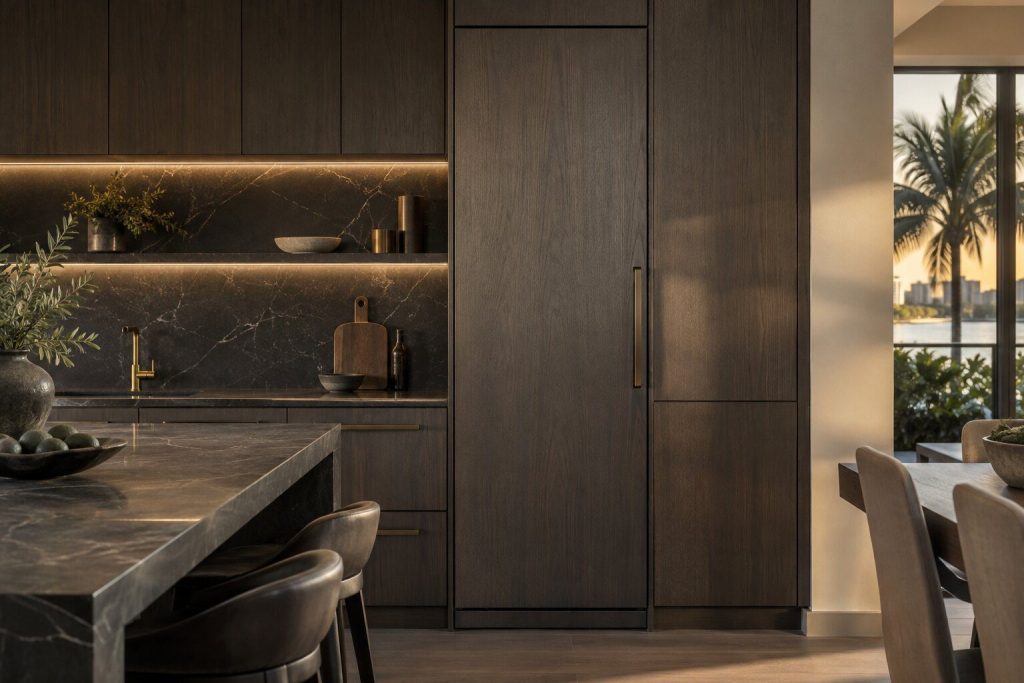
Two shapes, and the difference decides the visit. The French doors run 36, 42 and 48 inches wide and are built to take cabinet panels, so the box disappears into the joinery; the columns are 24, 30 and 36 inches of single-purpose refrigerator, meant to stand beside a freezer column of the same height and read as one run. Almost nothing here is freestanding in the ordinary sense. That changes the work before a part is named: the surround is tight, the panel and its handle come off first, and the air path the installer left is part of the diagnosis rather than a detail.
- French doors at 36, 42 and 48 inches; columns at 24, 30 and 36
- Panel-ready by default — the door furniture comes off before anything is opened
- PreciseCooling, the FreshZone drawer and iQ Remote View are the named parts people call about
-
Column freezers · 18, 24, 30 and 36 inches Dacor freezer repair in Miami
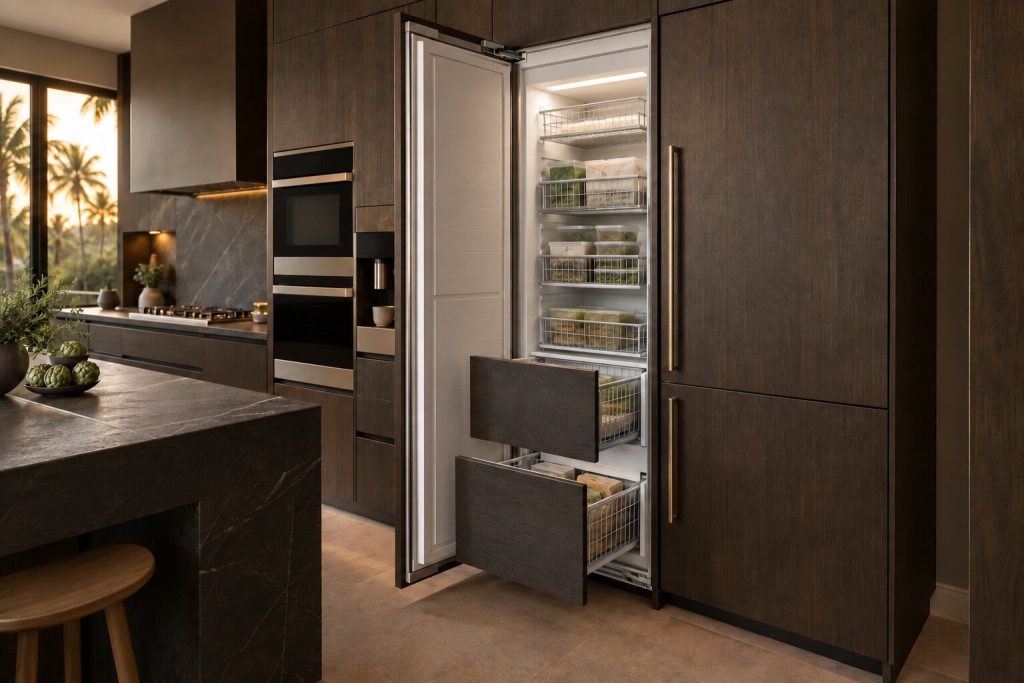
There is no chest freezer here, and no upright one standing in a garage. Every freezer this make builds is a column — 18, 24, 30 and 36 inches wide, panel-ready, designed to be installed beside a refrigerator column of matching height so the two read as cabinetry. The narrow one holds about nine and a half cubic feet and carries two ice makers of its own. That shape is the reason most calls about it are really calls about installation: a column has a defined air path through its base or top, and a blocked one imitates a failing sealed system exactly.
- Column-only: 18, 24, 30 and 36 inches, panel-ready, no freestanding cabinet in the line
- The 18-inch column carries dual ice makers and two freezer drawers in 9.4 cubic feet
- Power Freeze is a mode, not a problem — it will run the cabinet hard and sound wrong
-
24-inch wine column · 100 bottles, three zones Dacor wine column repair in Miami
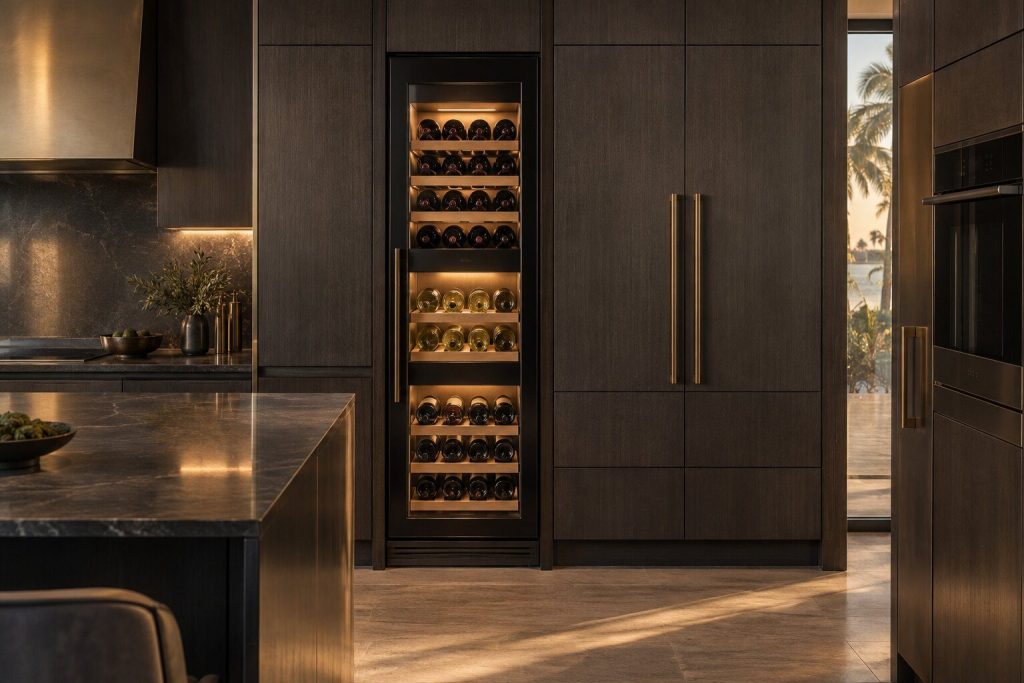
One cabinet, taken seriously. The 24-inch wine column holds about a hundred bottles across three independently held zones behind argon-filled triple glazing, on oak racks that glide out and doors that push to open. It is specified to hold within a third of a degree, and that specification is the reason people call: a cabinet built to that tolerance is expected to keep it, and a drift of two degrees in one zone is a problem here where it would be ordinary elsewhere. There is a smaller undercounter cellar too — 41 bottles, two zones — and it is a different machine with different expectations.
- 24-inch column: about 100 bottles, three zones, argon-filled triple glass, oak Glideracks
- PreciseCooling is specified to about a third of a degree — drift is a symptom, not a mood
- The undercounter cellar is a separate machine: 41 bottles, dual zone
-
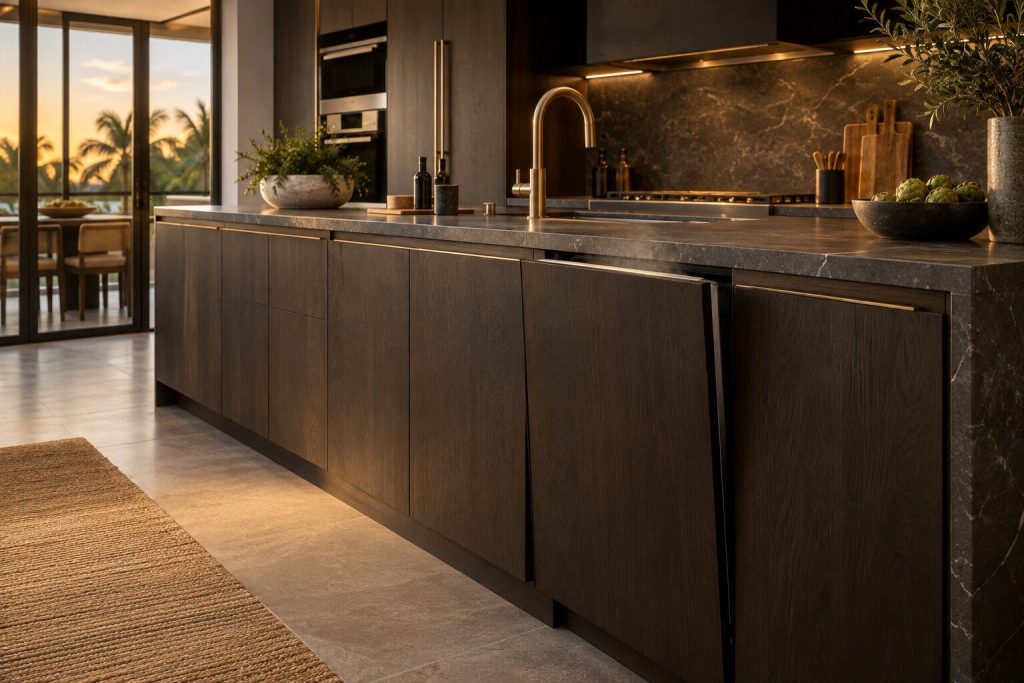
24-inch panel-ready · StormWash+ and AutoRelease Dacor dishwasher repair in Miami
Twenty-four inches, panel-ready, and two generations of it in South Florida kitchens. The current machine carries StormWash+, a water softener built into the appliance itself and an AutoRelease door that pops open at the end of a cycle to dry; the generation before it is the WaterWall platform with a third rack, quiet enough to be rated at 44 decibels. Behind both sits the problem language that changed in 2016: the older EDW and IDW machines report F-1 through F-9, the current ones report letter codes ending in C. Knowing which of those two a kitchen has is most of a diagnosis.
- Current platform: StormWash+, built-in water softener, AutoRelease drying door
- Previous Samsung-era platform: WaterWall, third rack, 44 dBA
- Legacy EDW and IDW machines speak F-1–F-9 — a different language entirely
-
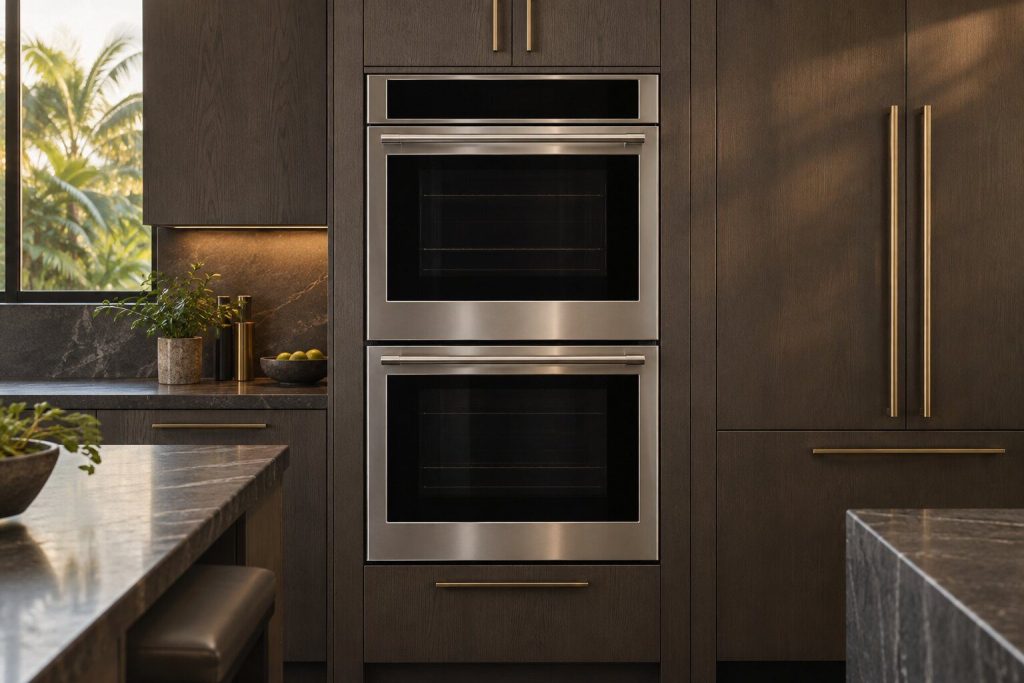
30-inch single and double · steam and non-steam Dacor wall oven repair in Miami
Thirty inches, single or double, and the meaningful split is whether the cavity makes steam. The current ovens run a four-part convection arrangement, connect to the house network, and on the steam models add a water system that has to be filled, drained and descaled like any other. The style names — Contemporary, Transitional — change the hardware and the finish rather than the mechanism. Older kitchens hold the classic ERC ovens, and those report F0 through F8 from a board Dacor designed itself: a different oven, a different table, and a repair that begins with a different question.
- 30-inch single and double, with and without steam
- Four-part convection and a network connection on the current generation
- Classic ERC ovens report F0–F8 — and F1, F2 and F3 mean something else on a range
-
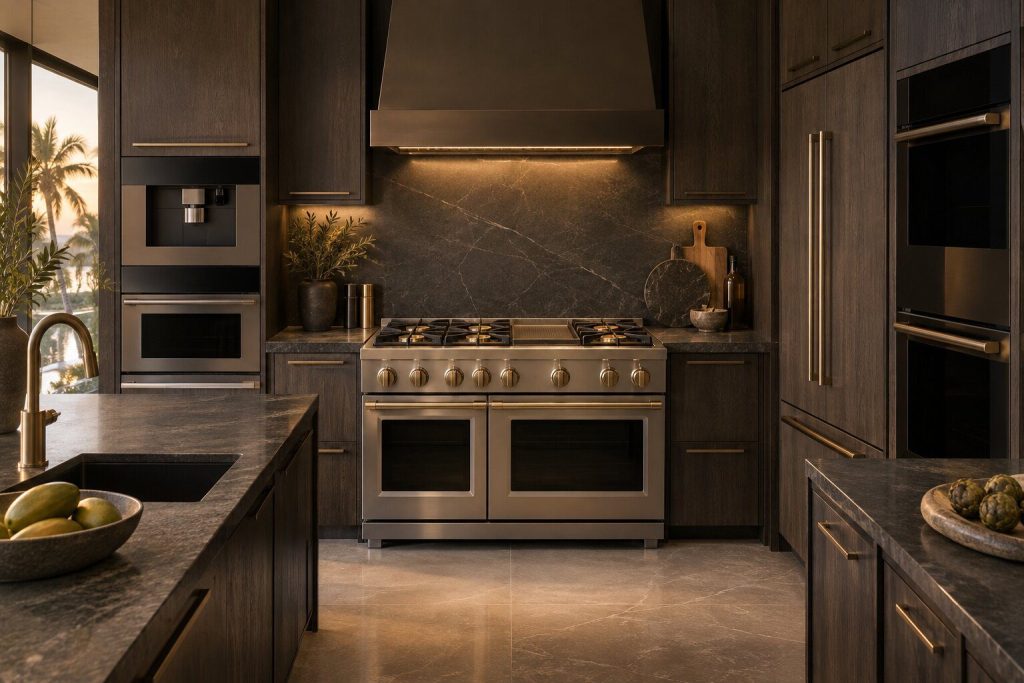
Dual-fuel at 30, 36 and 48 inches Dacor range repair in Miami
Thirty, thirty-six and forty-eight inches, and dual fuel almost throughout: gas on top, electric in the oven below. The forty-eight adds an integrated griddle and, on the steam models, a water system in the cavity. The professional range in this line carries six burners, a flame system designed to relight itself, and a seven-inch screen on the front. Beside all of that, South Florida kitchens still hold the ER-series ranges from before 2016 — a platform with its own diagnostic table running from F1 to F95, and one that a technician who only knows the current machines will read wrongly.
- Dual-fuel at 30, 36 and 48 inches; the 48 carries an integrated griddle
- The pro range: six burners, self-relighting flame, a seven-inch panel
- Legacy ER30D, ER36D and ER48D report F1–F95 — the widest table this make has
-
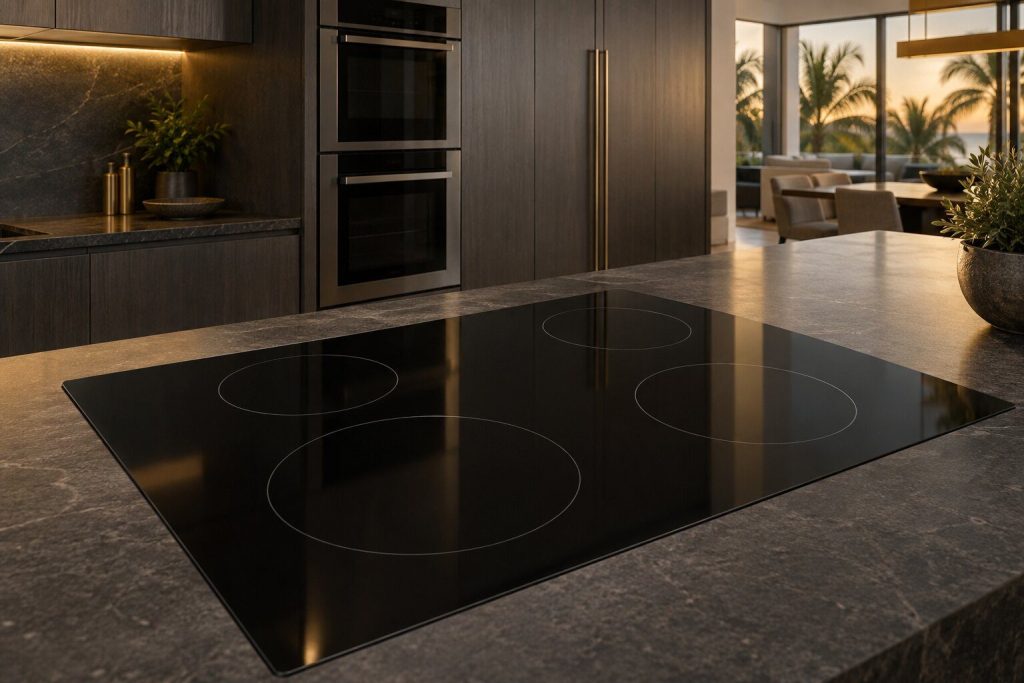
Induction and gas at 30 and 36 inches · rangetops at 36 and 48 Dacor cooktop repair in Miami
Two families under one heading. The cooktops are induction or gas at 30 and 36 inches — the induction ones frameless black glass with a display in the surface, the gas ones sealed burners on stainless. The rangetops are the professional half: 36 and 48 inches, six sealed brass burners built to simmer as well as sear, illuminated knobs, and a griddle and wok ring that sit in place of the grates. They are different machines to work on. A glass induction surface is an electronics repair; a rangetop is burners, gas and heavy brass, and the two rarely fail for the same reason.
- Induction at 30 and 36 inches, frameless black glass with an in-surface display
- Gas cooktops at 30 and 36; rangetops at 36 and 48 with six brass burners
- The rangetop's griddle and wok ring replace grates — they are accessories, not fixtures
-
Pro-canopy at 36 and 48 · chimney and liner inserts Dacor range hood repair in Miami
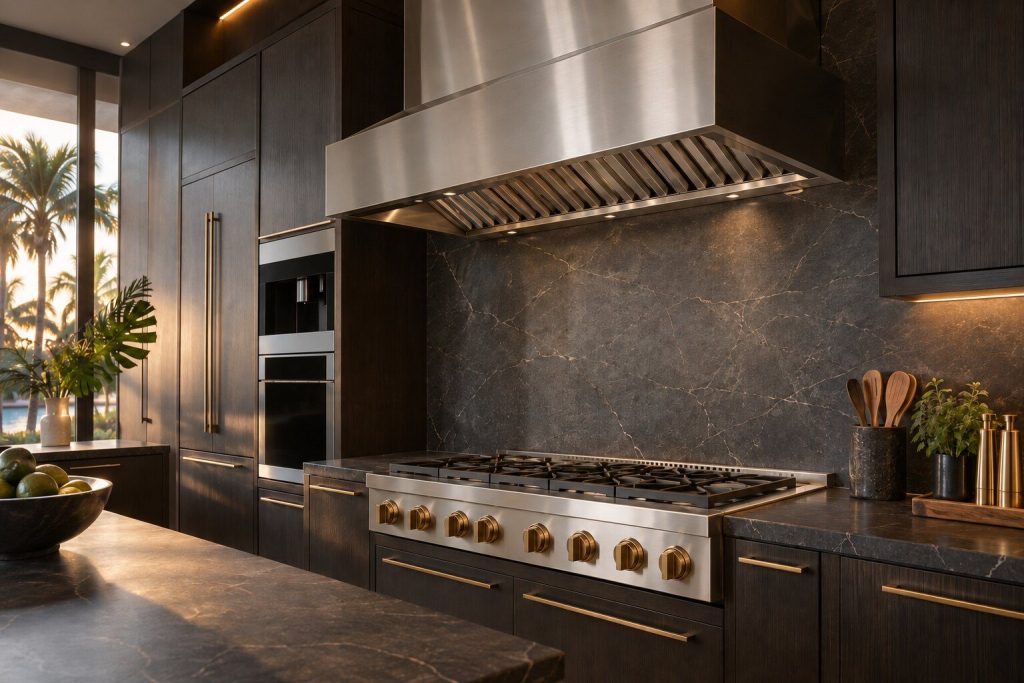
Three shapes, and which one is over the range decides everything about the repair. The pro canopies are 36 and 48 inches wide and about eighteen deep in the body, glass touch controls and LED light. The chimney hood is a 30-inch wall unit that extends up to the ceiling. The liners are inserts — five and a half inches tall — built to be hidden inside a joiner's custom hood, which means the appliance we are called to see is behind millwork nobody wants disturbed. Most hood calls are about the light, the fan speed control or the noise, and all three are reachable without touching the surround.
- Pro-canopy wall hoods at 36 and 48 inches; a 30-inch chimney hood
- Liner inserts at 30, 36 and 48 — about five and a half inches tall, built into custom millwork
- Light, speed control and noise are the three calls; none needs the joinery opened
-
24-inch built-in · plumbed and tank-fed Dacor built-in coffee system repair in Miami
One platform, two ways of feeding it, and no longer in the catalog. The 24-inch built-in coffee system came plumbed to the water supply or with a tank behind the door, with a burr grinder, a steam wand and a hot-water tap; the machines in Miami kitchens today are from that generation and there is no successor. Two things follow. This appliance does not report error codes at all — it writes sentences on its display, which is genuinely more useful than a code — and every repair is a parts-availability question before it is a labor one. We answer that question before the visit, not after.
- One family: plumbed and tank-fed 24-inch built-ins, with a burr grinder and steam wand
- Discontinued — there is no current replacement in this make's line
- No error codes at all: the display writes a sentence, and that sentence is the diagnosis
In more detail
About Dacor appliance maintenance
The maintenance on this make is mostly invisible
Nothing here announces that it needs doing. A column's air path closes up behind a kick panel over years. The dishwasher softens its own water and the resin has a life. A steam oven has a reservoir and a descaling interval that this water makes non-negotiable. A hood liner fills with grease inside joinery where nobody can look. None of it is dramatic and all of it is cheaper than the failure it prevents — and because a designed kitchen usually holds several of these machines, they are done in one visit rather than five.
This article is based on:
- Official manufacturer documentation
- Internal repair procedures
- Technician repair history
- Company quality standards
Before you book
Questions about Dacor appliance maintenance
How often is worth it?
Annually for the air paths and the hood, and on the water items whenever the appliance asks — the dishwasher and the coffee system both prompt. In a kitchen that cooks most nights the hood filters want attention more often than that.
Can you do several appliances in one visit?
That is the point of it. The journey, the setup and the paperwork are paid once, and everything after the first appliance costs a fraction of it.
Where we do it
Across Miami-Dade, Broward, and Palm Beach
Same terms everywhere we go: an on-site diagnostic first, the price agreed in writing, and the exact figure confirmed once we have seen the unit.
Neighborhoods people ask for by name