Appliance
Dacor cooktops and rangetops
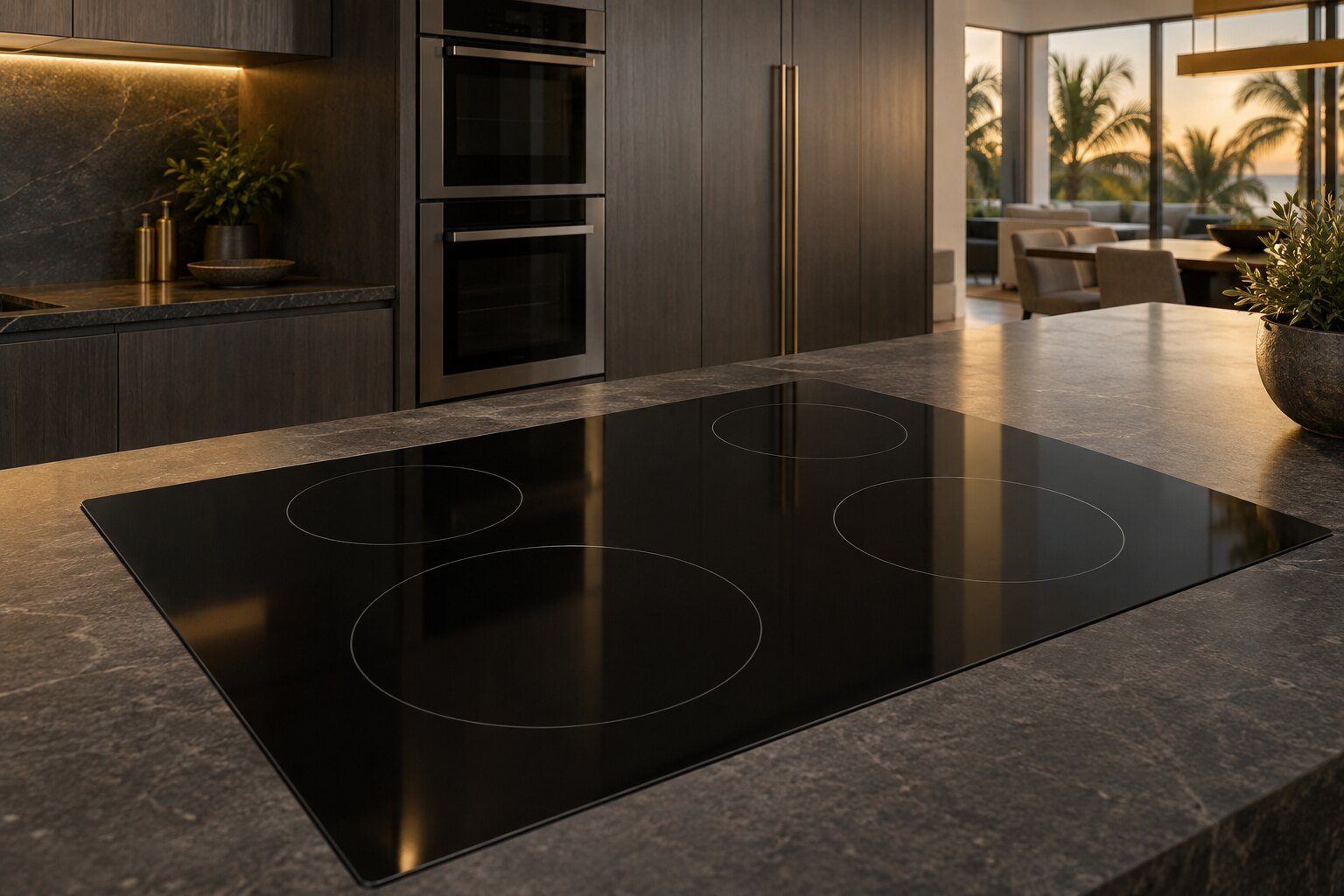
Two families under one heading. The cooktops are induction or gas at 30 and 36 inches — the induction ones frameless black glass with a display in the surface, the gas ones sealed burners on stainless. The rangetops are the professional half: 36 and 48 inches, six sealed brass burners built to simmer as well as sear, illuminated knobs, and a griddle and wok ring that sit in place of the grates. They are different machines to work on. A glass induction surface is an electronics repair; a rangetop is burners, gas and heavy brass, and the two rarely fail for the same reason.
- 4 symptoms we are called out to
- From $95 diagnostic, credited to the repair
- 59 cities and neighborhoods covered
- OEM parts available on order
The short version
What this equipment is, for a repair
Configurations
Induction and gas at 30 and 36 inches · rangetops at 36 and 48
Access
Planned before the visit, not discovered on arrival
Parts
OEM, available on order
Diagnostic
From $95, credited to the repair
What goes wrong with it
Symptoms we are called out to on Dacor cooktops and rangetops
Each one covers the likely causes in the order they are worth checking, and what to do in five minutes before booking anything.
-
Sparking at the burner and no flame Burner clicks but will not light
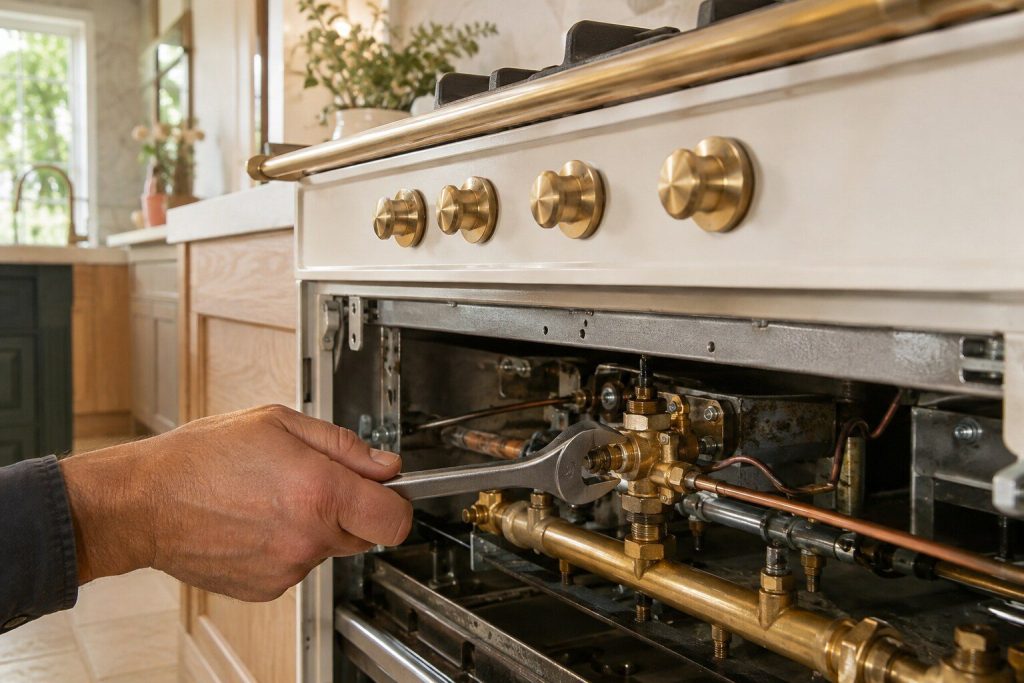
In this climate the two ordinary causes are salt air on the igniter and a cap that went back slightly wrong after a clean — which is why so many of these calls date from the week the hob was scrubbed. The professional burners on the rangetops complicate it pleasantly: they are built to relight themselves after a draft or a boil-over, so a burner that keeps going out may be that system rather than the burner. Neither is a code problem; the rangetops have no display to show one on.
- Most of these begin the week the hob was deep-cleaned
- Salt air and humidity are what actually kill igniters here
- One burner or all of them is the question that splits the diagnosis
-
It works for a few minutes at high power and stops Induction zone cuts out during cooking
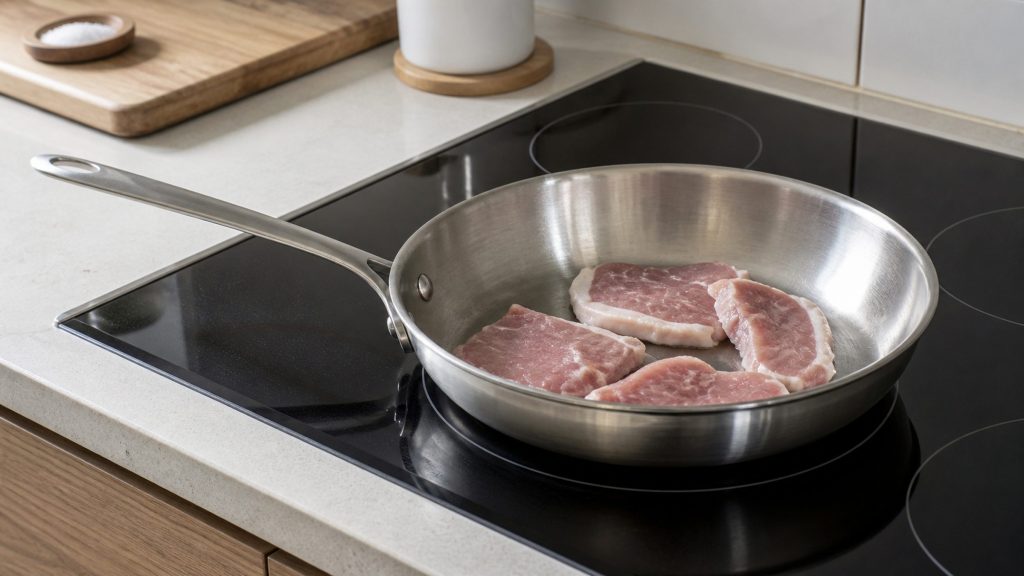
The most misread problem on an induction surface, because it looks like a zone dying and is usually a zone defending itself. The drive electronics under the glass shed a great deal of heat, and they rely on airflow through the cabinet beneath. Pack that space, add insulation during a renovation, or store a stack of trays against the underside, and the cooktop will run beautifully for five minutes at high power and then step back. Establishing that before anybody quotes for parts is the whole of this page.
- Cutting out after minutes at high power is usually protection, not failure
- The cause is under the worktop far more often than in the appliance
- Pan compatibility is a magnet test, and no repair changes it
-

It shows offline, or never finishes pairing The app will not connect to the appliance
Worth a page of its own because it is the complaint most likely to be sold as an appliance repair when it is nothing of the sort. The current generation reports to an app, and when the link works it genuinely shortens a diagnosis — a caller who can read what the app says saves the first part of a visit. When it does not work, the appliance is almost always fine, and the problem belongs to a router, a network band or an account. We will say so, and we will not charge repair money for it.
- An appliance off the network is not a broken appliance
- Most of these are the 2.4 GHz band, the router or the account — not the machine
- Only the 2016-and-later machines connect at all
-
It sears beautifully and cannot be turned down Burner will not stay at a simmer
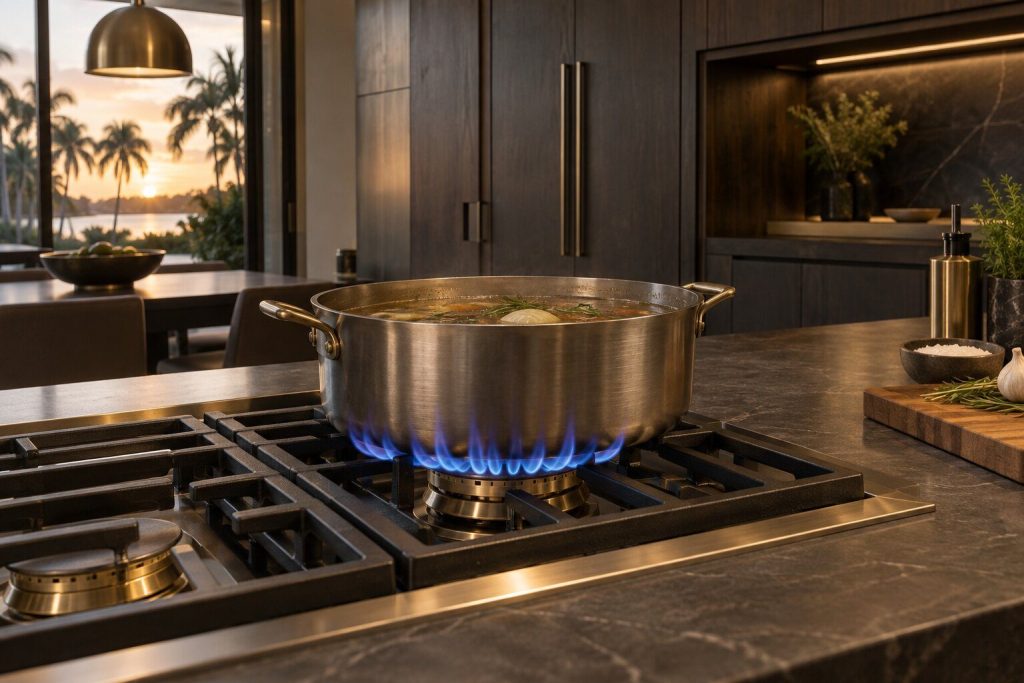
Losing the bottom of a burner's range is a specific and satisfying problem, because the cause is usually visible and the fix lasts. These are sealed brass burners built to run from a hard sear down to a genuine simmer, and when the low end goes it is nearly always a partly blocked port, a cap seated a fraction wrong after cleaning, or the simmer valve itself. It is also the clearest example of a problem that arrives the week the hob was scrubbed and gets blamed on the appliance.
- Losing the low end is usually ports or a cap, not the burner
- It very often dates from the week the hob was deep-cleaned
- The pro brass burners are built to simmer — this is a problem, not a limitation
What we do on it
Repairs we carry out on Dacor cooktops and rangetops
Starting figures for this equipment in South Florida. The exact cost is confirmed after an on-site diagnostic — and this is not the whole list of what can go wrong, so call if your problem is not here.
-
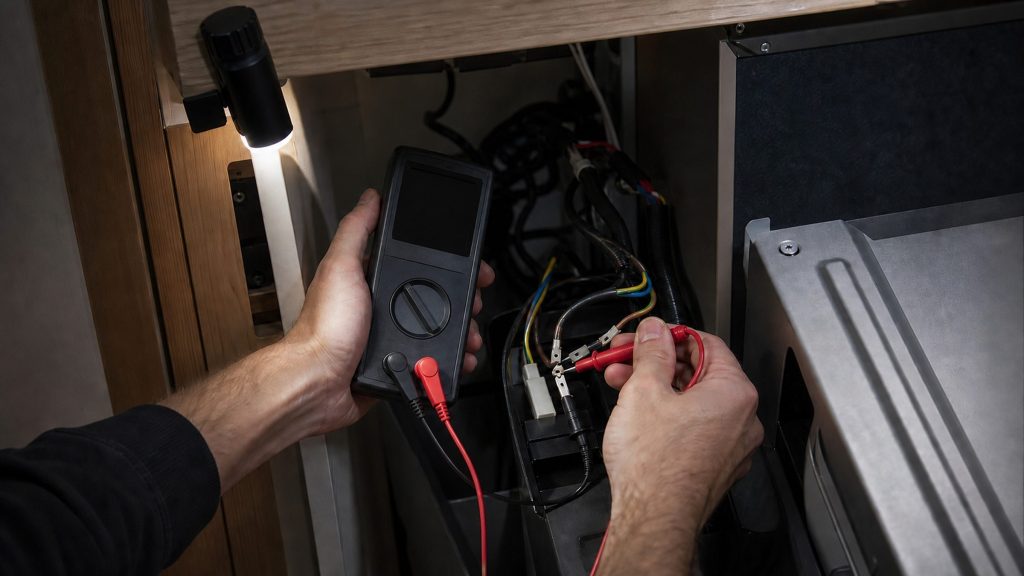
from $95 Diagnostic visit
Finding out what has actually gone wrong, before any part is named or priced. On this badge two questions come before the problem itself: how old the kitchen is, and how the appliance is held. The age decides which problem language the machine speaks — the pre-2016 boards and their F-codes, or the current platform and its letter codes — and the two share nothing. How it is held decides how long it takes to reach. The charge is credited against the repair if you go ahead, and if our honest recommendation is that the machine is not worth mending, you still get that recommendation and the charge does not change.
- The era comes first — it decides the code table, the board and the part number
- A written figure ahead of the work, credited against the repair
- If mending it is the wrong call we say so, rather than selling a part
-
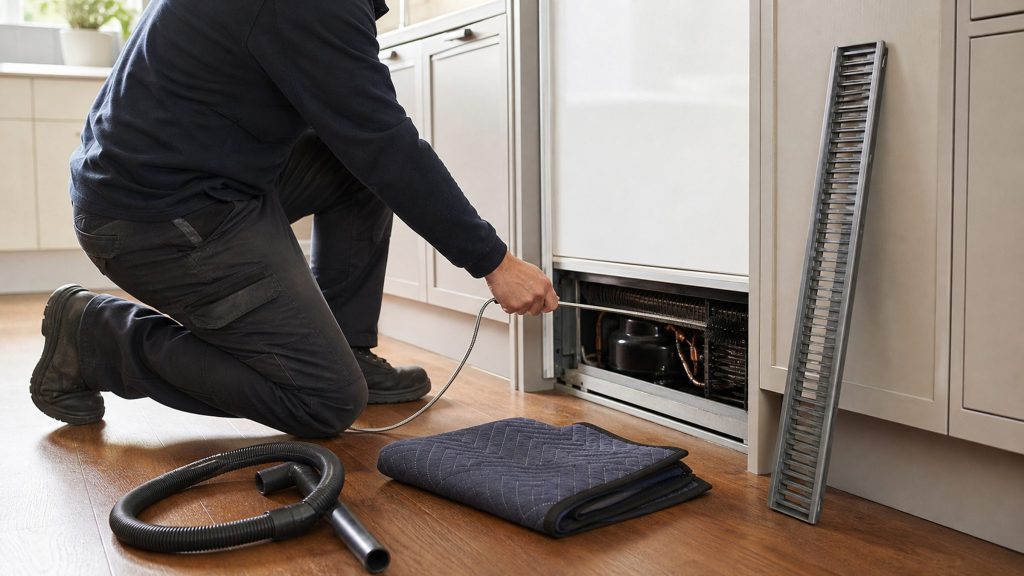
from $165 Appliance maintenance
The visit that keeps a built-in kitchen out of trouble, which on this make is mostly about air and water. Columns and panel-ready cabinets breathe through grilles that joinery and rugs slowly cover; the dishwasher softens its own water and that softener has a service interval; a steam oven has a reservoir and a descaling cycle; a hood liner fills with grease where nobody can see it. None of that is dramatic and all of it is cheaper than the failure it prevents. We do the lot in one visit rather than returning for each.
- Air paths first: column grilles, condenser coils, hood filters and blower
- Water next: the dishwasher softener, the steam reservoir, the coffee system's path
- One visit across the kitchen, not one visit per appliance
-
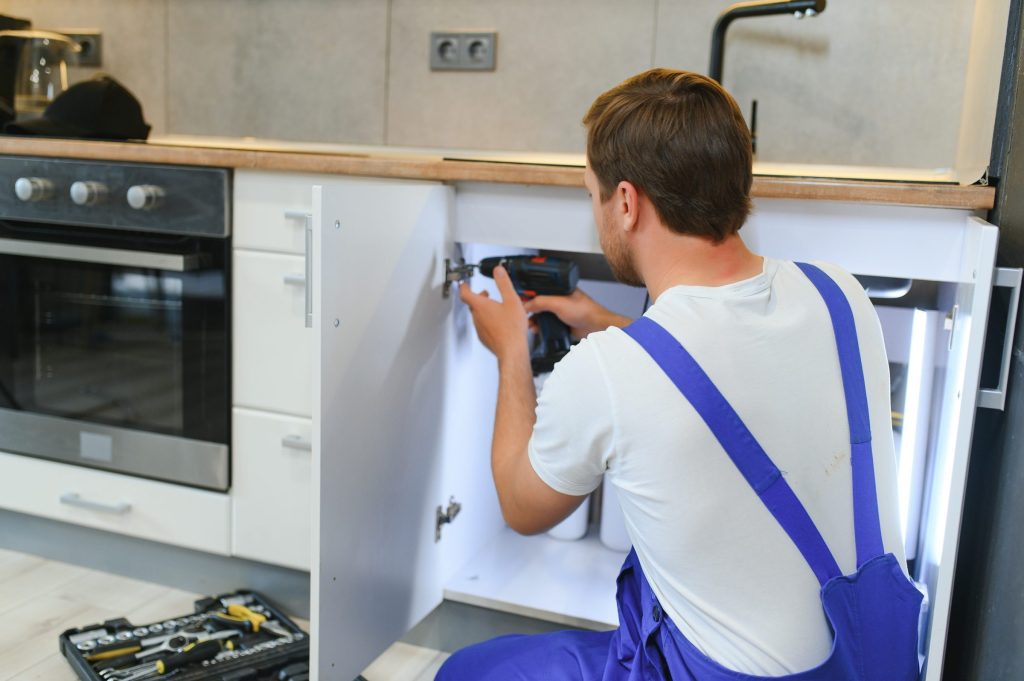
from $225 Appliance installation
Fitting equipment that was designed to disappear into cabinetry, which is a joinery job as much as a connection. Panel-ready columns and French doors take cabinet fronts and their hardware; wall ovens sit in tall units cut to a size; hood liners hide inside millwork built by somebody else; a rangetop drops into a worktop that has to be right before the appliance arrives. We measure the opening before delivery rather than after, because a cabinet that is a quarter inch out is a carpentry problem discovered on the wrong day.
- The opening is measured before the appliance is delivered, not on the day
- Panels, trim kits and handles fitted so the doors sit square and stay square
- Air path, water feed and power checked as part of the fit, not as an extra
-
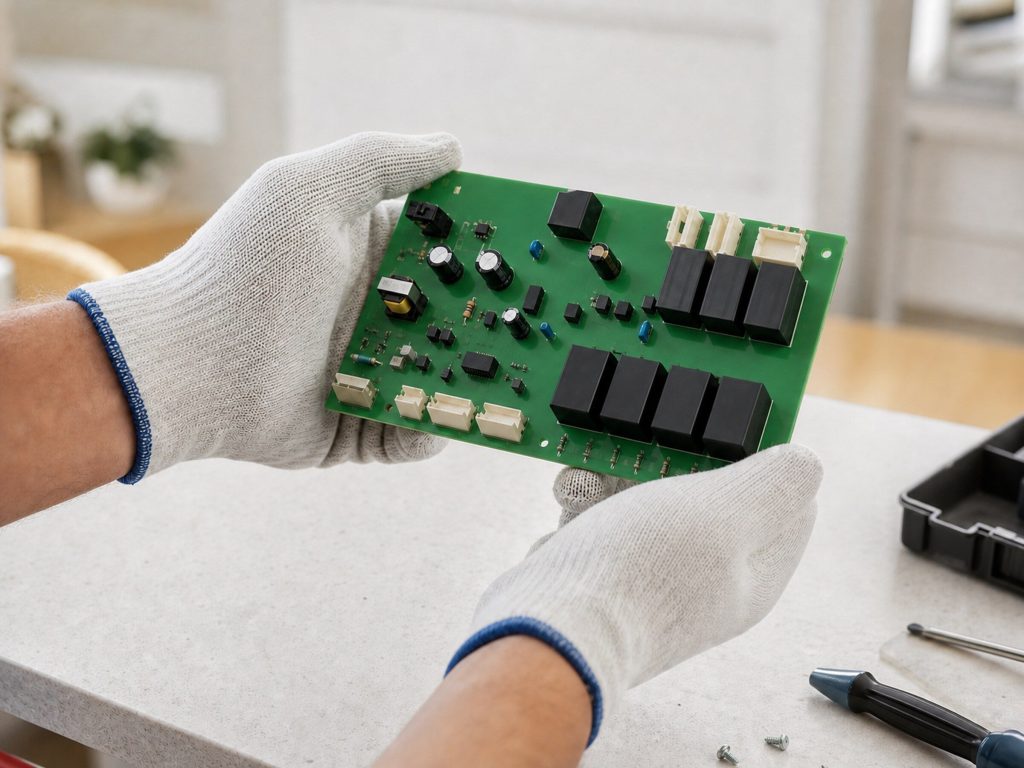
from $295 Control board repair
The board is the part most often blamed and least often at problem, so it is the last thing we conclude rather than the first. What makes this badge different is that there are two entirely separate generations of board behind the same door: the pre-2016 Dacor boards, and the Samsung-platform boards that replaced them. They are not interchangeable, the part numbers do not translate, and a supplier who is given the wrong one will happily sell it. We identify the generation from the plate before anything is ordered.
- Ruled in by elimination — sensors, harnesses and supply are checked first
- Two generations of board on one badge: the part numbers do not translate
- Legacy boards are quoted rather than published — availability is checked first
-
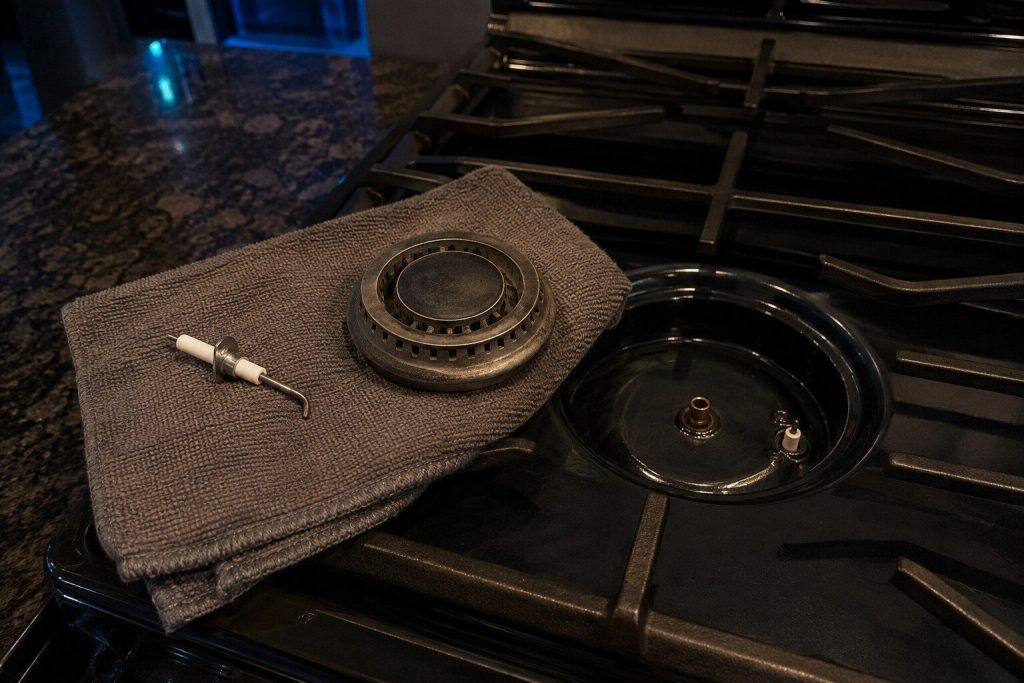
from $155 Gas burner and igniter repair
A burner that clicks without lighting, lights and goes out, or will not come down to a simmer. In Miami the usual culprits are salt air and humidity on the igniter, and a cap or head that went back slightly wrong after a clean — which is why so many of these calls date from the week the hob was scrubbed. The professional burners on the rangetops complicate it pleasantly: they are built to relight themselves after a draft or a boil-over, so a burner that keeps going out may be that system rather than the burner at all.
- Most of these problems begin the week the hob was deep-cleaned
- Salt air and humidity are what actually kill igniters here
- On the pro burners, repeated flame-outs may be the relight system
-
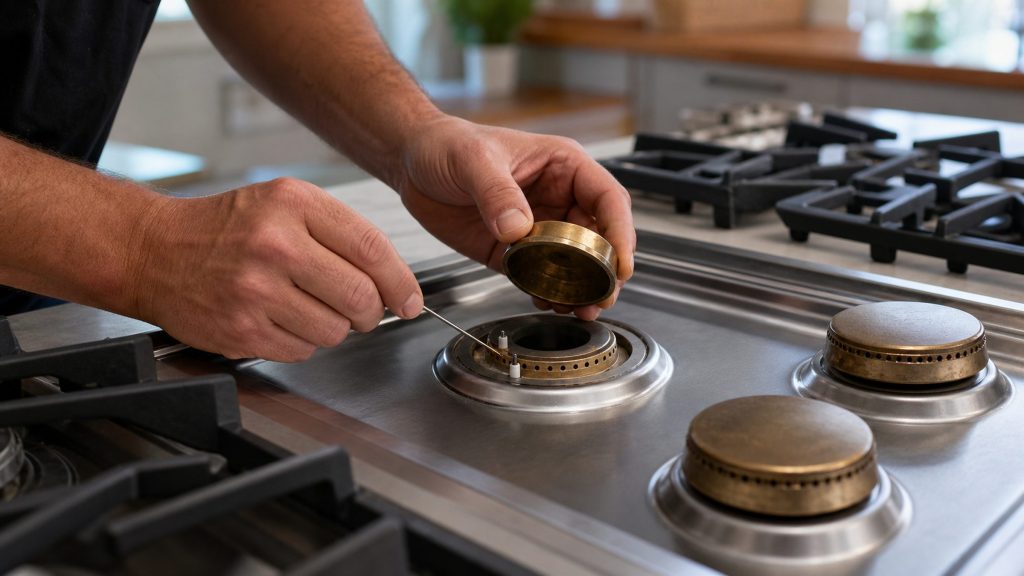
from $195 Rangetop service
The professional rangetops are 36 and 48 inches of sealed brass burners, illuminated knobs and a griddle or wok ring in place of grates, and they are worked harder than any other appliance in these kitchens. Service is mostly about restoring the range of the burners rather than fixing failures: simmer settings that have drifted, ports partially blocked by years of boil-over, knob illumination that has died on one burner, and the griddle plate's surface. It is a heavy appliance and a satisfying one to bring back.
- Six sealed brass burners built to sear and to genuinely simmer
- Illuminated knobs fail one at a time and are a separate small repair
- The griddle and wok ring are accessories that live where grates would
-
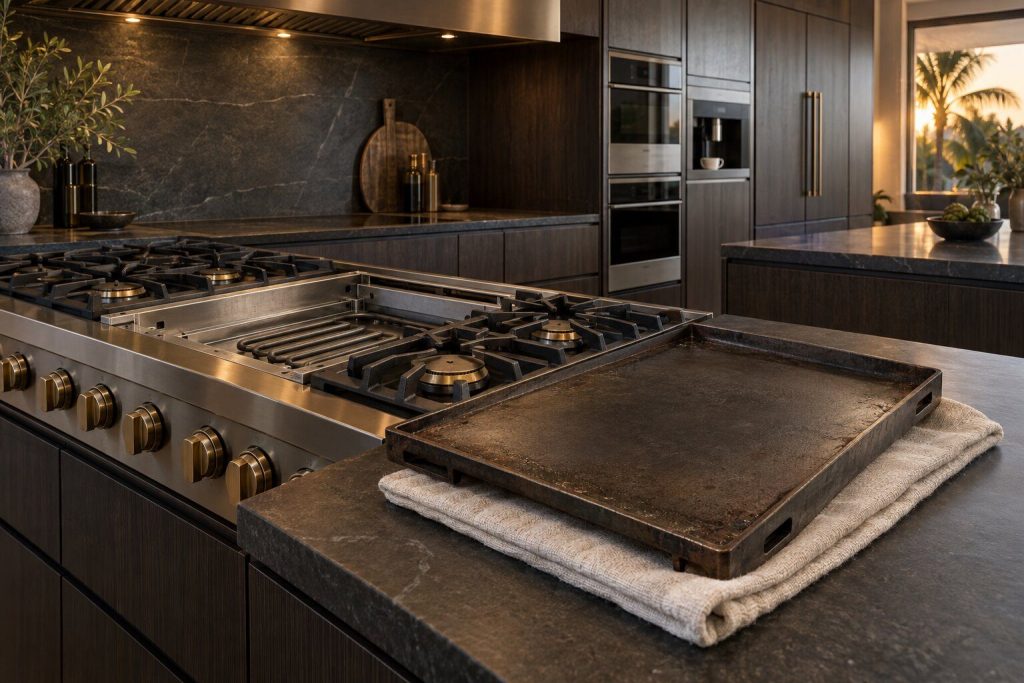
from $159 Integrated griddle service
The griddle built into the largest range is its own heated surface with its own control, which means it can be wrong while every burner beside it is right. The two failure patterns are quite different and worth telling apart before a visit: a griddle that never reaches temperature at all points at the element or its control, while one that gets there and then drifts away points at sensing or at a thermal cut-out doing its job. Surface condition matters too — a plate that has been cleaned with the wrong thing cooks unevenly and reads as a problem.
- Its own element and control — it fails independently of the burners
- Never heats and drifts after heating are two different repairs
- A mistreated plate surface cooks unevenly and imitates a problem
-
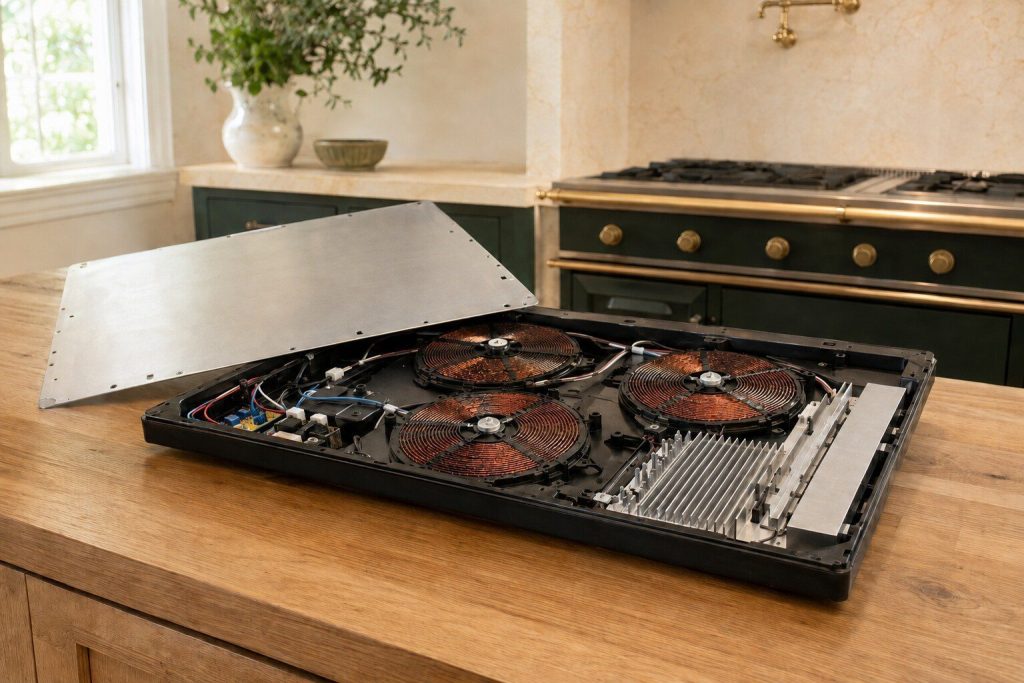
from $205 Induction cooktop repair
An induction surface is an electronics repair under glass, and the good news is that each zone has its own coil and drive, so one dead zone rarely means the whole cooktop. What matters most is telling failure apart from protection: a zone that runs for a few minutes at high power and then stops is very often defending itself against heat it cannot shed, and the cause is a blocked vent or a cabinet packed tight underneath rather than a problem in the appliance. That distinction is worth making before anybody quotes for parts.
- Per-zone coils and drives — one dead zone is usually local
- Cutting out after minutes at high power is usually protection, not failure
- Pan compatibility is a magnet test, and no repair changes it
-
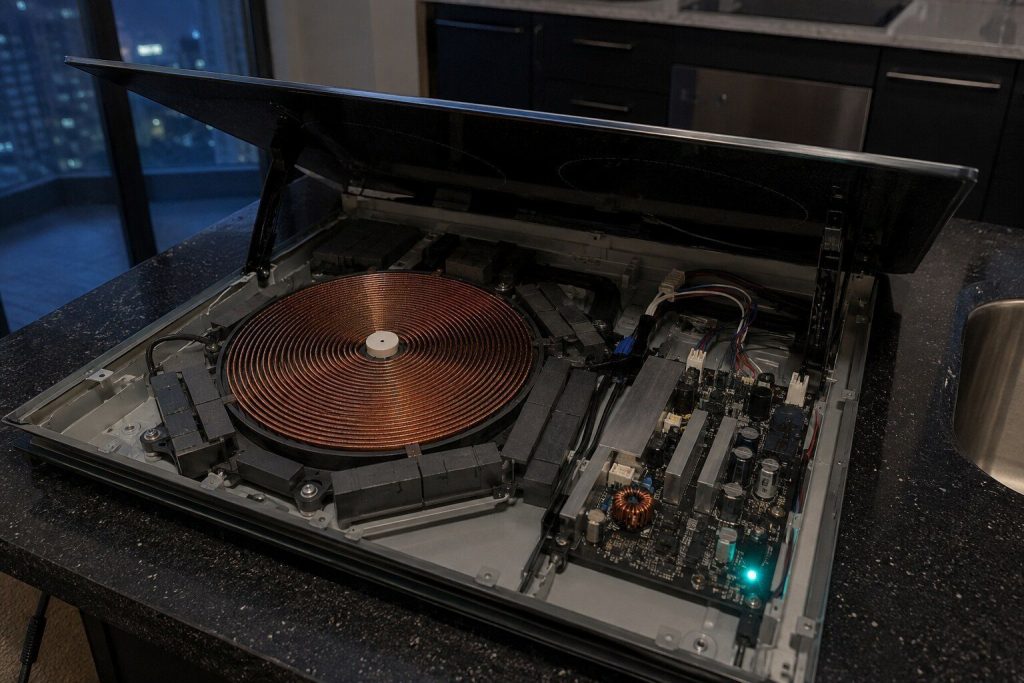
from $275 Cooktop glass replacement
Cracked or chipped glass on an induction surface is not cosmetic: the glass is part of the appliance's insulation and its seal against everything spilled on it, and a crack lets liquid reach the electronics beneath. On a frameless surface bonded into a stone worktop the replacement is careful work — the old panel comes out without damaging the stone, and the new one is bonded and sealed so the edge is as clean as it was. It is mostly a parts cost rather than a labor one, and we say so plainly when the number surprises people.
- A crack lets liquid into the electronics — it is not cosmetic
- Frameless glass in a stone worktop is careful work at both ends
- Mostly the cost of the panel, and we say so
-
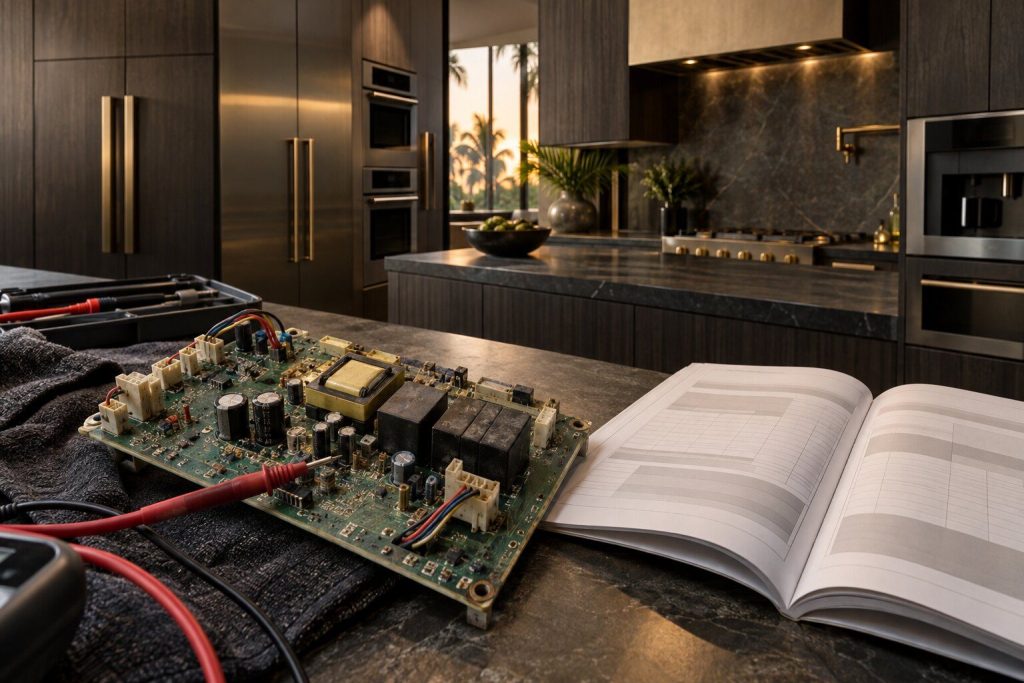
from $125 Legacy control diagnosis
The service that exists because this badge changed hands in 2016. Appliances made before that run Dacor's own boards and report F-codes — F0 to F8 on a Classic ERC oven, F1 to F95 on an ER-series range, F-1 to F-9 on an EDW or IDW dishwasher — and none of those strings exist on the current platform. A technician who only knows the current machines will read them wrongly or not at all, which is why owners of these appliances are so often told their machine is unfixable. It usually is not. What it needs is the right table and an honest answer about parts.
- Pre-2016 codes share nothing with the current platform
- F1, F2 and F3 mean different things on a Classic ERC oven and an ER range
- The honest part of this service is the parts answer, given before the visit
-
from $175 Rental turnaround service
A booked-out property with a designed kitchen has a narrow window between guests, and a Dacor in it needs somebody who will not spend the first hour working out what it is. This is one visit across the whole kitchen: every appliance run, the problems triaged by what stops a let and what merely annoys, and a written list of what was done and what is coming. Where a part is needed we say whether it arrives before the next arrival, because on a turnaround that is the only question that matters.
- One visit across the kitchen, inside the changeover window
- Triaged by what stops a let, not by what is most interesting
- A written list, and honest dates for anything on order
-
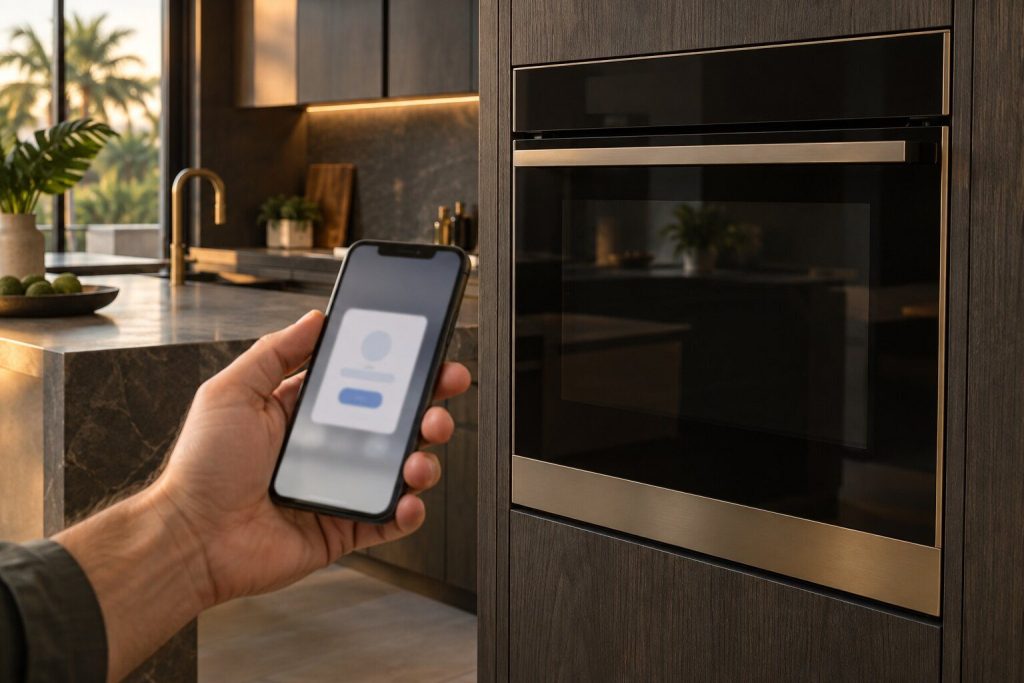
from $109 Smart features and connectivity
The current generation reports to an app, and when that link works it is genuinely useful for diagnosis — a caller who can read us what the app says shortens the conversation considerably. When it does not work, the appliance is usually fine. We treat connectivity as its own small service rather than as a repair, and we will say plainly when the problem is a router, a network band or an account rather than the machine. An oven off the network is not a broken oven, and nobody should pay for a visit that says otherwise.
- Connectivity is its own small service, not an appliance repair
- An appliance off the network is not a broken appliance
- Where the answer is the router or the account, we say so and charge accordingly
In more detail
About Dacor cooktops and rangetops
Two machines, one word
A frameless induction surface and a six-burner brass rangetop are both called cooktops and share almost nothing. One fails as electronics under glass, the other as gas and metal. Knowing which is in the worktop decides what the visit is, and it is the first thing we ask.
Protection looks like failure
An induction zone that works for five minutes and then stops is often defending itself against heat it cannot shed — a blocked vent, a cabinet packed tight underneath. It presents exactly as a dying zone and is frequently an installation problem with a simple answer.
After the deep clean
Burners that will not simmer, or will not light, very often date from the day the caps came off for cleaning and went back seated slightly wrong. It is worth saying because it turns an alarming symptom into a five-minute correction.
This article is based on:
- Official manufacturer documentation
- Internal repair procedures
- Technician repair history
- Company quality standards
Before you book
Questions about Dacor cooktops and rangetops
One induction zone has stopped and the rest are fine.
That is the good version of this problem. Each zone has its own coil and its own drive electronics under the glass, so one dead zone is usually local and does not mean the surface is finished. What we ask is whether it fails immediately or after a few minutes at high power, because a zone that works and then quits is often protecting itself — from a blocked vent, a hot cabinet below, or a pan it cannot read — rather than failing.
The induction top does not recognize my pans.
Induction needs a magnetic base, and the test is a fridge magnet: if it does not stick to the bottom of the pan, the cooktop cannot drive it. That is not a problem and no repair will change it. What is a problem is a pan that used to work and now does not, or a zone that reads some pans and not others it always read, and those are worth a call.
A rangetop burner will not simmer low.
The brass burners on the rangetops are built to run from a sear down to a genuine simmer, and losing the bottom of that range usually means the burner's low setting rather than the whole burner — a blocked port, a cap seated wrong after cleaning, or the simmer valve itself. It is one of the more satisfying repairs on these machines because the fix is often visible and lasting. We ask whether it started after a deep clean, which is the single most common trigger.
Can the griddle be left in permanently?
It can, and plenty of kitchens do, but it changes the surface underneath: a griddle left in place over months collects fat where the grates would normally allow it to fall, and that is a cleaning question that eventually becomes an ignition question. If burners nearest the griddle are the ones misbehaving, that is usually the reason, and it is a maintenance visit rather than a repair.
Where we do it
Across Miami-Dade, Broward, and Palm Beach
Same terms everywhere we go: an on-site diagnostic first, the price agreed in writing, and the exact figure confirmed once we have seen the unit.
Neighborhoods people ask for by name