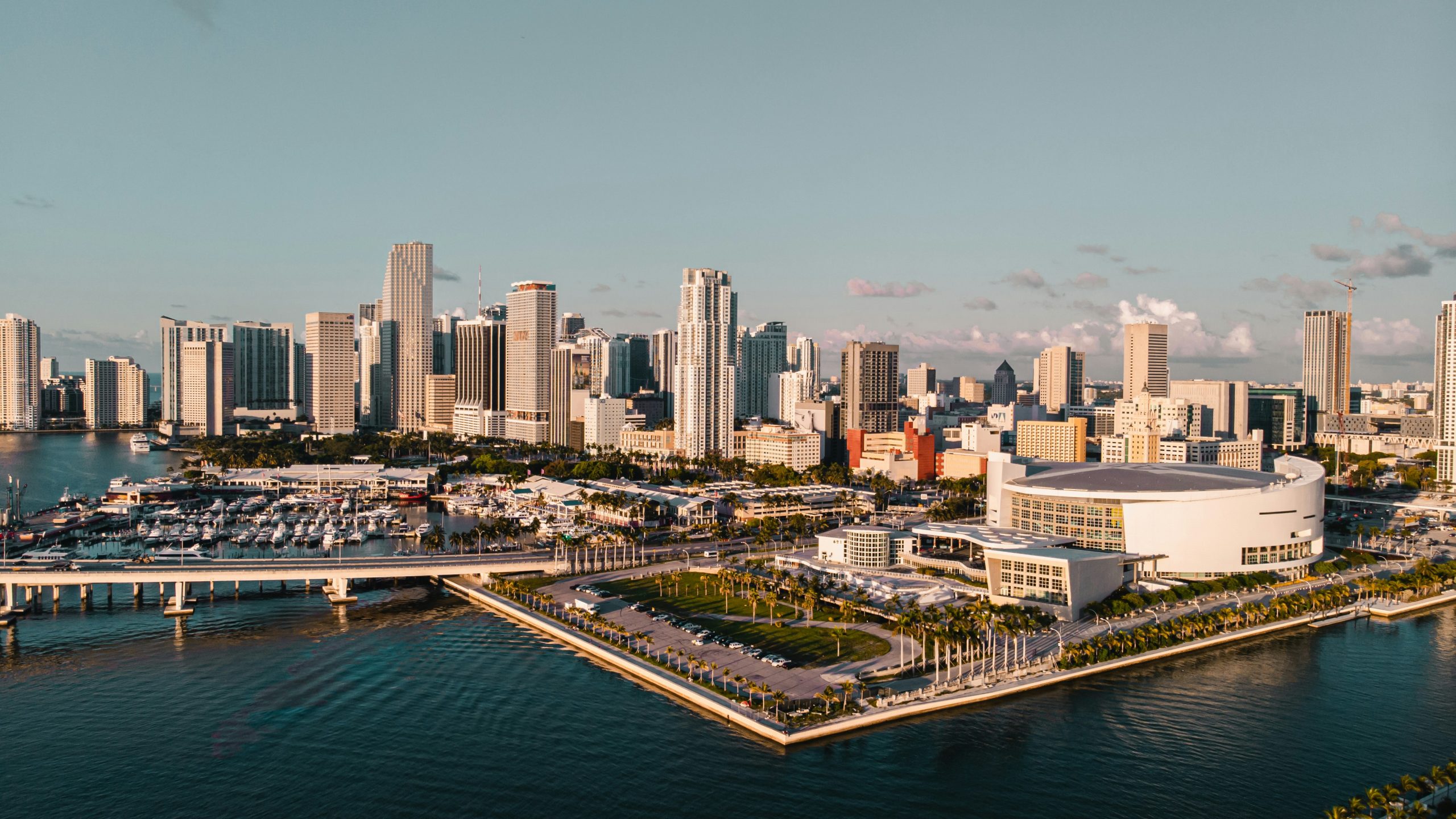
Miami-Dade · South Florida
Dacor repair in Miami
Everything from a 1950s house in the north to a new tower downtown, which is why we ask for the model and the building before quoting a range rather than after.
We cover Miami and the rest of Miami-Dade: an on-site diagnostic first, the price agreed in writing before anything is opened, and the exact figure confirmed once we have seen the unit.
By unit
What we repair in Miami, by Dacor unit
Start with whichever matches yours. How an appliance is installed shapes the visit as much as the repair does, which is why we ask about it when you book.
-
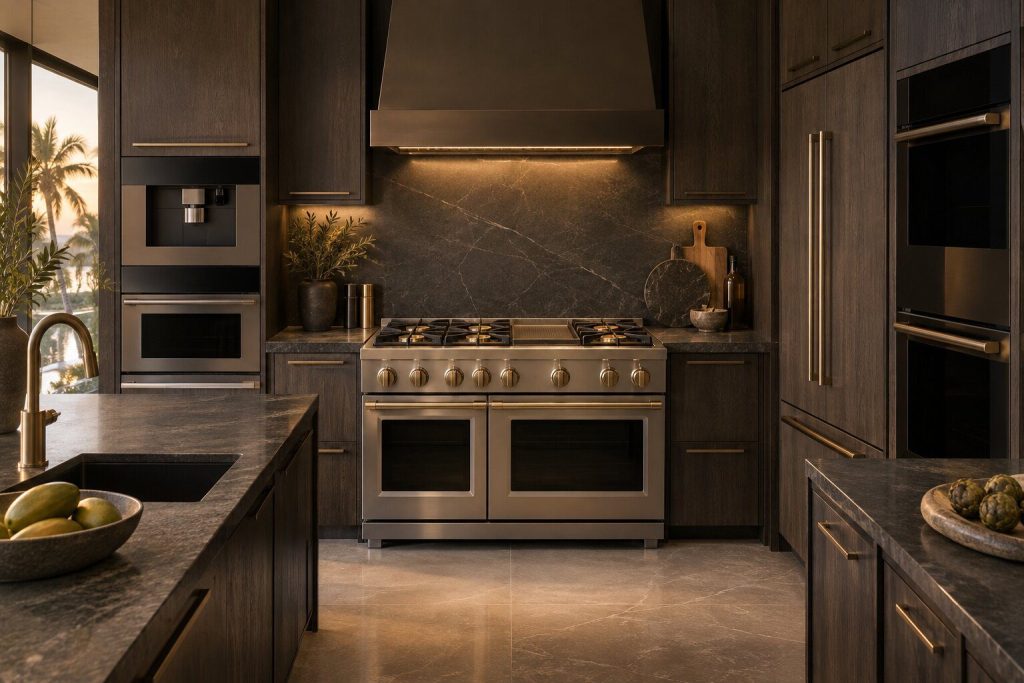
Dual-fuel at 30, 36 and 48 inches Dacor range repair in Miami
Thirty, thirty-six and forty-eight inches, and dual fuel almost throughout: gas on top, electric in the oven below. The forty-eight adds an integrated griddle and, on the steam models, a water system in the cavity. The professional range in this line carries six burners, a flame system designed to relight itself, and a seven-inch screen on the front. Beside all of that, South Florida kitchens still hold the ER-series ranges from before 2016 — a platform with its own diagnostic table running from F1 to F95, and one that a technician who only knows the current machines will read wrongly.
- Dual-fuel at 30, 36 and 48 inches; the 48 carries an integrated griddle
- The pro range: six burners, self-relighting flame, a seven-inch panel
- Legacy ER30D, ER36D and ER48D report F1–F95 — the widest table this make has
-
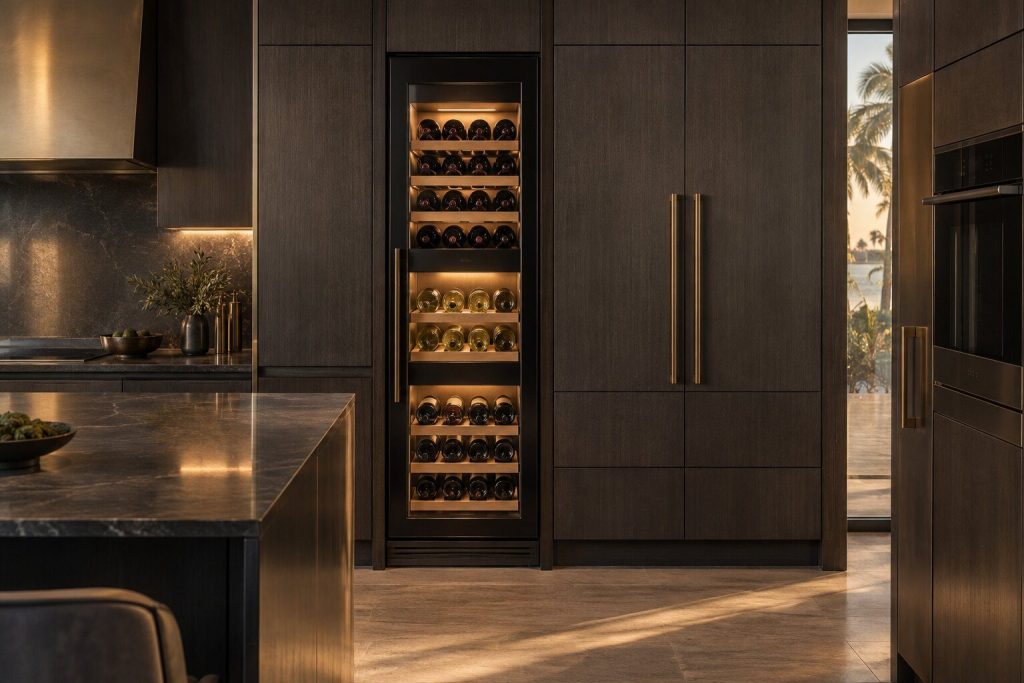
24-inch wine column · 100 bottles, three zones Dacor wine column repair in Miami
One cabinet, taken seriously. The 24-inch wine column holds about a hundred bottles across three independently held zones behind argon-filled triple glazing, on oak racks that glide out and doors that push to open. It is specified to hold within a third of a degree, and that specification is the reason people call: a cabinet built to that tolerance is expected to keep it, and a drift of two degrees in one zone is a problem here where it would be ordinary elsewhere. There is a smaller undercounter cellar too — 41 bottles, two zones — and it is a different machine with different expectations.
- 24-inch column: about 100 bottles, three zones, argon-filled triple glass, oak Glideracks
- PreciseCooling is specified to about a third of a degree — drift is a symptom, not a mood
- The undercounter cellar is a separate machine: 41 bottles, dual zone
-
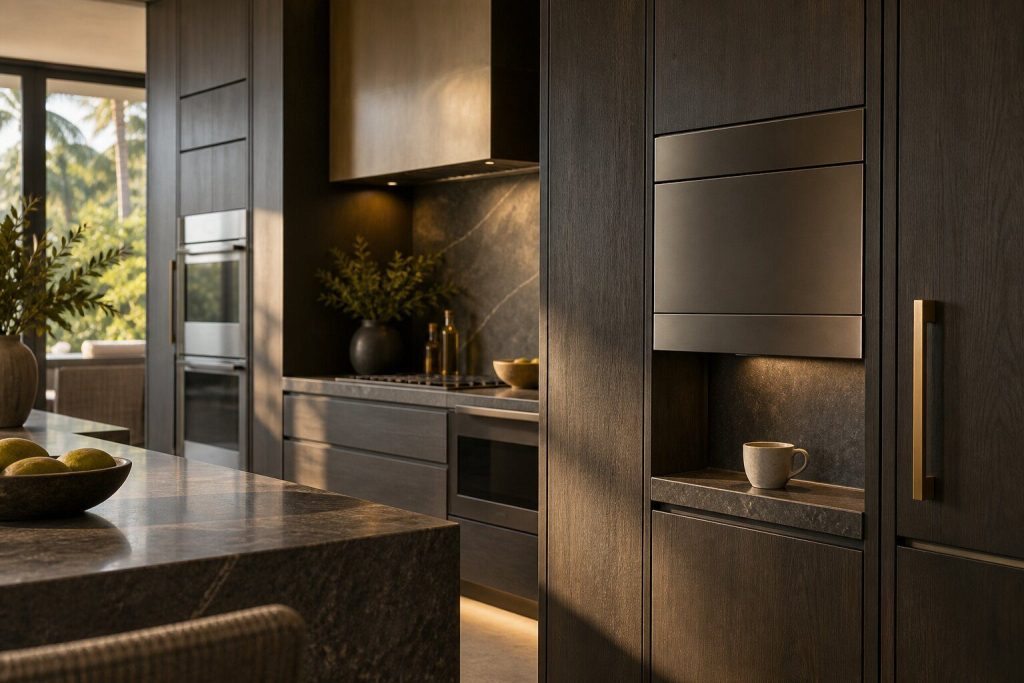
24-inch built-in · plumbed and tank-fed Dacor built-in coffee system repair in Miami
One platform, two ways of feeding it, and no longer in the catalog. The 24-inch built-in coffee system came plumbed to the water supply or with a tank behind the door, with a burr grinder, a steam wand and a hot-water tap; the machines in Miami kitchens today are from that generation and there is no successor. Two things follow. This appliance does not report error codes at all — it writes sentences on its display, which is genuinely more useful than a code — and every repair is a parts-availability question before it is a labor one. We answer that question before the visit, not after.
- One family: plumbed and tank-fed 24-inch built-ins, with a burr grinder and steam wand
- Discontinued — there is no current replacement in this make's line
- No error codes at all: the display writes a sentence, and that sentence is the diagnosis
-
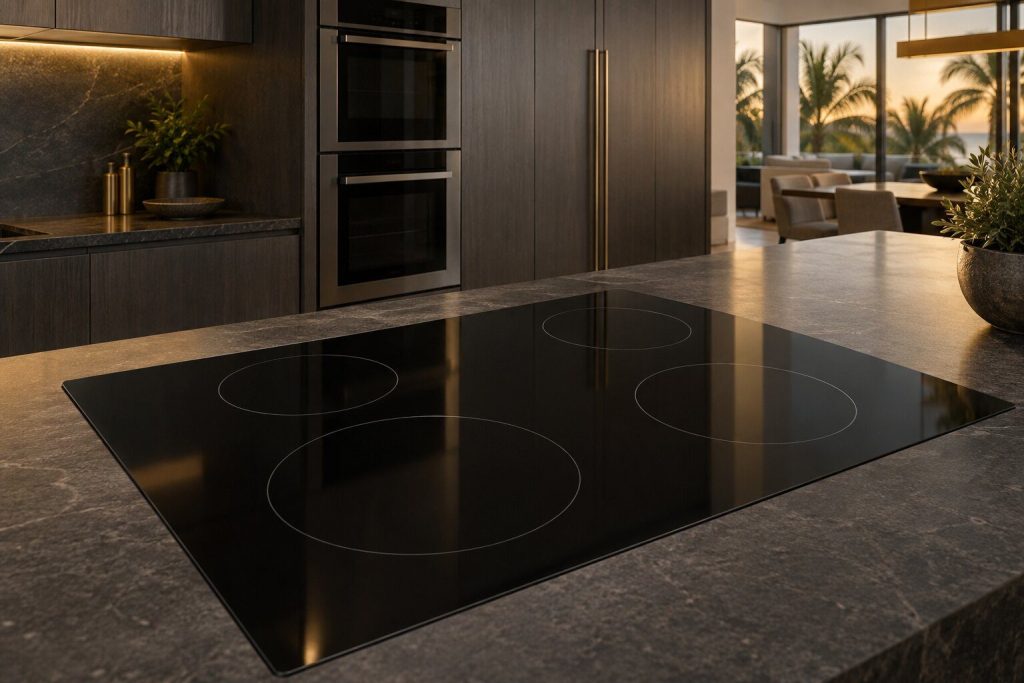
Induction and gas at 30 and 36 inches · rangetops at 36 and 48 Dacor cooktop repair in Miami
Two families under one heading. The cooktops are induction or gas at 30 and 36 inches — the induction ones frameless black glass with a display in the surface, the gas ones sealed burners on stainless. The rangetops are the professional half: 36 and 48 inches, six sealed brass burners built to simmer as well as sear, illuminated knobs, and a griddle and wok ring that sit in place of the grates. They are different machines to work on. A glass induction surface is an electronics repair; a rangetop is burners, gas and heavy brass, and the two rarely fail for the same reason.
- Induction at 30 and 36 inches, frameless black glass with an in-surface display
- Gas cooktops at 30 and 36; rangetops at 36 and 48 with six brass burners
- The rangetop's griddle and wok ring replace grates — they are accessories, not fixtures
-
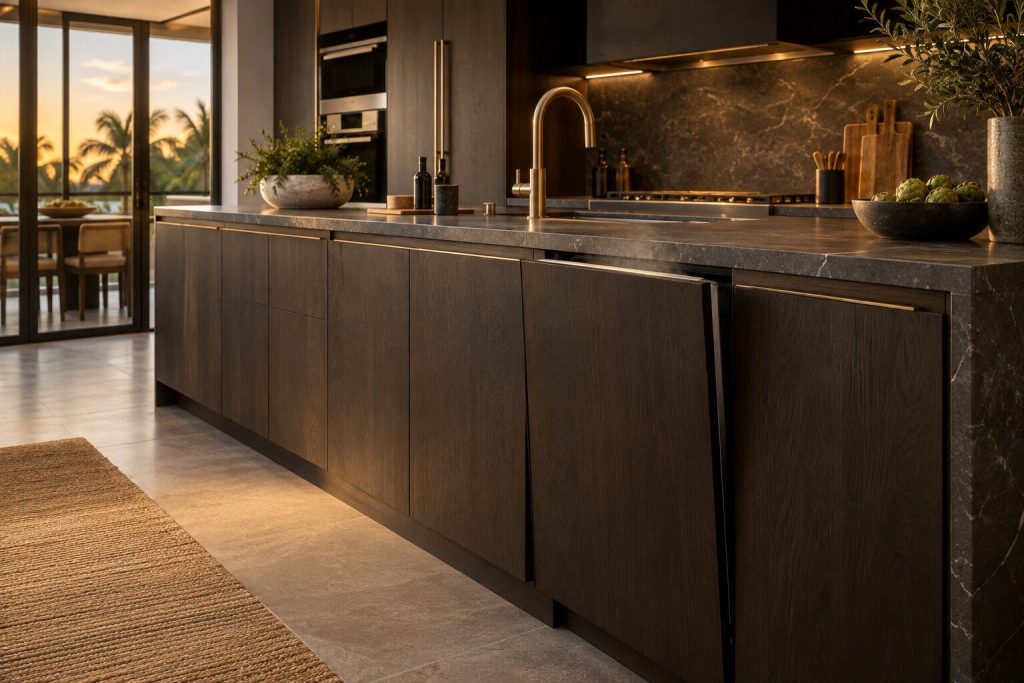
24-inch panel-ready · StormWash+ and AutoRelease Dacor dishwasher repair in Miami
Twenty-four inches, panel-ready, and two generations of it in South Florida kitchens. The current machine carries StormWash+, a water softener built into the appliance itself and an AutoRelease door that pops open at the end of a cycle to dry; the generation before it is the WaterWall platform with a third rack, quiet enough to be rated at 44 decibels. Behind both sits the problem language that changed in 2016: the older EDW and IDW machines report F-1 through F-9, the current ones report letter codes ending in C. Knowing which of those two a kitchen has is most of a diagnosis.
- Current platform: StormWash+, built-in water softener, AutoRelease drying door
- Previous Samsung-era platform: WaterWall, third rack, 44 dBA
- Legacy EDW and IDW machines speak F-1–F-9 — a different language entirely
-
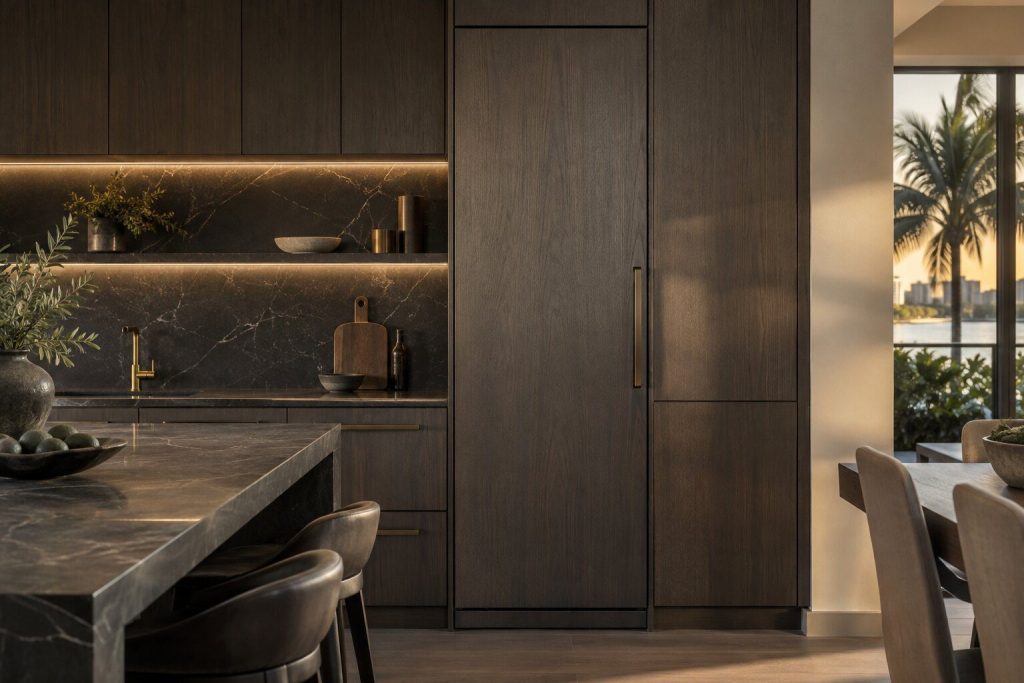
Panel-ready French door · 24, 30 and 36-inch columns Dacor refrigerator repair in Miami
Two shapes, and the difference decides the visit. The French doors run 36, 42 and 48 inches wide and are built to take cabinet panels, so the box disappears into the joinery; the columns are 24, 30 and 36 inches of single-purpose refrigerator, meant to stand beside a freezer column of the same height and read as one run. Almost nothing here is freestanding in the ordinary sense. That changes the work before a part is named: the surround is tight, the panel and its handle come off first, and the air path the installer left is part of the diagnosis rather than a detail.
- French doors at 36, 42 and 48 inches; columns at 24, 30 and 36
- Panel-ready by default — the door furniture comes off before anything is opened
- PreciseCooling, the FreshZone drawer and iQ Remote View are the named parts people call about
By job
The repairs we are called out for in Miami
Starting figures for this equipment in South Florida. What moves them is the model, the access and the part — the exact cost is confirmed after the on-site diagnostic.
-
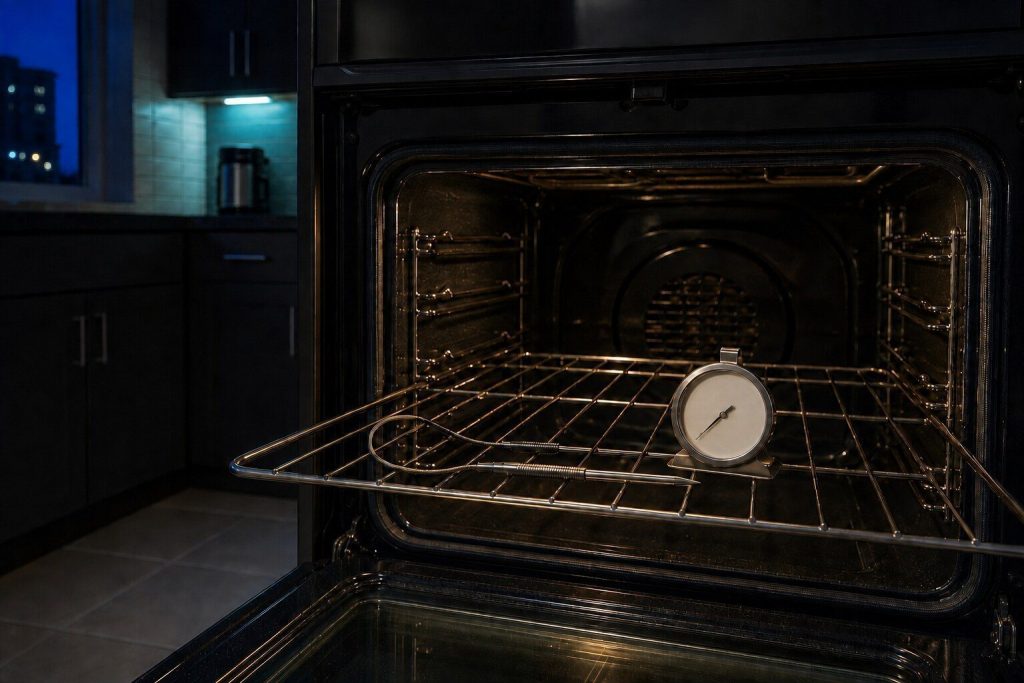
from $149 Temperature sensor and calibration
An oven that bakes badly while appearing to work is usually reading itself wrong. Sensors drift with age, and a cavity that is thirty degrees out sails through every self-test the appliance can perform because it believes its own reading. It is diagnosed with an independent probe and a logged preheat rather than by taste, and it is corrected either by calibration or by the sensor itself. On the steam models the same question is worth asking of the steam cycle separately, because it has its own sensing.
- An oven that is thirty degrees out passes its own self-test
- Independent probe and a logged preheat — not an oven thermometer left on a shelf
- Steam models sense the steam cycle separately and can drift separately
-
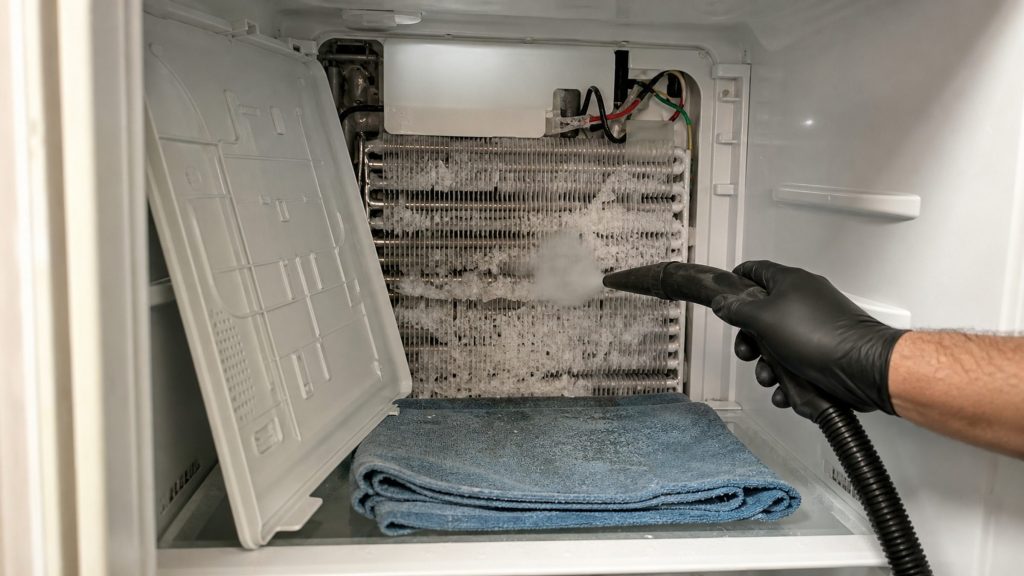
from $175 Defrost system repair
Frost where there should be none is a system problem rather than a mystery: a heater, a sensor, a thermostat and the control that decides when to run them. On these cabinets the symptom arrives slowly — a compartment that drifts a couple of degrees, then a fan that sounds like it is scraping, then ice visible at the back wall — and the cheapest moment to catch it is the first of those. On a column the whole load lives in one cabinet, so the same failure empties a freezer that a French door would have carried through.
- Heater, sensor, thermostat and the control that times them — checked as a system
- The early symptom is a two-degree drift, not visible ice
- On a column there is no second compartment to carry the load
-
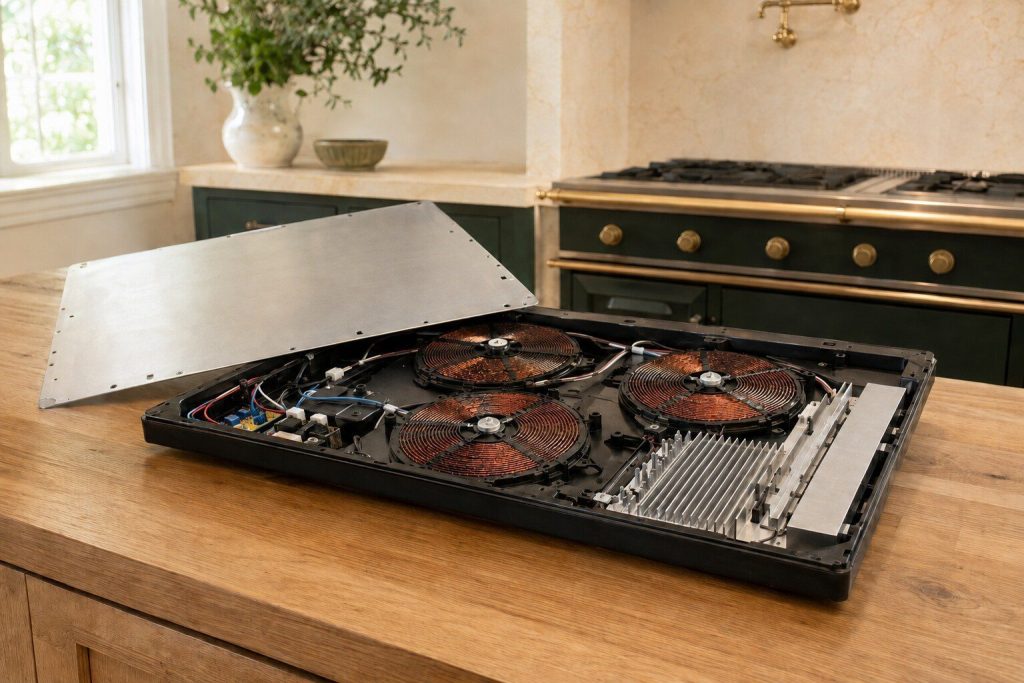
from $205 Induction cooktop repair
An induction surface is an electronics repair under glass, and the good news is that each zone has its own coil and drive, so one dead zone rarely means the whole cooktop. What matters most is telling failure apart from protection: a zone that runs for a few minutes at high power and then stops is very often defending itself against heat it cannot shed, and the cause is a blocked vent or a cabinet packed tight underneath rather than a problem in the appliance. That distinction is worth making before anybody quotes for parts.
- Per-zone coils and drives — one dead zone is usually local
- Cutting out after minutes at high power is usually protection, not failure
- Pan compatibility is a magnet test, and no repair changes it
-
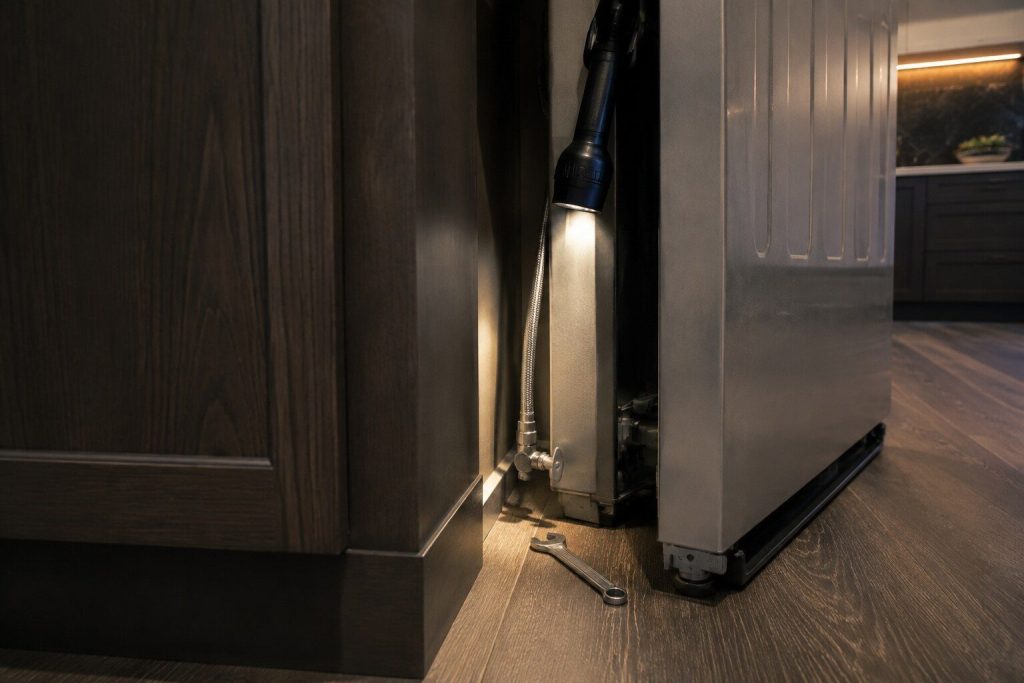
from $139 Water line and fill valve service
Everything upstream of the ice module, which is where most ice complaints actually live. The supply line runs behind cabinetry, the valve sits at the back of the machine, and the fill tube can partially freeze without ever stopping completely. In South Florida the additional factor is scale: a valve that has been fed hard water for years closes slowly and passes a trickle, which produces small hollow cubes on both modules at once — a symptom people reasonably read as two failed ice makers.
- Most ice problems are upstream of the module, not in it
- Scale makes a valve pass a trickle rather than fail outright
- Both modules affected at once is nearly always this
-
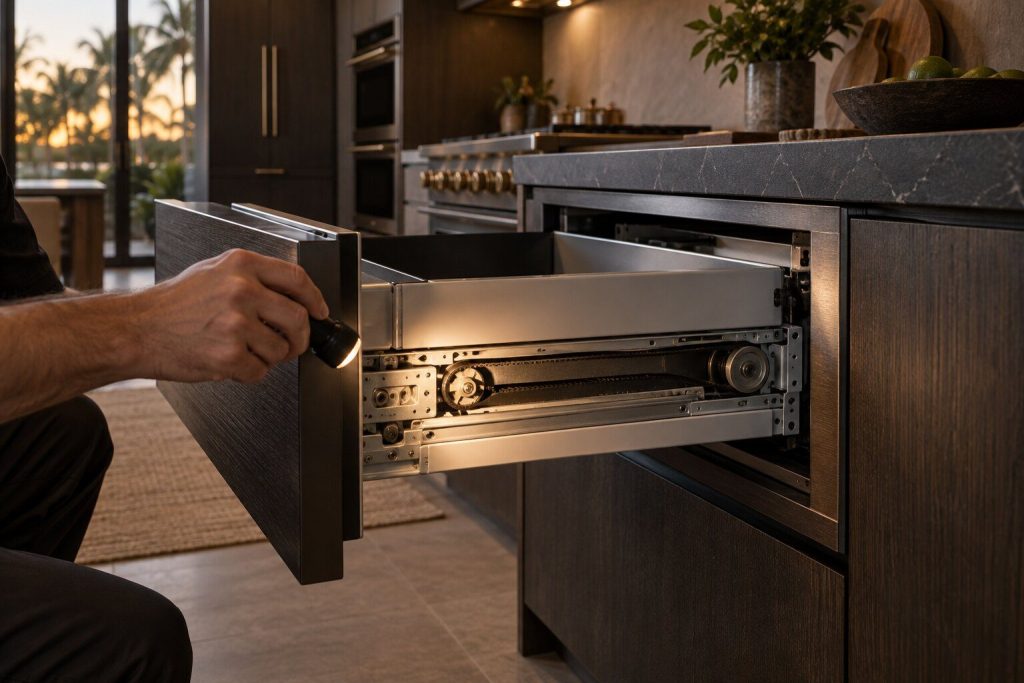
from $185 Microwave drawer mechanism
A drawer microwave is an oven and a motorized mechanism in one appliance, and the mechanism is what usually fails. A drawer that stops partway, will not open at all, or opens and immediately closes is a drive, a rail or an obstruction — and while any of that is unresolved the oven will refuse to run, because the interlock is not satisfied. That refusal reads as a dead appliance and is the machine being careful. It is a mechanical repair, it is common, and it very rarely means the microwave itself is finished.
- The mechanism fails far more often than the oven does
- A drawer that will not close leaves an oven that will not run — by design
- Mechanical repair, common, and not the end of the appliance
-
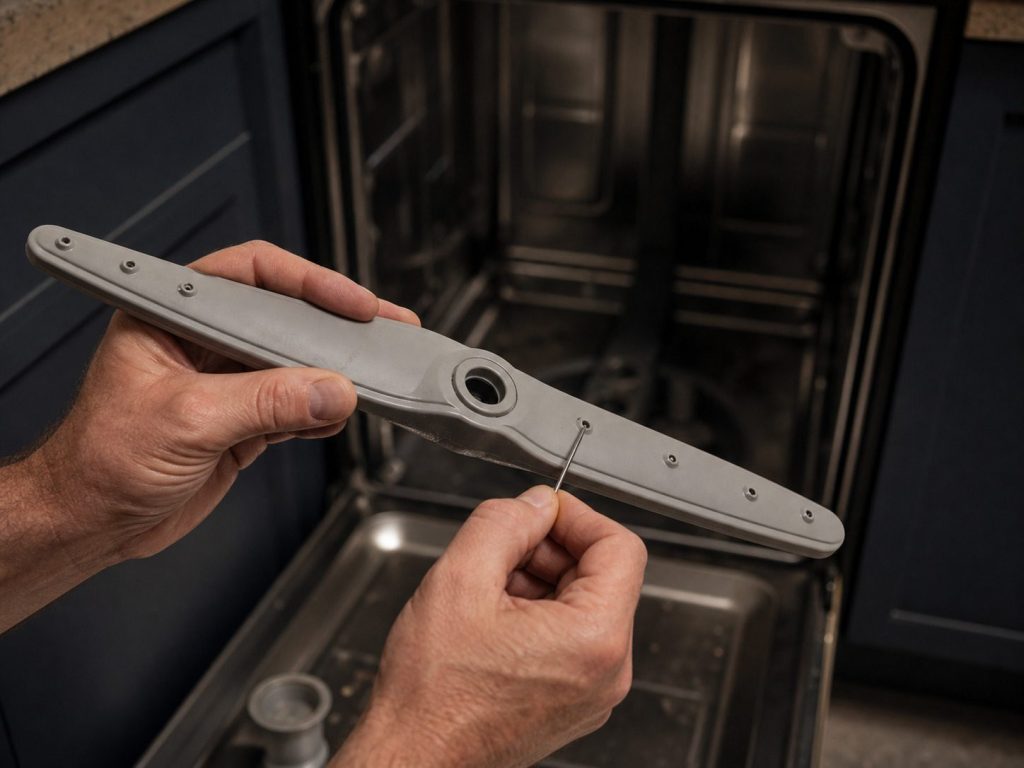
from $139 Wash performance service
Dishes coming out gritty, cloudy or wet is usually not one problem but three small ones together: spray arms partly blocked, a filter left too long, and water that is harder than the machine was set up for. This badge is unusual in having a softener built into the appliance, which means there is something to service that most dishwashers do not have — and a machine that washed perfectly for years and then declined is very often that softener rather than anything mechanical.
- Gritty, cloudy and wet are three different problems with three different answers
- The built-in softener has a service interval — this is where a slow decline starts
- Spray arms and the third rack's feed are checked under pressure, not by eye
Nearby
Where else we work near Miami
Every place below has its own page, with what the equipment and the access are like there.
Neighborhoods in Miami
Elsewhere in Miami-Dade
In more detail
Dacor repair in Miami, in more detail
What Dacor equipment is like in Miami
Everything from a 1950s house in the north to a new tower downtown, which is why we ask for the model and the building before quoting a range rather than after.
Miami sits in Miami-Dade County, and the equipment here follows the housing: older kitchens with appliances fitted into openings that were cut for something else, and newer ones where they were specified with the cabinetry. Both are Dacor work — coffee-machine, cooktop, dishwasher — and both are diagnosed on site before anything is priced.
Heat, dust and power cuts — what they do to a kitchen full of appliances
Inland the enemy is heat, dust and grease rather than salt. Condensers run hard for more months of the year here than almost anywhere else in the country, and grease that condenses in a hood liner instead of leaving through it comes back as a fan that labors. In Miami the appliances we are called out to are usually working exactly as designed — in conditions nobody designed them for.
What that means for the appliances in Miami
- Range hoods — Almost nothing in a tower vents outside, so the hood recirculates and lives entirely on a charcoal filter — a consumable most owners have never been told about, and the reason a healthy-sounding hood can move nothing at all.
- Refrigerators — A refrigerator in a tower has less air around it and a warmer cabinet behind it than the same unit in a house, so the condenser matters more here and the cleaning interval is shorter than the manual assumes.
- Cooktops and rangetops — Induction is common in these buildings because a gas line often is not, and an induction top under a counter needs the ventilation gap the instructions specify — which a full drawer removes without anybody noticing.
- Dishes coming out wet
- The app will not connect to the appliance
- Frost building up inside the freezer column
- Hood lights not working
- Sparking inside the microwave
Which Dacor series we work on around Miami
We publish the error codes for every Dacor series this site covers — Transitional, Heritage, ER platform among them. Which one is in your kitchen changes the visit more than it changes the diagnosis: how the appliance was installed decides what has to come apart before anyone can reach it, and in Miami that is a question about the room before it is a question about the appliance.
How a visit in Miami is arranged
We ask for the model number from the plate inside the door and a line about what the appliance is doing. That decides which parts ride in the van, and it is the difference between one appointment and two.
- How the appliance is built in, and whether it has ever been pulled out before
- Whether there is a second one — a bar, a pantry, a garage or an outdoor kitchen
- Whether the doors are paneled to match the cabinetry, which changes how they come off and go back
- The diagnosis first, then the scope and the price in writing, and your approval before anything is opened
What it costs, and what moves the figure
Prices in Miami are the same as everywhere else we cover: a diagnostic from $95 that is credited toward the repair, and starting figures per job rather than one number for "a repair". What moves it is the model, how the appliance is built into the cabinetry, which part it needs and how quickly that part can be sourced — none of which can be judged over the phone. The repairs we carry out lists what each job involves and the figure it starts at, and the unit pages covers what tends to go wrong on each type.
The exact cost is confirmed after the on-site diagnostic and agreed with you before any work begins. We are an independent repair company — not affiliated with, authorized by, or endorsed by any manufacturer — and our warranty covers the labor we performed.
Before you book
Questions about a visit in Miami
Do you cover Miami?
Yes. Miami is in Miami-Dade County and inside the area we work every week. Give us the address when you book, and say how the Dacor is installed — what has to come apart to reach it matters as much as where it is.
How soon can you get to Miami?
We will tell you the earliest slot we can genuinely keep rather than the earliest one that sounds good. Tell us the model number and what the unit is doing when you book: whether we can finish the same day depends on the part far more than on the drive.
Does it cost more because the job is in Miami?
No. The diagnostic and the work are priced the same across Miami-Dade, Broward and Palm Beach. What moves the figure is the model, how the unit is built in and which part it needs — never the address. Where access takes longer, we say so before anything is agreed rather than after.
My building has rules about service calls. What do you need?
The building name when you book, and anything it requires — a service elevator window, a loading bay slot, approved hours or a certificate of insurance. We arrange those in advance; found out on the day, they cost the appointment.
Booking a visit in Miami
Tell us the model number and what the unit is doing. We will bring the parts that problem usually needs, and you will have a firm price before we start.
This article is based on:
- Official manufacturer documentation
- Internal repair procedures
- Technician repair history
- Company quality standards