Appliance
Dacor microwaves
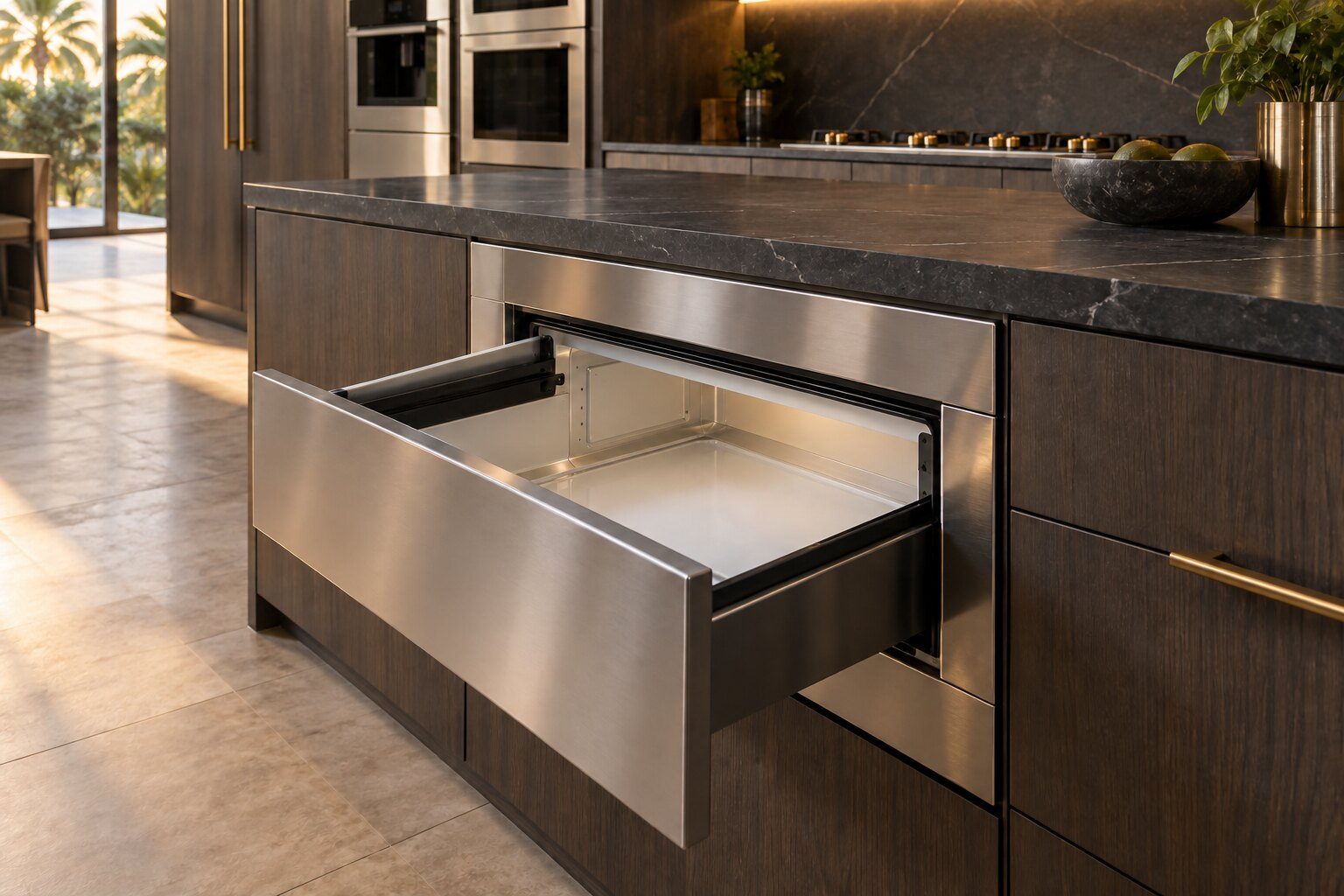
Three quite different appliances share the word here. The drawer microwave sits below the worktop and opens downward — about 1.2 cubic feet and 950 watts, with sensor cooking. The over-range unit is a combination machine: a convection microwave and a ventilation hood in one 30-inch body, which means a problem in it can present as a cooking problem or a venting one. And there is a countertop machine, the one appliance in this catalog that can simply be replaced rather than repaired. Which of the three is in the kitchen decides whether this is a joinery job, a hood job, or neither.
- 3 symptoms we are called out to
- From $95 diagnostic, credited to the repair
- 59 cities and neighborhoods covered
- OEM parts available on order
The short version
What this equipment is, for a repair
Configurations
Drawer, over-range convection and countertop
Access
Planned before the visit, not discovered on arrival
Parts
OEM, available on order
Diagnostic
From $95, credited to the repair
What goes wrong with it
Symptoms we are called out to on Dacor microwaves
Each one covers the likely causes in the order they are worth checking, and what to do in five minutes before booking anything.
-
The light is on, the plate turns, and the food is cold Microwave runs but does not heat
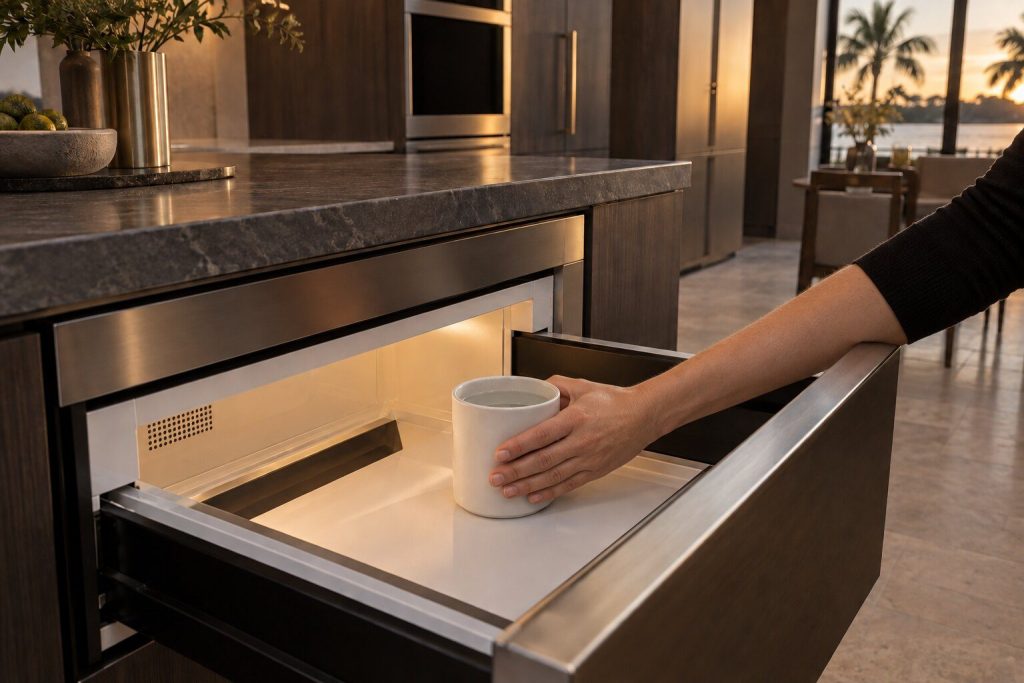
This is the one symptom on a microwave where we ask people to stop using the appliance until it has been seen. A machine that lights, turns and counts down while producing no heat has a problem on its high-voltage side, and that is not a part of an appliance to investigate with a screwdriver and a video: the capacitor in it can hold a lethal charge long after the plug is out. It is a routine repair for somebody equipped for it. There is no code to read — this make's microwaves display a single generic word and nothing more specific.
- Stop using it. The high-voltage side is not a do-it-yourself repair
- There is no code table for this appliance in either era — just the word ERROR
- Built-in and drawer machines are worth repairing; a countertop one usually is not
-
It stops partway, or refuses to move at all Microwave drawer will not open
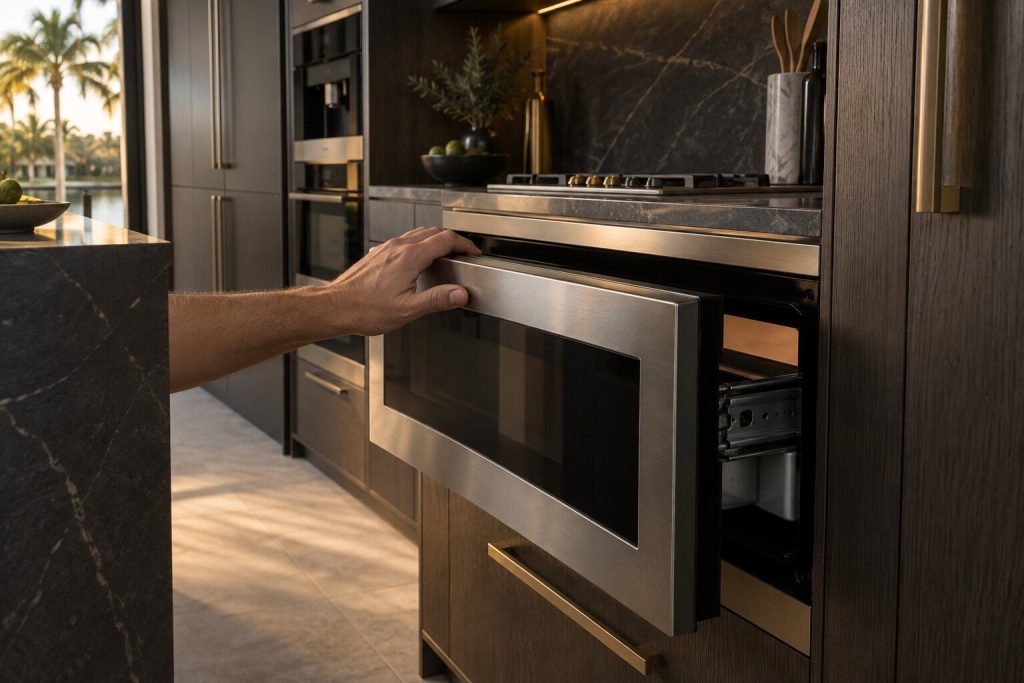
A drawer microwave is a motorized mechanism as well as an oven, and the mechanism is what usually fails. A drawer that stops partway, will not open, or opens and immediately closes is a drive, a rail or an obstruction — and while that is unresolved the oven will refuse to heat, because the interlock chain is not satisfied. That refusal reads as a dead appliance and is in fact the machine being careful. It is a mechanical repair, it is common, and it very rarely means the microwave itself is finished.
- The mechanism fails far more often than the oven does
- A drawer that will not close leaves an oven that will not run — by design
- Mechanical repair, ordinary parts, and not the end of the appliance
-
Arcing, a flash, or a burning smell during a cycle Sparking inside the microwave
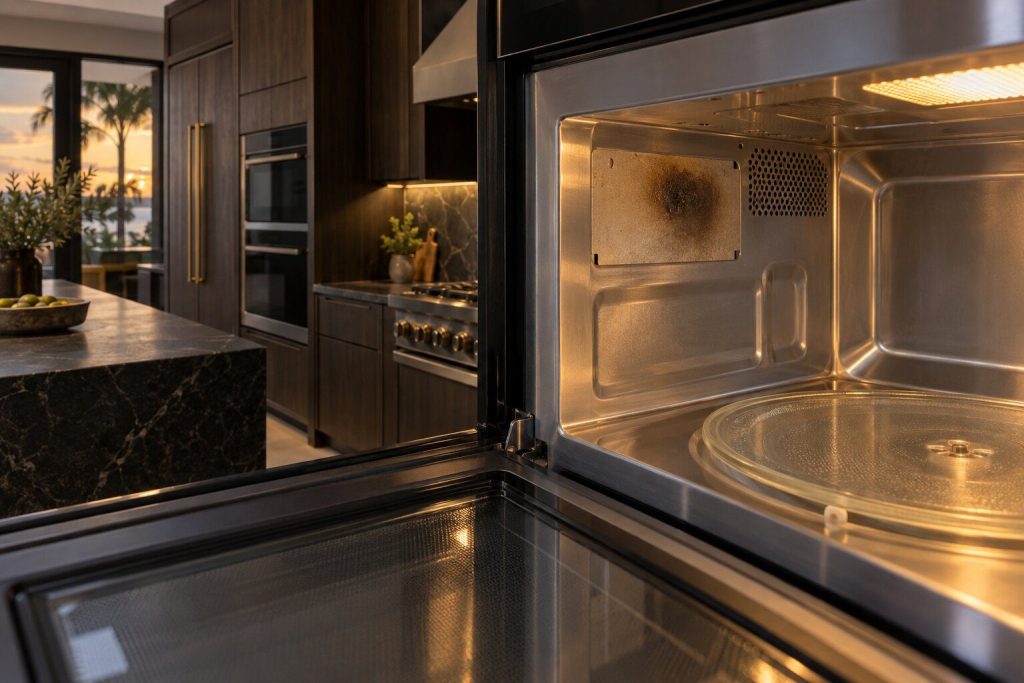
Stop the cycle and stop using the appliance. Sparking inside a microwave has a small number of causes and one of them — a damaged waveguide cover — will get worse quickly and can damage the magnetron, which is the expensive part. The others are usually harmless once found: metal in the cavity, a rack touching a wall, or food debris carbonized onto the cover. There is no code for this and no code table exists for these microwaves at all, so what the owner saw is the whole of the evidence.
- Stop the cycle and stop using it until it has been looked at
- A damaged waveguide cover gets worse fast and takes the magnetron with it
- Metal, a touching rack, or carbonized debris are the harmless causes
What we do on it
Repairs we carry out on Dacor microwaves
Starting figures for this equipment in South Florida. The exact cost is confirmed after an on-site diagnostic — and this is not the whole list of what can go wrong, so call if your problem is not here.
-
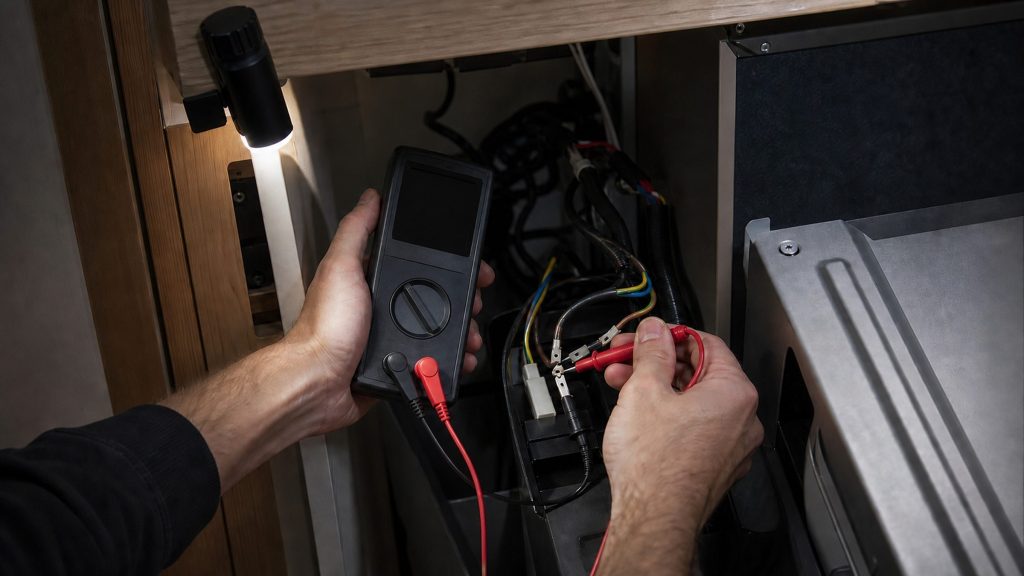
from $95 Diagnostic visit
Finding out what has actually gone wrong, before any part is named or priced. On this badge two questions come before the problem itself: how old the kitchen is, and how the appliance is held. The age decides which problem language the machine speaks — the pre-2016 boards and their F-codes, or the current platform and its letter codes — and the two share nothing. How it is held decides how long it takes to reach. The charge is credited against the repair if you go ahead, and if our honest recommendation is that the machine is not worth mending, you still get that recommendation and the charge does not change.
- The era comes first — it decides the code table, the board and the part number
- A written figure ahead of the work, credited against the repair
- If mending it is the wrong call we say so, rather than selling a part
-
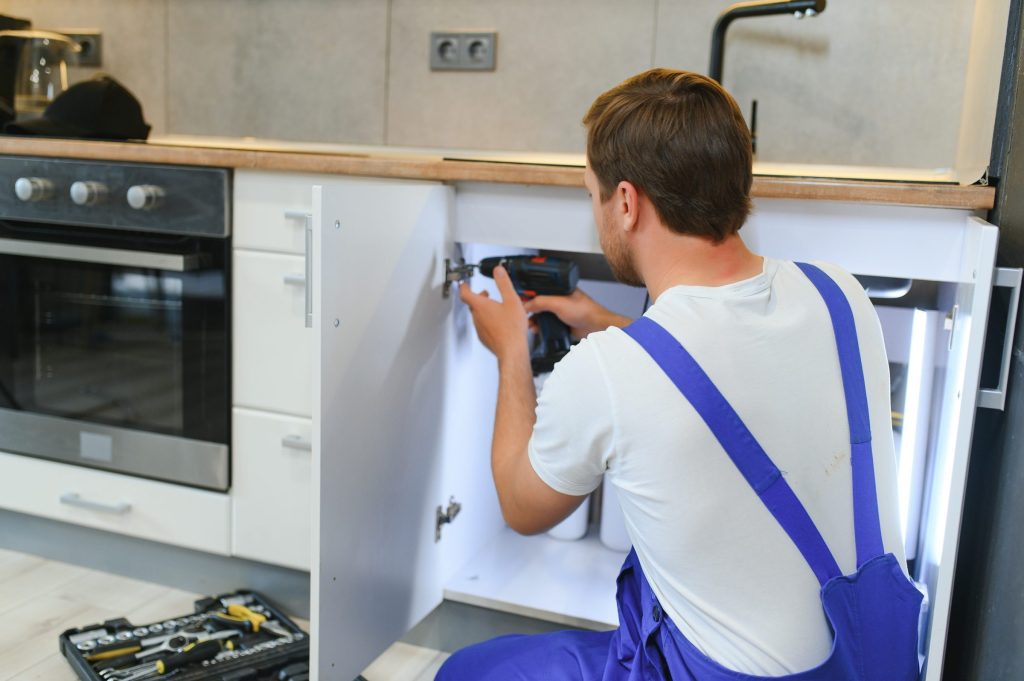
from $225 Appliance installation
Fitting equipment that was designed to disappear into cabinetry, which is a joinery job as much as a connection. Panel-ready columns and French doors take cabinet fronts and their hardware; wall ovens sit in tall units cut to a size; hood liners hide inside millwork built by somebody else; a rangetop drops into a worktop that has to be right before the appliance arrives. We measure the opening before delivery rather than after, because a cabinet that is a quarter inch out is a carpentry problem discovered on the wrong day.
- The opening is measured before the appliance is delivered, not on the day
- Panels, trim kits and handles fitted so the doors sit square and stay square
- Air path, water feed and power checked as part of the fit, not as an extra
-
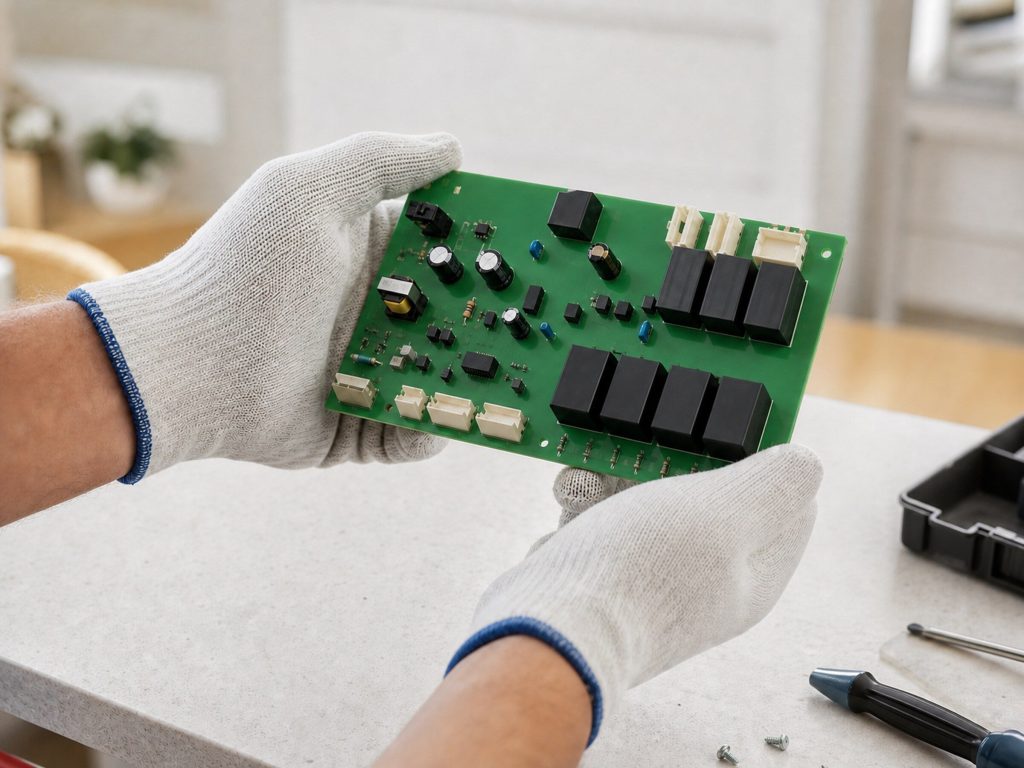
from $295 Control board repair
The board is the part most often blamed and least often at problem, so it is the last thing we conclude rather than the first. What makes this badge different is that there are two entirely separate generations of board behind the same door: the pre-2016 Dacor boards, and the Samsung-platform boards that replaced them. They are not interchangeable, the part numbers do not translate, and a supplier who is given the wrong one will happily sell it. We identify the generation from the plate before anything is ordered.
- Ruled in by elimination — sensors, harnesses and supply are checked first
- Two generations of board on one badge: the part numbers do not translate
- Legacy boards are quoted rather than published — availability is checked first
-
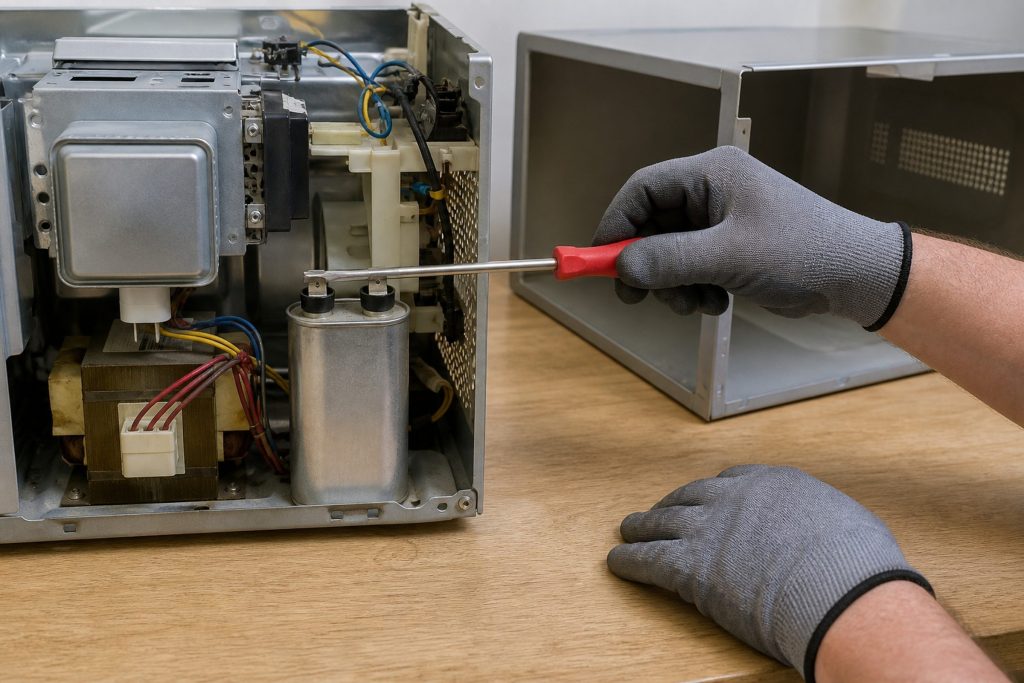
from $195 Built-in microwave repair
A built-in microwave is worth repairing where a countertop one is not: it is fitted, matched to the kitchen and expensive to replace, and the usual problems are ordinary. Doors and interlocks, control panels, turntable drives and cooling fans account for most calls. The one symptom we ask people to stop using the appliance for is a machine that runs, lights and turns while producing no heat — that is the high-voltage side, and it is a routine repair for somebody equipped for it and a genuinely dangerous one for anybody else.
- Fitted and matched — the economics are different from a countertop machine
- Doors, interlocks, panels, turntable drives and fans are most of the work
- Runs but does not heat: stop using it and call
-
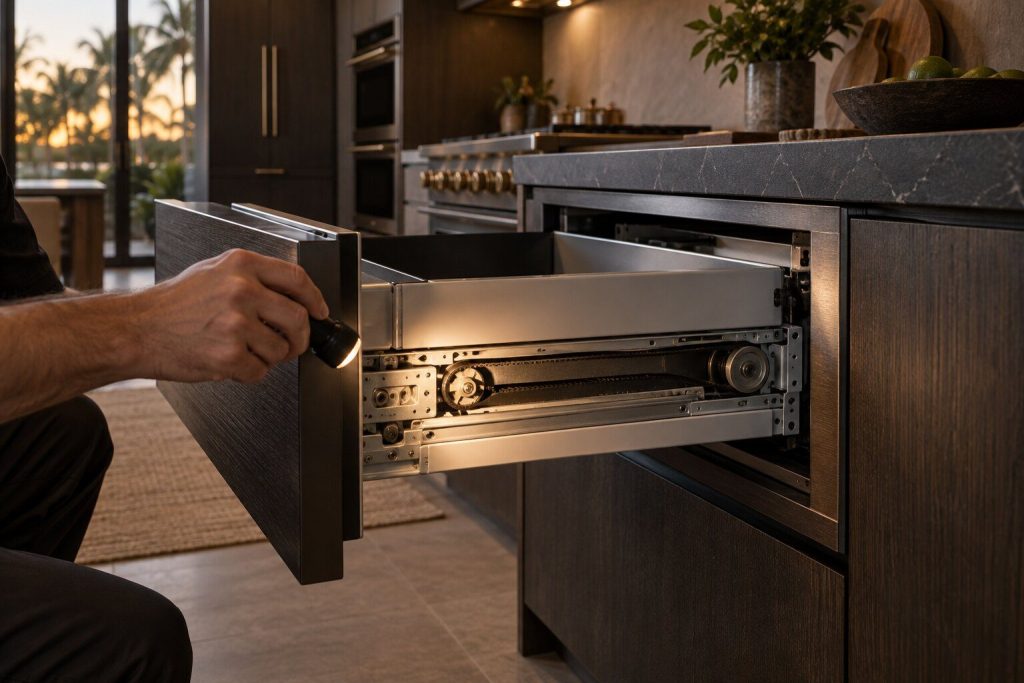
from $185 Microwave drawer mechanism
A drawer microwave is an oven and a motorized mechanism in one appliance, and the mechanism is what usually fails. A drawer that stops partway, will not open at all, or opens and immediately closes is a drive, a rail or an obstruction — and while any of that is unresolved the oven will refuse to run, because the interlock is not satisfied. That refusal reads as a dead appliance and is the machine being careful. It is a mechanical repair, it is common, and it very rarely means the microwave itself is finished.
- The mechanism fails far more often than the oven does
- A drawer that will not close leaves an oven that will not run — by design
- Mechanical repair, common, and not the end of the appliance
-
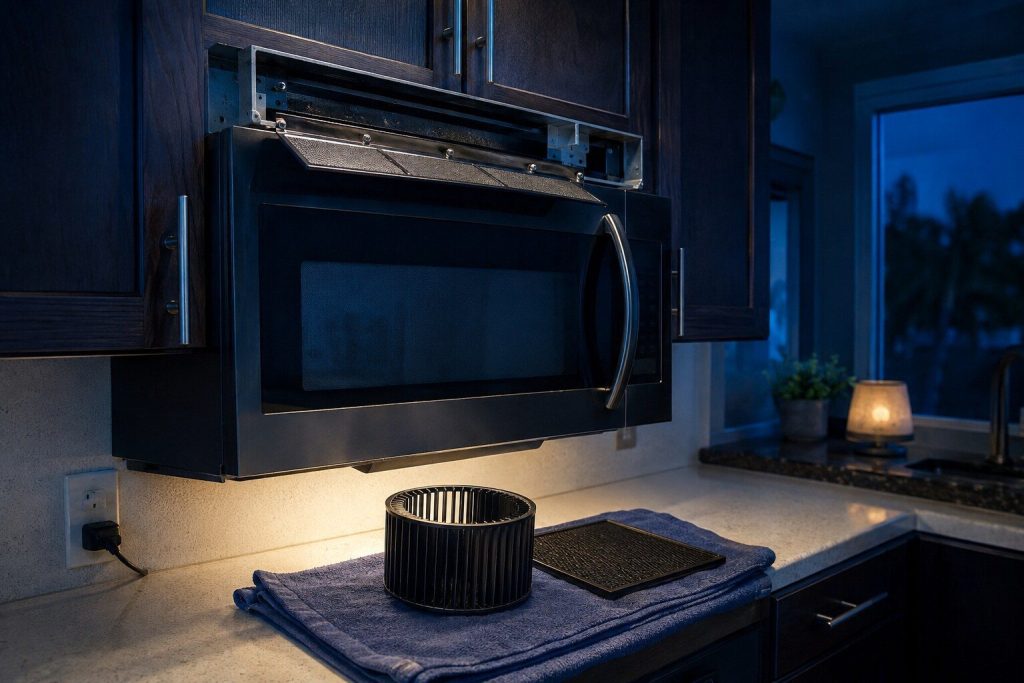
from $169 Over-range microwave and vent service
The over-range unit is two appliances in one shell — a convection microwave and a ventilation hood — and either half can fail while the other is perfect. Venting that has weakened is normally filters or the duct, exactly as on a full hood; heating problems are microwave problems. What makes this unit particular is a shared control panel, so a fan that does not respond at all and a fan that simply moves less air point at different halves of the machine. We ask which it is before the van is loaded.
- Two appliances in one shell, with one control panel between them
- No response at all and weak airflow are different halves of the machine
- Convection adds an element and a fan the plain machines do not have
In more detail
About Dacor microwaves
Three appliances, one name
A drawer, an over-range combination and a countertop machine are not variations of the same product. One is joinery, one is half a hood, and one is genuinely disposable. The first question is which of the three is in the kitchen, because the answer changes whether a visit is worth booking at all.
The interlock is doing its job
A drawer that will not close fully leaves the oven refusing to run, and that reads as a dead appliance. It is the safety chain behaving exactly as designed, and the repair is mechanical rather than electronic.
When we tell you not to bother
A countertop microwave out of warranty is usually not worth a service call, and saying so costs us the visit. It is written here because trust on the built-in machines — the ones that genuinely are worth repairing — depends on being straight about the one that is not.
This article is based on:
- Official manufacturer documentation
- Internal repair procedures
- Technician repair history
- Company quality standards
Before you book
Questions about Dacor microwaves
The drawer will not open, or opens and stops.
A drawer microwave is a motorized mechanism as well as an oven, and the drive, the rails and the interlocks are the parts that fail most. A drawer that stops partway is usually an obstruction or a worn rail rather than the oven itself, and the oven will refuse to run while the interlock is unsatisfied — which is the machine being careful, not the machine being broken. It is a common repair and does not usually mean the appliance is finished.
The over-range unit heats but no longer vents.
It is two appliances in one shell, and either half can fail alone. Venting that has weakened is normally filters or the duct rather than the blower, exactly as on a full hood. What makes this unit different is that a venting problem can also sit in the shared control panel, so we ask whether the fan responds at all or simply moves less air — the two answers point at different halves of the machine.
Is a microwave worth repairing at all?
The built-in ones usually are, and the countertop one usually is not. A drawer or an over-range unit is fitted, matched to the kitchen and expensive to replace; the repairs are ordinary and the appliance goes on for years. A countertop machine is a different economic question and we will tell you honestly when the sensible answer is to replace it rather than pay for a visit.
It runs but nothing gets hot.
That is the one symptom on a microwave where we ask people to stop using the appliance until it is seen. A machine that runs, lights and turns while producing no heat has a problem in the high-voltage side, and that is not a part of an appliance to investigate with a screwdriver and a video. It is a routine repair for somebody equipped for it, and a genuinely dangerous one otherwise.
Where we do it
Across Miami-Dade, Broward, and Palm Beach
Same terms everywhere we go: an on-site diagnostic first, the price agreed in writing, and the exact figure confirmed once we have seen the unit.
Neighborhoods people ask for by name