Appliance
Dacor freezers
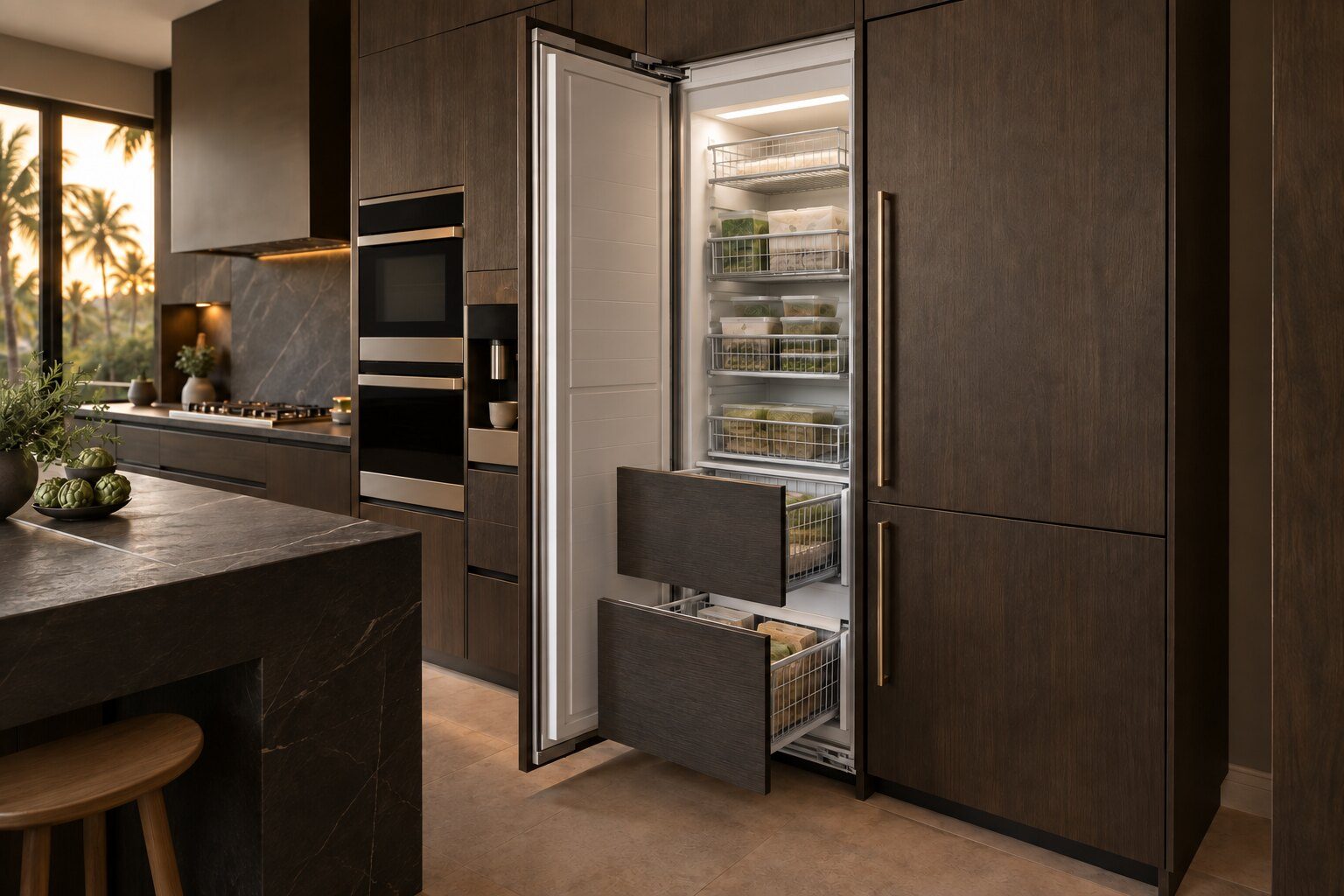
There is no chest freezer here, and no upright one standing in a garage. Every freezer this make builds is a column — 18, 24, 30 and 36 inches wide, panel-ready, designed to be installed beside a refrigerator column of matching height so the two read as cabinetry. The narrow one holds about nine and a half cubic feet and carries two ice makers of its own. That shape is the reason most calls about it are really calls about installation: a column has a defined air path through its base or top, and a blocked one imitates a failing sealed system exactly.
- 8 symptoms we are called out to
- From $95 diagnostic, credited to the repair
- 59 cities and neighborhoods covered
- OEM parts available on order
The short version
What this equipment is, for a repair
Configurations
Column freezers · 18, 24, 30 and 36 inches
Access
Planned before the visit, not discovered on arrival
Parts
OEM, available on order
Diagnostic
From $95, credited to the repair
What goes wrong with it
Symptoms we are called out to on Dacor freezers
Each one covers the likely causes in the order they are worth checking, and what to do in five minutes before booking anything.
-
The freezer is perfect and the fresh food is not, or the reverse One side cold, the other warm
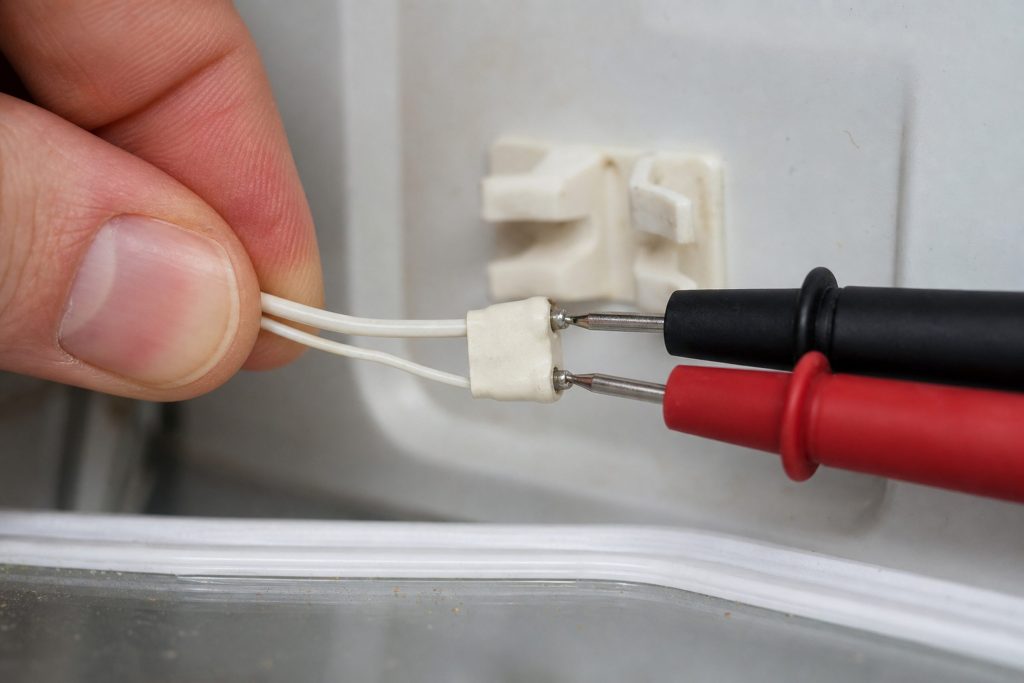
The most diagnostic complaint on refrigeration, because half the appliance is telling you it is healthy. On a French-door cabinet one sealed system serves both compartments and air is moved between them, so one warm side almost always means the air path — a fan, a damper, a duct, a defrost cycle that has stopped finishing. On a column pair it means something quite different: two cabinets with a system each, and one of them has a problem the other does not share. Establishing which shape is in the kitchen is the first question and it changes everything after it.
- Half the cabinet working is evidence, and it halves the diagnosis
- French door: one system, so this is airflow. Columns: two systems, so it is local
- Ice building at the back wall points at defrost rather than at the fan
-
No ice, slow ice, or cubes that come out hollow Ice maker has stopped
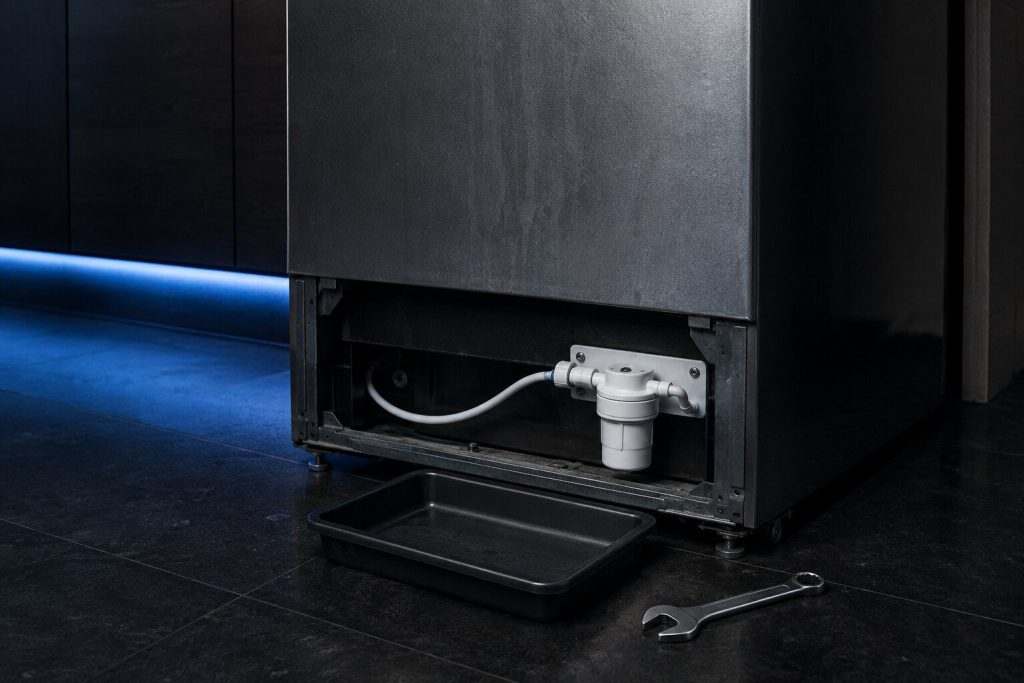
Ice is a module inside a cabinet on this make rather than an appliance of its own, and the freezer columns carry two of them. That second module is the most useful diagnostic tool in the kitchen: both stopped points upstream at the water supply, the inlet valve or the fill tube, while one stopped and one working points squarely at the module itself. Hollow or slow cubes are a third case again, and in South Florida they usually mean a valve that scale has narrowed rather than a mechanism that has failed.
- Two modules on the freezer columns — which one stopped is half the answer
- Both stopped is water. One stopped is that module
- Hollow cubes are fill volume, and in this water that is usually scale
-
A puddle in front of the joinery, or damp at the base Water under a built-in cabinet
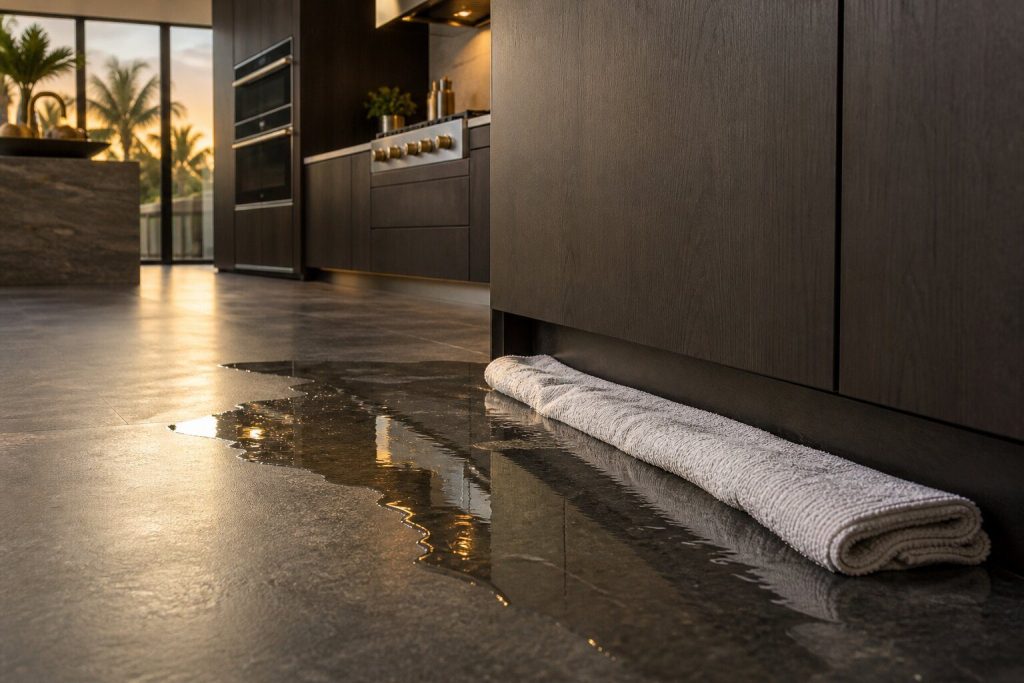
Water under built-in refrigeration is worse than water under a freestanding cabinet because it has somewhere to go: under the joinery, into the base of the cabinet beside it, and in a condominium sometimes into the ceiling below. There are only four likely sources — a blocked defrost drain, a split or loose supply line, the ice module's fill path, or a door that no longer seals in a humid kitchen — and they are told apart by where the water starts. The first action is not diagnosis. It is closing the supply valve.
- Turn the water off at the valve first — the diagnosis can wait, the joinery cannot
- Four likely sources, separated by where the water appears rather than by guesswork
- Under cabinetry the consequential damage is usually larger than the problem causing it
-
Soft ice cream, frost on the packets, and a cabinet that never rests Freezer column running warm
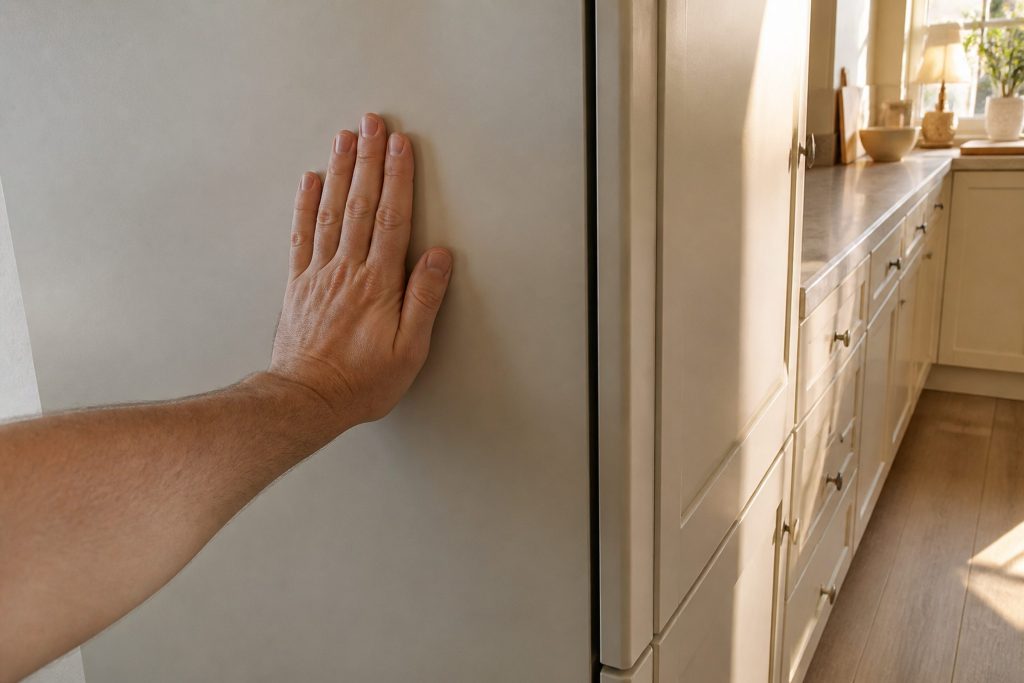
Every freezer this make builds is a column, and there is no second compartment to carry the load while a part is ordered — so this complaint is treated as urgent in a way the same problem on a French-door cabinet would not be. Before anything is opened, two free things are worth ruling out, and between them they account for a large share of these calls: a load pushed past the internal vents so air cannot circulate, and a base grille covered after a floor was laid or a kick panel refitted.
- No second compartment — this one empties the cabinet if it is left
- Overloaded drawers and a covered grille imitate a failing sealed system
- Power Freeze running hard is a mode, not a problem
-

It shows offline, or never finishes pairing The app will not connect to the appliance
Worth a page of its own because it is the complaint most likely to be sold as an appliance repair when it is nothing of the sort. The current generation reports to an app, and when the link works it genuinely shortens a diagnosis — a caller who can read what the app says saves the first part of a visit. When it does not work, the appliance is almost always fine, and the problem belongs to a router, a network band or an account. We will say so, and we will not charge repair money for it.
- An appliance off the network is not a broken appliance
- Most of these are the 2.4 GHz band, the router or the account — not the machine
- Only the 2016-and-later machines connect at all
-
A click, a buzz or a rattle that was not there last month Refrigeration making a new noise
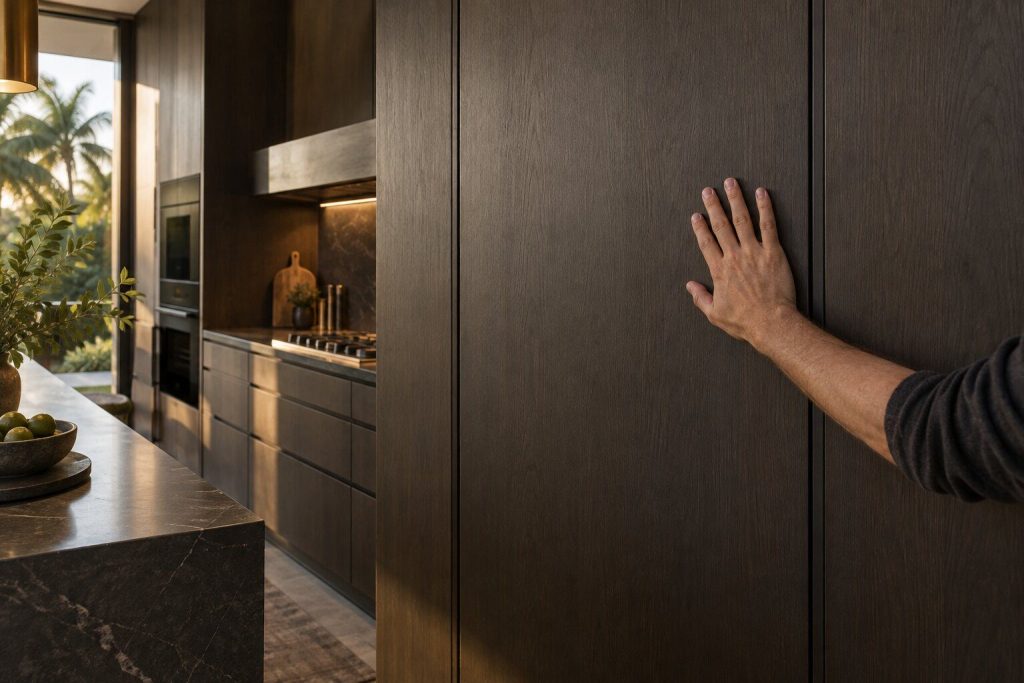
Refrigeration is never silent, and the useful question is not whether it makes a noise but whether the noise is new. Built-in cabinets are quieter than freestanding ones, which means a change is noticed sooner and worries people more. Most new noises come from one of four places — the evaporator fan, the condenser fan, the compressor mounts, or something touching the cabinet — and three of those four are cheap. What matters is catching a fan before ice or a dry bearing takes the cooling with it.
- A new noise is worth a call; a familiar one usually is not
- Noise that stops when the door opens is the evaporator fan
- Panel-ready cabinets amplify contact noise through the joinery
What we do on it
Repairs we carry out on Dacor freezers
Starting figures for this equipment in South Florida. The exact cost is confirmed after an on-site diagnostic — and this is not the whole list of what can go wrong, so call if your problem is not here.
-
from $95 Diagnostic visit
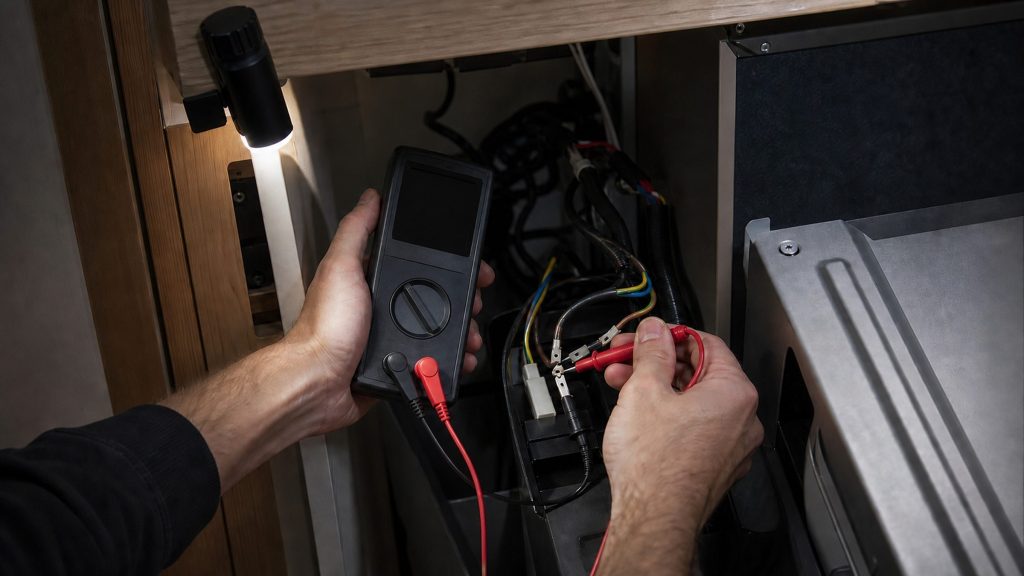
Finding out what has actually gone wrong, before any part is named or priced. On this badge two questions come before the problem itself: how old the kitchen is, and how the appliance is held. The age decides which problem language the machine speaks — the pre-2016 boards and their F-codes, or the current platform and its letter codes — and the two share nothing. How it is held decides how long it takes to reach. The charge is credited against the repair if you go ahead, and if our honest recommendation is that the machine is not worth mending, you still get that recommendation and the charge does not change.
- The era comes first — it decides the code table, the board and the part number
- A written figure ahead of the work, credited against the repair
- If mending it is the wrong call we say so, rather than selling a part
-
from $165 Appliance maintenance
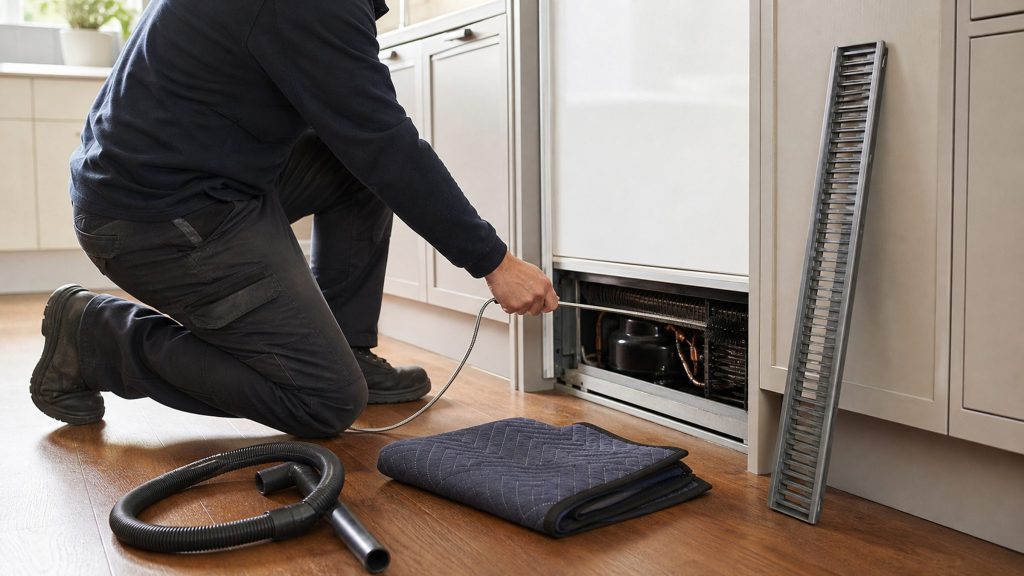
The visit that keeps a built-in kitchen out of trouble, which on this make is mostly about air and water. Columns and panel-ready cabinets breathe through grilles that joinery and rugs slowly cover; the dishwasher softens its own water and that softener has a service interval; a steam oven has a reservoir and a descaling cycle; a hood liner fills with grease where nobody can see it. None of that is dramatic and all of it is cheaper than the failure it prevents. We do the lot in one visit rather than returning for each.
- Air paths first: column grilles, condenser coils, hood filters and blower
- Water next: the dishwasher softener, the steam reservoir, the coffee system's path
- One visit across the kitchen, not one visit per appliance
-
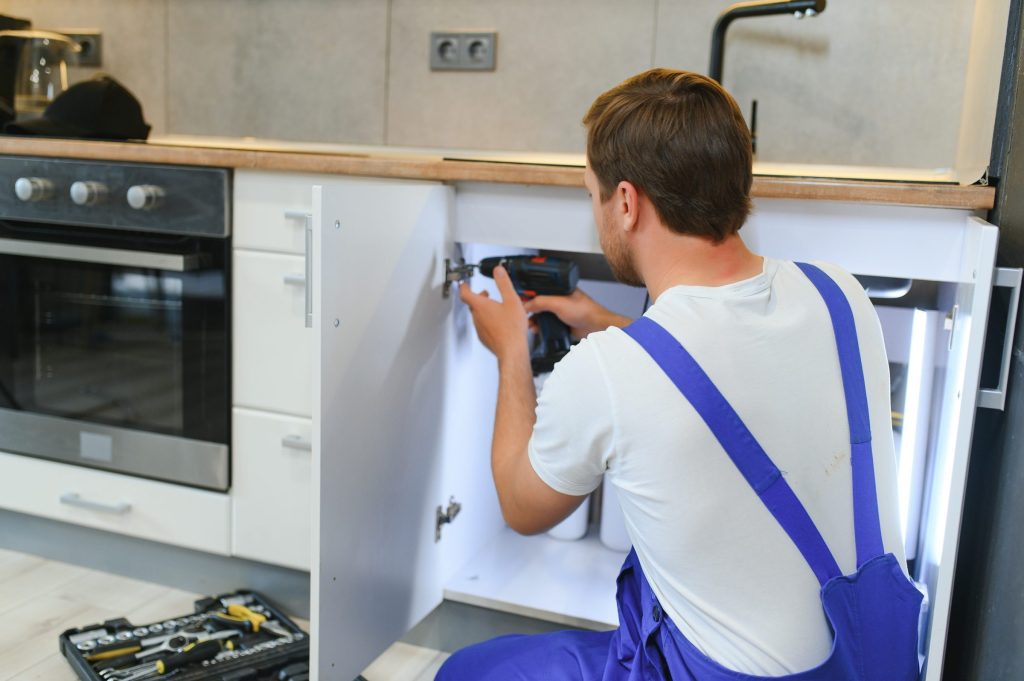
from $225 Appliance installation
Fitting equipment that was designed to disappear into cabinetry, which is a joinery job as much as a connection. Panel-ready columns and French doors take cabinet fronts and their hardware; wall ovens sit in tall units cut to a size; hood liners hide inside millwork built by somebody else; a rangetop drops into a worktop that has to be right before the appliance arrives. We measure the opening before delivery rather than after, because a cabinet that is a quarter inch out is a carpentry problem discovered on the wrong day.
- The opening is measured before the appliance is delivered, not on the day
- Panels, trim kits and handles fitted so the doors sit square and stay square
- Air path, water feed and power checked as part of the fit, not as an extra
-
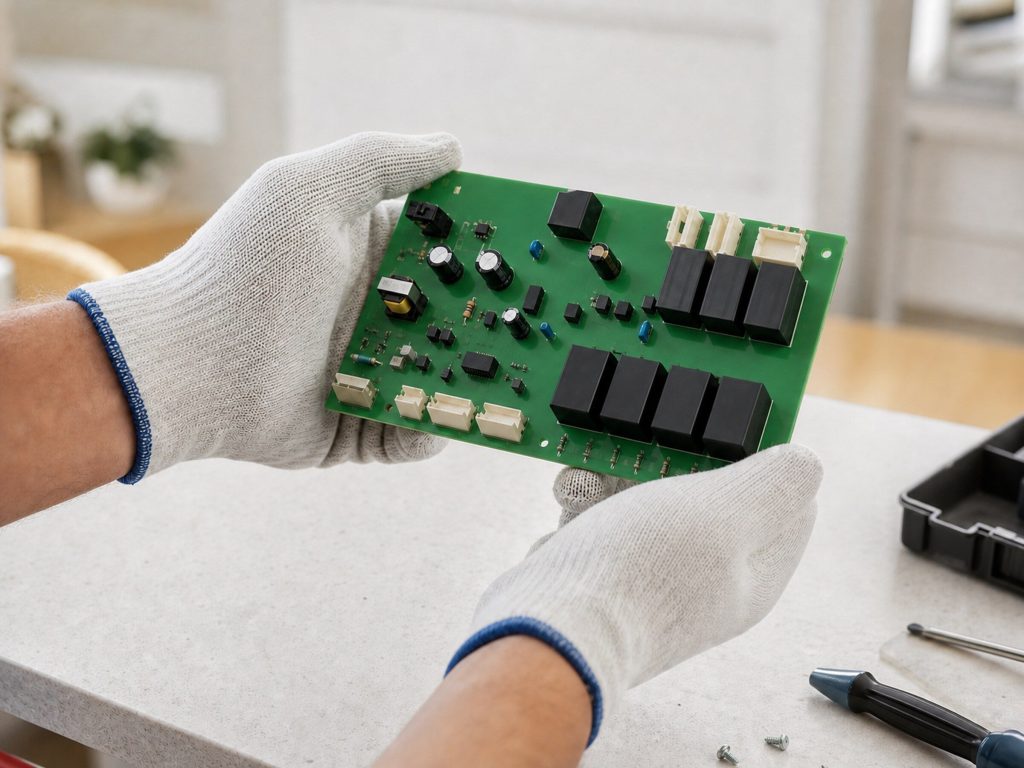
from $295 Control board repair
The board is the part most often blamed and least often at problem, so it is the last thing we conclude rather than the first. What makes this badge different is that there are two entirely separate generations of board behind the same door: the pre-2016 Dacor boards, and the Samsung-platform boards that replaced them. They are not interchangeable, the part numbers do not translate, and a supplier who is given the wrong one will happily sell it. We identify the generation from the plate before anything is ordered.
- Ruled in by elimination — sensors, harnesses and supply are checked first
- Two generations of board on one badge: the part numbers do not translate
- Legacy boards are quoted rather than published — availability is checked first
-
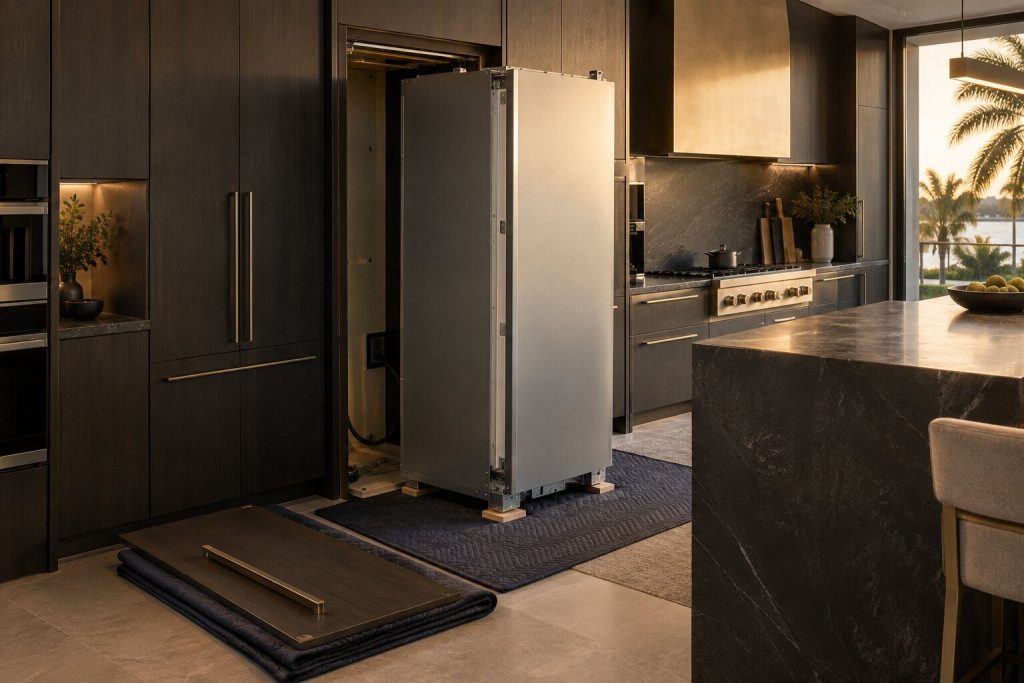
from $185 Built-in column access
The service that exists because of the shape of this line. A refrigeration column is captured by the cabinetry around it, held by trim, carrying a cabinet panel and a handle that belong to the kitchen rather than the appliance. Bringing it far enough forward to be worked on — and putting the joinery back exactly as it was — is real work with a real risk attached, and pretending otherwise is how a repair leaves a scratch down a walnut run. We price it as its own step so that nobody is surprised by it halfway through a visit.
- Panel, handle and trim removed and recorded before anything is moved
- The joinery is protected first — the risk here is the cabinetry, not the appliance
- Priced as its own step so it is never a surprise mid-visit
-
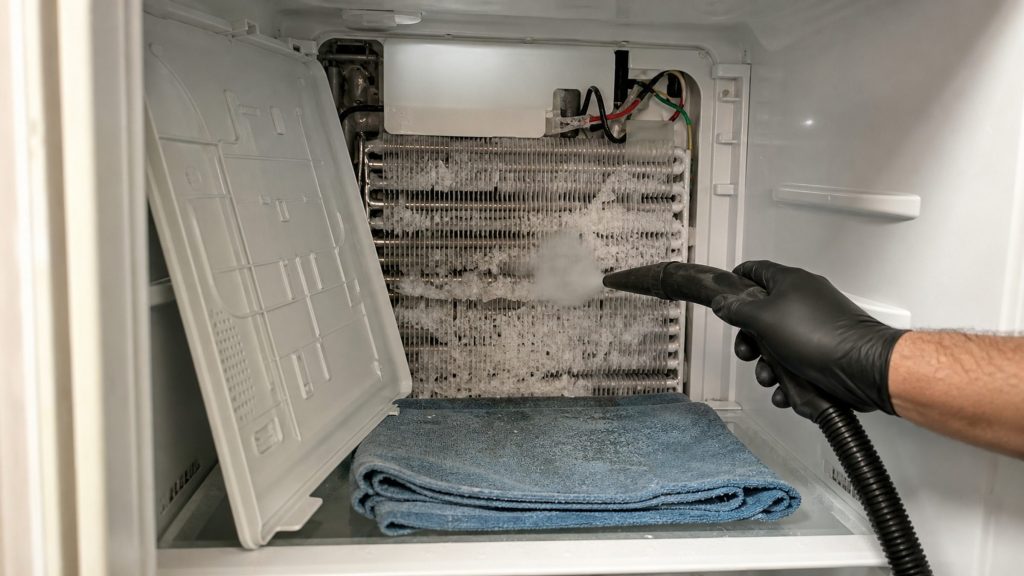
from $175 Defrost system repair
Frost where there should be none is a system problem rather than a mystery: a heater, a sensor, a thermostat and the control that decides when to run them. On these cabinets the symptom arrives slowly — a compartment that drifts a couple of degrees, then a fan that sounds like it is scraping, then ice visible at the back wall — and the cheapest moment to catch it is the first of those. On a column the whole load lives in one cabinet, so the same failure empties a freezer that a French door would have carried through.
- Heater, sensor, thermostat and the control that times them — checked as a system
- The early symptom is a two-degree drift, not visible ice
- On a column there is no second compartment to carry the load
-
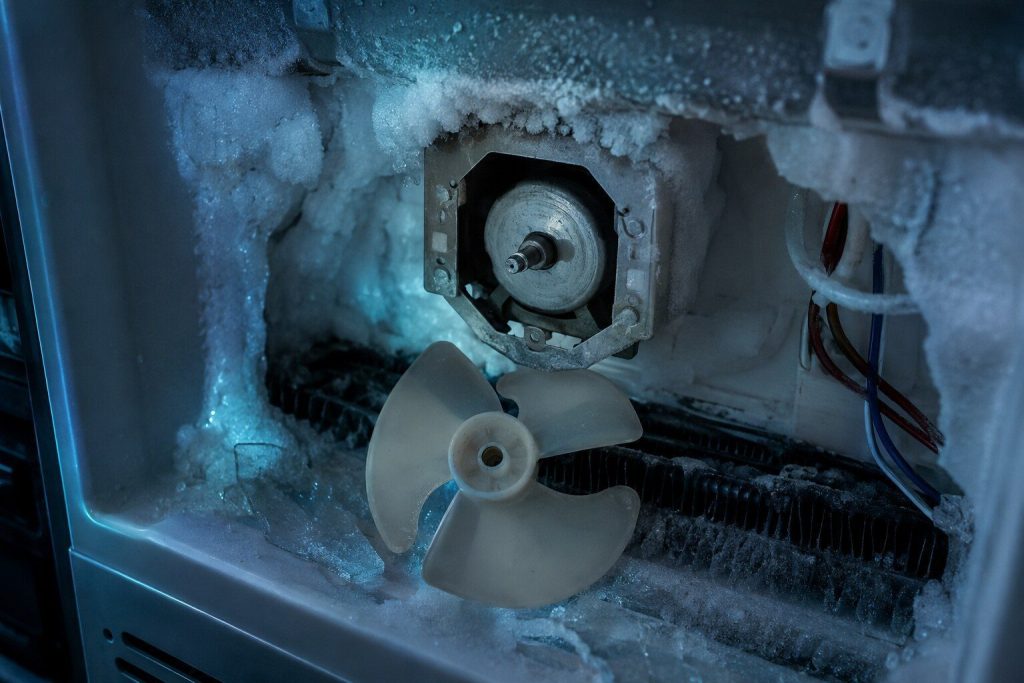
from $159 Evaporator fan repair
The fan that moves cold air is the part that most often explains a cabinet cooling unevenly. When it slows, stalls or is caught by ice, one compartment keeps its temperature and the other drifts, which reads as a refrigeration failure and is not one. It usually announces itself first as noise — a hum that rises with the door closed, a click, a scrape — and people reasonably wait for it to become worse. On a panel-ready cabinet it is worth not waiting: the fan is behind the back panel, and the visit is short while the cabinet is still cold.
- Uneven cooling with a healthy compressor is usually this
- Noise that changes with the door closed is the early warning
- Short visit while the cabinet still works — longer once it does not
-
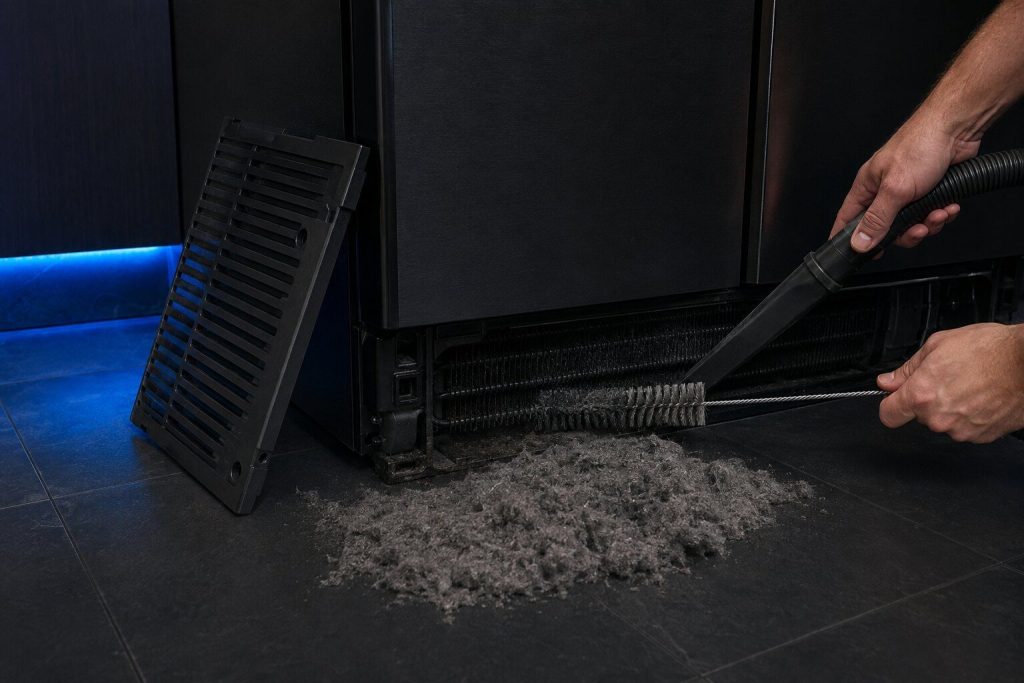
from $129 Condenser cleaning
The least glamorous visit on the list and the one that prevents the most expensive ones. A condenser rejects heat, and in a Miami kitchen it does that through a grille that collects dust, cooking grease and pet hair until the cabinet is running against itself. On built-in refrigeration it matters more than on freestanding, because the coil sits in a defined air path that the cabinetry controls: when that path is restricted, the compressor runs longer, the temperature drifts, and everything downstream ages faster than it should.
- Built-in refrigeration lives on a defined air path — restrict it and everything ages
- Grease and pet hair, not dust, are what actually block a Miami coil
- Cheapest visit here, and the one that prevents the dear ones
-
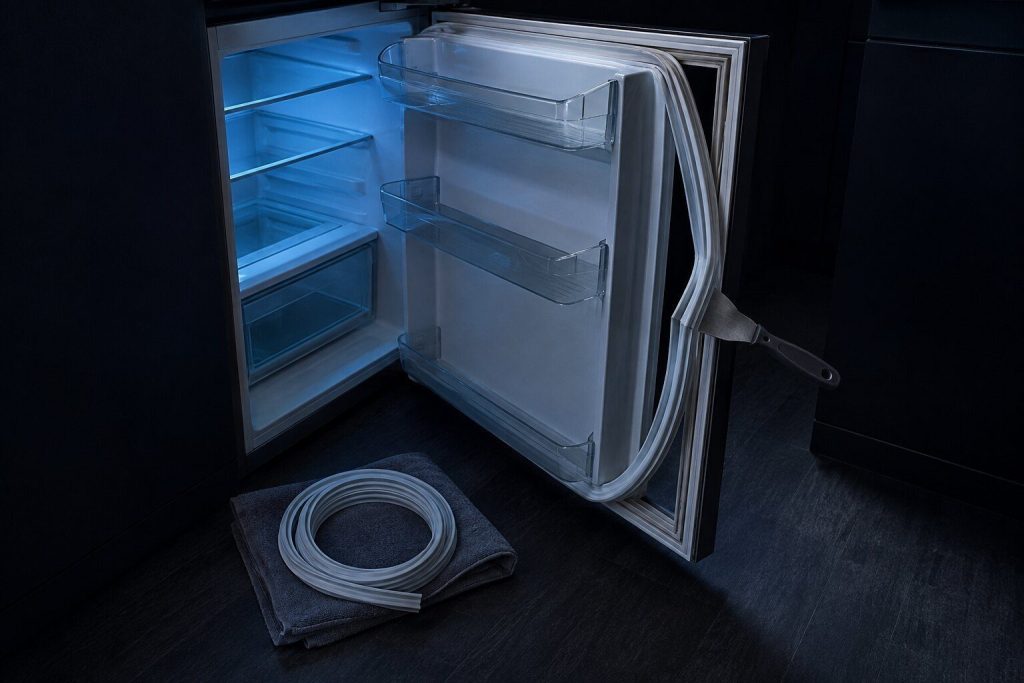
from $165 Door seal replacement
A gasket that no longer seals is a slow, expensive problem: the cabinet runs longer, the compartment nearest the leak drifts, and condensation appears where nobody expects it. Panel-ready doors make it likelier than on ordinary refrigeration, because the door carries the weight of a cabinet front and its hardware, and a hinge that has settled under that weight pulls the seal away from the frame along one edge. Replacing the gasket without correcting the door is how the same problem comes back within a year, so we do both or neither.
- Panel weight settles hinges — the seal is often the symptom, not the cause
- A dollar-bill test along all four edges, not a look at the worst corner
- Door alignment corrected at the same visit or the problem returns
-
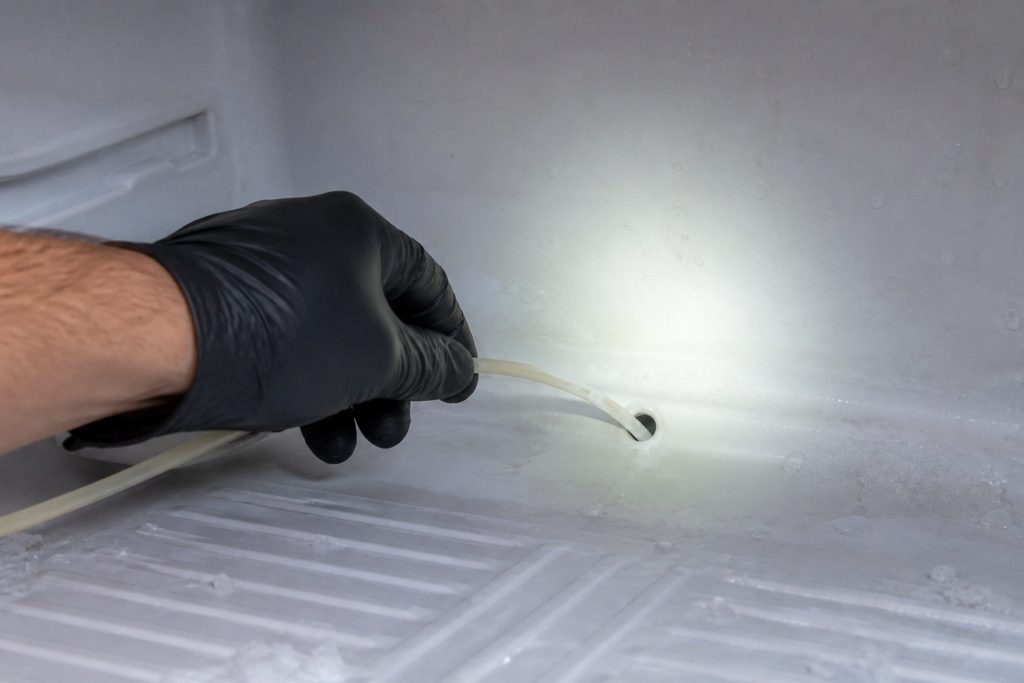
from $155 Refrigerator leak repair
Water in the base of a built-in cabinet is worse than water under a freestanding one, because it has somewhere to go: the floor under the joinery, the base of the cabinet beside it, and in a condominium sometimes the ceiling below. There are only a few sources — a blocked defrost drain, a split or loose water line, the ice module's fill path, a door that no longer seals in a humid kitchen — and finding which one it is takes less time than the damage takes to happen. If there is water on the floor in front of a column, turn the supply off at the valve and call.
- Under built-in cabinetry a leak reaches the floor and the neighbors, not a drip tray
- Four likely sources, and they are told apart by where the water is
- Supply off at the valve first — the diagnosis can wait, the joinery cannot
-
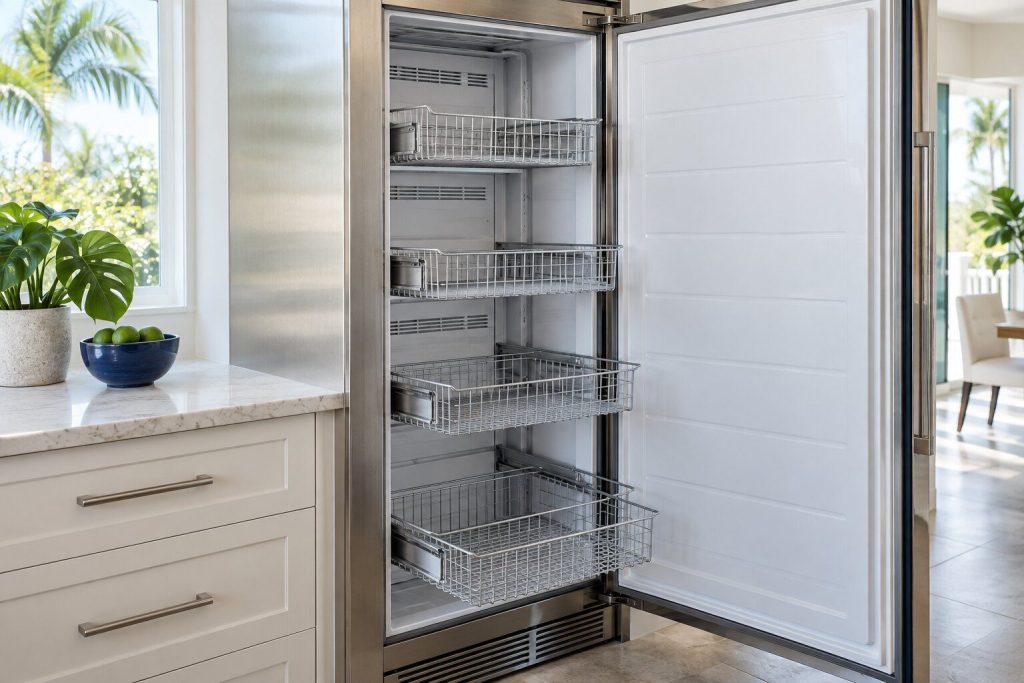
from $185 Freezer column repair
Every freezer this make builds is a column, which changes both the problems and the stakes. There is no second compartment to carry the load while a part is ordered, so a failure here empties a cabinet that often holds a great deal. The narrow column packs two ice makers, two drawers and its own sealed system into eighteen inches, and that density is why so many calls about it are really calls about airflow: drawers overloaded past the vents, or a base grille covered after a floor was laid. We check that before anything is opened.
- No second compartment — a problem here empties the cabinet
- Two ice makers and two drawers inside eighteen inches on the narrow column
- Overloaded drawers and covered grilles imitate a failing system
-
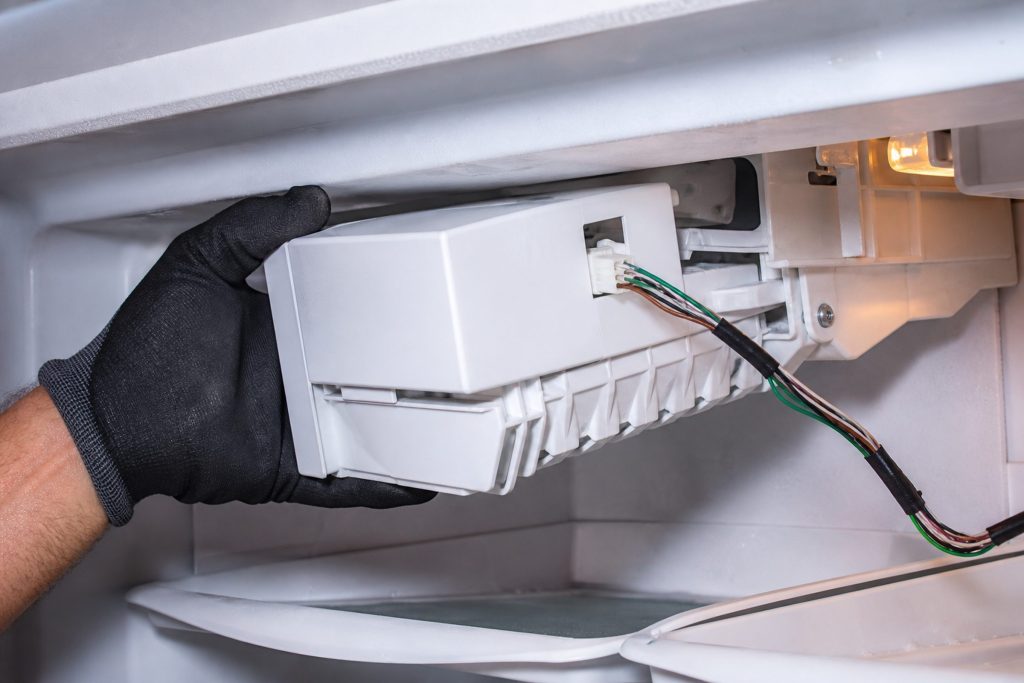
from $165 Ice maker repair
The ice maker is a module inside a cabinet rather than an appliance of its own on this badge — there is no standalone ice machine in the line. On the freezer columns there are two of them, which is genuinely useful for diagnosis: both stopped points upstream at the water supply, the inlet valve or the fill tube, while one stopped and one working points squarely at the module itself. Hollow or slow ice is a third case and usually a fill or a temperature problem rather than a mechanism that has failed.
- Two modules on the freezer columns — which one stopped is half the diagnosis
- Both stopped is a water problem; one stopped is a module problem
- Hollow or slow cubes are usually fill volume, not a broken mechanism
-
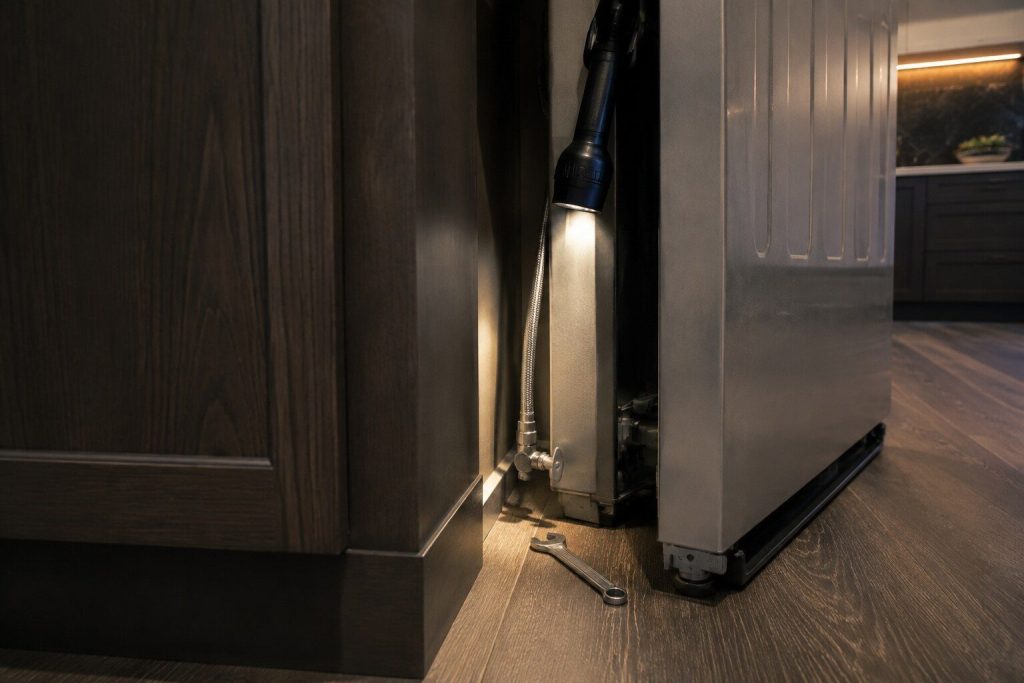
from $139 Water line and fill valve service
Everything upstream of the ice module, which is where most ice complaints actually live. The supply line runs behind cabinetry, the valve sits at the back of the machine, and the fill tube can partially freeze without ever stopping completely. In South Florida the additional factor is scale: a valve that has been fed hard water for years closes slowly and passes a trickle, which produces small hollow cubes on both modules at once — a symptom people reasonably read as two failed ice makers.
- Most ice problems are upstream of the module, not in it
- Scale makes a valve pass a trickle rather than fail outright
- Both modules affected at once is nearly always this
-
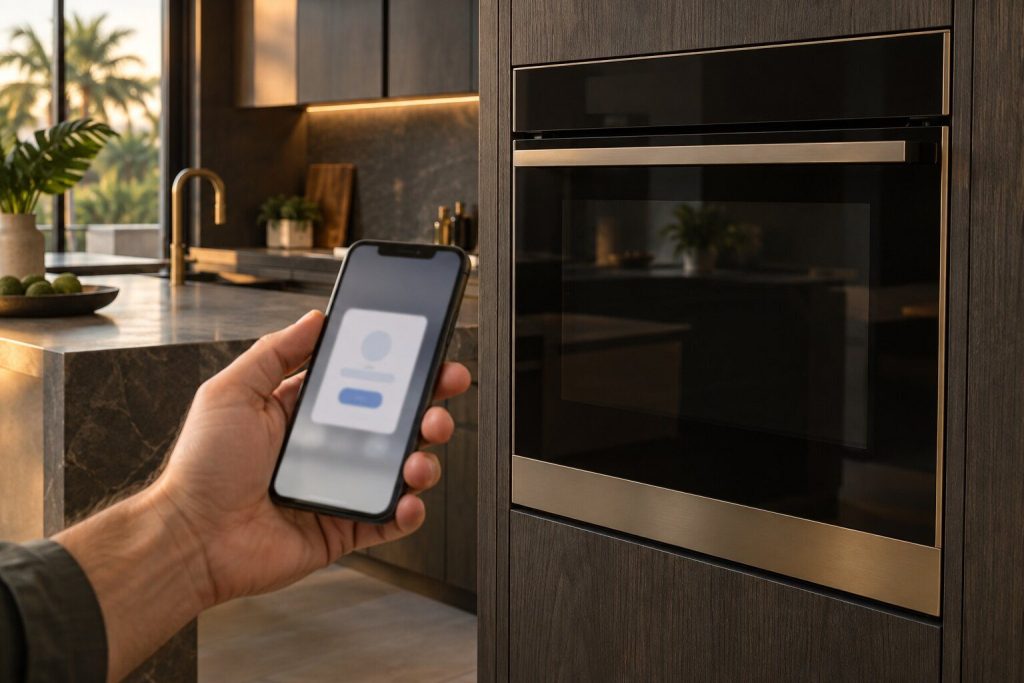
from $109 Smart features and connectivity
The current generation reports to an app, and when that link works it is genuinely useful for diagnosis — a caller who can read us what the app says shortens the conversation considerably. When it does not work, the appliance is usually fine. We treat connectivity as its own small service rather than as a repair, and we will say plainly when the problem is a router, a network band or an account rather than the machine. An oven off the network is not a broken oven, and nobody should pay for a visit that says otherwise.
- Connectivity is its own small service, not an appliance repair
- An appliance off the network is not a broken appliance
- Where the answer is the router or the account, we say so and charge accordingly
In more detail
About Dacor freezers
Column-only, and that is a decision
A line without a chest or an upright freezer is not an incomplete catalog. This make builds refrigeration meant to be trimmed into joinery in matched pairs, and a freezer that stands alone in a utility room is a different product for a different room. It is worth knowing before a replacement is planned, because the opening in the cabinetry, not the appliance, is what limits the choice.
The air path is part of the machine
Every column breathes through a grille that the installer left clear and somebody later covered. Kick panels, a rug, a shelf built across the top: each produces a cabinet that runs without pause and never quite gets cold. We check it before we open anything, because the alternative is diagnosing a sealed system that was never at problem.
Two ice makers in eighteen inches
The narrow column carries two ice makers and two drawers in nine and a half cubic feet, which is a great deal of mechanism in a small cabinet. It also means the useful question is never just whether the ice has stopped, but whether both have — one answer points at the water supply, the other at a single module.
This article is based on:
- Official manufacturer documentation
- Internal repair procedures
- Technician repair history
- Company quality standards
Before you book
Questions about Dacor freezers
It is running constantly and the ice is soft.
On a column the first thing to rule out is the air path, not the compressor. These cabinets breathe through a grille at the base or the top depending on how they were trimmed in, and joinery, a kick panel or a rug across the vent produces precisely this pair of symptoms — a machine that never rests and ice that never gets hard. It costs two minutes to check and it is the answer often enough that we check it first, before anything is dismantled.
Both ice makers have stopped.
Two ice makers failing together is usually one cause upstream of both — the water supply, the inlet valve or the fill tube — rather than two modules failing at once. One stopped and one working is the opposite case and points at the module itself. Telling us which of the two it is, when you call, decides what goes on the van, and on a panel-ready column that is the difference between finishing the job and booking a second visit.
Can you put a freezer where the old one stood?
Only if the opening was built for a column. This make does not sell a freestanding freezer, so there is no like-for-like replacement for a garage upright — what exists is an 18, 24, 30 or 36-inch cabinet that expects a finished surround, a panel and a power and water feed placed for it. We will tell you that plainly when you ask rather than after a delivery, because it is a cabinetry question before it is an appliance one.
What does Power Freeze do to the cabinet?
It drives the compartment down hard for a set period to recover after the door has been open or a load has gone in warm, and while it runs the cabinet is louder and the fans are faster than you are used to. People call about it, reasonably, because a machine behaving unusually is what a problem sounds like. If the mode was started deliberately or by a full load, it will end on its own; if it never ends, that is a real symptom and worth the call.
Where we do it
Across Miami-Dade, Broward, and Palm Beach
Same terms everywhere we go: an on-site diagnostic first, the price agreed in writing, and the exact figure confirmed once we have seen the unit.
Neighborhoods people ask for by name