
Model
DRF425300AP repair
Dacor DRF425300AP repair in Miami: what owners of this Contemporary unit search for, what those symptoms usually point at, and what the work involves. Diagnostic from $95, credited toward the repair.
- From $95 diagnostic, credited to the repair
- 59 cities and neighborhoods covered
- OEM parts available on order
- In writing the price, before anything is opened
The short version
What the number tells us
The generation decides which parts exist, how quickly they arrive and what a repair on this cabinet is worth. It is the first thing we ask for.
Model
DRF425300AP
Give us this number when you book and the technician arrives knowing what the unit is and which parts it takes.
or call (305) 363-6067
Generation
Parts
OEM on order; legacy parts take longer
Diagnostic
From $95, credited to the repair
What we can tell you
What this number means for a repair
Not a specification table. Capacity, dimensions and production years are not something we can verify, and a plausible-looking table of them would be invention rather than information.
-
The full number is the first thing we ask for
It decides what the display can tell you and how easily parts are found, and the data plate settles it in one line. Letters after the digits are not decoration — they identify the configuration, and two units sharing the digits can take different components.
-
What we ask you to read off the unit
The data plate, not the box or the invoice. On this equipment it sits inside the cabinet — along a side wall, behind the lowest drawer, or under the lid of a wine cabinet — and it carries the full number and the service index together. A photograph of it is worth more than any table we could publish.
What owners of this model ask about
The symptoms searched most often with the DRF425300AP
Taken from real search suggestions rather than from a list we made up. Each page says what the symptom usually points at and what to check first.
-
It is running, the light works, and the food is warm Refrigerator not cooling
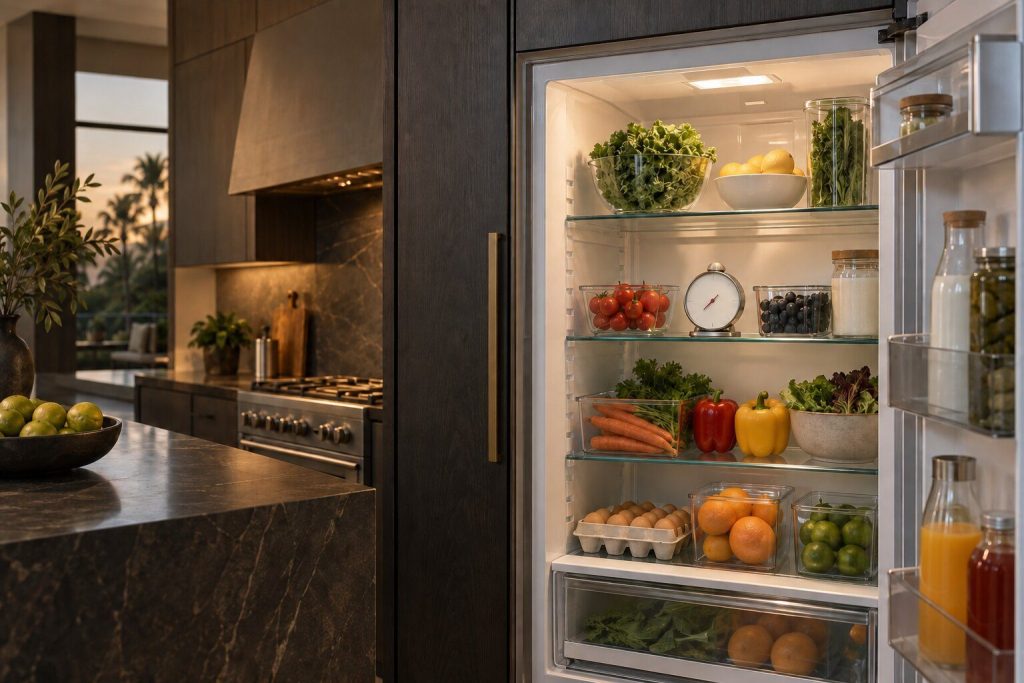
The cabinet is clearly alive and the food is clearly not cold. Two pieces of evidence settle most of what follows and neither needs tools. The first is a thermometer in each compartment, read twice an hour apart. The second is which cabinet you have: on a French door one sealed system serves both compartments, so a single warm side is an airflow problem; on a column pair there are two independent systems and the cold cabinet beside the warm one is evidence rather than a symptom. This make publishes no error code for any of it, which is why the readings matter more here than on other badges.
- Freezer cold and fresh food warm means airflow, not refrigerant
- There is no code to read — the app's named alarms are all the appliance will say
- Check the grille before anything else: a captured column has one way to breathe
-
The freezer is perfect and the fresh food is not, or the reverse One side cold, the other warm
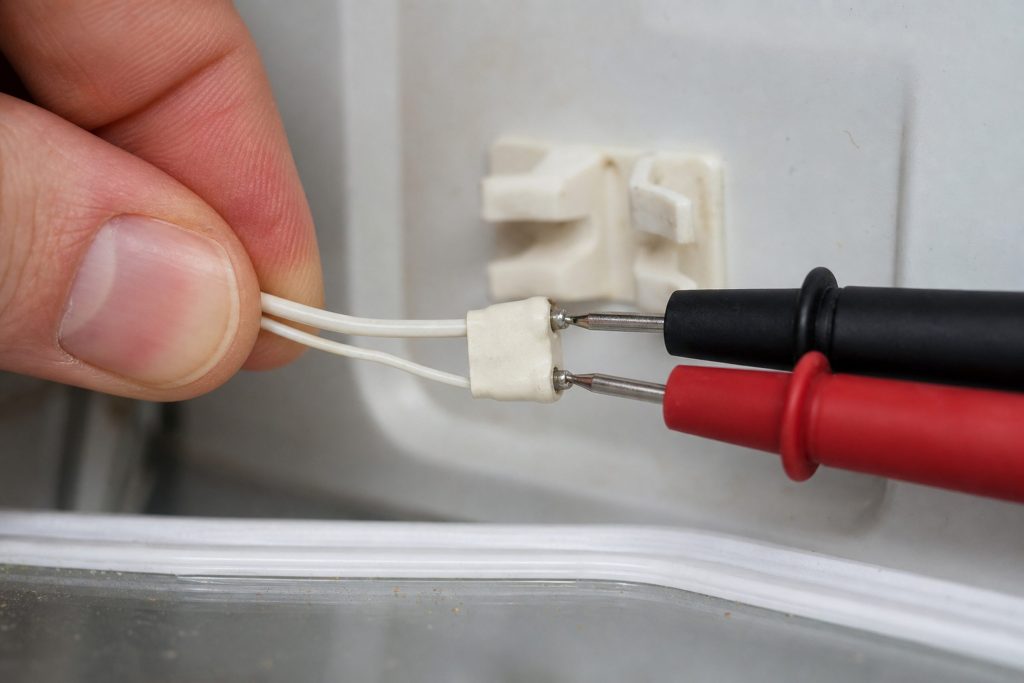
The most diagnostic complaint on refrigeration, because half the appliance is telling you it is healthy. On a French-door cabinet one sealed system serves both compartments and air is moved between them, so one warm side almost always means the air path — a fan, a damper, a duct, a defrost cycle that has stopped finishing. On a column pair it means something quite different: two cabinets with a system each, and one of them has a problem the other does not share. Establishing which shape is in the kitchen is the first question and it changes everything after it.
- Half the cabinet working is evidence, and it halves the diagnosis
- French door: one system, so this is airflow. Columns: two systems, so it is local
- Ice building at the back wall points at defrost rather than at the fan
-
No ice, slow ice, or cubes that come out hollow Ice maker has stopped
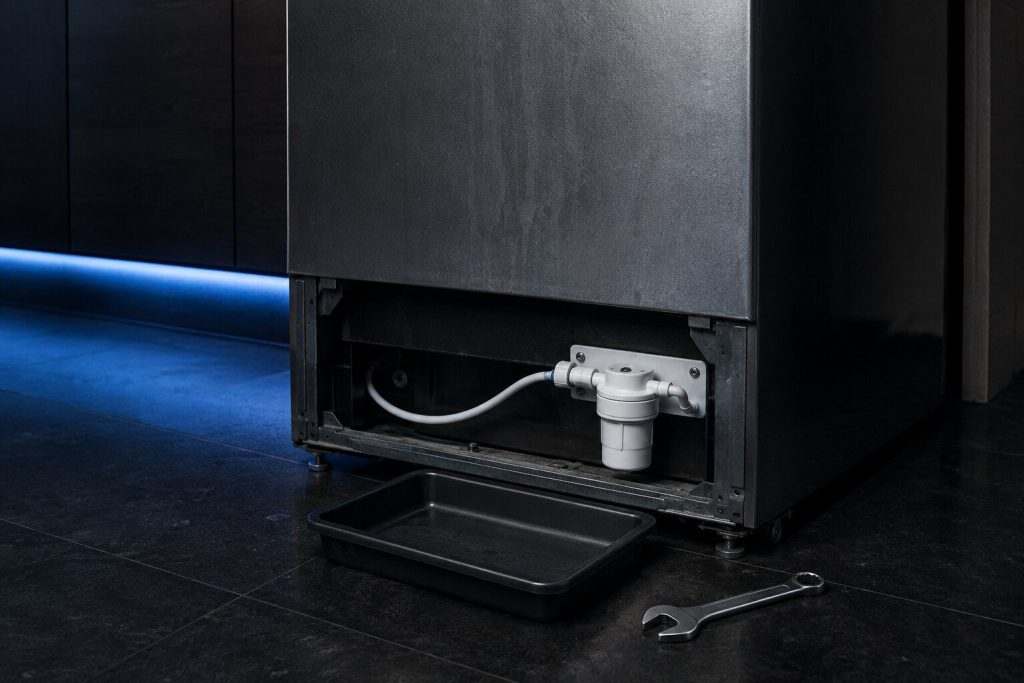
Ice is a module inside a cabinet on this make rather than an appliance of its own, and the freezer columns carry two of them. That second module is the most useful diagnostic tool in the kitchen: both stopped points upstream at the water supply, the inlet valve or the fill tube, while one stopped and one working points squarely at the module itself. Hollow or slow cubes are a third case again, and in South Florida they usually mean a valve that scale has narrowed rather than a mechanism that has failed.
- Two modules on the freezer columns — which one stopped is half the answer
- Both stopped is water. One stopped is that module
- Hollow cubes are fill volume, and in this water that is usually scale
-
A puddle in front of the joinery, or damp at the base Water under a built-in cabinet
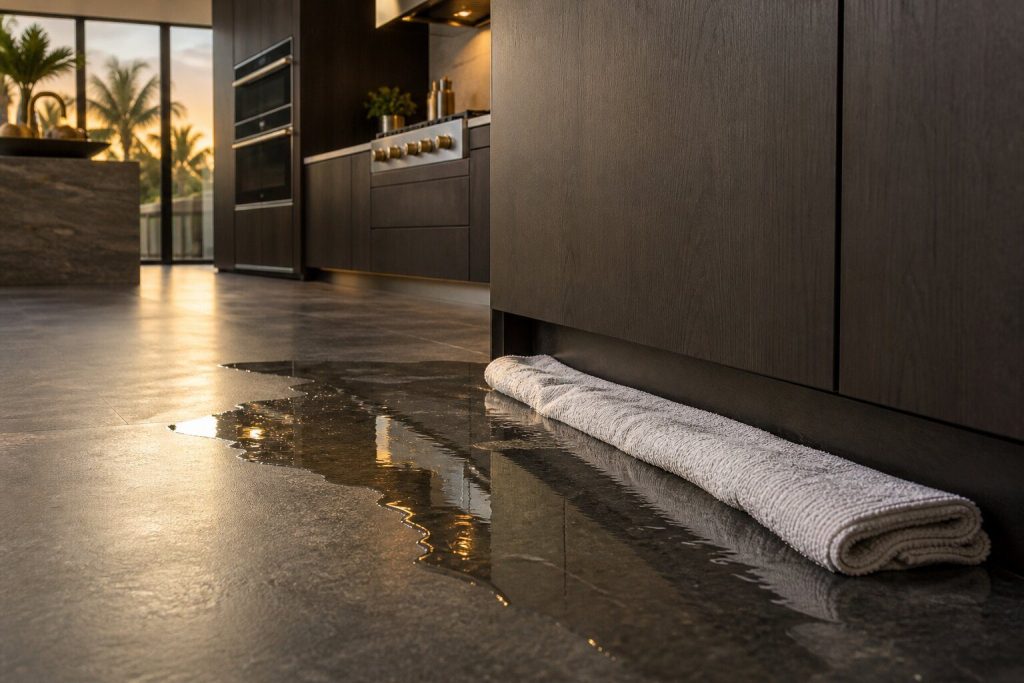
Water under built-in refrigeration is worse than water under a freestanding cabinet because it has somewhere to go: under the joinery, into the base of the cabinet beside it, and in a condominium sometimes into the ceiling below. There are only four likely sources — a blocked defrost drain, a split or loose supply line, the ice module's fill path, or a door that no longer seals in a humid kitchen — and they are told apart by where the water starts. The first action is not diagnosis. It is closing the supply valve.
- Turn the water off at the valve first — the diagnosis can wait, the joinery cannot
- Four likely sources, separated by where the water appears rather than by guesswork
- Under cabinetry the consequential damage is usually larger than the problem causing it
-

It shows offline, or never finishes pairing The app will not connect to the appliance
Worth a page of its own because it is the complaint most likely to be sold as an appliance repair when it is nothing of the sort. The current generation reports to an app, and when the link works it genuinely shortens a diagnosis — a caller who can read what the app says saves the first part of a visit. When it does not work, the appliance is almost always fine, and the problem belongs to a router, a network band or an account. We will say so, and we will not charge repair money for it.
- An appliance off the network is not a broken appliance
- Most of these are the 2.4 GHz band, the router or the account — not the machine
- Only the 2016-and-later machines connect at all
-
A click, a buzz or a rattle that was not there last month Refrigeration making a new noise
Refrigeration is never silent, and the useful question is not whether it makes a noise but whether the noise is new. Built-in cabinets are quieter than freestanding ones, which means a change is noticed sooner and worries people more. Most new noises come from one of four places — the evaporator fan, the condenser fan, the compressor mounts, or something touching the cabinet — and three of those four are cheap. What matters is catching a fan before ice or a dry bearing takes the cooling with it.
- A new noise is worth a call; a familiar one usually is not
- Noise that stops when the door opens is the evaporator fan
- Panel-ready cabinets amplify contact noise through the joinery
-
The cabinet insists the door is open and it plainly is not Door alarm chiming with the door shut
One of the four named alarms these cabinets have — there is no code behind it, just the chime and the app saying Door Open. When it sounds with the door visibly closed, the appliance is not confused: either the door is genuinely not sealing home, or the switch that reports its position has failed. The first is far more likely and often free to correct, and on a panel-ready door it is usually a hinge that has settled under the weight of a cabinet front.
- No code behind it — Door Open is one of only four named alarms on these cabinets
- A door that looks closed can still be a few millimeters off the seal
- Panel weight settles hinges, and the switch is the last suspect
Also called out to on this equipment
- Freezer column running warm
- Wine column zone too warm
- Condensation on the wine column glass
- Range hood fan will not start
- Hood runs but the kitchen does not clear
- Microwave runs but does not heat
- Microwave drawer will not open
- Oven bakes unevenly or at the wrong temperature
- Burner clicks but will not light
- Induction zone cuts out during cooking
- Glassware coming out cloudy
- Dishes coming out wet
- Coffee has gone bitter and weak
- Frost building up inside the freezer column
- Hood lights not working
- Hood switching itself on
- Sparking inside the microwave
- Burner will not stay at a simmer
In more detail
About DRF425300AP repair
What owners of the DRF425300AP search for
These are the phrases people pair with this model number, taken from real search suggestions rather than from a list we made up. They are a fair map of what tends to go wrong on it — and each one has a page of its own explaining the likely causes.
- dacor drf425300ap
- dacor 42-inch panel-ready french door refrigerator drf425300ap
What the display can tell you
The Contemporary reports very little through its display, which is why more of the diagnosis on this generation is measured rather than read. If something is showing on yours, photograph it before it clears and look it up in the full error code list — codes do not wait, and the number is often gone by the time a technician arrives.
What we do not publish about it
No specification table: capacity, dimensions, configuration and production years are not something we can verify, and a plausible-looking table of them would be invention rather than information. What we can tell you is what the number means for a repair — which generation it is, what its display can report, and how easily parts are found.
Before you call
- Check the full model number on the data plate — the three digits are the family, and the letters after them matter for parts
- Photograph the display if anything is showing on it
- Look at the condenser through the grille
- Note whether this started after a power cut
This article is based on:
- Official manufacturer documentation
- Internal repair procedures
- Technician repair history
- Company quality standards

Before you book
Questions about DRF425300AP repair
Is the DRF425300AP still worth repairing?
Usually. The Contemporary was built to be repaired, and a cabinet in good condition with sound cabinetry is worth keeping well past twenty years. Where the work approaches what the unit is worth, or a second major failure is already visible, we say so on the visit rather than after.
Can you still get parts for the DRF425300AP?
For most of what fails, yes — OEM parts are ordered against your model. Legacy parts can take a few days to source, which is why we confirm a part is the problem before ordering it rather than after.
Where do I find the full model number on a DRF425300AP?
On the data plate inside, usually high on the left or right wall of the fresh food compartment, and on an undercounter cabinet behind the grille at the bottom. Photograph the whole plate rather than writing it down — the letters after the digits decide which parts fit, and they are the part people misread most often.
What tends to go wrong on the DRF425300AP?
Judging by what its owners search for: freezer door alarm with door closed, refrigerator ice maker stopped, refrigerator noise, refrigerator not cooling, refrigerator one side warm, refrigerator water on the floor, and smart app will not connect. Each of those has a page explaining the likely causes and what to check before booking anything.
Do you publish specifications for the DRF425300AP?
No. Capacity, dimensions, configuration and production years are not something we can verify, and a plausible-looking table of them would be invention rather than information. What we can tell you is what the number means for a repair.