Appliance
Dacor range hoods
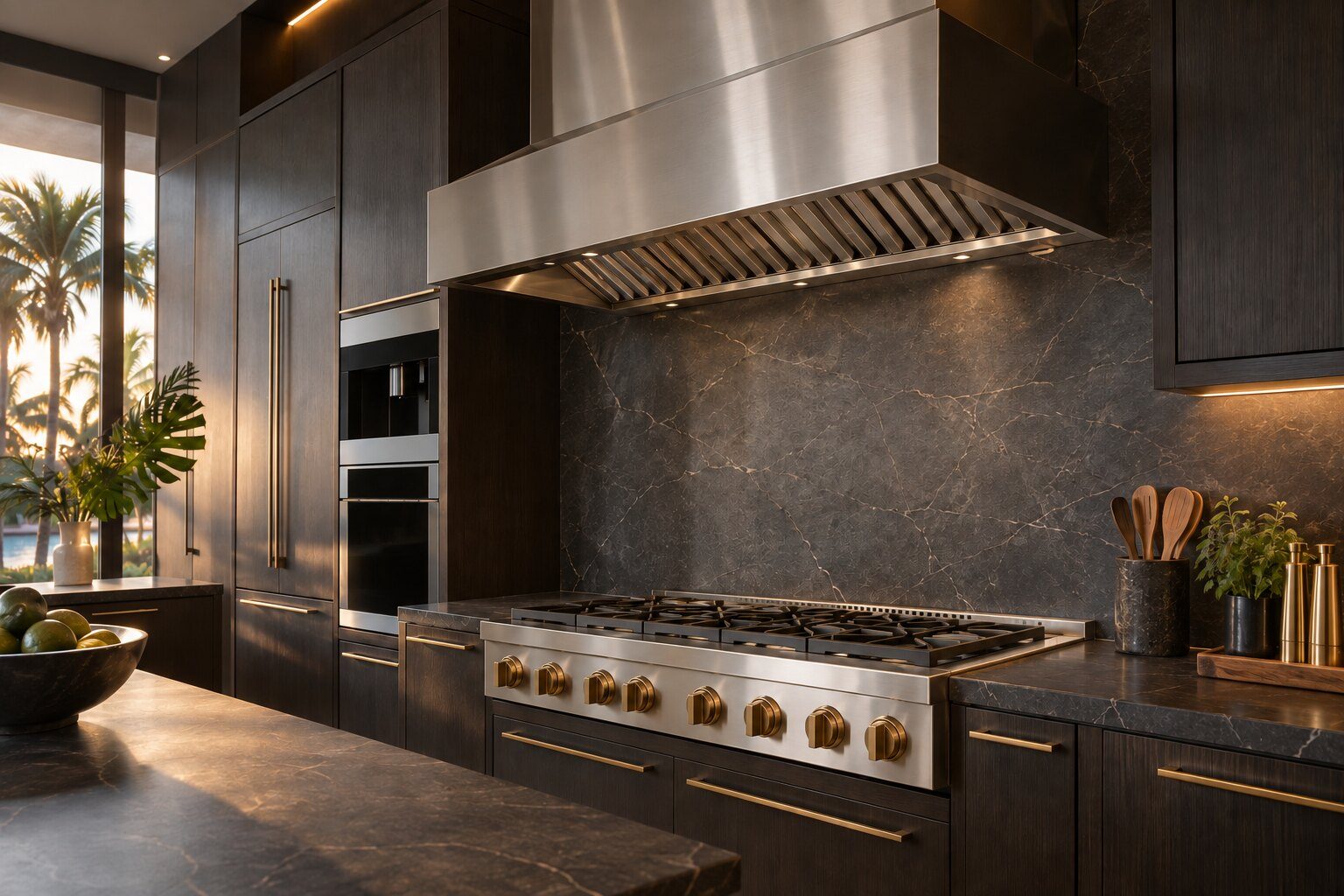
Three shapes, and which one is over the range decides everything about the repair. The pro canopies are 36 and 48 inches wide and about eighteen deep in the body, glass touch controls and LED light. The chimney hood is a 30-inch wall unit that extends up to the ceiling. The liners are inserts — five and a half inches tall — built to be hidden inside a joiner's custom hood, which means the appliance we are called to see is behind millwork nobody wants disturbed. Most hood calls are about the light, the fan speed control or the noise, and all three are reachable without touching the surround.
- 4 symptoms we are called out to
- From $95 diagnostic, credited to the repair
- 59 cities and neighborhoods covered
- OEM parts available on order
The short version
What this equipment is, for a repair
Configurations
Pro-canopy at 36 and 48 · chimney and liner inserts
Access
Planned before the visit, not discovered on arrival
Parts
OEM, available on order
Diagnostic
From $95, credited to the repair
What goes wrong with it
Symptoms we are called out to on Dacor range hoods
Each one covers the likely causes in the order they are worth checking, and what to do in five minutes before booking anything.
-
Lights work, buttons respond, and nothing moves Range hood fan will not start
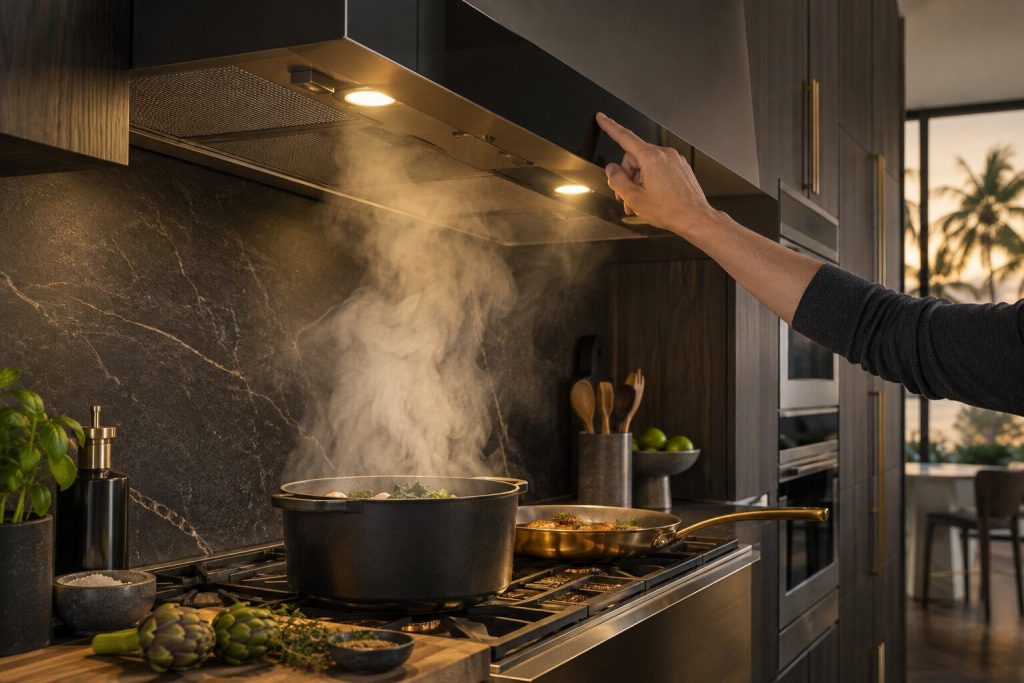
A hood that lights up and will not extract is one of the few appliances in this kitchen with no code to give you — the maker's own manual troubleshoots in plain English because the control panel has no display to show a string on. That is worth saying plainly, because several sites publish tables of codes for these hoods that the manufacturer's own document contradicts. What decides this call is which shape of hood is over the range: a canopy, a chimney, or a liner hidden inside somebody's millwork.
- There is no error code — the maker's own manual uses plain English, and so do we
- Lights working narrows it: the supply reaches the hood
- Which shape of hood it is decides how the visit is done
-
The fan sounds normal and the smoke stays Hood runs but the kitchen does not clear
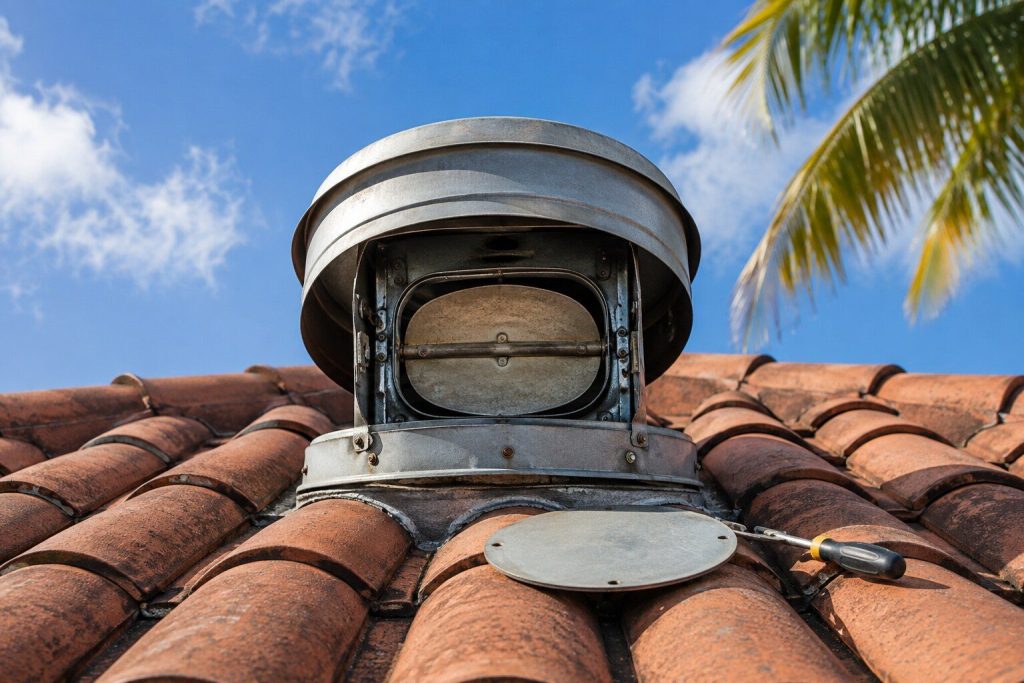
A hood can be in perfect working order and still fail to clear a kitchen, which is why this complaint is diagnosed from the outlet backwards rather than from the appliance forwards. Filters block gradually enough that nobody can name the day it got bad. Beyond them, in South Florida buildings, the duct run is often long and shared, and a run that has come apart above the ceiling or a backdraught damper stuck shut will leave a healthy blower pushing against nothing at all.
- Filters first — they block slowly enough that nobody notices
- Then the duct: long shared runs are ordinary in buildings here
- A healthy fan pushing into a blocked run sounds completely normal
-
One lamp dark, or the whole strip Hood lights not working
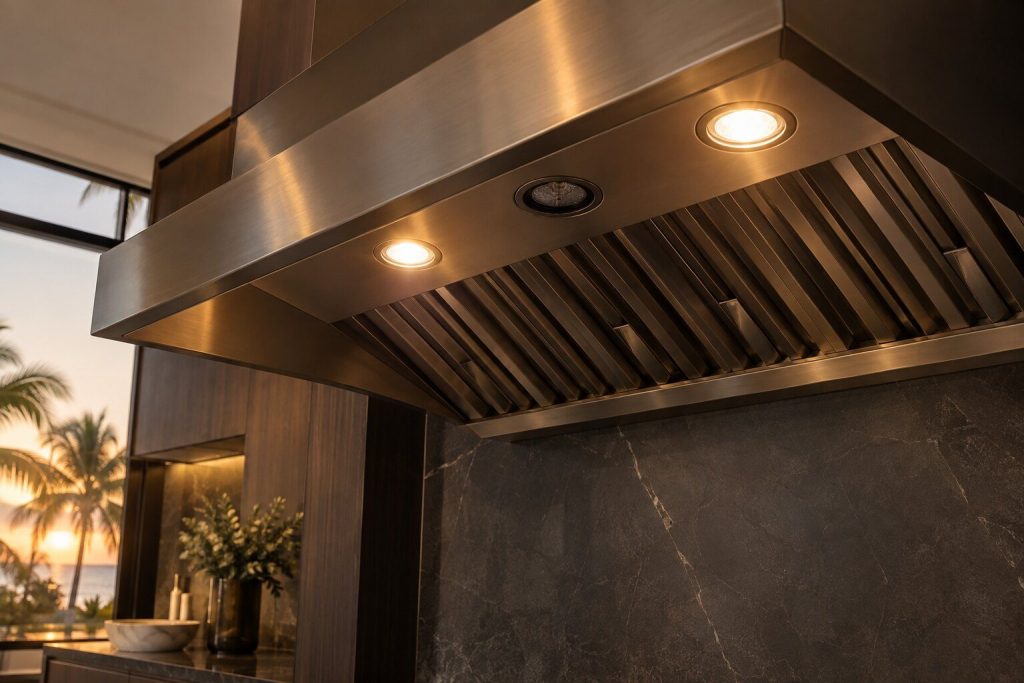
The smallest hood problem and the most common call. LED modules in these hoods fail one at a time, so a single dark lamp is a module or its driver rather than a hood at the end of its life. A whole strip dark points at the driver or the supply instead. There is no code to read — the maker's own manual troubleshoots hood lighting in plain English, because the control panel has no display. A photograph of the hood from below usually decides what goes on the van.
- One dark lamp is a module; all dark is the driver or the supply
- Dimming before failure points at the driver, not the lamps
- A photo from below is usually enough to bring the right part
-
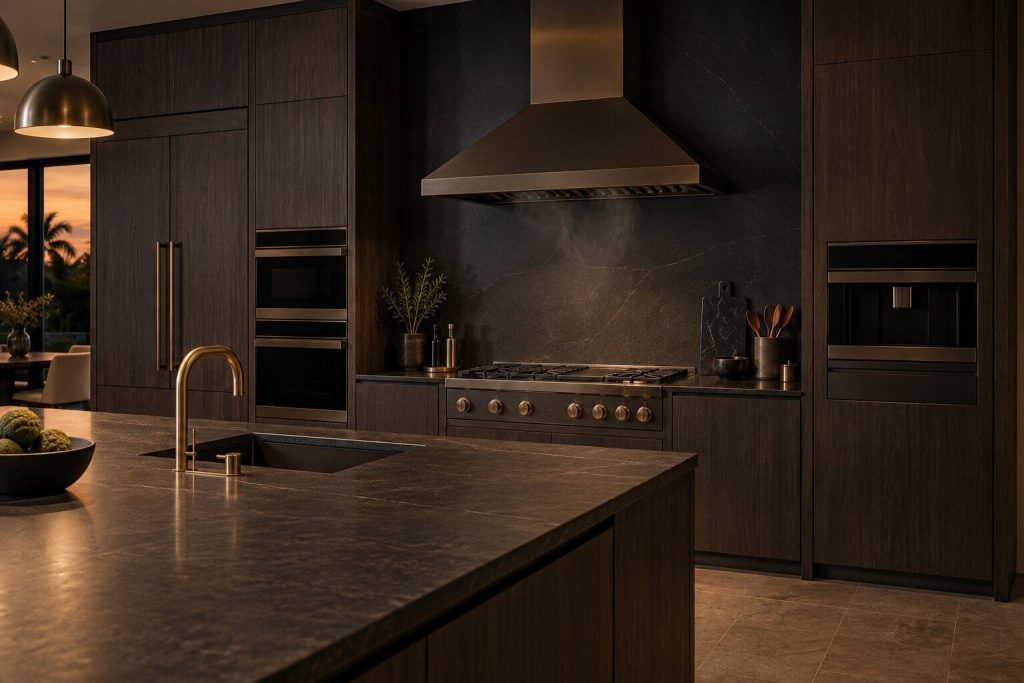
The fan starts with nobody at the controls Hood switching itself on
Alarming the first time and usually correct behavior. These hoods have an automatic overheat response: when the temperature under the canopy climbs past a threshold — a heavy sear, a long roast, a burner left high — the hood starts itself to protect the appliance and the cabinetry above it. That is the design working. What is a genuine problem is a hood that starts with a cold range, or one that starts and will not stop, and those point at the sensor or the control rather than at the kitchen.
- Starting during heavy cooking is the overheat protection, by design
- Starting with a cold range is a sensor or a control problem
- A hood that will not switch off is worth a call rather than a breaker
What we do on it
Repairs we carry out on Dacor range hoods
Starting figures for this equipment in South Florida. The exact cost is confirmed after an on-site diagnostic — and this is not the whole list of what can go wrong, so call if your problem is not here.
-
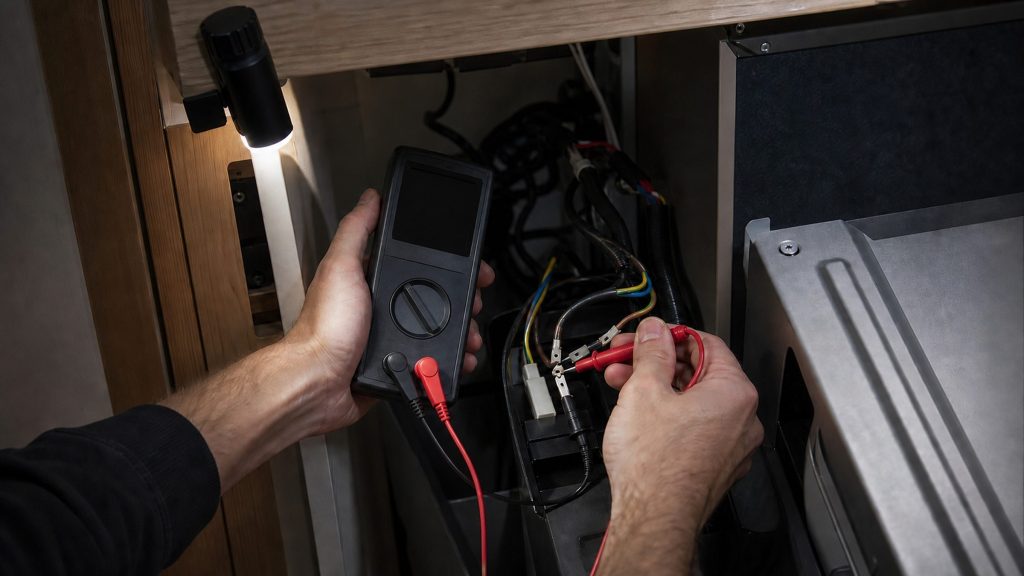
from $95 Diagnostic visit
Finding out what has actually gone wrong, before any part is named or priced. On this badge two questions come before the problem itself: how old the kitchen is, and how the appliance is held. The age decides which problem language the machine speaks — the pre-2016 boards and their F-codes, or the current platform and its letter codes — and the two share nothing. How it is held decides how long it takes to reach. The charge is credited against the repair if you go ahead, and if our honest recommendation is that the machine is not worth mending, you still get that recommendation and the charge does not change.
- The era comes first — it decides the code table, the board and the part number
- A written figure ahead of the work, credited against the repair
- If mending it is the wrong call we say so, rather than selling a part
-
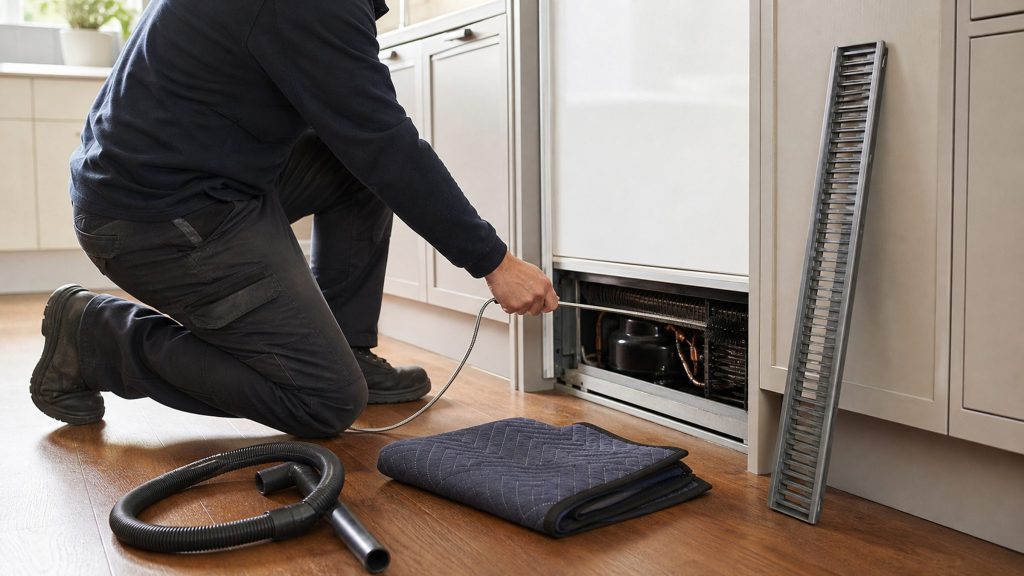
from $165 Appliance maintenance
The visit that keeps a built-in kitchen out of trouble, which on this make is mostly about air and water. Columns and panel-ready cabinets breathe through grilles that joinery and rugs slowly cover; the dishwasher softens its own water and that softener has a service interval; a steam oven has a reservoir and a descaling cycle; a hood liner fills with grease where nobody can see it. None of that is dramatic and all of it is cheaper than the failure it prevents. We do the lot in one visit rather than returning for each.
- Air paths first: column grilles, condenser coils, hood filters and blower
- Water next: the dishwasher softener, the steam reservoir, the coffee system's path
- One visit across the kitchen, not one visit per appliance
-
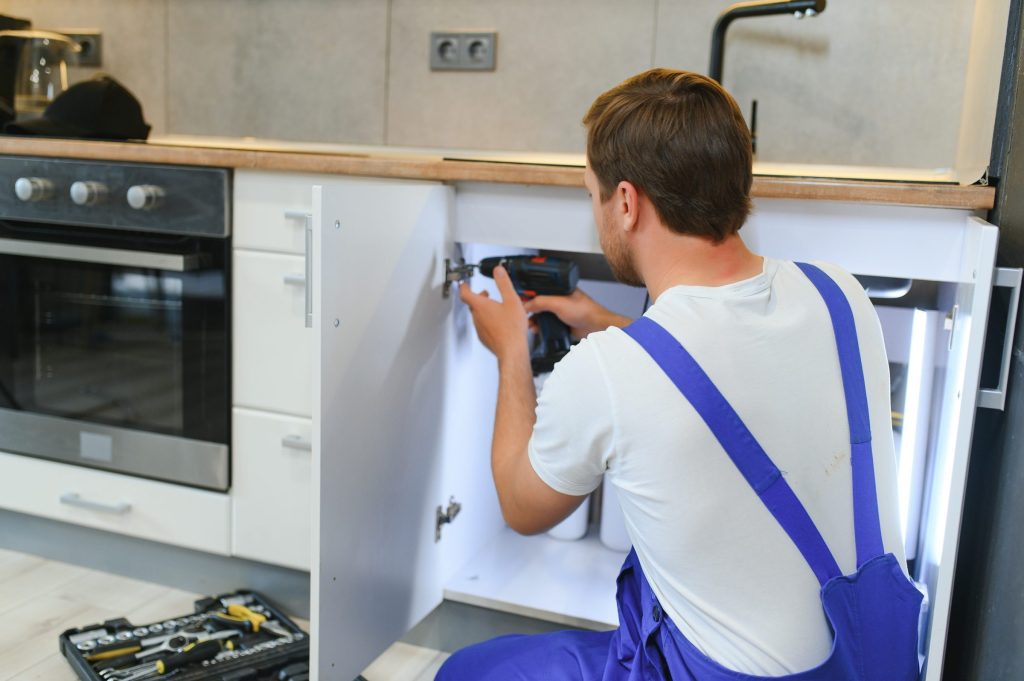
from $225 Appliance installation
Fitting equipment that was designed to disappear into cabinetry, which is a joinery job as much as a connection. Panel-ready columns and French doors take cabinet fronts and their hardware; wall ovens sit in tall units cut to a size; hood liners hide inside millwork built by somebody else; a rangetop drops into a worktop that has to be right before the appliance arrives. We measure the opening before delivery rather than after, because a cabinet that is a quarter inch out is a carpentry problem discovered on the wrong day.
- The opening is measured before the appliance is delivered, not on the day
- Panels, trim kits and handles fitted so the doors sit square and stay square
- Air path, water feed and power checked as part of the fit, not as an extra
-

from $165 Hood motor and blower service
Noise and weak extraction are the two hood complaints, and both are usually grease before they are parts. A blower wheel collects it unevenly, goes out of balance and hums or rattles at particular speeds; filters block gradually enough that nobody notices the day the kitchen stopped clearing. What is not grease is a bearing, a mount that has loosened, or a duct that has come apart above the ceiling — and in South Florida buildings, with long shared runs, the duct is a more common answer than people expect.
- Gradual noise is grease and balance; sudden noise is a bearing or a mount
- Weak extraction starts at the filters and often ends at the duct
- Long shared duct runs are ordinary here and are part of the diagnosis
-
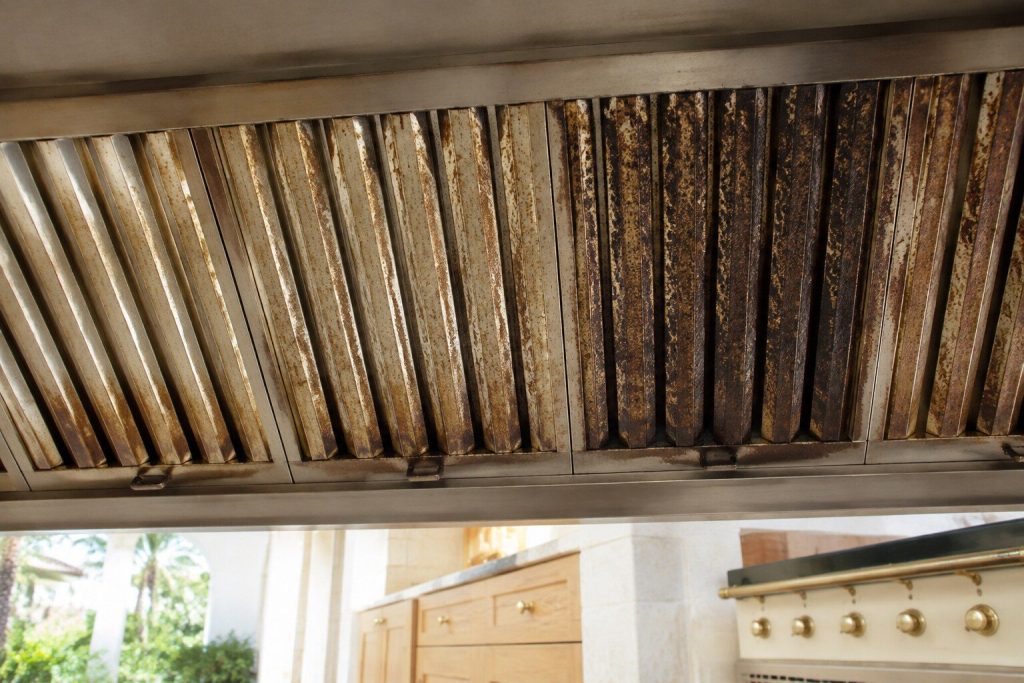
from $175 Hood liner service
The liner inserts are about five and a half inches tall and live inside a hood built by a joiner, which is why owners put off calling: they assume the carpentry has to come apart. In nearly every case it does not. These units are designed to be serviced from below — filters down, blower and lamps reachable through the opening — and a kitchen that has been venting badly for a year can usually be put right in a single visit without a mark on the millwork.
- Designed to be serviced from below — the joinery stays where it is
- About five and a half inches of appliance inside somebody else's hood
- The postponed repair is usually the easy one
-
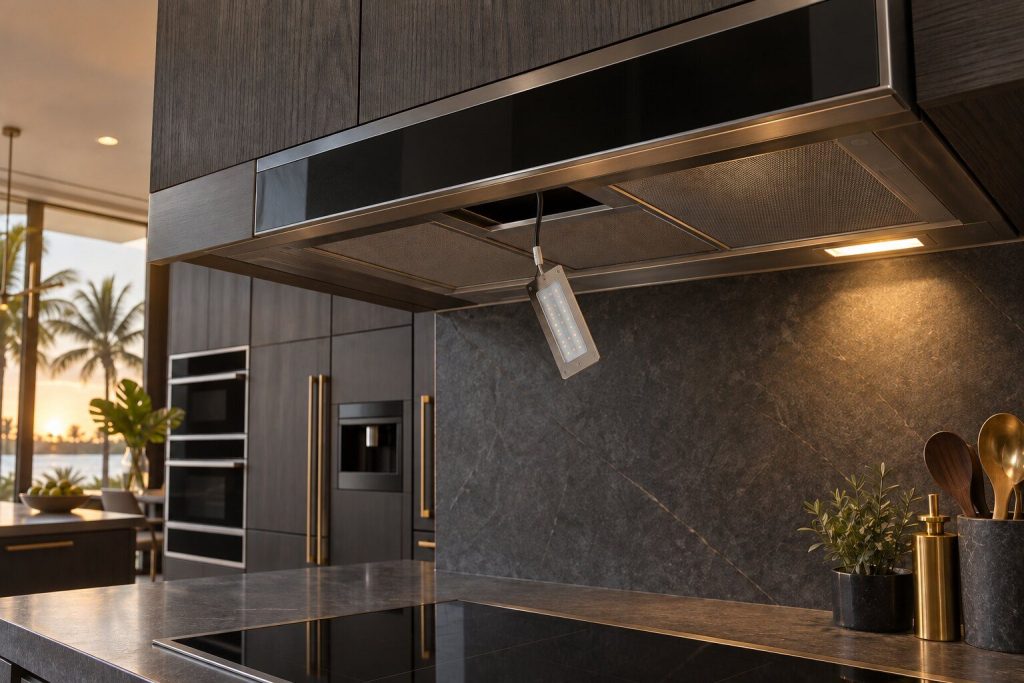
from $119 Hood light and control service
Lamps and controls are the small end of hood work and the most common call. LED modules fail one at a time, so a single dark lamp is a module or its driver rather than a hood at the end of its life; a whole strip dark points at the driver or the supply. The glass touch controls on the canopy hoods have their own failure — a panel that responds to some presses and not others, usually the panel itself rather than the board behind it. Both are short visits, and a photograph from below tells us most of what to bring.
- One dark lamp is a module; all dark is the driver or the supply
- Touch panels that half respond are usually the panel, not the board
- A photo from below decides what goes on the van
-
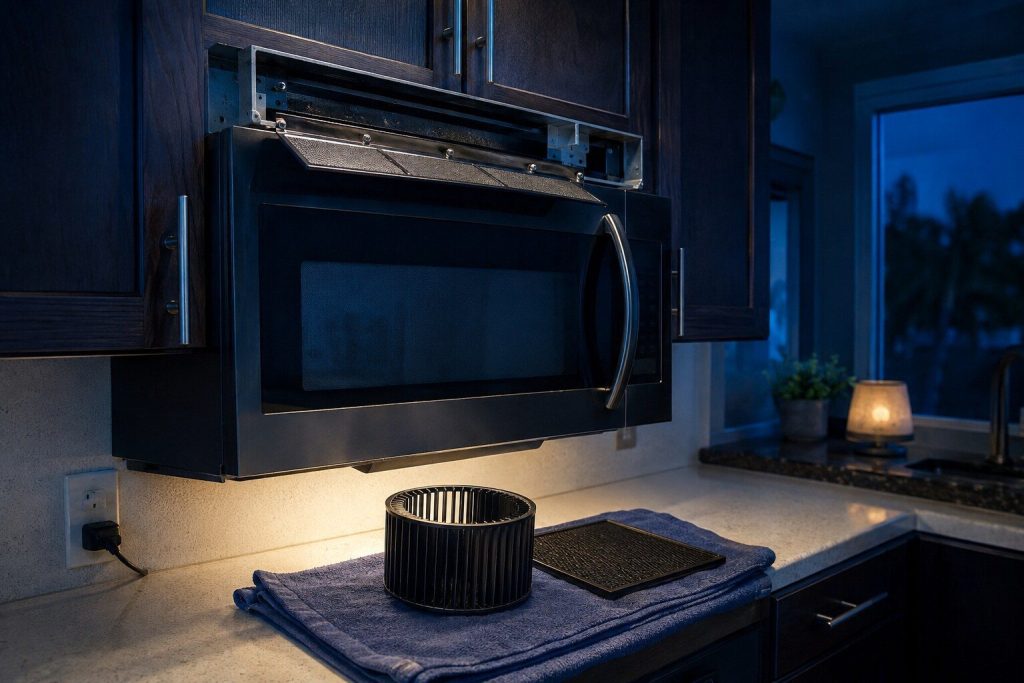
from $169 Over-range microwave and vent service
The over-range unit is two appliances in one shell — a convection microwave and a ventilation hood — and either half can fail while the other is perfect. Venting that has weakened is normally filters or the duct, exactly as on a full hood; heating problems are microwave problems. What makes this unit particular is a shared control panel, so a fan that does not respond at all and a fan that simply moves less air point at different halves of the machine. We ask which it is before the van is loaded.
- Two appliances in one shell, with one control panel between them
- No response at all and weak airflow are different halves of the machine
- Convection adds an element and a fan the plain machines do not have
In more detail
About Dacor range hoods
Three shapes, three visits
A pro canopy, a chimney hood and a hidden liner are serviced differently and fail differently. The liner is the one that worries people most and is usually the simplest: it was designed to be reached from below, which means the custom millwork around it stays where it is.
Grease is the usual answer
Most noise complaints on a hood are a blower wheel carrying an uneven layer of grease, and most performance complaints are filters. Neither needs parts. Saying so first is more useful than a diagnosis that arrives with an invoice.
When the fan is fine and the duct is not
A hood can be in perfect order and still fail to clear a kitchen if the duct above it has come apart or a damper has stuck. In buildings here the run is often long and shared, and that is where we look once the appliance itself has been ruled out.
This article is based on:
- Official manufacturer documentation
- Internal repair procedures
- Technician repair history
- Company quality standards
Before you book
Questions about Dacor range hoods
The fan is loud and it was not before.
Noise that changes character is worth a look; noise that has grown gradually is usually grease. The blower wheel collects it unevenly, goes out of balance and hums or rattles at particular speeds — very ordinary in a kitchen that cooks, and reversible with cleaning rather than parts. A sudden change in the noise, particularly a scrape or a knock, is the other kind and we treat it as a bearing or a mount until shown otherwise.
Only one lamp works.
LED modules in these hoods generally fail one at a time, so a single dark lamp is a module or its driver rather than the hood. It is among the cheapest visits on the list and one of the few where a photograph of the hood from below tells us almost everything we need to bring. Where the whole strip is dark, the driver or the supply becomes the more likely answer.
The hood is built into cabinetry — can it be serviced?
Yes, and in nearly every case without disturbing the joinery. The liner inserts are made to be serviced from below: the filters come down, the blower and the lamps are reachable through the opening. We say this plainly because people postpone hood repairs out of a fear of the carpentry, and then live with a kitchen that vents badly for a year.
It does not seem to clear steam any more.
Start with the filters. Baffle and mesh filters block gradually and the loss of performance is slow enough that nobody notices the day it becomes bad. After that, the duct: a run that has come loose above the ceiling, or a backdraught damper stuck shut, will leave a perfectly healthy fan pushing against nothing. Both are common in South Florida buildings where the duct run is long and shared.
Where we do it
Across Miami-Dade, Broward, and Palm Beach
Same terms everywhere we go: an on-site diagnostic first, the price agreed in writing, and the exact figure confirmed once we have seen the unit.
Neighborhoods people ask for by name