Appliance
Dacor wine columns
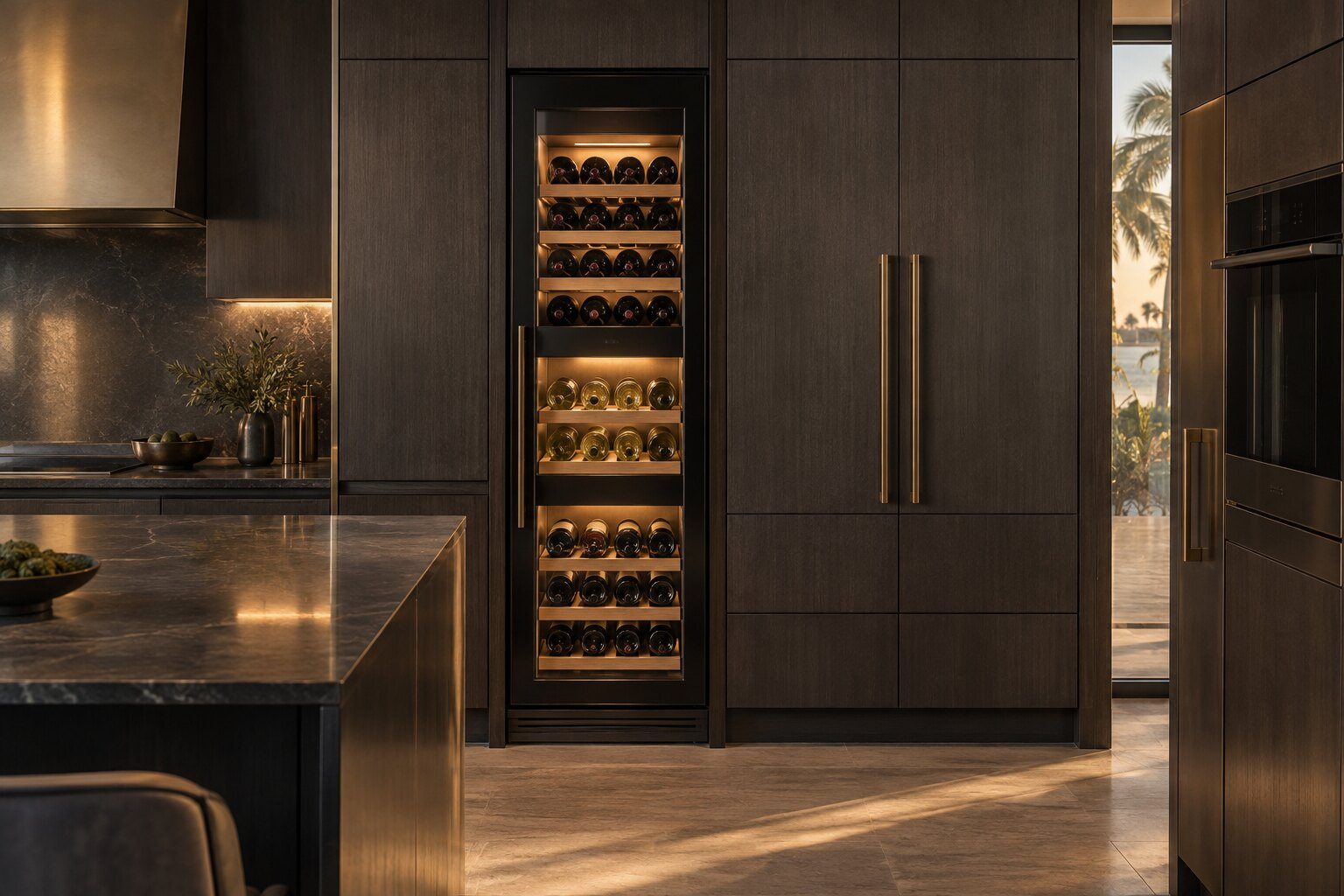
One cabinet, taken seriously. The 24-inch wine column holds about a hundred bottles across three independently held zones behind argon-filled triple glazing, on oak racks that glide out and doors that push to open. It is specified to hold within a third of a degree, and that specification is the reason people call: a cabinet built to that tolerance is expected to keep it, and a drift of two degrees in one zone is a problem here where it would be ordinary elsewhere. There is a smaller undercounter cellar too — 41 bottles, two zones — and it is a different machine with different expectations.
- 5 symptoms we are called out to
- From $95 diagnostic, credited to the repair
- 59 cities and neighborhoods covered
- OEM parts available on order
The short version
What this equipment is, for a repair
Configurations
24-inch wine column · 100 bottles, three zones
Access
Planned before the visit, not discovered on arrival
Parts
OEM, available on order
Diagnostic
From $95, credited to the repair
What goes wrong with it
Symptoms we are called out to on Dacor wine columns
Each one covers the likely causes in the order they are worth checking, and what to do in five minutes before booking anything.
-
One zone has drifted and the others are holding Wine column zone too warm
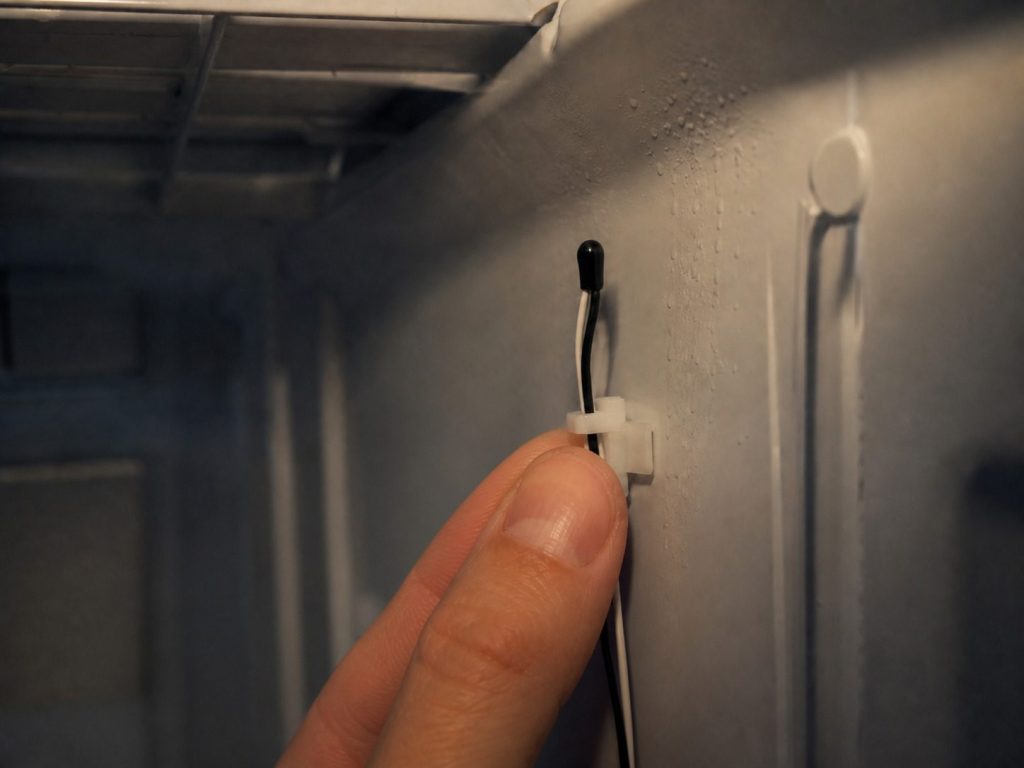
A cabinet specified to hold within about a third of a degree is judged against that number, and a two-degree drift that would be unremarkable in a refrigerator is a problem here. The question that decides everything is how many zones are wrong. One adrift while the others hold is the division of airflow — that zone's sensor or damper — and stays a small repair. All three drifting together moves the diagnosis to the system feeding them. There is no code to read on this cabinet; the measurement is the diagnosis.
- One zone wrong is local. Three zones wrong is the system
- Two degrees is a problem on a cabinet specified to a third of one
- No code exists — a 156-page manual with no code table in it
-
The outer pane is cold and the glass is wet Condensation on the wine column glass
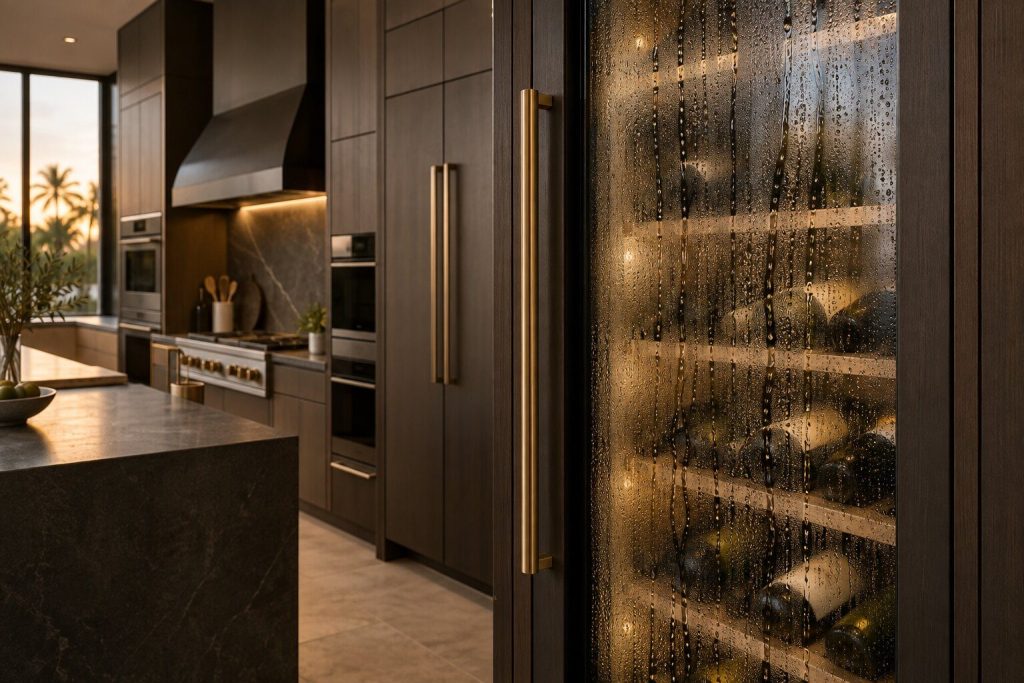
The door of a wine column is equipment in itself: argon-filled triple glazing designed to keep heat and ultraviolet light out of the cabinet. Its outer pane should sit near room temperature even in a Miami August. When that pane is cold to the touch and running with condensation, the cavity has lost its fill or the door is no longer sealing — and either way the cabinet is now fighting the room. It will lose slowly, expensively and out of sight, which is why this is worth a call earlier than it feels like it deserves.
- Cold outer glass is a problem, not humidity
- The cabinet is now fighting the kitchen, and the compressor pays for it
- Check the racks before the door: one sitting proud holds it open
-

It shows offline, or never finishes pairing The app will not connect to the appliance
Worth a page of its own because it is the complaint most likely to be sold as an appliance repair when it is nothing of the sort. The current generation reports to an app, and when the link works it genuinely shortens a diagnosis — a caller who can read what the app says saves the first part of a visit. When it does not work, the appliance is almost always fine, and the problem belongs to a router, a network band or an account. We will say so, and we will not charge repair money for it.
- An appliance off the network is not a broken appliance
- Most of these are the 2.4 GHz band, the router or the account — not the machine
- Only the 2016-and-later machines connect at all
-
A click, a buzz or a rattle that was not there last month Refrigeration making a new noise
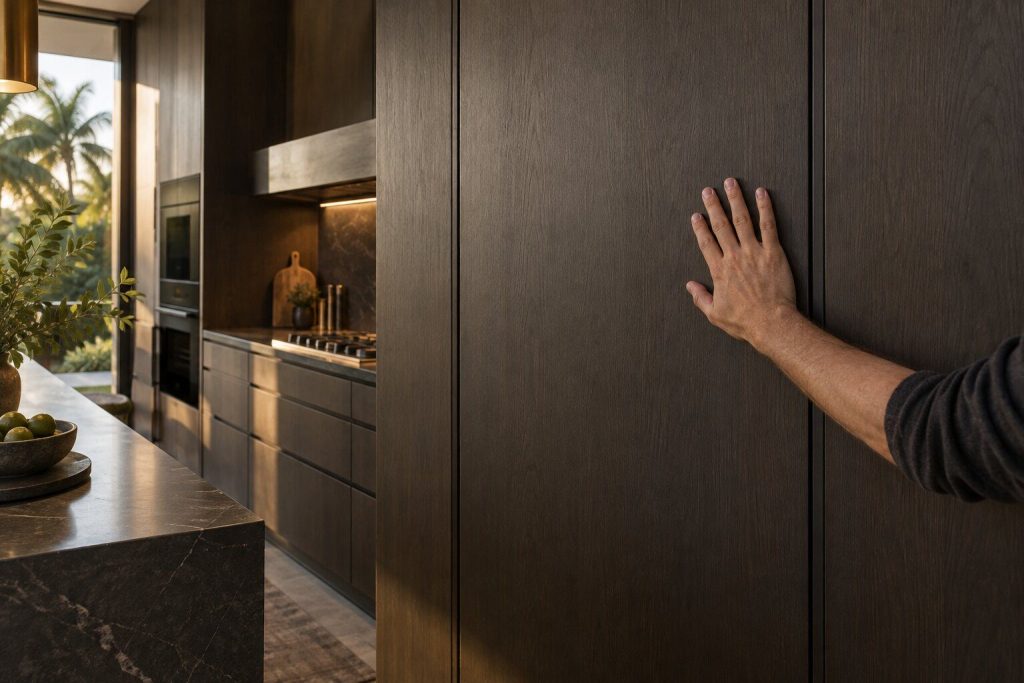
Refrigeration is never silent, and the useful question is not whether it makes a noise but whether the noise is new. Built-in cabinets are quieter than freestanding ones, which means a change is noticed sooner and worries people more. Most new noises come from one of four places — the evaporator fan, the condenser fan, the compressor mounts, or something touching the cabinet — and three of those four are cheap. What matters is catching a fan before ice or a dry bearing takes the cooling with it.
- A new noise is worth a call; a familiar one usually is not
- Noise that stops when the door opens is the evaporator fan
- Panel-ready cabinets amplify contact noise through the joinery
-
The cabinet insists the door is open and it plainly is not Door alarm chiming with the door shut
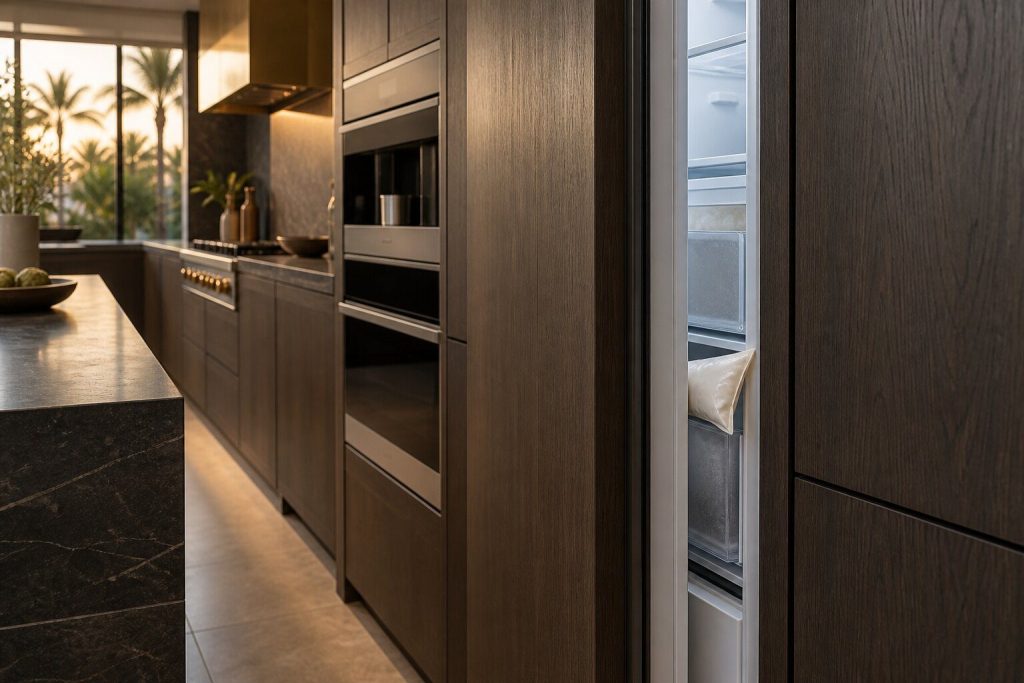
One of the four named alarms these cabinets have — there is no code behind it, just the chime and the app saying Door Open. When it sounds with the door visibly closed, the appliance is not confused: either the door is genuinely not sealing home, or the switch that reports its position has failed. The first is far more likely and often free to correct, and on a panel-ready door it is usually a hinge that has settled under the weight of a cabinet front.
- No code behind it — Door Open is one of only four named alarms on these cabinets
- A door that looks closed can still be a few millimeters off the seal
- Panel weight settles hinges, and the switch is the last suspect
What we do on it
Repairs we carry out on Dacor wine columns
Starting figures for this equipment in South Florida. The exact cost is confirmed after an on-site diagnostic — and this is not the whole list of what can go wrong, so call if your problem is not here.
-
from $95 Diagnostic visit
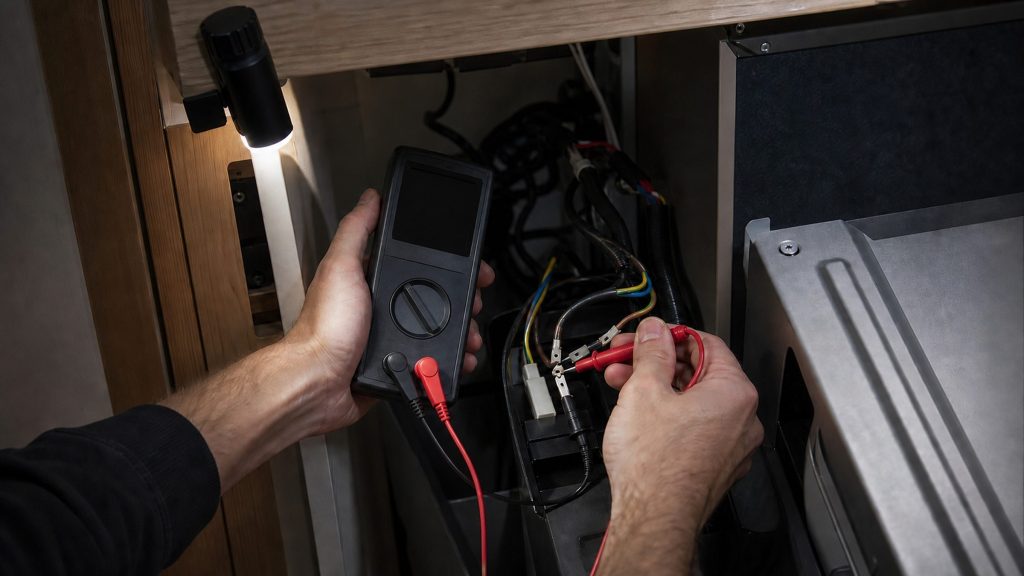
Finding out what has actually gone wrong, before any part is named or priced. On this badge two questions come before the problem itself: how old the kitchen is, and how the appliance is held. The age decides which problem language the machine speaks — the pre-2016 boards and their F-codes, or the current platform and its letter codes — and the two share nothing. How it is held decides how long it takes to reach. The charge is credited against the repair if you go ahead, and if our honest recommendation is that the machine is not worth mending, you still get that recommendation and the charge does not change.
- The era comes first — it decides the code table, the board and the part number
- A written figure ahead of the work, credited against the repair
- If mending it is the wrong call we say so, rather than selling a part
-
from $165 Appliance maintenance
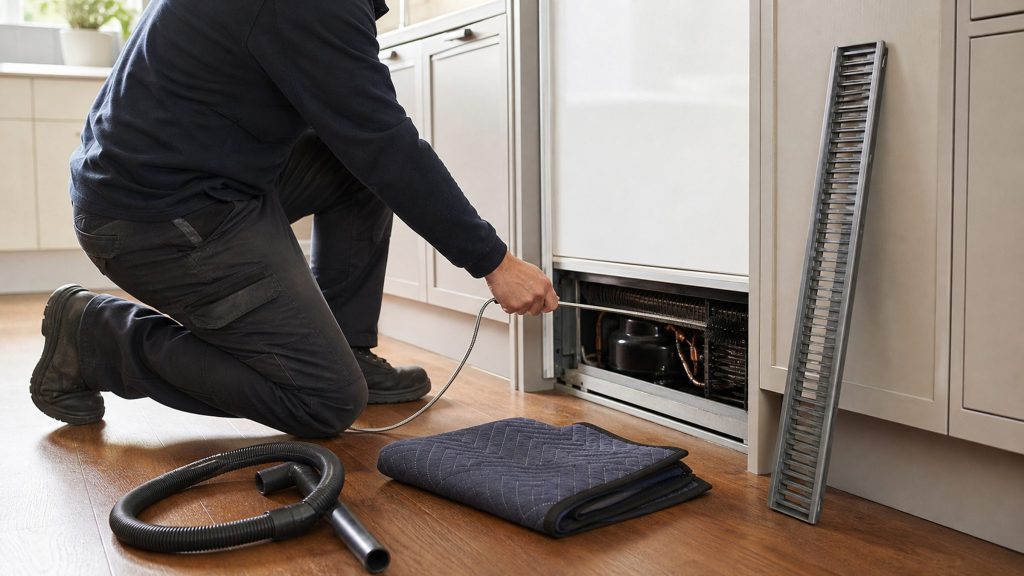
The visit that keeps a built-in kitchen out of trouble, which on this make is mostly about air and water. Columns and panel-ready cabinets breathe through grilles that joinery and rugs slowly cover; the dishwasher softens its own water and that softener has a service interval; a steam oven has a reservoir and a descaling cycle; a hood liner fills with grease where nobody can see it. None of that is dramatic and all of it is cheaper than the failure it prevents. We do the lot in one visit rather than returning for each.
- Air paths first: column grilles, condenser coils, hood filters and blower
- Water next: the dishwasher softener, the steam reservoir, the coffee system's path
- One visit across the kitchen, not one visit per appliance
-
from $225 Appliance installation
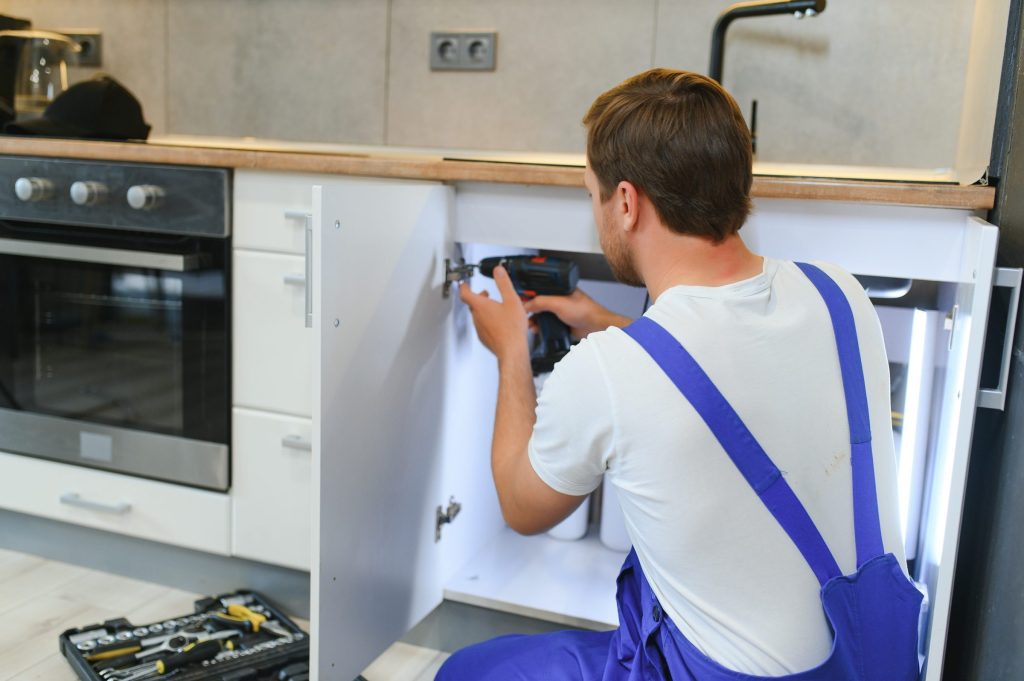
Fitting equipment that was designed to disappear into cabinetry, which is a joinery job as much as a connection. Panel-ready columns and French doors take cabinet fronts and their hardware; wall ovens sit in tall units cut to a size; hood liners hide inside millwork built by somebody else; a rangetop drops into a worktop that has to be right before the appliance arrives. We measure the opening before delivery rather than after, because a cabinet that is a quarter inch out is a carpentry problem discovered on the wrong day.
- The opening is measured before the appliance is delivered, not on the day
- Panels, trim kits and handles fitted so the doors sit square and stay square
- Air path, water feed and power checked as part of the fit, not as an extra
-
from $295 Control board repair
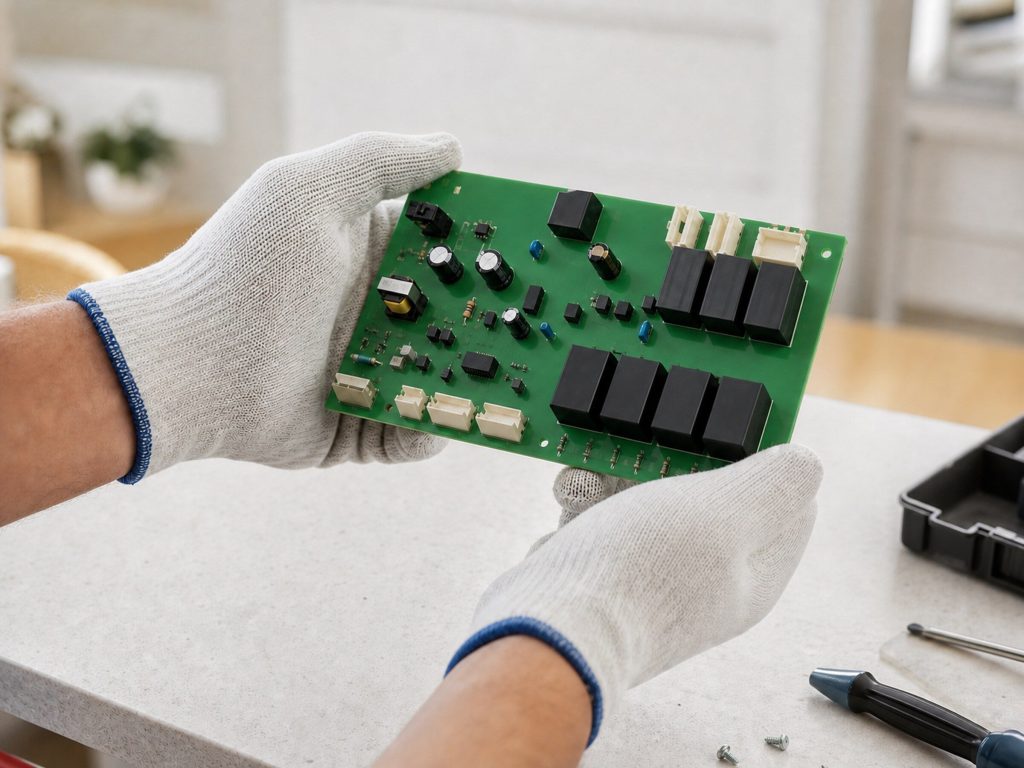
The board is the part most often blamed and least often at problem, so it is the last thing we conclude rather than the first. What makes this badge different is that there are two entirely separate generations of board behind the same door: the pre-2016 Dacor boards, and the Samsung-platform boards that replaced them. They are not interchangeable, the part numbers do not translate, and a supplier who is given the wrong one will happily sell it. We identify the generation from the plate before anything is ordered.
- Ruled in by elimination — sensors, harnesses and supply are checked first
- Two generations of board on one badge: the part numbers do not translate
- Legacy boards are quoted rather than published — availability is checked first
-
from $185 Built-in column access
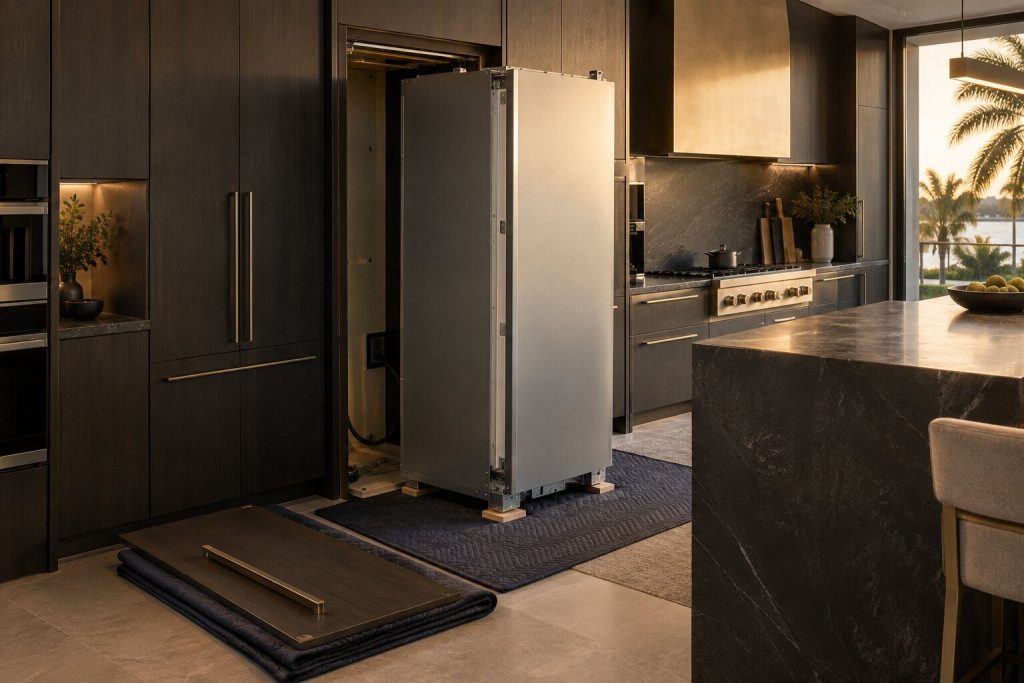
The service that exists because of the shape of this line. A refrigeration column is captured by the cabinetry around it, held by trim, carrying a cabinet panel and a handle that belong to the kitchen rather than the appliance. Bringing it far enough forward to be worked on — and putting the joinery back exactly as it was — is real work with a real risk attached, and pretending otherwise is how a repair leaves a scratch down a walnut run. We price it as its own step so that nobody is surprised by it halfway through a visit.
- Panel, handle and trim removed and recorded before anything is moved
- The joinery is protected first — the risk here is the cabinetry, not the appliance
- Priced as its own step so it is never a surprise mid-visit
-
from $129 Condenser cleaning
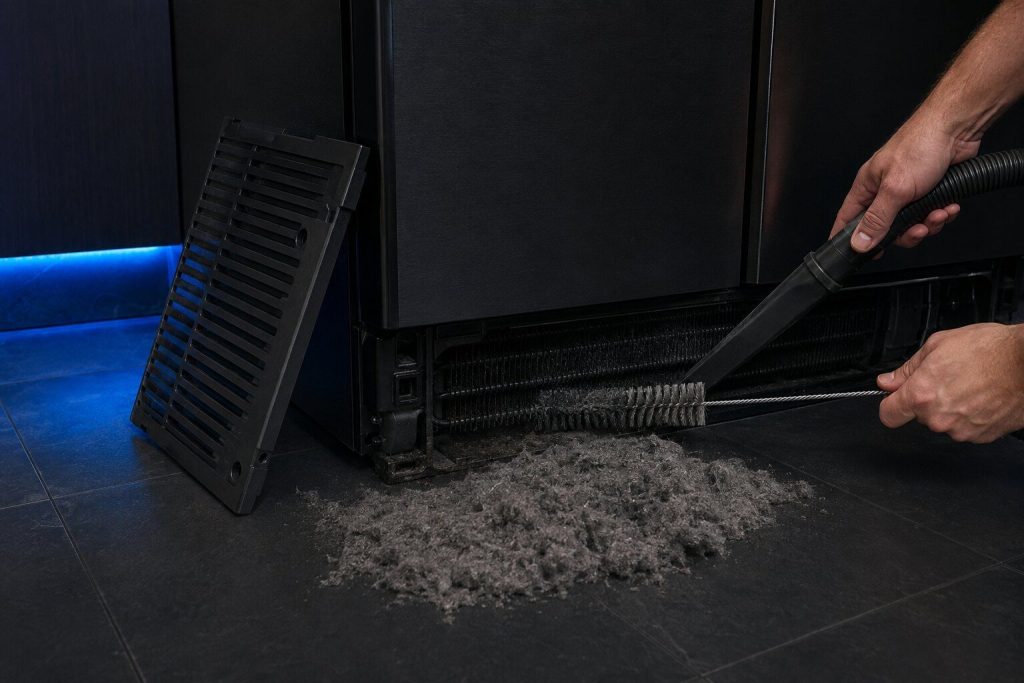
The least glamorous visit on the list and the one that prevents the most expensive ones. A condenser rejects heat, and in a Miami kitchen it does that through a grille that collects dust, cooking grease and pet hair until the cabinet is running against itself. On built-in refrigeration it matters more than on freestanding, because the coil sits in a defined air path that the cabinetry controls: when that path is restricted, the compressor runs longer, the temperature drifts, and everything downstream ages faster than it should.
- Built-in refrigeration lives on a defined air path — restrict it and everything ages
- Grease and pet hair, not dust, are what actually block a Miami coil
- Cheapest visit here, and the one that prevents the dear ones
-
from $165 Door seal replacement
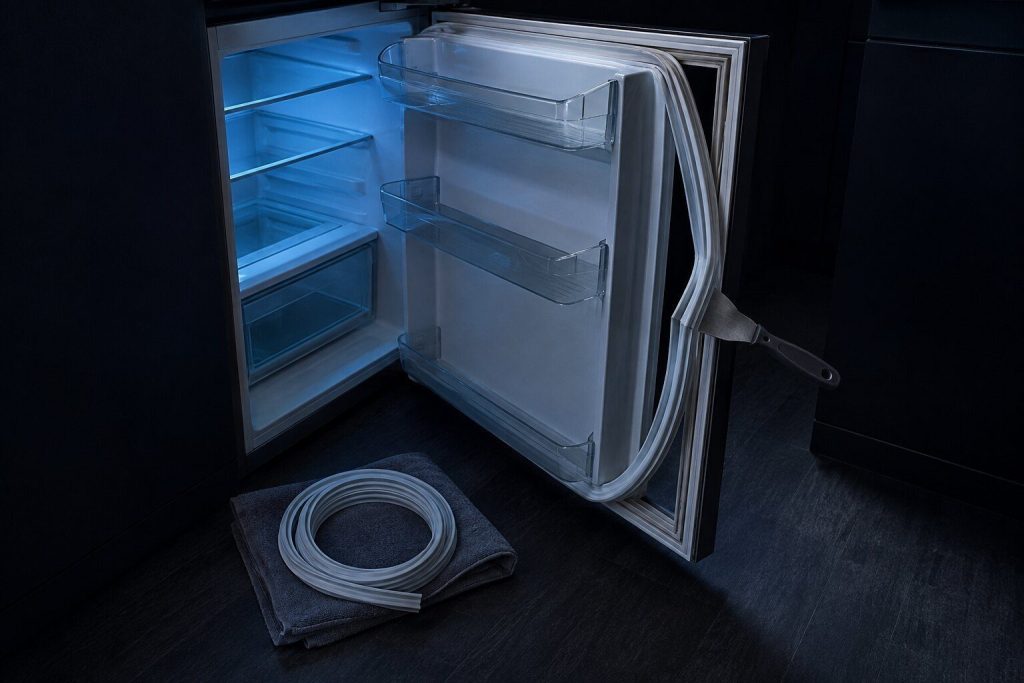
A gasket that no longer seals is a slow, expensive problem: the cabinet runs longer, the compartment nearest the leak drifts, and condensation appears where nobody expects it. Panel-ready doors make it likelier than on ordinary refrigeration, because the door carries the weight of a cabinet front and its hardware, and a hinge that has settled under that weight pulls the seal away from the frame along one edge. Replacing the gasket without correcting the door is how the same problem comes back within a year, so we do both or neither.
- Panel weight settles hinges — the seal is often the symptom, not the cause
- A dollar-bill test along all four edges, not a look at the worst corner
- Door alignment corrected at the same visit or the problem returns
-
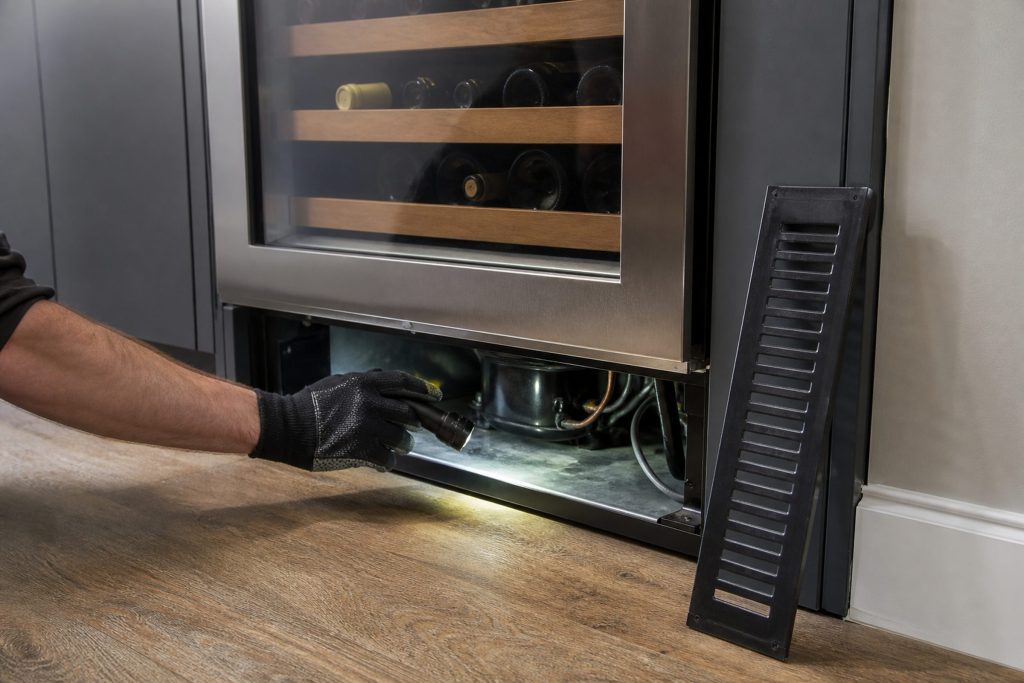
from $185 Wine column not cooling repair
A wine cabinet specified to hold within about a third of a degree is a machine where a two-degree drift counts as a failure, and the owner who calls about it is not being fussy. The useful question is how many zones are wrong. One zone adrift while the others hold is a division-of-airflow problem — that zone's sensor or damper — and stays a small repair. All three drifting together moves the diagnosis to the system feeding them, and that is where the cabinet's age and its condenser start to matter.
- One zone wrong is local; three zones wrong is the system
- Two degrees is a problem on a cabinet specified to a third of one
- A full cabinet holds temperature far better than an empty one during a visit
-
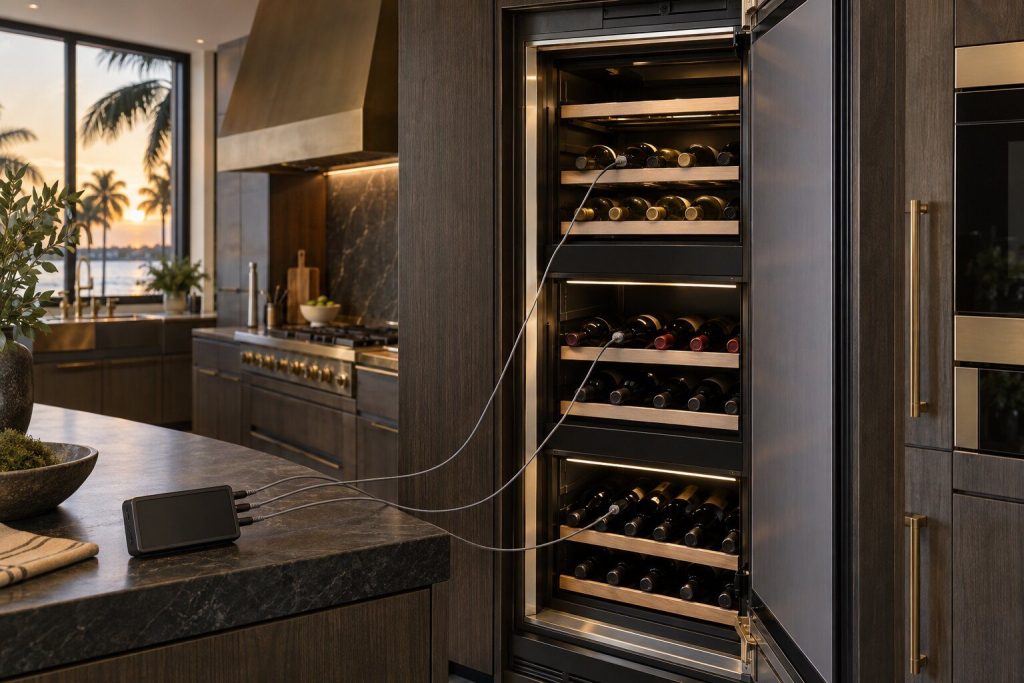
from $165 Wine zone calibration
Measuring what the cabinet is actually doing, zone by zone, against what its display claims. On a three-zone column with a tight specification the two can separate slowly — a sensor that reads a degree optimistic, a damper that no longer closes fully — and nothing about that is visible from the front. Calibration is instrument work rather than adjustment by feel: probes in each zone, logged over a period long enough to include a compressor cycle, then correction where the reading and the truth have parted company.
- Probes in each zone, logged across a full compressor cycle
- Corrects the drift between what the cabinet does and what it says
- Worth doing before a collection is moved in, not after
-
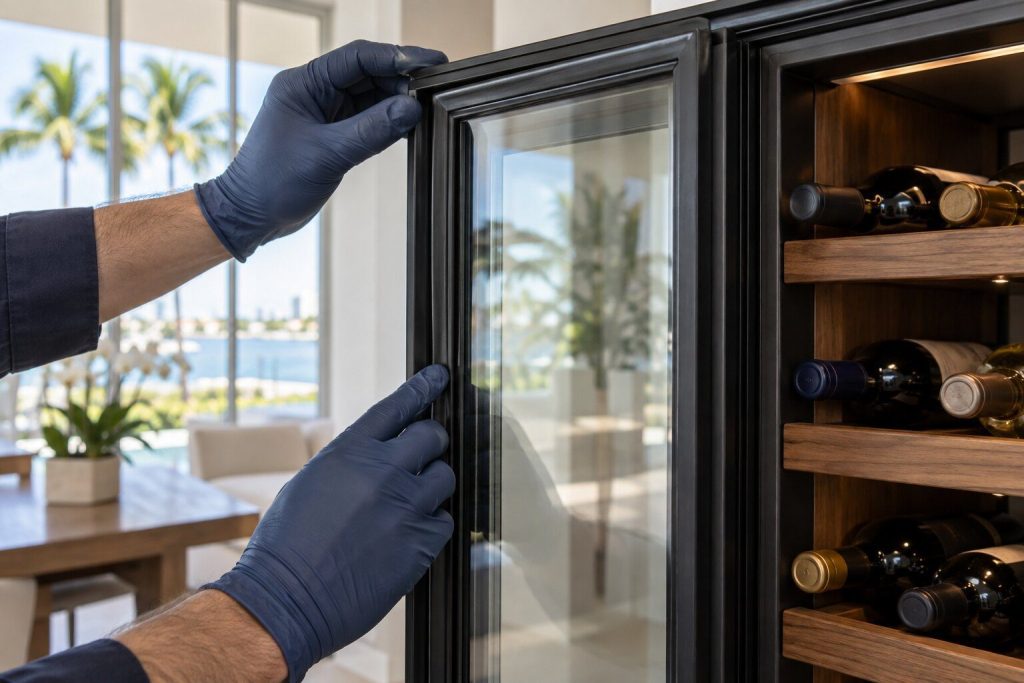
from $149 Wine door and seal service
The door of a wine column is a piece of equipment in itself: argon-filled triple glazing that keeps ultraviolet light and heat out of the cabinet, a gasket that has to seal against a room at eighty per cent humidity, and a push-to-open mechanism that people use several times a day. Condensation on the outside of the glass, or glass that is cold to the touch, means the cavity or the gasket is letting the cabinet fight the kitchen — and in this climate the cabinet loses that fight slowly, expensively, and out of sight.
- Cold outer glass or condensation on it is a real problem, not humidity
- The gasket seals against a Miami kitchen — it works harder here than anywhere
- Push-to-open is a mechanism and wears like one
-
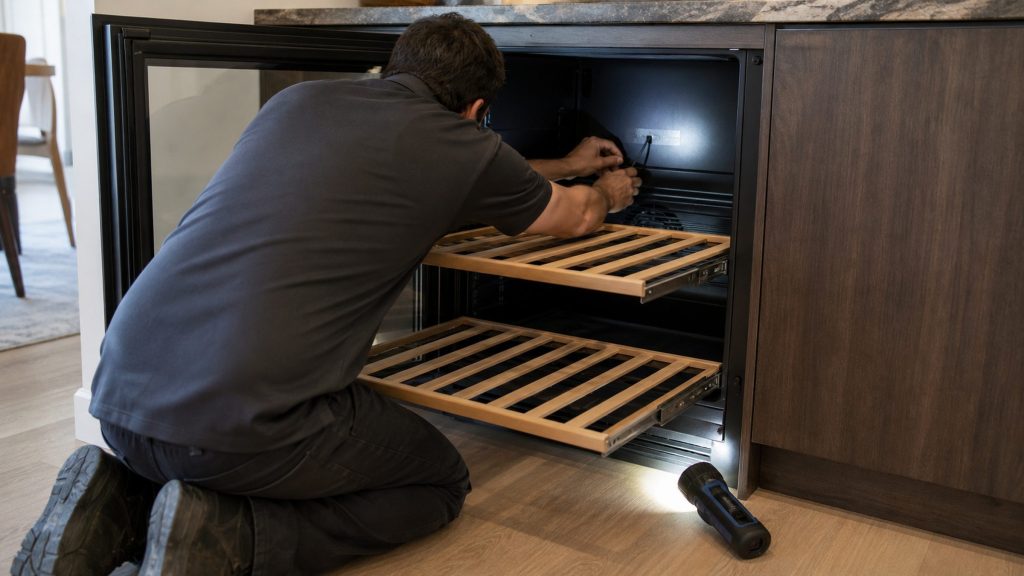
from $119 Glideracks and runner service
The oak racks in these columns glide out on runners so that bottles come forward in a tray rather than being reached for one at a time, and that mechanism is used more than any other part of the cabinet. Runners bind, a rack sits proud and stops the door sealing, a rail comes loose and a hundred bottles' worth of weight goes somewhere it should not. It is the smallest visit on this list and one of the more satisfying, because the result is immediate and visible the moment you pull a shelf.
- Used more than any other part of the cabinet, and wears accordingly
- A rack sitting proud is a door-seal problem waiting to be misdiagnosed
- Small visit, immediate result
-
from $109 Smart features and connectivity
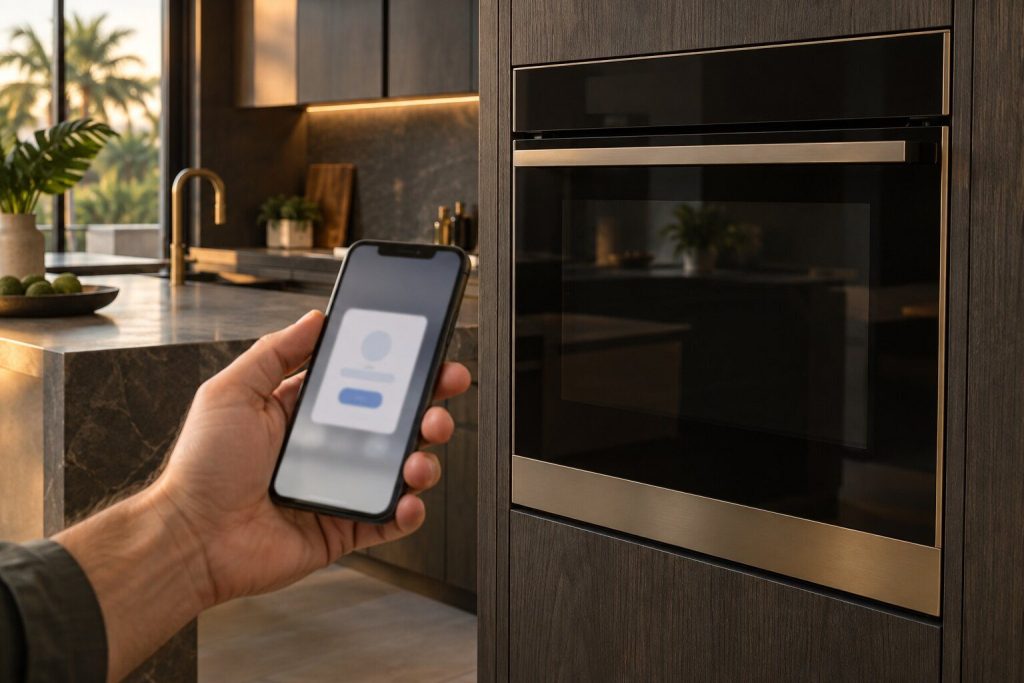
The current generation reports to an app, and when that link works it is genuinely useful for diagnosis — a caller who can read us what the app says shortens the conversation considerably. When it does not work, the appliance is usually fine. We treat connectivity as its own small service rather than as a repair, and we will say plainly when the problem is a router, a network band or an account rather than the machine. An oven off the network is not a broken oven, and nobody should pay for a visit that says otherwise.
- Connectivity is its own small service, not an appliance repair
- An appliance off the network is not a broken appliance
- Where the answer is the router or the account, we say so and charge accordingly
In more detail
About Dacor wine columns
A third of a degree is a promise
Wine cabinets are sold on tolerance, and this one is specified tightly enough that a drift most refrigerators would shrug off counts as a problem. That changes what is worth calling about. A zone two degrees off its setting is not fussiness on the owner's part; on this cabinet it is the machine failing to do the single thing it was bought to do.
Three zones means three answers
Independently held zones are the reason a diagnosis can start on the telephone. One zone wrong points at its own sensor and damper; all three drifting together points at the system feeding them. The caller who knows which case it is has already done half the work.
Two different cabinets, one word
The full-height column and the undercounter cellar share a name and almost nothing else — a hundred bottles in three zones against forty-one in two, different platforms, different parts. We ask which one is in the kitchen before anything else, because arriving with the wrong assumption costs a visit.
This article is based on:
- Official manufacturer documentation
- Internal repair procedures
- Technician repair history
- Company quality standards
Before you book
Questions about Dacor wine columns
One zone is warm and the others are right.
That is the useful failure, because it rules out most of the cabinet. Three independently held zones means three sensors and a damper arrangement that divides the airflow, so a single zone drifting while the others hold is nearly always in that division rather than in the sealed system feeding all three. We ask which zone and by how much, because a zone that is two degrees out and one that is ten are different repairs.
The glass is cold to the touch and there is condensation on it.
The door is argon-filled triple glazing, and its outer pane should sit near room temperature in a Miami summer. Cold glass and condensation together mean the seal of that cavity or the door gasket is letting the cabinet fight the room, which in this climate it will lose slowly and expensively. It is worth the call early: the compressor running against a leaking door is what shortens the life of a cabinet like this one.
Does the racking come out for a repair?
The oak racks glide out and are meant to, which is one of the few pleasant facts about servicing this cabinet — the bottles come out in trays rather than by hand, one shelf at a time. We ask you to empty the zone we are working on and leave the rest loaded; a full cabinet holds its temperature far better while a door is open, and on a hundred-bottle column that matters over the length of a visit.
Is the undercounter cellar the same machine?
No, and it is worth being clear about it before a visit. The undercounter cellar is 41 bottles in two zones, a different platform with different parts, and it lives under a worktop rather than standing full height in a run of cabinetry. When somebody says wine cooler we ask which of the two is in the kitchen, because almost nothing crosses between them but the name.
Where we do it
Across Miami-Dade, Broward, and Palm Beach
Same terms everywhere we go: an on-site diagnostic first, the price agreed in writing, and the exact figure confirmed once we have seen the unit.
Neighborhoods people ask for by name