
Maintenance & Prevention
Closing a Miami House for the Summer With a Dacor Kitchen in It
A kitchen nobody visits for four months behaves differently from one in daily use, and the decisions are cheaper made before leaving. Refrigeration left running in a house at 85 degrees works harder than it ever does in season, so the condenser wants cleaning before you go rather than after you return. A wine column is the appliance most worth leaving powered — a collection is worth more than the electricity — but it should be calibrated and its door checked first, because a seal that is marginal in February loses a zone in August. Anything with water in it wants attention: the dishwasher left with a dry trap gets a smell, the coffee system left with water in the boiler scales, and an ice maker left on with nobody drawing ice will pack a bin solid and freeze the mechanism. And the single thing most likely to cause real damage while nobody is there is a slow leak behind a cabinet, which is why the supply valves are the last thing to touch on the way out.
The full guide
The question is not what breaks. It is what breaks while nobody is standing in the kitchen.
Dacor refrigerator not cooling: an empty house is a harder environment
Air conditioning set to hold a building rather than a room, or switched off entirely. Ambient temperatures in the high eighties. Humidity that nobody is running an extractor against.
Refrigeration in that house works harder for four months than it does all season, and it does it without anybody noticing the day it starts to struggle.
Which is why the condensers come first
A coil that is half closed with grease and pet hair copes in February. The same coil in an empty August house does not, and the compressor runs against it every hour of every day with nobody to hear it.
Cleaning the grilles before leaving is the single highest-value thing on this page, and it is twenty minutes an owner can do themselves.
What to leave on, and what not to
The wine column, almost always. A collection is worth more than a season of electricity, and these cabinets are built to hold. What is worth doing first is the door: a seal that is marginal now will lose a zone in an empty house, and calibration is cheaper than a case of wine.
The refrigeration, only if something is in it. An empty cabinet running for four months is wear with no purpose — off, emptied and propped open is kinder and smells better in November.
The ice maker, no. With nobody drawing ice the bin packs solid, the mechanism freezes into the block, and forcing it in the autumn breaks the part that was working.
The water, before the power
A dishwasher left dry gets a smell from its trap; a cycle with a cleaner and the door left ajar prevents it. The coffee system left with water in the boiler scales over a summer. A water filter close to its interval is worth changing now rather than in four months.
And the valves on the way out
Dishwasher, refrigeration, coffee system. A fitting that weeps a few drops an hour is a nuisance in an occupied house and a ceiling in an empty one, and the difference is entirely whether somebody turned a tap.
What we find on the return visit
Three things, in order of frequency. An ice bin packed into a solid block with the mechanism frozen into it, because nobody turned the ice maker off. A dishwasher with a dry trap and a smell that takes two cycles to clear. And a condenser that was marginal in May and is now the reason a cabinet has been running without resting since June.
None of those is a failure. All three are the result of a kitchen being left in its everyday configuration for a season it was not designed to sit through, and all three are avoided in the twenty minutes before the door is locked.
If it turns out to be a repair
What this leads to, and what it costs
Every job on this site is priced the same way: an on-site diagnostic first, the figure agreed in writing before anybody starts.
-
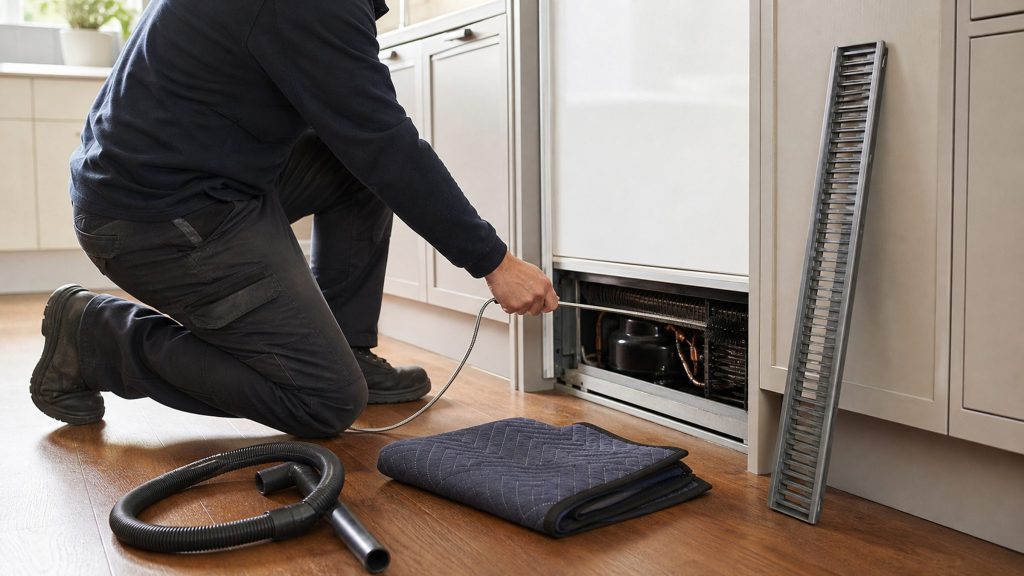
from $165 Appliance maintenance
The visit that keeps a built-in kitchen out of trouble, which on this make is mostly about air and water. Columns and panel-ready cabinets breathe through grilles that joinery and rugs slowly cover; the dishwasher softens its own water and that softener has a service interval; a steam oven has a reservoir and a descaling cycle; a hood liner fills with grease where nobody can see it. None of that is dramatic and all of it is cheaper than the failure it prevents. We do the lot in one visit rather than returning for each.
- Air paths first: column grilles, condenser coils, hood filters and blower
- Water next: the dishwasher softener, the steam reservoir, the coffee system's path
- One visit across the kitchen, not one visit per appliance
-
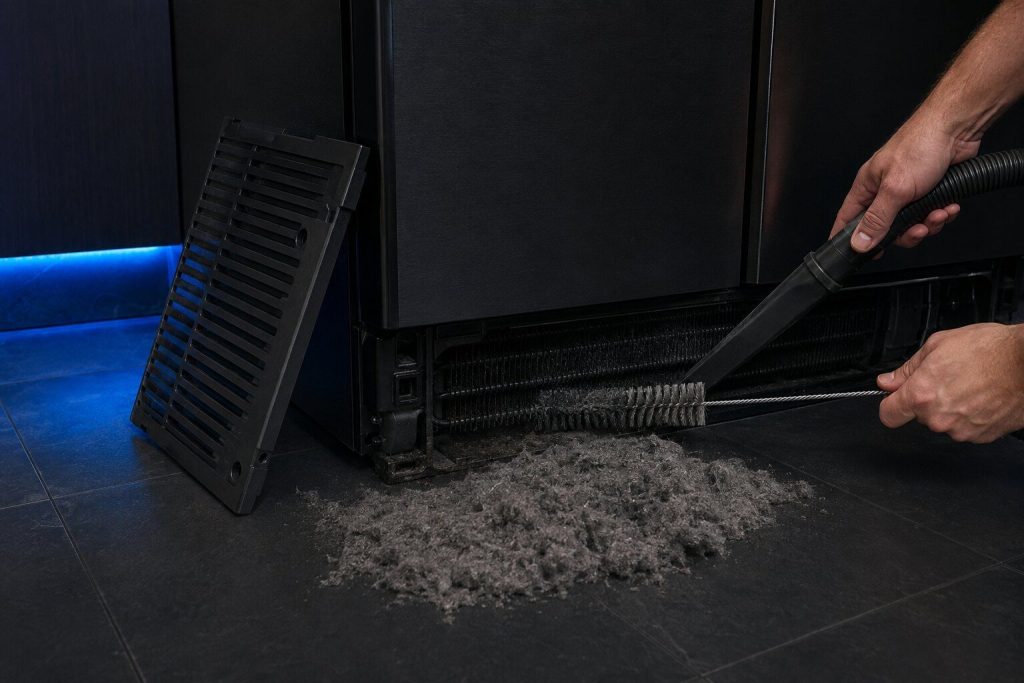
from $129 Condenser cleaning
The least glamorous visit on the list and the one that prevents the most expensive ones. A condenser rejects heat, and in a Miami kitchen it does that through a grille that collects dust, cooking grease and pet hair until the cabinet is running against itself. On built-in refrigeration it matters more than on freestanding, because the coil sits in a defined air path that the cabinetry controls: when that path is restricted, the compressor runs longer, the temperature drifts, and everything downstream ages faster than it should.
- Built-in refrigeration lives on a defined air path — restrict it and everything ages
- Grease and pet hair, not dust, are what actually block a Miami coil
- Cheapest visit here, and the one that prevents the dear ones
-

from $175 Rental turnaround service
A booked-out property with a designed kitchen has a narrow window between guests, and a Dacor in it needs somebody who will not spend the first hour working out what it is. This is one visit across the whole kitchen: every appliance run, the problems triaged by what stops a let and what merely annoys, and a written list of what was done and what is coming. Where a part is needed we say whether it arrives before the next arrival, because on a turnaround that is the only question that matters.
- One visit across the kitchen, inside the changeover window
- Triaged by what stops a let, not by what is most interesting
- A written list, and honest dates for anything on order

Questions people ask about this
Should the refrigerator be left running or emptied?
If nothing is in it, empty and off with the door propped open is kinder to the appliance and to the smell. If the household leaves food or a collection behind, running is the only option — and then the condenser and the door seals are what decide whether it copes.
What about the wine column?
Leave it on. A collection is worth more than four months of electricity. What is worth doing first is checking the door and having the zones calibrated, because a cabinet holding to a third of a degree in February can drift in an empty house at 85.
Is it worth a visit before leaving?
On a kitchen with several of these appliances, usually yes, and it is the same visit as ordinary maintenance — condensers, seals, softener, filters, and the supply valves shown to whoever will be checking the house.
Maintenance & Prevention
More guides like this one
-
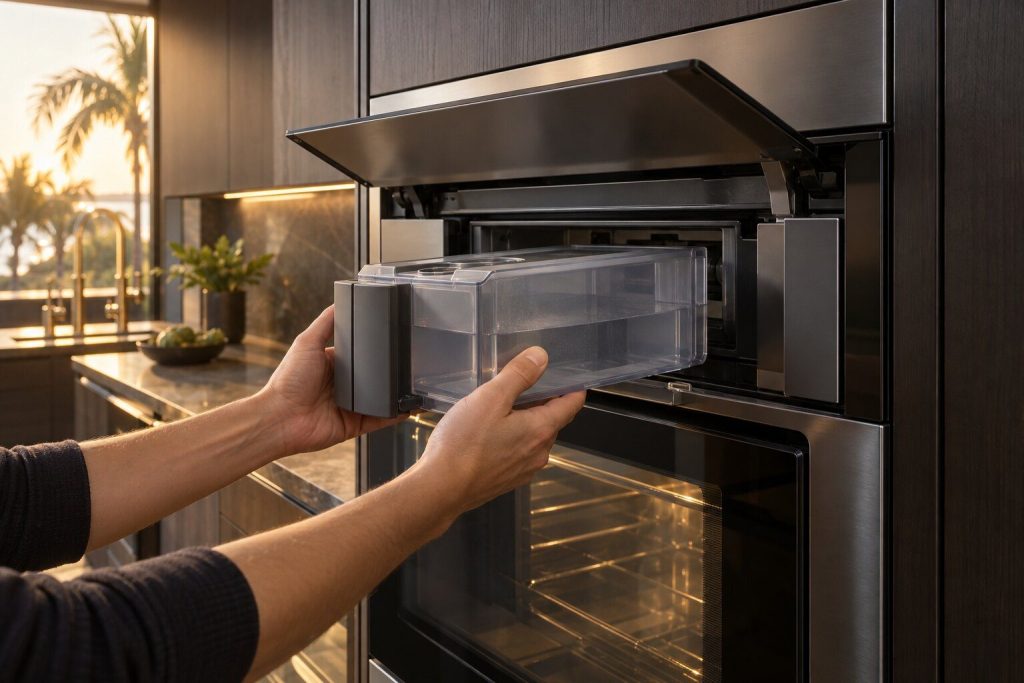
The Dacor Steam Oven Descale Nobody Mentions on Delivery
A reservoir, a pump and a water path that South Florida scales quickly. Descaled on schedule these systems last well; ignored, the scale takes the pump with it — and that is the repair this maintenance exists to prevent.
Read more -
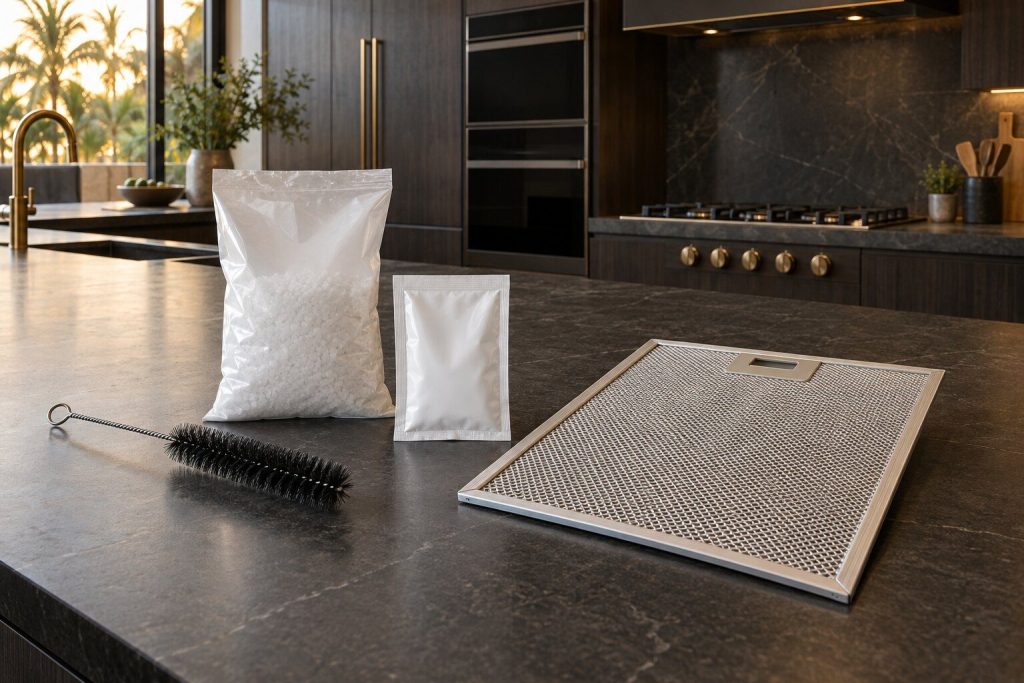
The Dacor Maintenance Nobody Hands You on Delivery
A dishwasher softener, a steam reservoir, a coffee filter and a column air path. Four items with real intervals, none of them mentioned when the kitchen was handed over, and all four decide how long the equipment lasts.
Read more -
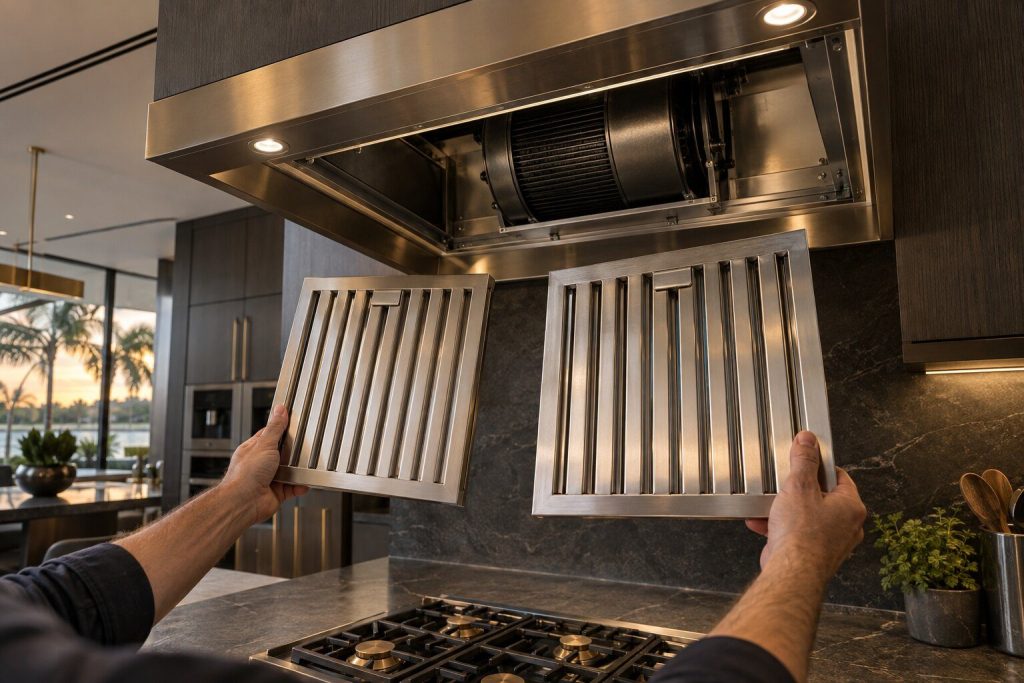
Dacor Hood Filters, Monthly: the Cheapest Maintenance in the Kitchen
Filters block gradually enough that nobody notices the week the kitchen stopped clearing. Baffles go in the dishwasher, mesh prefers hot water — and doing it monthly prevents the blower repair entirely.
Read more
Tell us the model number and what it is doing.
This article is based on:
- Official manufacturer documentation
- Internal repair procedures
- Technician repair history
- Company quality standards