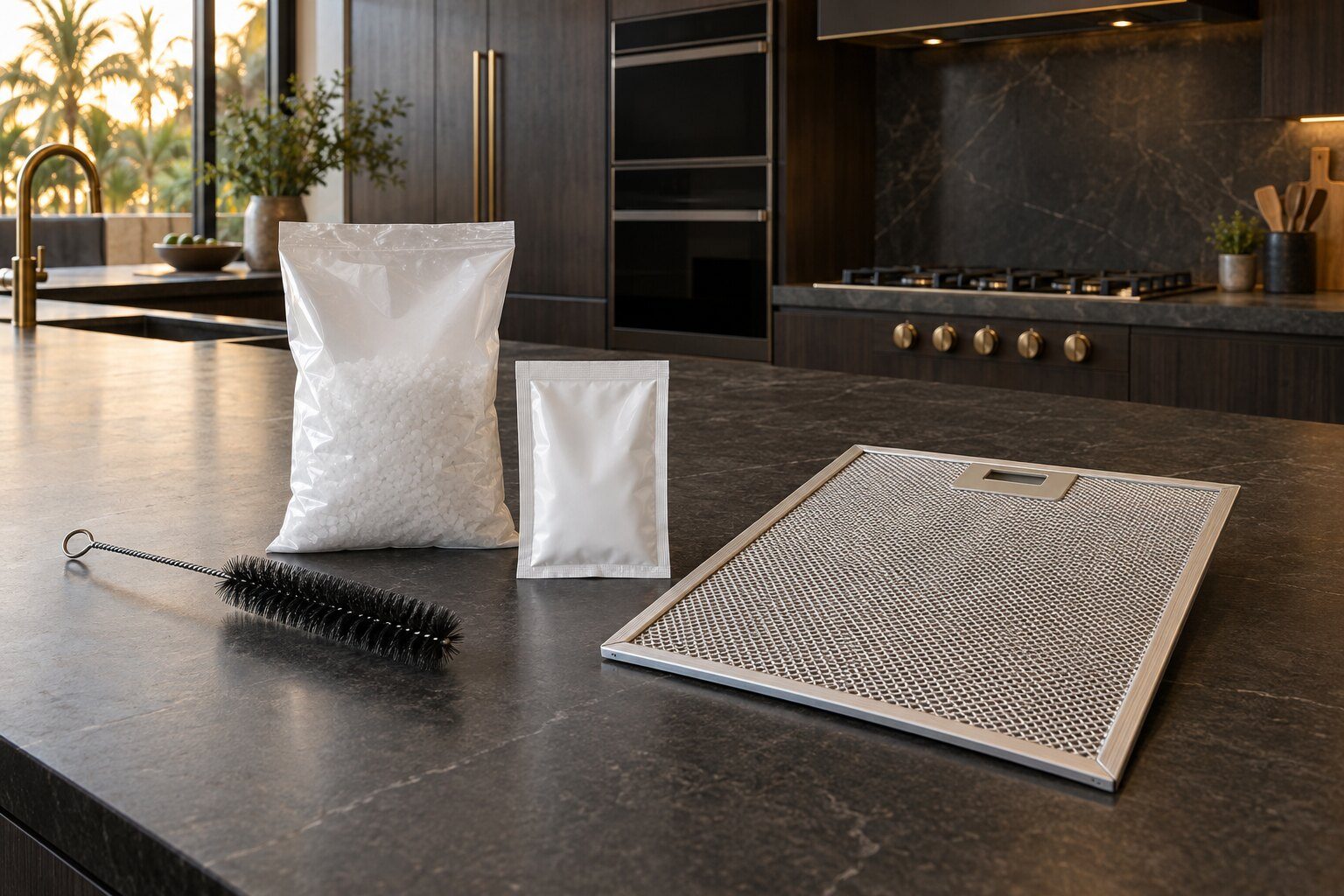
Maintenance & Prevention
The Dacor Maintenance Nobody Hands You on Delivery
Four things on a Dacor kitchen have genuine service intervals and almost nobody is told about any of them. The dishwasher has a water softener built into the appliance, and it needs the right salt, a setting that matches the water actually arriving, and eventually new resin. The steam ovens carry a reservoir, a pump and a descaling interval that hard water makes non-negotiable. The built-in coffee system has a filter and a descaling cycle it prompts for, and the prompts are worth following. And every panel-ready refrigeration cabinet breathes through one grille that fills with dust, cooking grease and pet hair over about four years. None of it is dramatic, all of it is cheap, and each one prevents a repair that is not. Because a designed kitchen usually holds several of these machines, they are best done in one visit rather than five.
The full guide
Every one of these arrives with the appliance and none of them arrives with an explanation.
Dacor appliance maintenance: the softener nobody mentions
A dishwasher that treats its own water is unusual, and in this city it is the reason glassware in these kitchens stays clear for years longer than it otherwise would.
It is also a maintenance item: dishwasher salt specifically, a hardness setting measured against what comes out of the tap rather than guessed, and resin that eventually stops regenerating. The symptom of neglect is not a failure — it is a slow, even decline across every load that people describe as the machine getting tired.
The steam system
Only on the steam ovens, and the plain ones in the same line have none of it. A reservoir, a pump, a path into the cavity, and a descaling interval that hard water makes shorter than the manual's default assumes.
Scale slows the cycle first, fouls the level sensing second, and takes the pump third. The first two are a service; the third is a repair.
The coffee system's counters
Clean Group every fifty cycles. Please Milk Clean two hours after the milk system was last used. Those are counters rather than complaints, and owners who run them when prompted very rarely need the brew group stripped on a bench.
On a discontinued platform that matters more than usual: the maintenance is available and the parts are not always.
The air path behind the grille
Every panel-ready cabinet sheds heat through one route the installer left clear — usually a grille at the base. That grille is trim, it looks like part of the kitchen, and in ten years most of them are opened exactly once.
Dust, cooking grease, pet hair, salt air working on all three. Four years is enough to close a coil to half its capacity, and the cabinet then runs without resting while nothing inside it has failed.
Why one visit rather than five
Because a designed kitchen rarely holds one machine from this badge, and because everything after the first appliance is cheap: the journey, the setup and the paperwork are paid once. The visit that does the four items above across a whole kitchen is the single best-value thing on our price list, and it is the one nobody books until something breaks.
Why none of it was explained on delivery
Because the people who deliver and install an appliance are rarely the people who service it, and the manual that covers all of this is in a drawer under the warranty card.
That is not anybody behaving badly — it is simply how a kitchen arrives. But it means a household can run four appliances with real service intervals for five years without anybody once mentioning that the dishwasher takes salt. The first time most owners hear about the softener is when we explain why their glassware has gone cloudy, and that conversation is years later than it should have been.
If it turns out to be a repair
What this leads to, and what it costs
Every job on this site is priced the same way: an on-site diagnostic first, the figure agreed in writing before anybody starts.
-
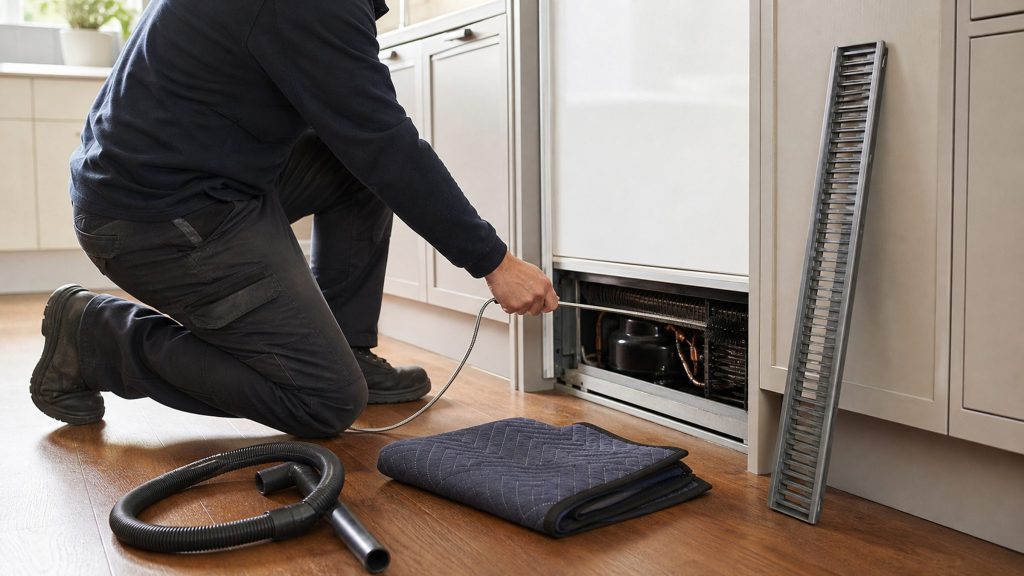
from $165 Appliance maintenance
The visit that keeps a built-in kitchen out of trouble, which on this make is mostly about air and water. Columns and panel-ready cabinets breathe through grilles that joinery and rugs slowly cover; the dishwasher softens its own water and that softener has a service interval; a steam oven has a reservoir and a descaling cycle; a hood liner fills with grease where nobody can see it. None of that is dramatic and all of it is cheaper than the failure it prevents. We do the lot in one visit rather than returning for each.
- Air paths first: column grilles, condenser coils, hood filters and blower
- Water next: the dishwasher softener, the steam reservoir, the coffee system's path
- One visit across the kitchen, not one visit per appliance
-
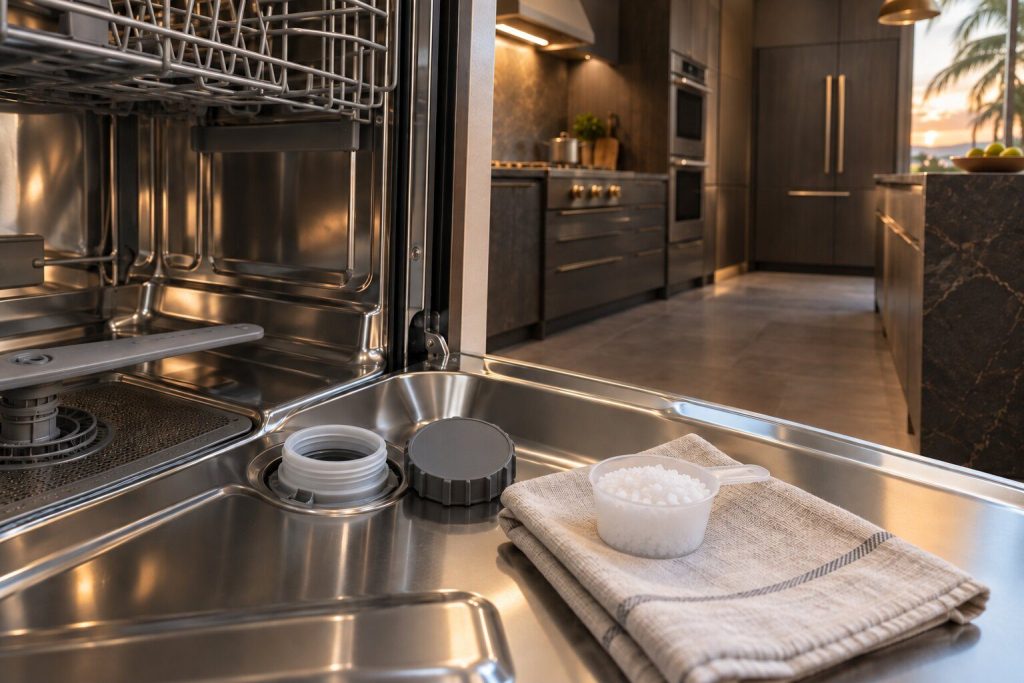
from $129 Built-in water softener service
A dishwasher with its own softener is unusual, and in South Florida it is the reason glassware in these kitchens stays clear for years longer than it otherwise would. It is also a maintenance item that nobody is told about: the chamber needs salt of the right kind, the setting has to match the water actually arriving, and the resin does not last forever. The clearest sign it needs attention is a machine whose performance has declined slowly and evenly — everything slightly worse, nothing actually broken.
- The reason glass stays clear in a hard-water city
- Needs the right salt, the right setting, and eventually new resin
- The symptom is a slow, even decline rather than a failure
-
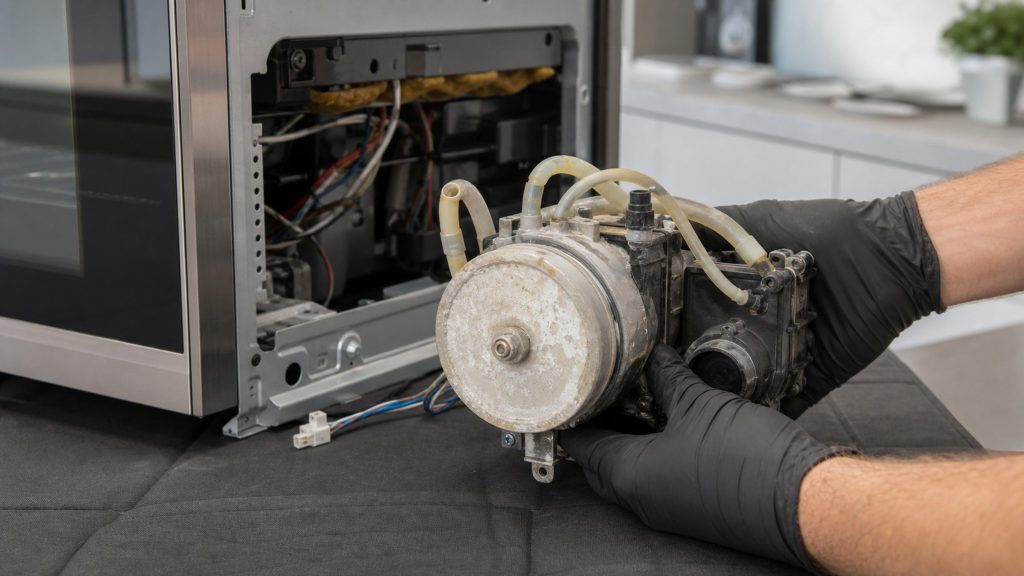
from $175 Steam oven water system
The steam models carry a water system the plain ovens do not have: a reservoir, a pump, a path into the cavity and a descaling interval that South Florida water makes non-negotiable. Most problems here are scale rather than mechanism — a pump straining, a steam cycle that takes far longer than it should, a reservoir that reports empty when it is full because its sensing is fouled. Descaled and serviced on schedule these systems last well; ignored, they take the pump with them, and that is a considerably larger repair.
- A reservoir, a pump and a descaling interval the non-steam ovens do not have
- Most problems are scale, and scale eventually takes the pump
- A reservoir reporting empty while full is fouled sensing, not a broken tank

Questions people ask about this
How often, realistically?
Annually for the air paths and the hood filters, and on the water items whenever the appliance asks — the dishwasher and the coffee system both prompt. In a kitchen that cooks most nights the hood filters want attention monthly, and that one is worth doing yourself.
Can several appliances be done in one visit?
That is the point of it. The journey, the setup and the paperwork are paid once, and everything after the first appliance costs a fraction of it. A refrigeration column, a freezer column, a wine cabinet and a dishwasher in one run share an age, a room and frequently an air path.
What happens if none of it is done?
Nothing dramatic, which is the problem. Glassware slowly frosts, a steam cycle takes longer every month, a column runs without resting, a hood stops clearing. Each of those ends as a repair that costs several times the service that would have prevented it.
Maintenance & Prevention
More guides like this one
-
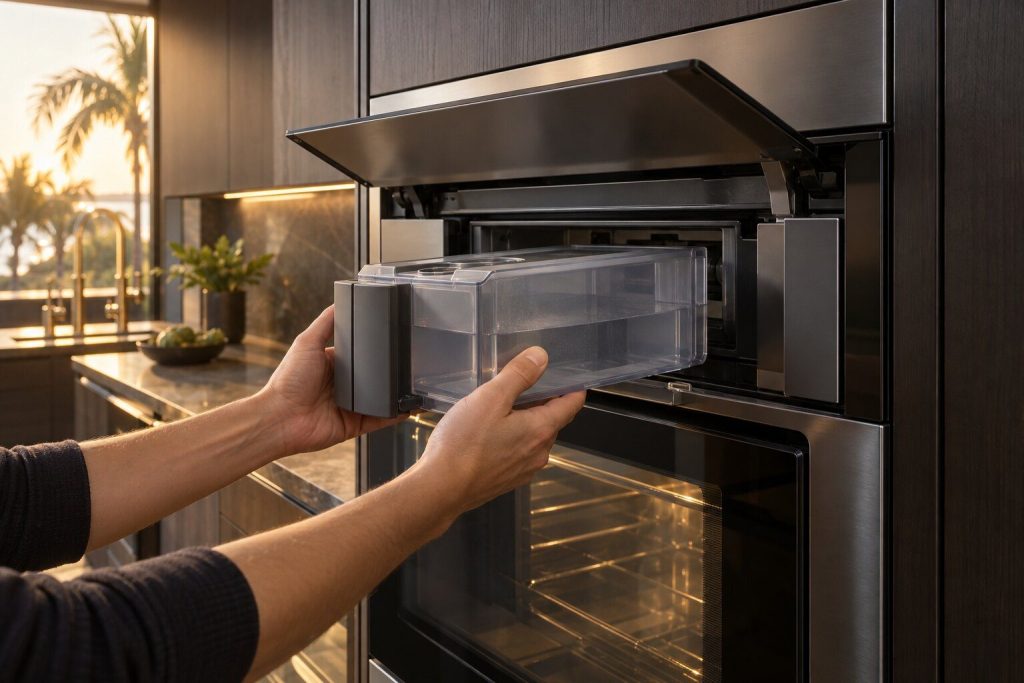
The Dacor Steam Oven Descale Nobody Mentions on Delivery
A reservoir, a pump and a water path that South Florida scales quickly. Descaled on schedule these systems last well; ignored, the scale takes the pump with it — and that is the repair this maintenance exists to prevent.
Read more -
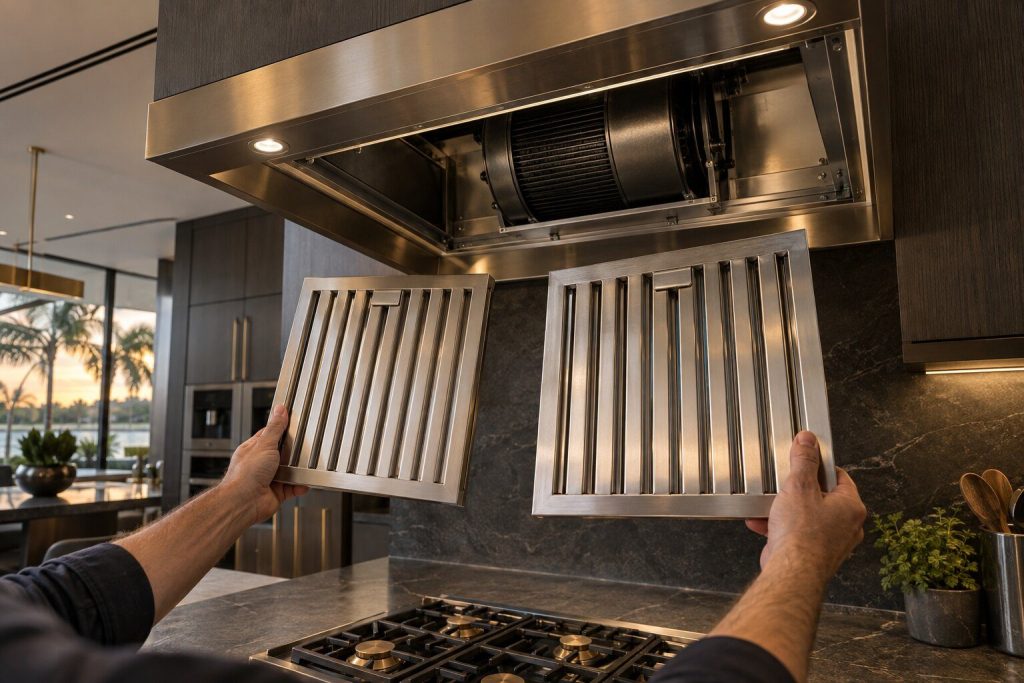
Dacor Hood Filters, Monthly: the Cheapest Maintenance in the Kitchen
Filters block gradually enough that nobody notices the week the kitchen stopped clearing. Baffles go in the dishwasher, mesh prefers hot water — and doing it monthly prevents the blower repair entirely.
Read more -
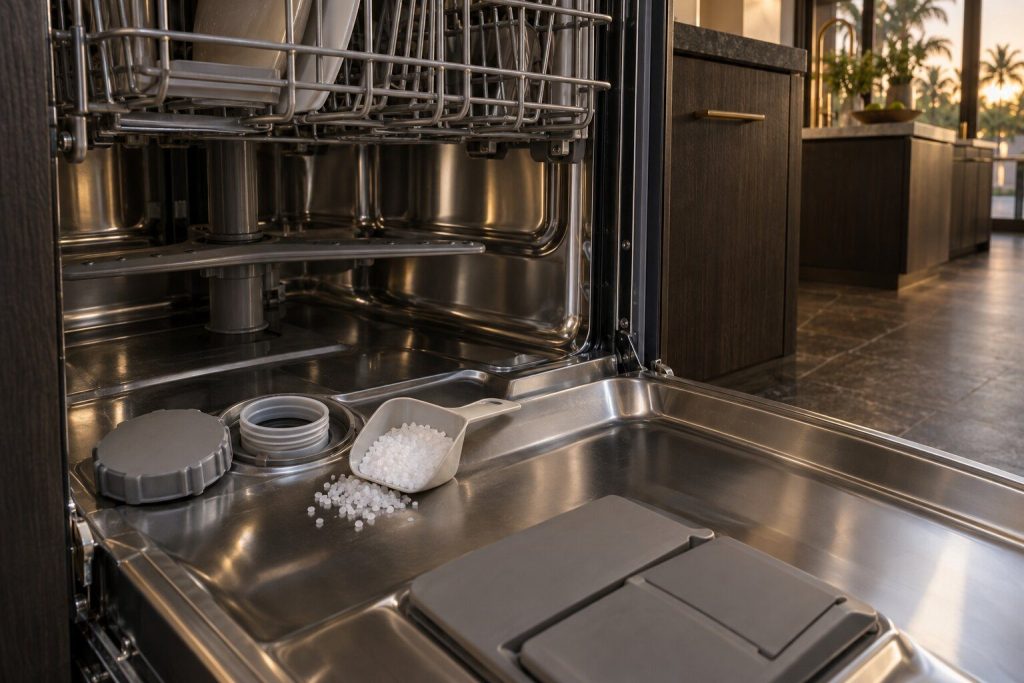
Cloudy Glass in a Dacor Dishwasher: Deposit or Etching
One glass and ten minutes of white vinegar settle it. Deposit washes off and means the water needs treating; etching is permanent and no repair reverses it — and this machine has its own softener, which is usually the answer.
Read more
Tell us the model number and what it is doing.
This article is based on:
- Official manufacturer documentation
- Internal repair procedures
- Technician repair history
- Company quality standards