Common Problems
Your Dacor Hood Switching Itself On Is Probably Correct
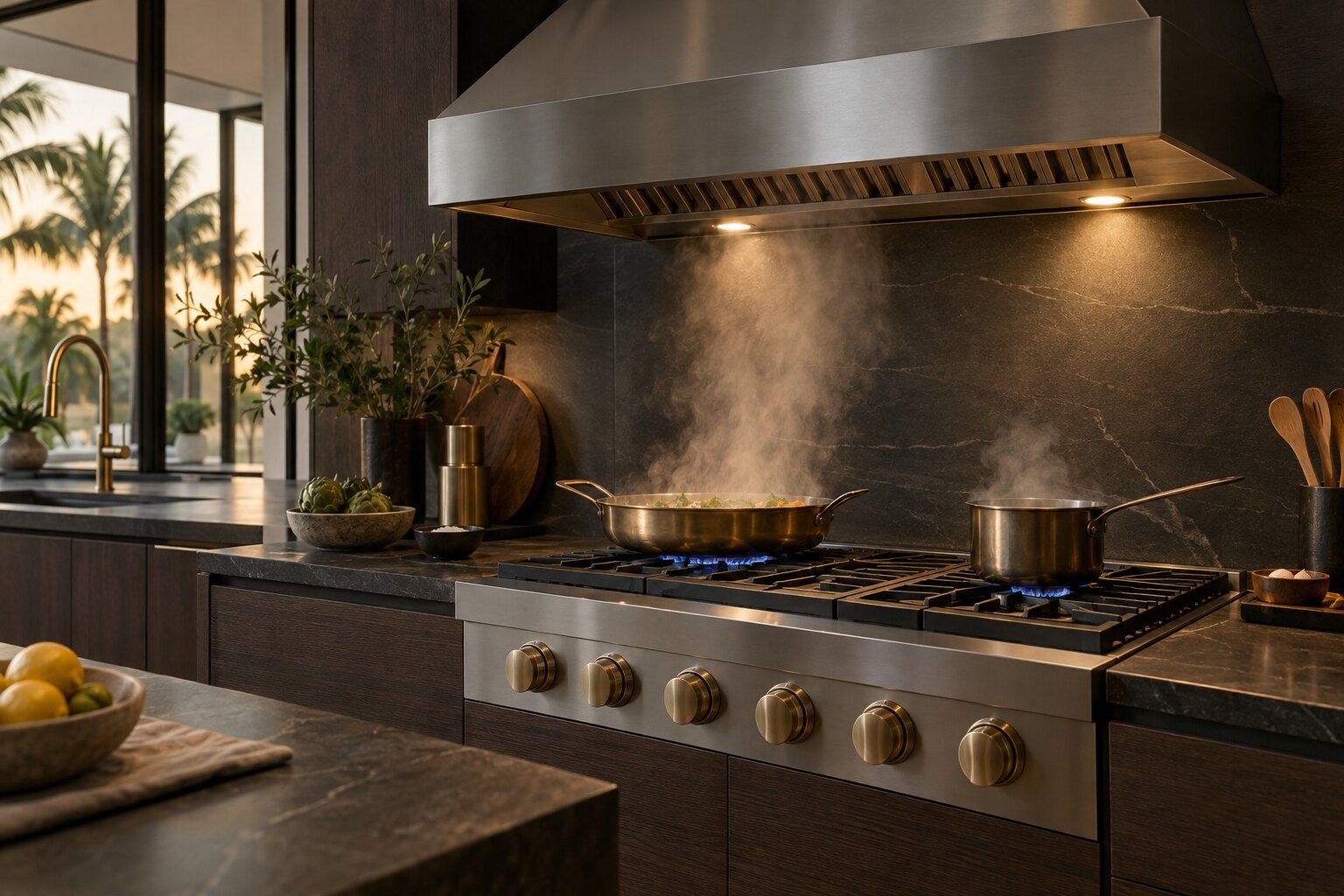
A Dacor hood that starts on its own during heavy cooking is doing what it was designed to do. These hoods carry an automatic overheat response: when the temperature under the canopy climbs past a threshold — a long roast, a hard sear, a burner left high under an empty pan — the hood starts itself to protect the appliance and the cabinetry above it. Interrupting that while the cooktop is hot is the one thing not to do. Two versions of the same behavior are genuine problems. A hood that starts with a cold range usually has a temperature sensor fouled with grease, reading warmer than the air around it; a proper clean often ends it. A hood that starts and will not stop, or refuses the off command, points at the control panel or a remote sending on its own. There is no error code to read — the hood's control panel has no display.
The full guide
The first time it happens in an empty kitchen it is unnerving. It is also, nine times out of ten, the hood being sensible.
Dacor hood turns on by itself: what the feature is for
A hood sits directly above the hottest thing in the kitchen, with cabinetry around it and a duct above. Left unventilated through a long high-heat session, that space gets hot enough to matter — not dramatically, but enough to age the joinery and the appliance's own wiring.
Starting the fan automatically is cheap insurance, which is why the behavior appears in the manual rather than in a code table.
When it is working
A long roast. A hard sear on a professional rangetop with six burners. A pan boiled dry. In each case heat under the canopy crosses the threshold, the hood starts, and it stops again once the temperature falls.
If the range was in use and the hood stopped on its own afterwards, nothing needs doing.
When it is a problem
With a cold range and nothing cooking. That points at the sensor, and in a working kitchen the usual reason is grease: a fouled sensor reads warmer than the air around it, crosses the threshold earlier and earlier, and eventually triggers with the hob switched off.
A proper clean of the canopy and the sensor often ends it outright, which makes this one of the cheaper problems on the list.
The other problem: it will not stop
A hood that refuses the off command is not an overheat response. That is the control panel — and on the glass touch panels the keys nearest the heat fail first — or a remote or wall control sending on its own.
Both are ordinary repairs, and both are worth distinguishing from the protection behavior before anybody is called.
Why there is no code for any of this
The control panel on these hoods is a set of buttons with no display, so there is nothing to show a code on. The manufacturer's own manual troubleshoots the hood as problem, cause and solution in plain English — including "Fan comes on by itself", which is listed as normal behavior.
Several appliance sites publish code tables for Dacor hoods anyway. They are contradicted by the document that came with the appliance, and this site does not repeat them.
The clean that usually ends it
Grease on the sensor is the ordinary explanation for a hood that has recently developed this habit, and it responds to a proper clean rather than a part. That means the canopy interior, the sensor itself and the area around it — not just the filters, which is as far as most cleaning gets.
It is worth combining with a filter and blower service, because the same grease that fooled the sensor has been collecting on the wheel. A hood that starts by itself and is also louder than it used to be is telling you about one problem twice.
If it turns out to be a repair
What this leads to, and what it costs
Every job on this site is priced the same way: an on-site diagnostic first, the figure agreed in writing before anybody starts.
-
from $165 Hood motor and blower service
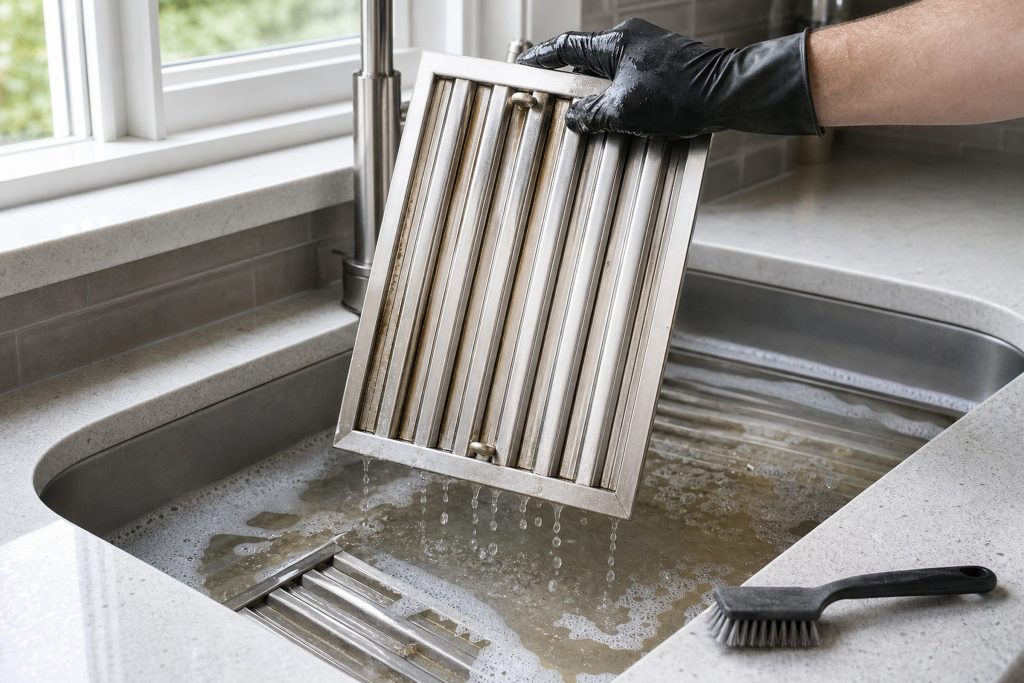
Noise and weak extraction are the two hood complaints, and both are usually grease before they are parts. A blower wheel collects it unevenly, goes out of balance and hums or rattles at particular speeds; filters block gradually enough that nobody notices the day the kitchen stopped clearing. What is not grease is a bearing, a mount that has loosened, or a duct that has come apart above the ceiling — and in South Florida buildings, with long shared runs, the duct is a more common answer than people expect.
- Gradual noise is grease and balance; sudden noise is a bearing or a mount
- Weak extraction starts at the filters and often ends at the duct
- Long shared duct runs are ordinary here and are part of the diagnosis
-
from $119 Hood light and control service
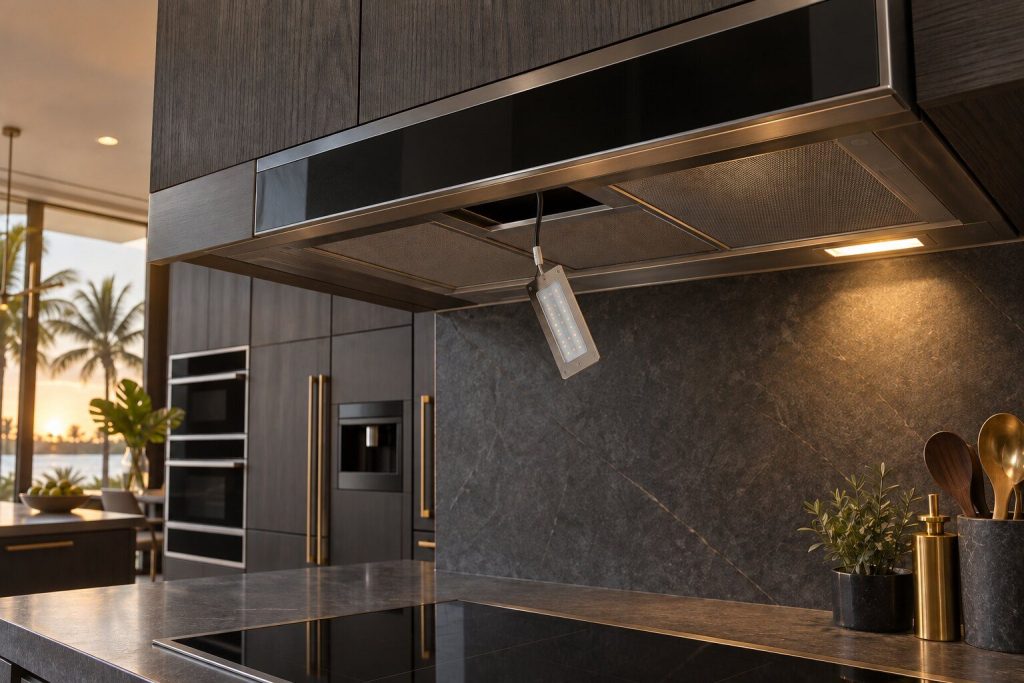
Lamps and controls are the small end of hood work and the most common call. LED modules fail one at a time, so a single dark lamp is a module or its driver rather than a hood at the end of its life; a whole strip dark points at the driver or the supply. The glass touch controls on the canopy hoods have their own failure — a panel that responds to some presses and not others, usually the panel itself rather than the board behind it. Both are short visits, and a photograph from below tells us most of what to bring.
- One dark lamp is a module; all dark is the driver or the supply
- Touch panels that half respond are usually the panel, not the board
- A photo from below decides what goes on the van
-
The fan starts with nobody at the controls Hood switching itself on
Alarming the first time and usually correct behavior. These hoods have an automatic overheat response: when the temperature under the canopy climbs past a threshold — a heavy sear, a long roast, a burner left high — the hood starts itself to protect the appliance and the cabinetry above it. That is the design working. What is a genuine problem is a hood that starts with a cold range, or one that starts and will not stop, and those point at the sensor or the control rather than at the kitchen.
- Starting during heavy cooking is the overheat protection, by design
- Starting with a cold range is a sensor or a control problem
- A hood that will not switch off is worth a call rather than a breaker
Questions people ask about this
Should I cut the breaker?
Not while the range is hot — the hood may be running for a reason, and stopping it is the opposite of helpful. If it runs with everything cold and refuses to stop, the breaker is a reasonable temporary measure until it is looked at.
It never used to do this.
Grease on the sensor is the usual explanation for a hood that has recently developed the habit. The sensor reads warmer than the air around it, the threshold is crossed earlier and earlier, and eventually it triggers with nothing on the hob. A proper clean frequently ends it.
Could the remote be doing it?
Yes, and it is worth ruling out early. Wall controls and handsets fail with a key effectively held closed, and they are easy to forget about entirely when the hood is the obvious suspect.
Common Problems
More guides like this one
-
Two Degrees Is a Problem on a Dacor Wine Column
The cabinet is specified to hold within about a third of a degree, so a drift most refrigerators would shrug off is a genuine failure here. How many zones are wrong is the question that decides the repair.
Read more -
Why Five Dacor Appliances Show No Error Code At All
The refrigeration, the freezer columns, the wine column, the hoods and the microwaves publish no error codes in either era. Sites that list them anyway are quoting strings the manufacturer's own manual contradicts.
Read more -
When Your Dacor Is a Samsung Underneath, and When It Is Not
Samsung has owned Dacor since September 2016 and runs it as its ultra-premium subsidiary. What that genuinely changed is the electronics platform — and what it did not change is worth being equally clear about.
Read more
Tell us the model number and what it is doing.
This article is based on:
- Official manufacturer documentation
- Internal repair procedures
- Technician repair history
- Company quality standards