Common Problems
Two Degrees Is a Problem on a Dacor Wine Column
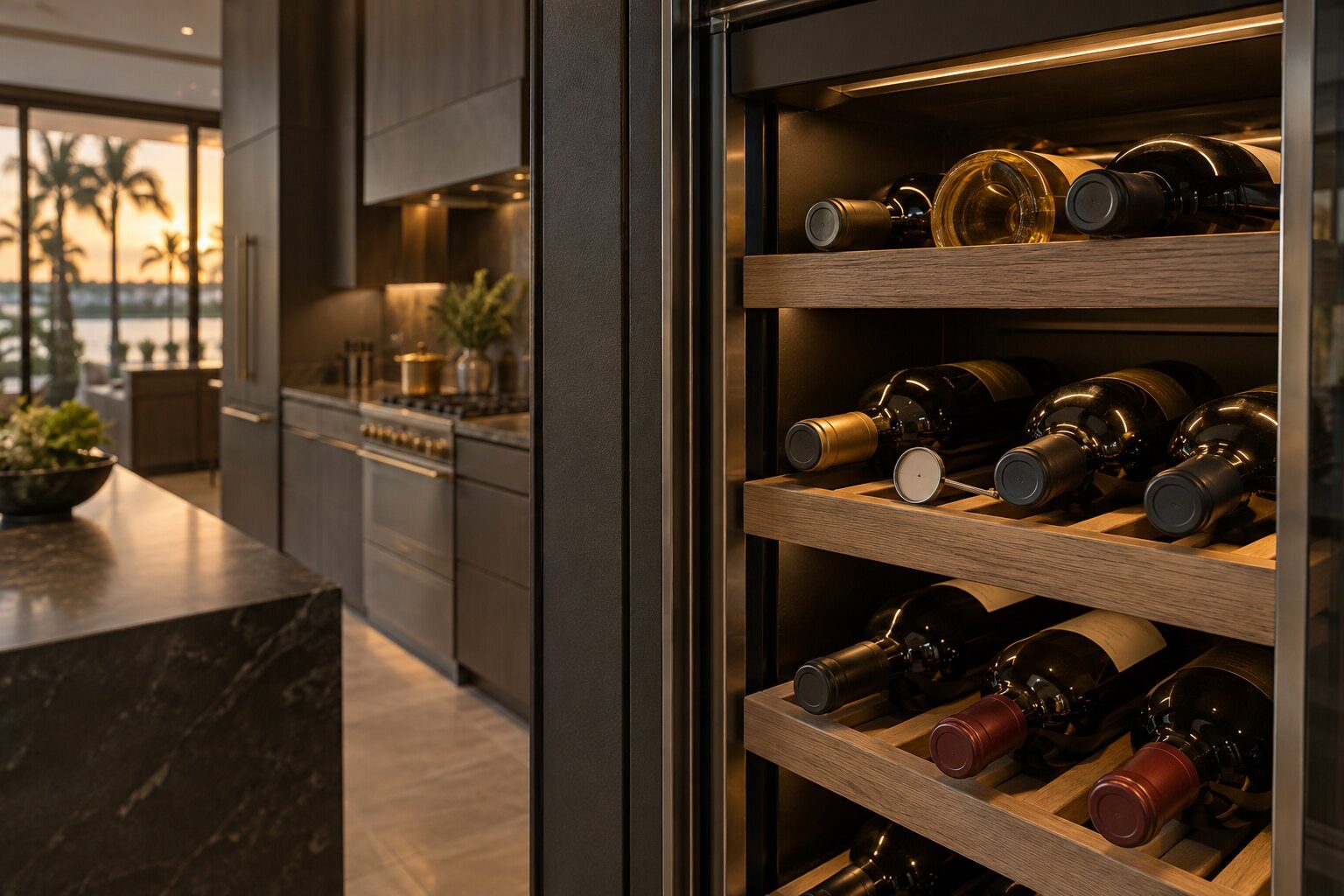
The 24-inch Dacor wine column holds about a hundred bottles across three independently controlled zones behind argon-filled triple glazing, and its cooling is specified to roughly a third of a degree. Against that specification a two-degree drift is a problem rather than a quirk, and the owner who calls about it is right to. What decides the repair is how many zones have moved. One zone adrift while the others hold points at the division of airflow serving that zone — its sensor or its damper — and stays a small repair. All three drifting together moves the diagnosis to the system feeding them: the condenser, the fan, the sealed system, and in a coastal kitchen the condenser is worth looking at before the refrigerant. There is no error code to read; the cabinet's 156-page manual contains no code table at all.
The full guide
Wine cabinets are sold on tolerance, and a cabinet sold on tolerance is judged against it.
Dacor wine column not cooling: why a small number matters here
A domestic refrigerator wanders by several degrees through its cycle and nobody minds, because nothing in it cares. A wine column specified to a third of a degree is doing something different, and it was bought precisely because it does.
So two degrees out is not fussiness on the owner's part. It is the machine failing at the single thing it exists for, and we do not treat the call as though it were anything less.
The measurement that decides everything
Three thermometers, one per zone, placed among the bottles rather than in the airflow, read twice an hour apart. That is it — and it is a measurement anybody can take before booking anything.
One zone adrift while the others hold means the problem is in how air is divided: that zone's damper, or its sensor. Small repair, local part. All three drifting together points at what feeds them, and that is where the condenser, the fan and the sealed system come in.
What the coastal air does to it
A wine column in an open-plan Miami kitchen is working against eighty per cent humidity through a glass door all summer. If that door has lost its seal, or the glazing cavity has failed, the cabinet is fighting the room continuously — and losing slowly, out of sight, with the compressor paying for it.
The clue is the outer pane. It should sit near room temperature even in August. Cold glass and condensation together are a door problem, not a humidity problem.
Racks, and the cheapest version of this problem
Before anything else: push every rack fully home. A rack half an inch proud holds the door off its seal, and one zone then warms continuously while everything inside the cabinet works perfectly. It is free, it takes a minute, and it resolves a fair share of these calls outright.
What calibration actually involves
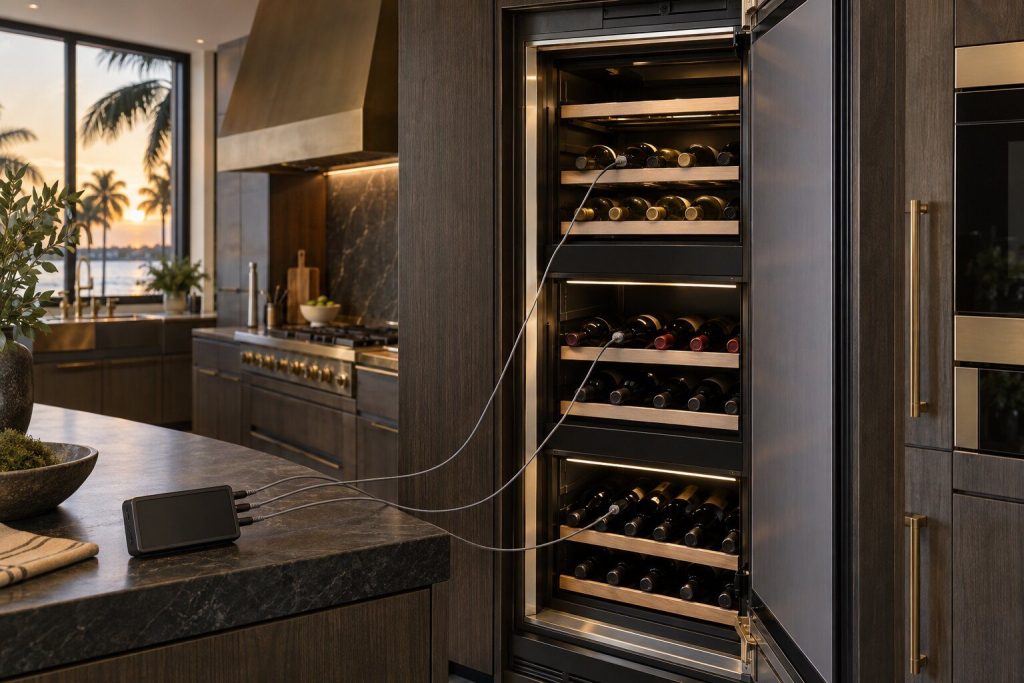
Probes in each zone, logged across a full compressor cycle rather than read once, compared against what the cabinet says about itself, and corrected where the two have parted company — then logged again to prove it. A calibration certified from a single reading is not a calibration, and it is the reason this is instrument work rather than an adjustment by feel.
Before we arrive, and while we are there
Leave the cabinet loaded and leave it running. A full column is considerably more stable than an empty one, and a cabinet that has been switched off and restarted is recovering rather than working — which looks like health for several hours and hides exactly what we came to measure.
During the visit we ask you to empty only the zone being worked on. The oak racks glide out in trays, so that is a few minutes rather than an afternoon, and the rest of the cabinet holds its temperature far better with the bottles still in it.
If it turns out to be a repair
What this leads to, and what it costs
Every job on this site is priced the same way: an on-site diagnostic first, the figure agreed in writing before anybody starts.
-
from $165 Wine zone calibration
Measuring what the cabinet is actually doing, zone by zone, against what its display claims. On a three-zone column with a tight specification the two can separate slowly — a sensor that reads a degree optimistic, a damper that no longer closes fully — and nothing about that is visible from the front. Calibration is instrument work rather than adjustment by feel: probes in each zone, logged over a period long enough to include a compressor cycle, then correction where the reading and the truth have parted company.
- Probes in each zone, logged across a full compressor cycle
- Corrects the drift between what the cabinet does and what it says
- Worth doing before a collection is moved in, not after
-
from $185 Wine column not cooling repair
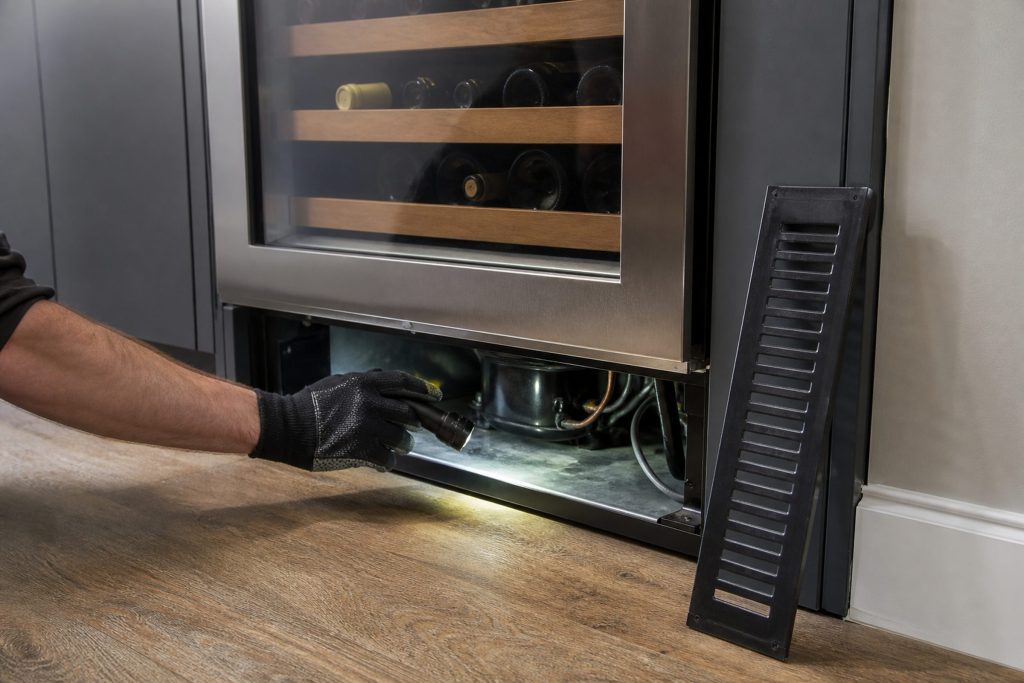
A wine cabinet specified to hold within about a third of a degree is a machine where a two-degree drift counts as a failure, and the owner who calls about it is not being fussy. The useful question is how many zones are wrong. One zone adrift while the others hold is a division-of-airflow problem — that zone's sensor or damper — and stays a small repair. All three drifting together moves the diagnosis to the system feeding them, and that is where the cabinet's age and its condenser start to matter.
- One zone wrong is local; three zones wrong is the system
- Two degrees is a problem on a cabinet specified to a third of one
- A full cabinet holds temperature far better than an empty one during a visit
-
One zone has drifted and the others are holding Wine column zone too warm
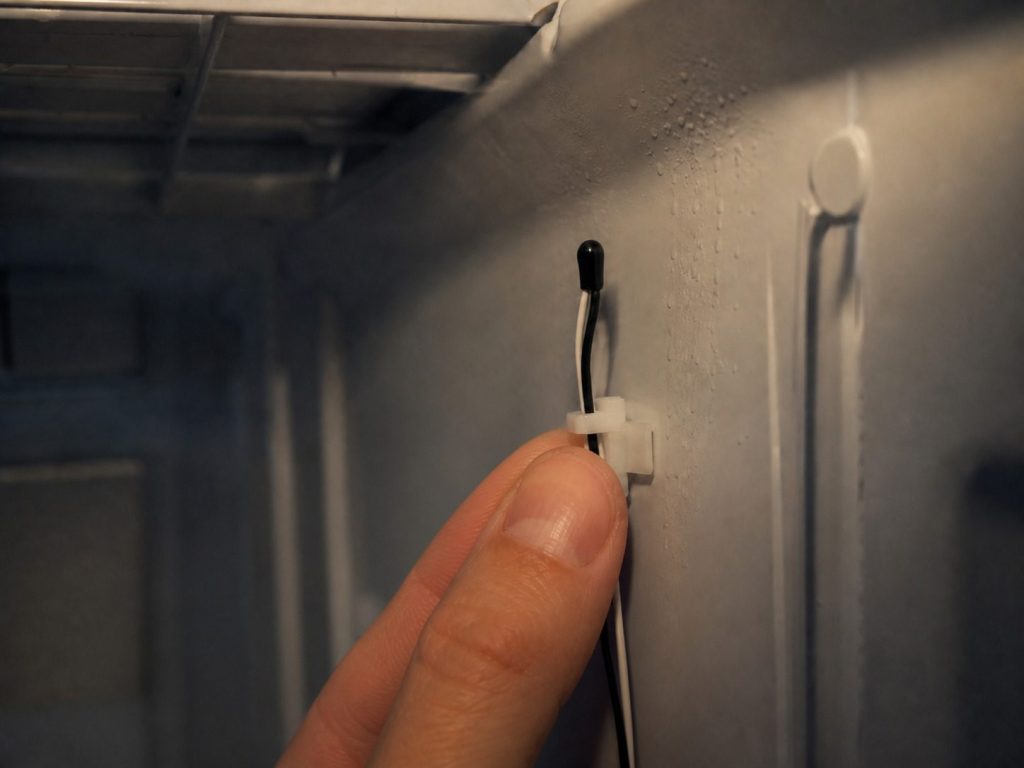
A cabinet specified to hold within about a third of a degree is judged against that number, and a two-degree drift that would be unremarkable in a refrigerator is a problem here. The question that decides everything is how many zones are wrong. One adrift while the others hold is the division of airflow — that zone's sensor or damper — and stays a small repair. All three drifting together moves the diagnosis to the system feeding them. There is no code to read on this cabinet; the measurement is the diagnosis.
- One zone wrong is local. Three zones wrong is the system
- Two degrees is a problem on a cabinet specified to a third of one
- No code exists — a 156-page manual with no code table in it
Questions people ask about this
Should I move the wine?
Only out of the zone that has drifted, and only if it has been warm for more than a day. The rest of the cabinet is doing its job, and a full column is considerably more stable than an empty one while a repair is arranged.
The display says the right temperature.
The display is the thing under suspicion, which is why the measurement is taken with a separate thermometer placed among the bottles rather than in the airflow. A sensor reading a degree optimistic is one of the ordinary causes of exactly this complaint.
Is TEMP-HI a real Dacor code?
No. It appears on at least one appliance site as a Dacor wine-cabinet code and it is contradicted by the manufacturer's own manual, which documents four named alarms and no codes. The same site publishes a fabricated table for the hoods.
Common Problems
More guides like this one
-
Why Five Dacor Appliances Show No Error Code At All
The refrigeration, the freezer columns, the wine column, the hoods and the microwaves publish no error codes in either era. Sites that list them anyway are quoting strings the manufacturer's own manual contradicts.
Read more -
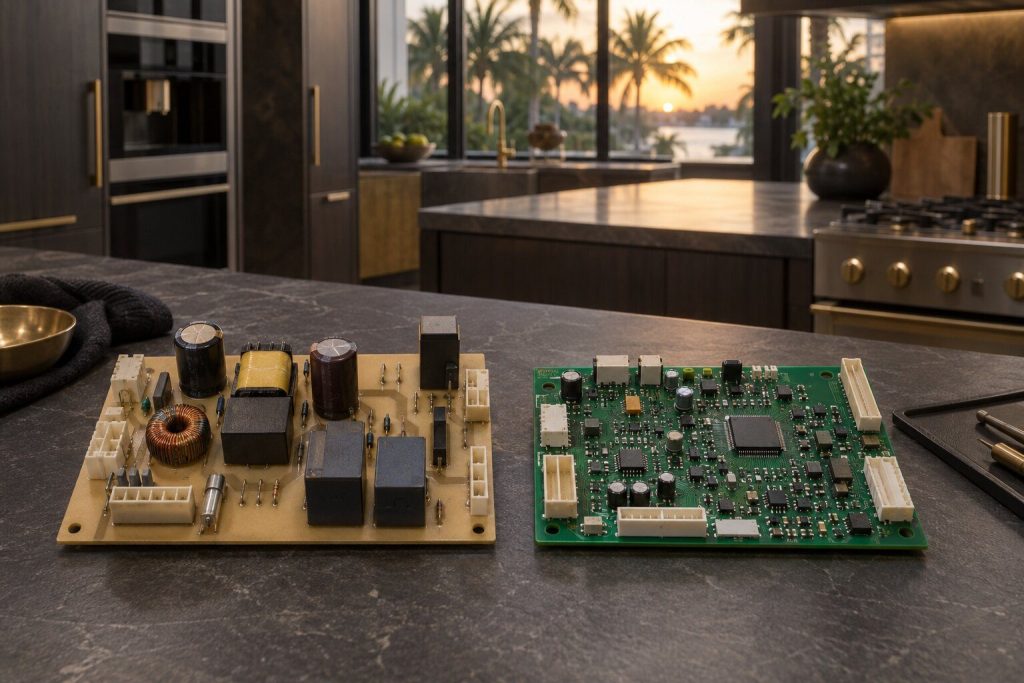
When Your Dacor Is a Samsung Underneath, and When It Is Not
Samsung has owned Dacor since September 2016 and runs it as its ultra-premium subsidiary. What that genuinely changed is the electronics platform — and what it did not change is worth being equally clear about.
Read more -
Which Era Is My Dacor? The 2016 Line That Changes Everything
Dacor built its own control boards until September 2016 and has run the Samsung platform since. The two generations share no error code, no board and no part number — so the model number matters more here than on any other make.
Read more
Tell us the model number and what it is doing.
This article is based on:
- Official manufacturer documentation
- Internal repair procedures
- Technician repair history
- Company quality standards