Common Problems
Why Five Dacor Appliances Show No Error Code At All
Five of the ten appliance types Dacor builds publish no error codes in either era. The refrigeration columns, the French-door refrigerators, the freezer columns and the wine column report four named alarms through a connected app — Self Check, Abnormally High Temperature, Door Open and Filter Replacement — and display nothing on the cabinet. The range hoods have no display at all: the manufacturer's own manual troubleshoots them as problem, cause and solution in plain English. The microwaves show a single generic word, ERROR, for several unrelated conditions. That is the documentation, not a gap in it. Several appliance sites publish code tables for these machines anyway — FAN-FAIL and NO-LIGHT for the hoods, TEMP-HI and COMP-ERR for the wine column, 5E and 21E for the refrigeration, F0 and F1 for the microwaves — and none of them has a manufacturer document behind it.
The full guide
A code table that covers every appliance a brand makes is usually a sign that somebody invented half of it.
Dacor error codes list: what each of the five actually reports
The refrigeration — columns, French doors, freezer columns and the wine cabinet — carries a monitoring system rather than a problem system. Four named alarms, reported in the connected app: Self Check, Abnormally High Temperature, Door Open, Filter Replacement. Nothing appears on the cabinet as a code.
The hoods report nothing. The control panel has buttons and no display, which is why the manufacturer's manual troubleshoots them in sentences.
The microwaves show one word, ERROR, and use it for an incorrect clock time, a weight-sensor cooking failure and a sensor-cook problem alike.
Why fabricated tables are worse than no table
A made-up code makes a page look official, and an official-looking page sends a technician after the wrong part. The microwave case is the clearest: two sites publish F0 and F1 for Dacor microwaves with wording that is word for word identical to this make's own Classic wall-oven codes. Somebody relabelled an oven table and published it, and it has been copied since.
The hood case is worse, because the manufacturer's document exists and says the opposite.
What we publish instead
Symptom pages. Problem conditions written out in plain language, weighted deliberately toward these five appliances — eighteen of our twenty-five symptom pages serve them — with the free checks first and the measurement that actually decides the diagnosis named explicitly.
That is not second best. On an appliance that publishes no codes it is the only honest form the information can take.
Where codes do exist on this make
The ovens, the ranges, the induction cooktops and the dishwashers, and there the tables are real, sourced and split by era. The built-in coffee system is a case of its own: it reports in whole sentences on its display, which is more useful than a code and is why its pages read differently from everything else here.
The one thing worth doing before searching
Find the model number. On this make it decides which of two code tables applies, and on five appliances out of ten it tells you that there is no table to look for at all — which saves an evening of reading contradictory lists.
What we ask for instead of a code
On refrigeration: two thermometer readings an hour apart, which compartment is wrong, and whether it is a French door or one of a pair of columns. On a wine column: all three zone readings against their settings. On a hood: whether it moves air at the intake but not at the outlet. On a microwave: whether it heats a measured load at all.
Every one of those is available before anybody drives anywhere, and each of them narrows the visit as much as a code would. On an appliance that publishes nothing, the measurement is the readout.
If it turns out to be a repair
What this leads to, and what it costs
Every job on this site is priced the same way: an on-site diagnostic first, the figure agreed in writing before anybody starts.
-
Which Era Is My Dacor? The 2016 Line That Changes Everything
Dacor built its own control boards until September 2016 and has run the Samsung platform since. The two generations share no error code, no board and no part number — so the model number matters more here than on any other make.
Read more -
It is running, the light works, and the food is warm Refrigerator not cooling
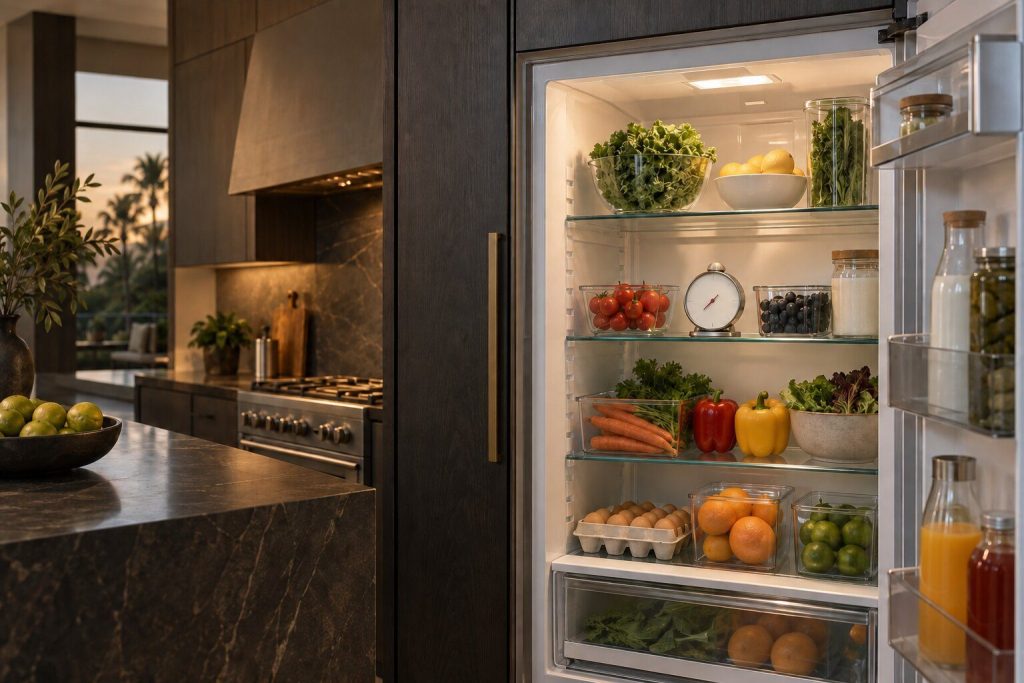
The cabinet is clearly alive and the food is clearly not cold. Two pieces of evidence settle most of what follows and neither needs tools. The first is a thermometer in each compartment, read twice an hour apart. The second is which cabinet you have: on a French door one sealed system serves both compartments, so a single warm side is an airflow problem; on a column pair there are two independent systems and the cold cabinet beside the warm one is evidence rather than a symptom. This make publishes no error code for any of it, which is why the readings matter more here than on other badges.
- Freezer cold and fresh food warm means airflow, not refrigerant
- There is no code to read — the app's named alarms are all the appliance will say
- Check the grille before anything else: a captured column has one way to breathe
-
Lights work, buttons respond, and nothing moves Range hood fan will not start
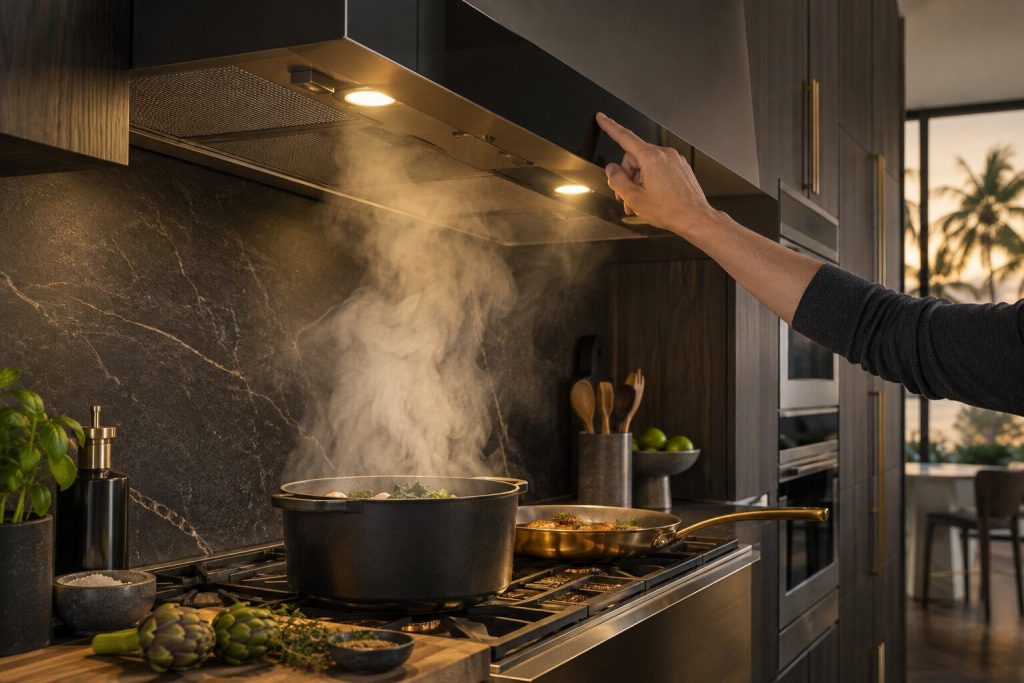
A hood that lights up and will not extract is one of the few appliances in this kitchen with no code to give you — the maker's own manual troubleshoots in plain English because the control panel has no display to show a string on. That is worth saying plainly, because several sites publish tables of codes for these hoods that the manufacturer's own document contradicts. What decides this call is which shape of hood is over the range: a canopy, a chimney, or a liner hidden inside somebody's millwork.
- There is no error code — the maker's own manual uses plain English, and so do we
- Lights working narrows it: the supply reaches the hood
- Which shape of hood it is decides how the visit is done
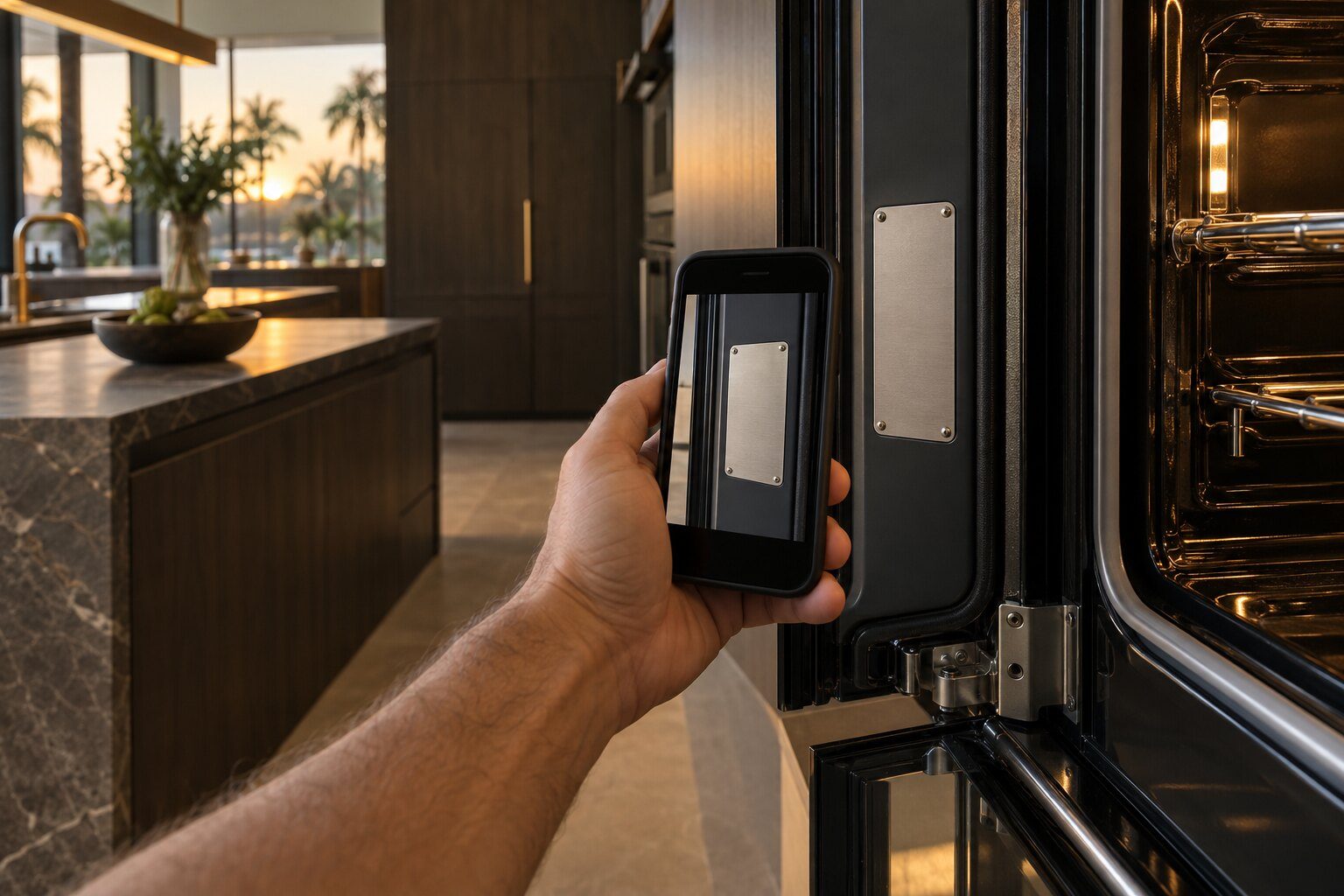
Questions people ask about this
Another site lists error codes for my Dacor hood.
The manufacturer's own hood manual has a full troubleshooting section — Nothing Works, Lights not working, Fan not drawing heat and smoke properly — written entirely in plain English, because the control panel is a set of physical buttons with no display. Strings like FAN-FAIL and VENT-BLOCK are contradicted by that document. We list them on this site only to say we will not repeat them.
What about 5E and 21E on the refrigerator?
Those match the format of the parent company's own refrigerator service codes, and the platform-sharing claim behind them is directionally correct. But no Dacor-branded document has been found that shows those codes to a Dacor owner, and the manuals that were read cover four named alarms and nothing else. Until a Dacor document says otherwise, we treat them as unverified.
So how do you diagnose an appliance that says nothing?
With measurements rather than a readout. Two thermometers an hour apart on refrigeration. Which zone of a wine column has drifted and by how much. Whether a hood moves air at the intake but not at the outlet. Those facts are as diagnostic as a code and they are available before anybody drives anywhere.
Common Problems
More guides like this one
-
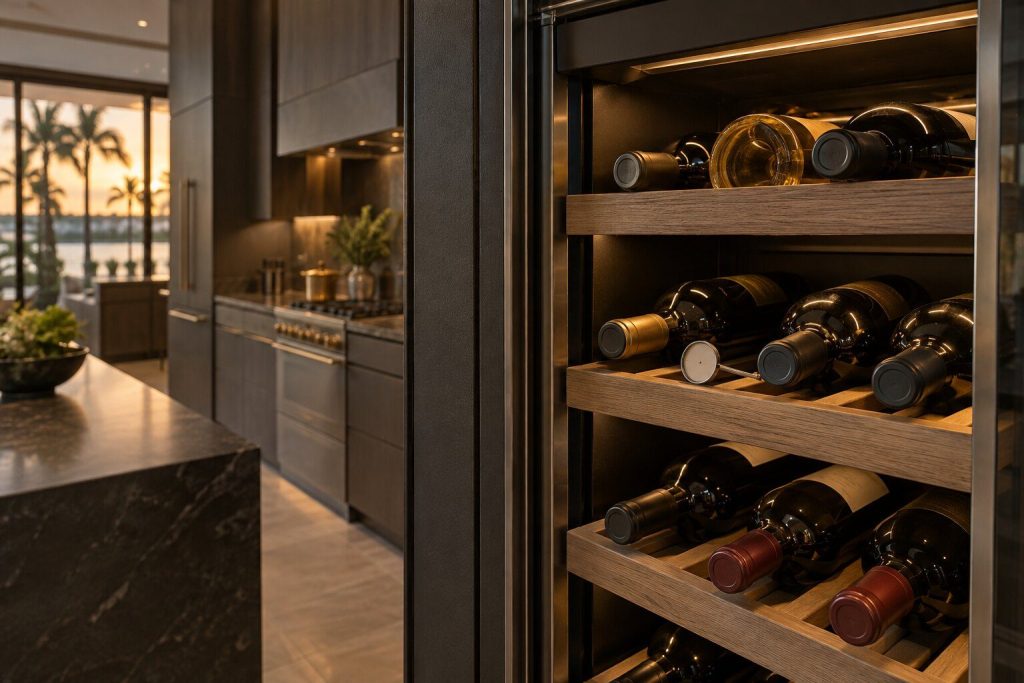
Two Degrees Is a Problem on a Dacor Wine Column
The cabinet is specified to hold within about a third of a degree, so a drift most refrigerators would shrug off is a genuine failure here. How many zones are wrong is the question that decides the repair.
Read more -
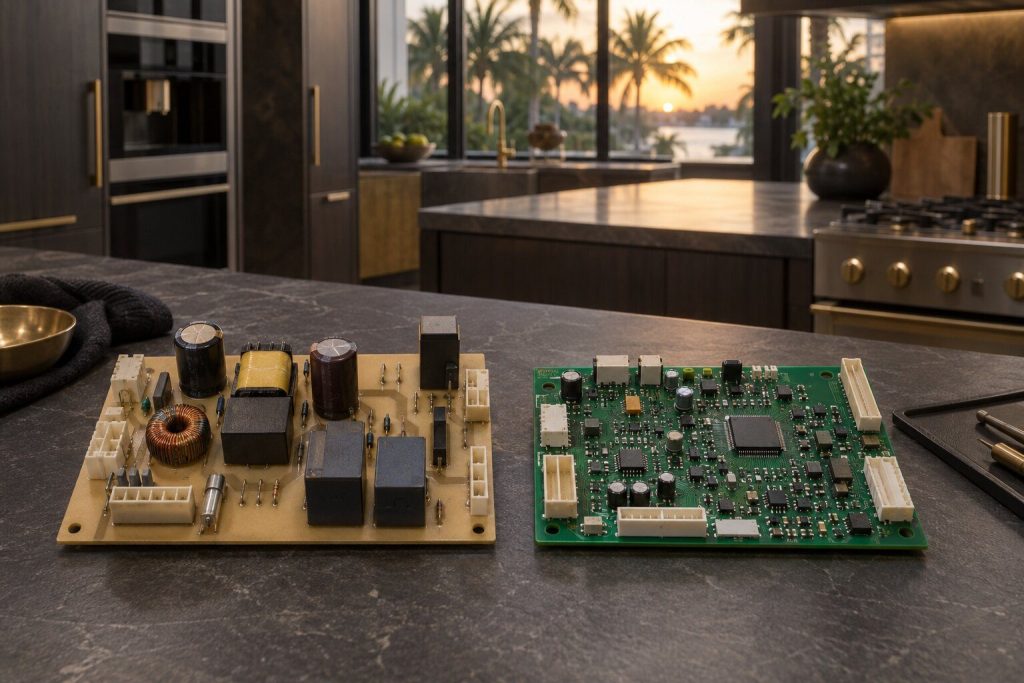
When Your Dacor Is a Samsung Underneath, and When It Is Not
Samsung has owned Dacor since September 2016 and runs it as its ultra-premium subsidiary. What that genuinely changed is the electronics platform — and what it did not change is worth being equally clear about.
Read more -
Which Era Is My Dacor? The 2016 Line That Changes Everything
Dacor built its own control boards until September 2016 and has run the Samsung platform since. The two generations share no error code, no board and no part number — so the model number matters more here than on any other make.
Read more
Tell us the model number and what it is doing.
This article is based on:
- Official manufacturer documentation
- Internal repair procedures
- Technician repair history
- Company quality standards