Common Problems
The Dacor Dishwasher Door That Opens Itself Is Not Broken
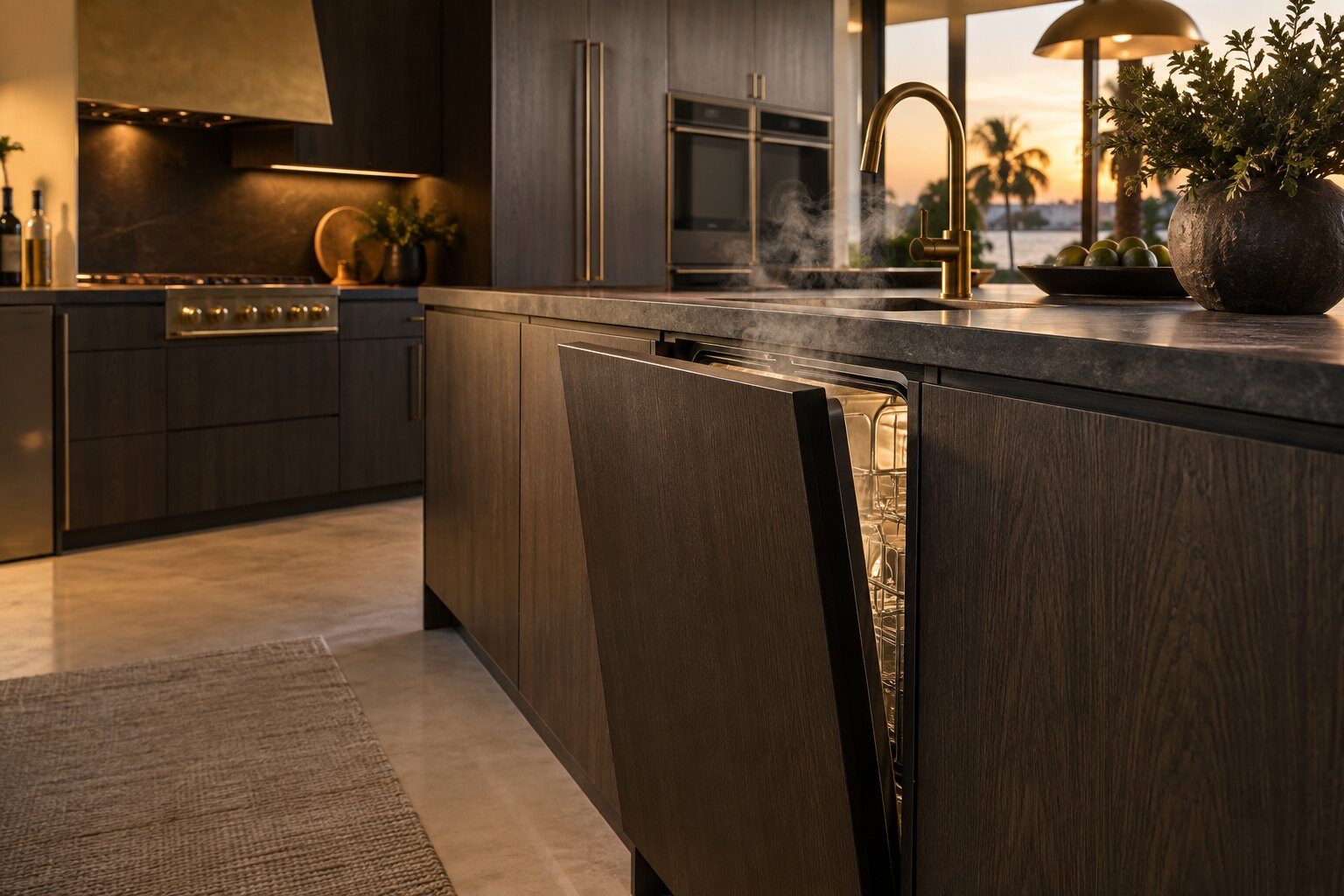
A Dacor dishwasher door that opens a few inches at the end of a cycle is doing what it was designed to do. The feature is AutoRelease, and it is most of how these machines dry: instead of a heated element roasting the load, the door releases to let steam out and the residual heat finishes the job. That is quieter, gentler on plastics and part of why the machine is rated as quietly as it is. It also means damp plastics beside dry glass are normal rather than a defect. Two versions of this are genuine problems: a door that releases mid-cycle rather than at the end, and a door that never releases at all — the second being the most common real cause of poor drying on this make, and a mechanism repair rather than a heating one.
The full guide
Some service calls are answered by a sentence, and this is one of them.
Dacor dishwasher door opens at end of cycle: what the machine is doing
At the end of the cycle the latch releases and the door swings open a few inches. Steam leaves, the load is still hot, and the water on it evaporates instead of being baked off by an element.
That is why these dishwashers can be as quiet as they are and why plastics do not warp in them. It is also why the first week with one is slightly alarming: a kitchen appliance opening its own door with nobody near it is not what anybody expects.
Why your glass is dry and the plastics are not
Residual-heat drying depends on the load holding heat. Ceramic and glass hold a great deal; plastic holds almost none, so a plastic container comes out of the same cycle with beads of water on it while everything around it is bone dry.
Nothing is wrong. A rinse aid genuinely helps here — it changes the way water sheets off a surface rather than sitting on it — and it is the single cheapest improvement available on this machine.
The two versions that are real problems
A door that releases in the middle of a cycle is a latch or a control problem, and it will also flood the kitchen floor with steam at the wrong moment.
A door that never releases at all is the common one, and it presents as a drying complaint rather than a door complaint. People describe it as the machine having got worse over a year, and it is a mechanism that has stopped doing its half of the work.
What to do while it is waiting for a visit
Open the door yourself a few inches when the cycle finishes. The load dries the way it should, and it costs you one trip to the kitchen. It also confirms the diagnosis: if manual opening dries the load properly, the heating side of the machine is fine and the problem is purely the release.
Where this fits in the fleet of Dacor complaints
It belongs with the small group of problems on this make that are not problems at all — an induction zone stepping back from full power because the cabinet beneath it is packed tight, a hood starting itself during a hard sear, a wine column running loudly after its door has been open. Each of them reads as a failure from across the room, and each of them costs somebody a call-out fee every month somewhere.
If it turns out to be a repair
What this leads to, and what it costs
Every job on this site is priced the same way: an on-site diagnostic first, the figure agreed in writing before anybody starts.
-
from $135 Door, latch and AutoRelease repair
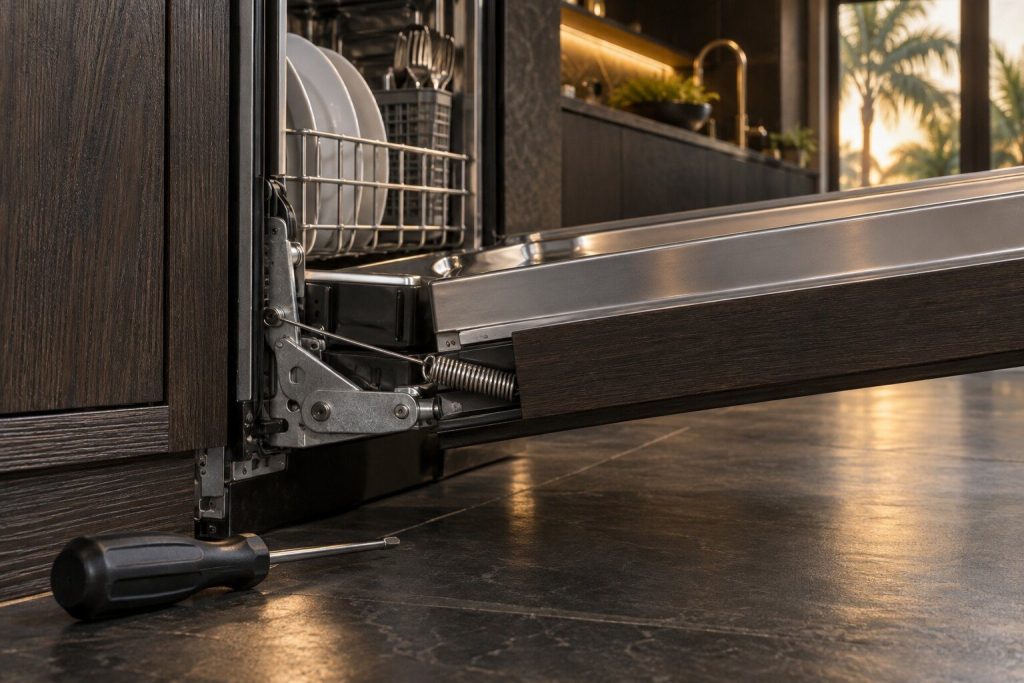
The door of a panel-ready dishwasher carries a cabinet front, and the springs and hinges are tensioned for that weight. When a panel is changed, or a hinge cable frays, the door drops, the latch stops meeting the strike, and the machine refuses to start — which reads as an electrical problem and is entirely mechanical. On the current machines the door is also part of the drying system: it releases itself a few inches at the end of a cycle, and a door that never releases or releases mid-cycle is a genuine problem rather than a habit.
- A dropped door is mechanical, even though it presents as 'will not start'
- Hinge springs and cables are tensioned for the weight of the cabinet panel
- AutoRelease opening at the end of a cycle is correct behavior
-
from $155 Drying and heat repair
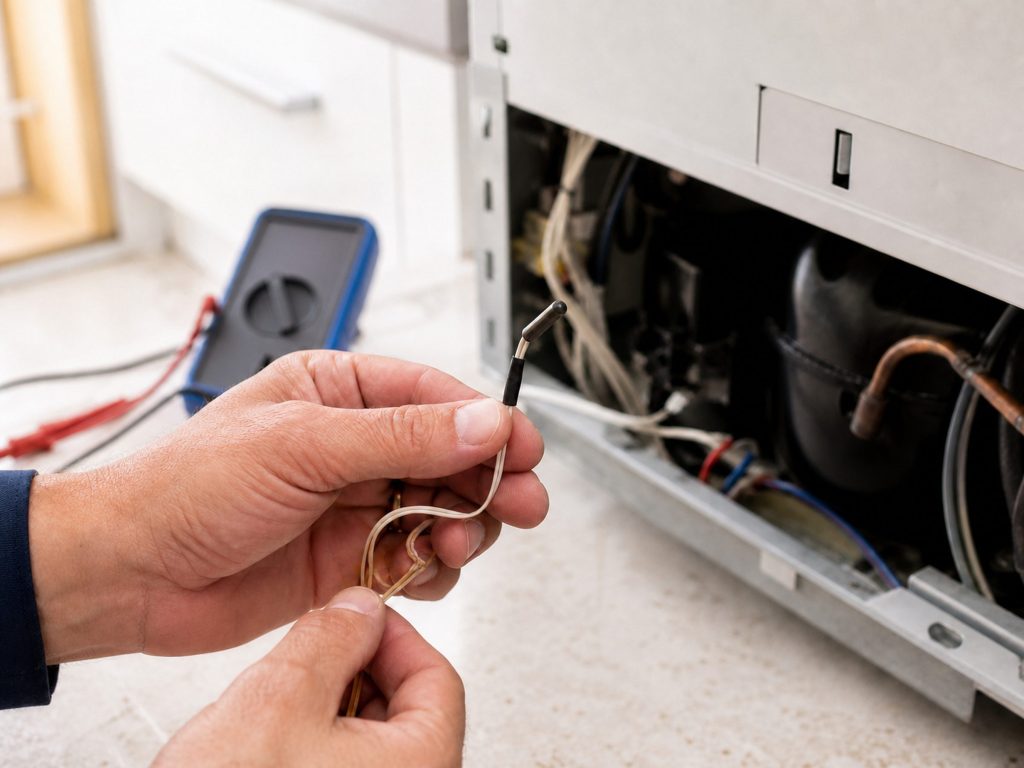
Poor drying on a modern dishwasher is usually a misunderstanding before it is a problem, and we would rather explain that than sell a visit. These machines dry without a hot element roasting the load: they use residual heat and an opening door, which leaves plastics damp and glass dry, and that is the design. What is a problem is water still standing on upturned crockery, glass coming out cloudy and warm, or a machine that no longer heats the wash at all — and those three point at the heater, its thermistor or the control that runs them.
- Damp plastics with dry glass is the design, not a defect
- Cloudy warm glass and pooled water are the symptoms that matter
- Heater, thermistor and control tested as a set
-
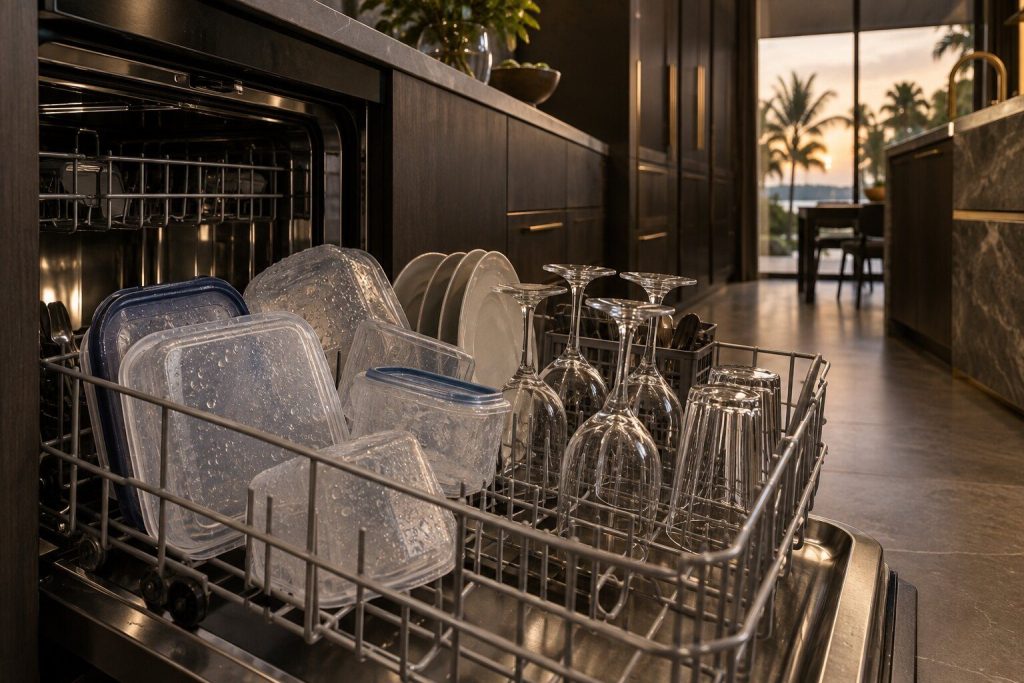
Plastics soaked, glass fine, and a puddle on the upturned cups Dishes coming out wet
Half of these calls are answered by an explanation rather than a repair, and we would rather give it than take the visit. These machines dry without an element roasting the load: they use residual heat and a door that releases itself at the end of the cycle. That leaves plastics damp and glass dry, and it is the design rather than a defect. What is a genuine problem is water still standing on upturned crockery, warm cloudy glass, or a door that never opens at the end.
- Damp plastics beside dry glass is the design, not a problem
- The door opening itself at the end of the cycle is AutoRelease working
- Pooled water on upturned items is the symptom that is real
Questions people ask about this
Can I stop it opening?
On most of these machines the feature can be disabled in the settings, and the price is wetter dishes. It is worth living with for a week before switching it off — most people who do end up missing it on their next dishwasher.
Why are the plastics always wet?
Because plastic holds almost no heat. Residual-heat drying works by leaving the load hot enough to evaporate what is on it, and china and glass hold that heat while plastic does not. A rinse aid makes a visible difference here, because it changes how water sheets off the surface.
The door never opens now and everything is wet.
That is a real problem and it is the commonest cause of poor drying on this make. It is the release mechanism or the latch rather than the heater, which means the repair is mechanical and usually modest. Opening the door by hand at the end of the cycle is a perfectly good workaround while it is arranged.
Common Problems
More guides like this one
-
Two Degrees Is a Problem on a Dacor Wine Column
The cabinet is specified to hold within about a third of a degree, so a drift most refrigerators would shrug off is a genuine failure here. How many zones are wrong is the question that decides the repair.
Read more -
Why Five Dacor Appliances Show No Error Code At All
The refrigeration, the freezer columns, the wine column, the hoods and the microwaves publish no error codes in either era. Sites that list them anyway are quoting strings the manufacturer's own manual contradicts.
Read more -
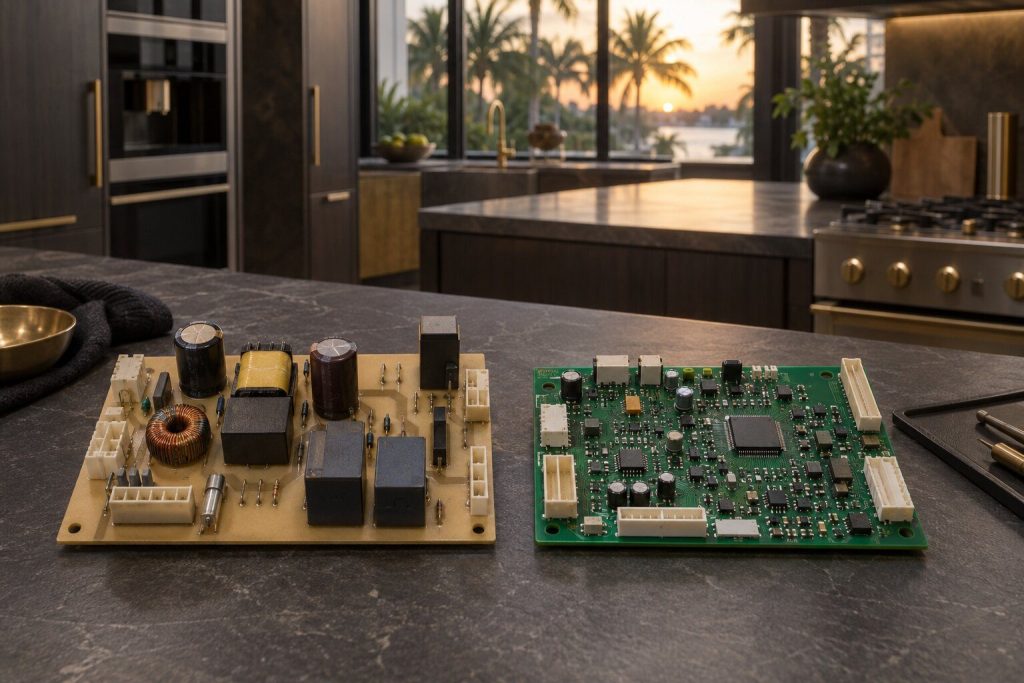
When Your Dacor Is a Samsung Underneath, and When It Is Not
Samsung has owned Dacor since September 2016 and runs it as its ultra-premium subsidiary. What that genuinely changed is the electronics platform — and what it did not change is worth being equally clear about.
Read more
Tell us the model number and what it is doing.
This article is based on:
- Official manufacturer documentation
- Internal repair procedures
- Technician repair history
- Company quality standards