Troubleshooting
The Simmer That Went Away After You Cleaned the Rangetop
A Dacor rangetop burner that sears beautifully and will not hold a simmer has lost the small end of its range, and the cause is nearly always one of three things. The inner simmer ports are partly blocked — they are much smaller than the sear ports, so they block first while everything still looks fine from above. The cap or head is seated a fraction out of position, which changes the flame pattern at low settings long before it affects a hard sear. Or the simmer setting on the valve has drifted over years of use, which is a proper adjustment with a lasting result. All three are common after a deep clean, when caps and heads come off, get washed and go back slightly wrong or still damp. These are sealed brass burners built to run from a sear to a genuine simmer, so losing the low end is a problem rather than a limitation.
The full guide
A cook notices this within a day and a casual glance at the hob shows nothing at all.
Dacor burner will not simmer: why the low end fails first
A burner is not one flame; it is a set of ports of different sizes doing different jobs. The outer ring delivers heat and will push gas through a surprising amount of obstruction. The inner ring does the simmering, its ports are small, and it blocks long before anything else.
So the failure mode of a well-used rangetop is entirely predictable: full power stays perfect and the bottom of the range quietly disappears.
The deep clean that caused it
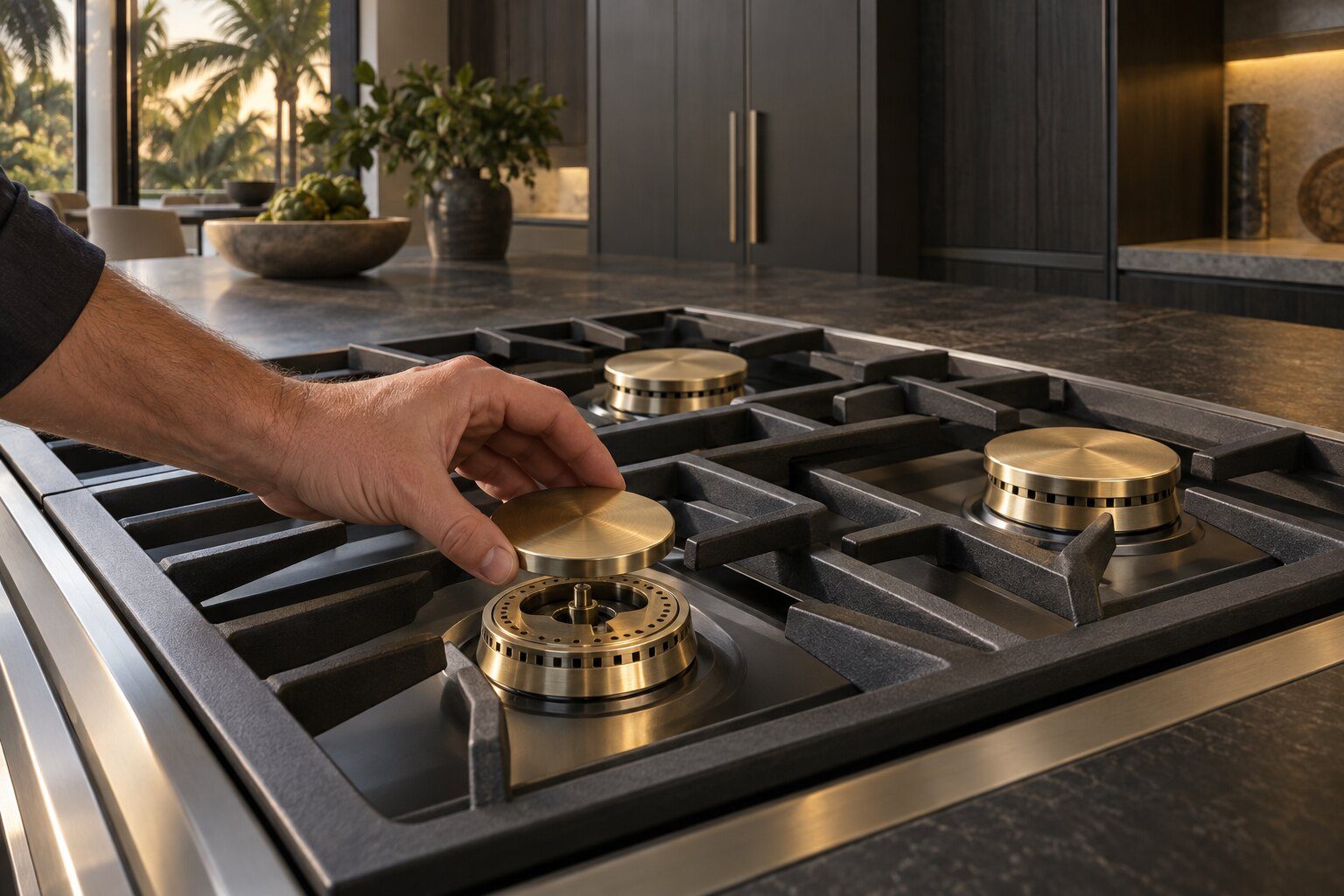
Caps and heads come off for cleaning, which is right and necessary. What goes wrong is at the other end: a cap that goes back a fraction off its locating pins, a head not quite home, or — most common of all — everything still damp when the hob is lit again.
A wet burner behaves badly for hours and then recovers, which is why people so often report that it fixed itself and came back.
The simmer valve, and why it is worth adjusting
Behind each knob is a valve with a low-flame setting that can be adjusted, and over years of use it drifts. Setting it back is a proper adjustment rather than a bodge, and the result is immediate and lasting: a burner that will hold a genuine simmer under a pan of stock all afternoon.
It is one of the more satisfying things we do on these hobs, and it needs no parts at all.
When it is not the burner
If every burner has lost its low end at once, the burner is not the problem. That points at the gas supply pressure feeding the hob, and on a rangetop drawing as much as these do it is worth checking properly rather than adjusting six valves to compensate.
What a full rangetop service actually restores
Every cap and head off, every port cleared, every burner reseated, and then each one set across its full range from sear to simmer. On a hob that cooks most nights that restores more performance than any single part would, and it is the visit that makes an eight-year-old rangetop behave like a new one.
When to stop and let somebody else do it
If a gentle clean of the inner ports does not restore the simmer, stop. Enlarging a port with anything harder than a fine wire permanently changes the flame on that burner and cannot be undone, and it is one of the few do-it-yourself repairs on this site that can leave an appliance worse than it started.
The simmer valve is the same. It is adjustable and the adjustment lasts, but it is set against an actual flame with the burner running and the hob apart, not by feel with a screwdriver through a knob spindle.
If it turns out to be a repair
What this leads to, and what it costs
Every job on this site is priced the same way: an on-site diagnostic first, the figure agreed in writing before anybody starts.
-
from $195 Rangetop service
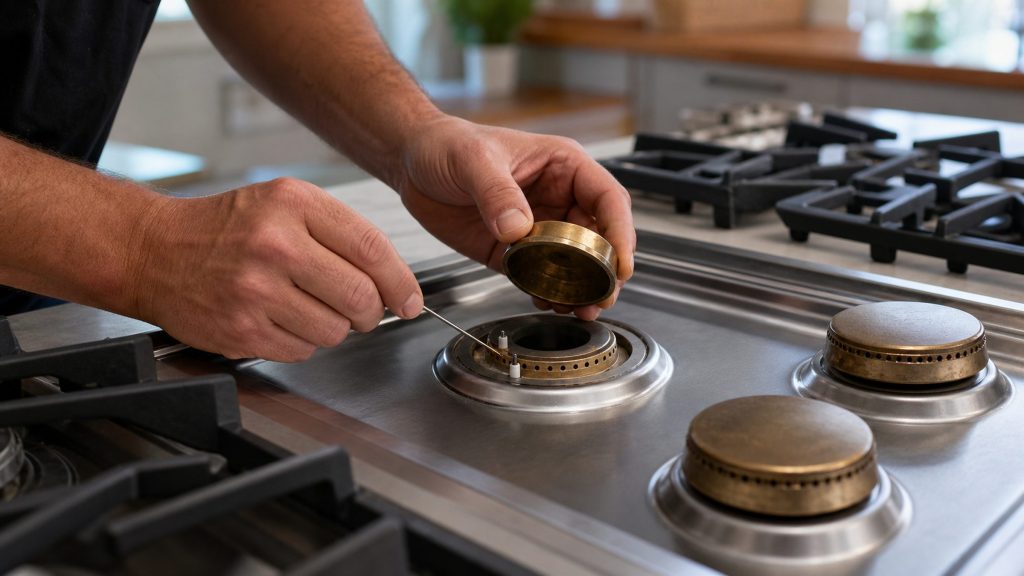
The professional rangetops are 36 and 48 inches of sealed brass burners, illuminated knobs and a griddle or wok ring in place of grates, and they are worked harder than any other appliance in these kitchens. Service is mostly about restoring the range of the burners rather than fixing failures: simmer settings that have drifted, ports partially blocked by years of boil-over, knob illumination that has died on one burner, and the griddle plate's surface. It is a heavy appliance and a satisfying one to bring back.
- Six sealed brass burners built to sear and to genuinely simmer
- Illuminated knobs fail one at a time and are a separate small repair
- The griddle and wok ring are accessories that live where grates would
-
from $155 Gas burner and igniter repair
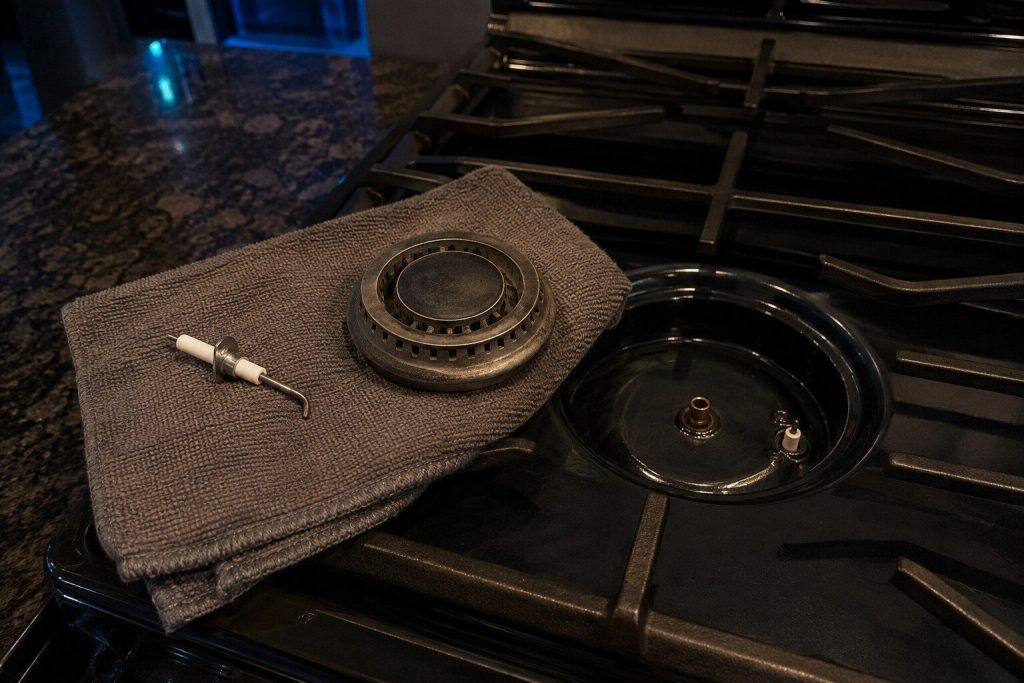
A burner that clicks without lighting, lights and goes out, or will not come down to a simmer. In Miami the usual culprits are salt air and humidity on the igniter, and a cap or head that went back slightly wrong after a clean — which is why so many of these calls date from the week the hob was scrubbed. The professional burners on the rangetops complicate it pleasantly: they are built to relight themselves after a draft or a boil-over, so a burner that keeps going out may be that system rather than the burner at all.
- Most of these problems begin the week the hob was deep-cleaned
- Salt air and humidity are what actually kill igniters here
- On the pro burners, repeated flame-outs may be the relight system
-
It sears beautifully and cannot be turned down Burner will not stay at a simmer
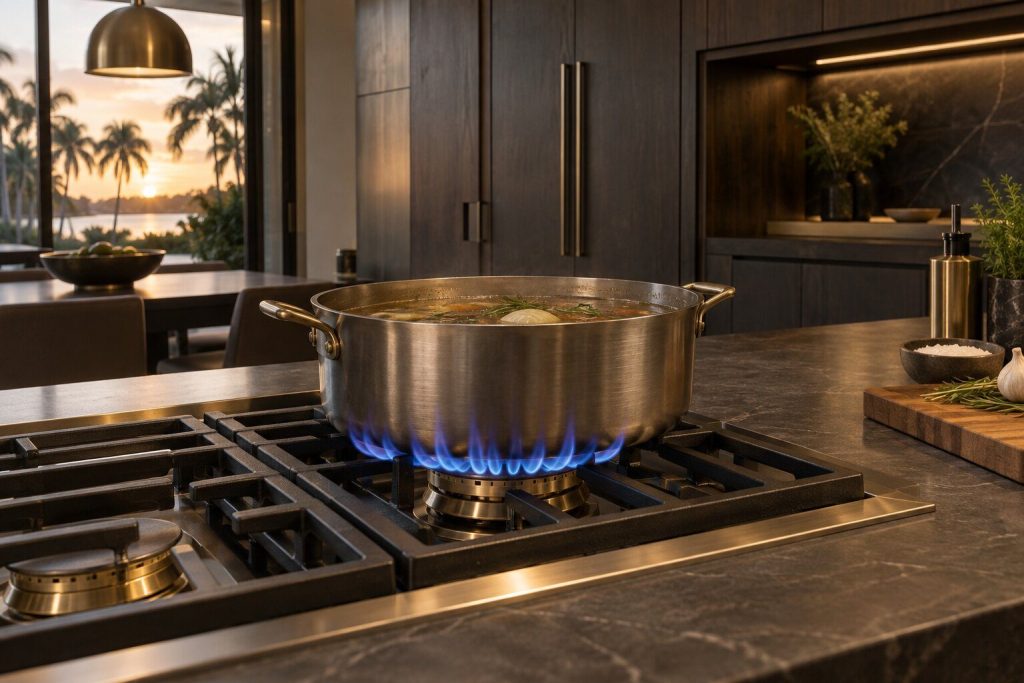
Losing the bottom of a burner's range is a specific and satisfying problem, because the cause is usually visible and the fix lasts. These are sealed brass burners built to run from a hard sear down to a genuine simmer, and when the low end goes it is nearly always a partly blocked port, a cap seated a fraction wrong after cleaning, or the simmer valve itself. It is also the clearest example of a problem that arrives the week the hob was scrubbed and gets blamed on the appliance.
- Losing the low end is usually ports or a cap, not the burner
- It very often dates from the week the hob was deep-cleaned
- The pro brass burners are built to simmer — this is a problem, not a limitation
Questions people ask about this
Can I clear the ports myself?
Carefully, with a fine wire or a pin, and never with a drill bit — enlarging a port permanently changes the flame and cannot be undone. Take the cap and head off, look at the small inner ring, and if a gentle clean does not restore the simmer, leave it alone.
Only one burner does it.
That is the usual pattern and it keeps the repair to that burner. All of them losing the low end at once points instead at the gas supply pressure, which is a different conversation and sometimes an outside one.
Why does the sear still work?
Because a hard sear pushes gas through the large outer ports and tolerates a great deal of obstruction. A simmer relies on a small, even flow through the smallest openings on the burner, so it fails while everything else still looks perfect.
Troubleshooting
More guides like this one
-
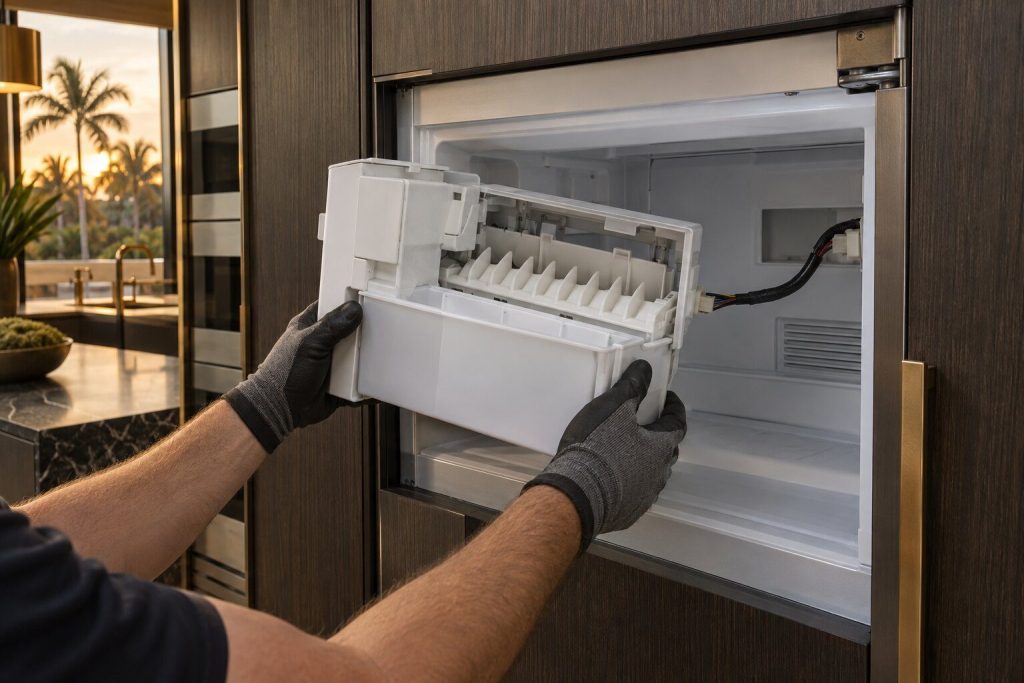
Two Ice Makers, One Water Problem: Reading a Dacor Freezer Column
The narrow freezer column carries two ice makers, and that second module is the most useful diagnostic tool in the kitchen. Both stopped is a water problem. One stopped is that module.
Read more -
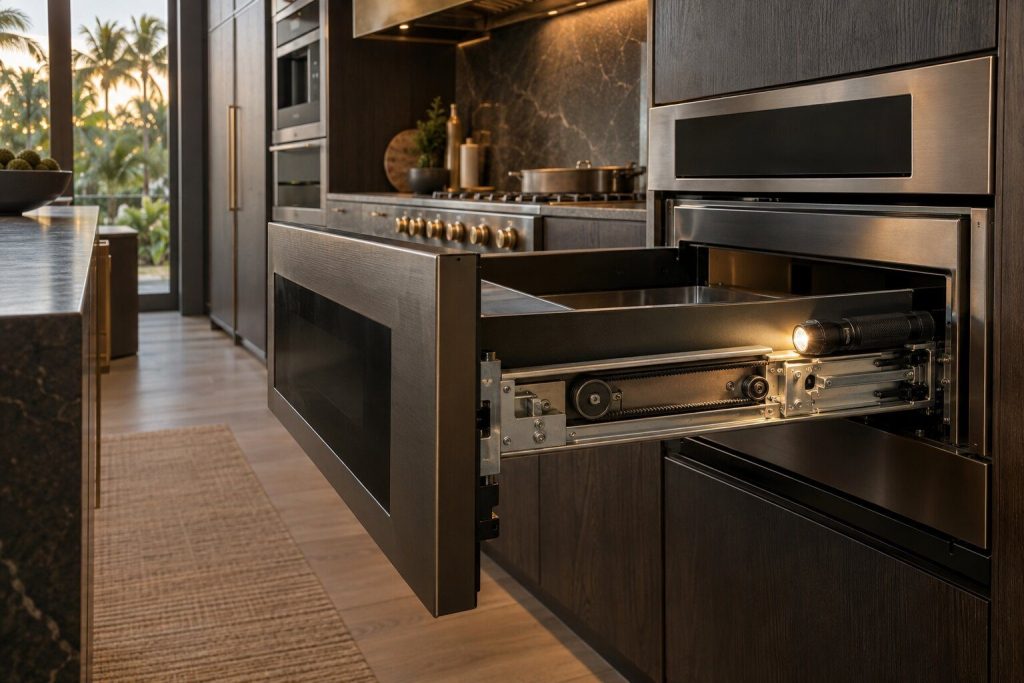
A Dacor Microwave Drawer That Will Not Open Is Not a Dead Oven
The mechanism fails far more often than the oven does, and while the drawer is not closed the oven refuses to heat — which reads as a dead appliance and is the machine being careful.
Read more -
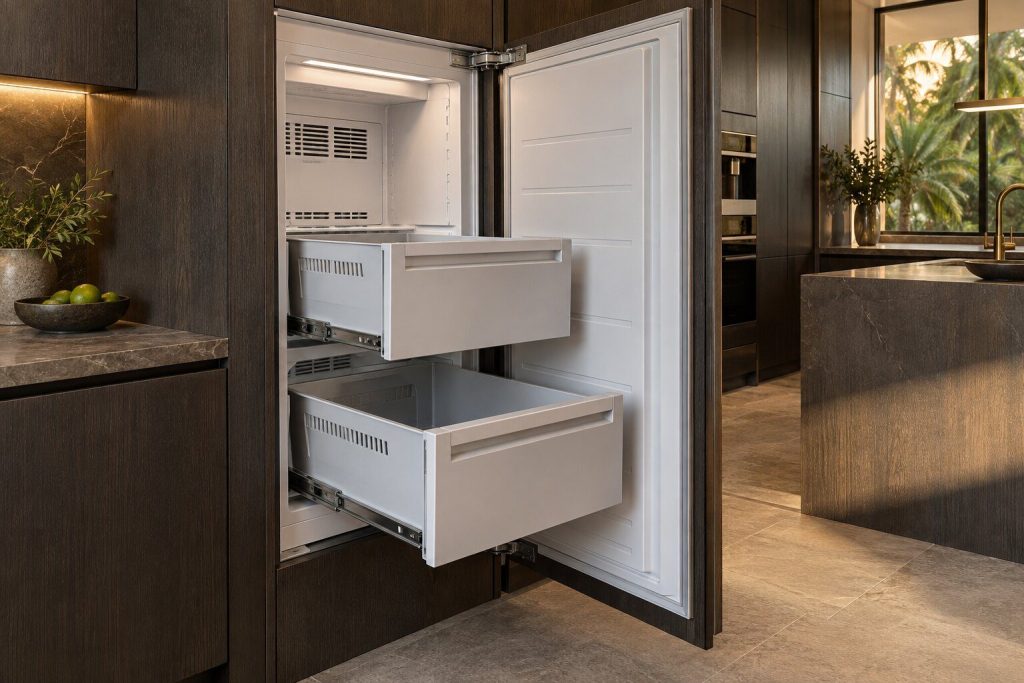
A Dacor Freezer Column Running Warm: Two Free Checks First
There is no second compartment to carry the load, so this one is urgent. Before anything is opened, two things that cost nothing account for a large share of these calls: how the drawers are loaded, and whether the base grille is covered.
Read more
Tell us the model number and what it is doing.
This article is based on:
- Official manufacturer documentation
- Internal repair procedures
- Technician repair history
- Company quality standards