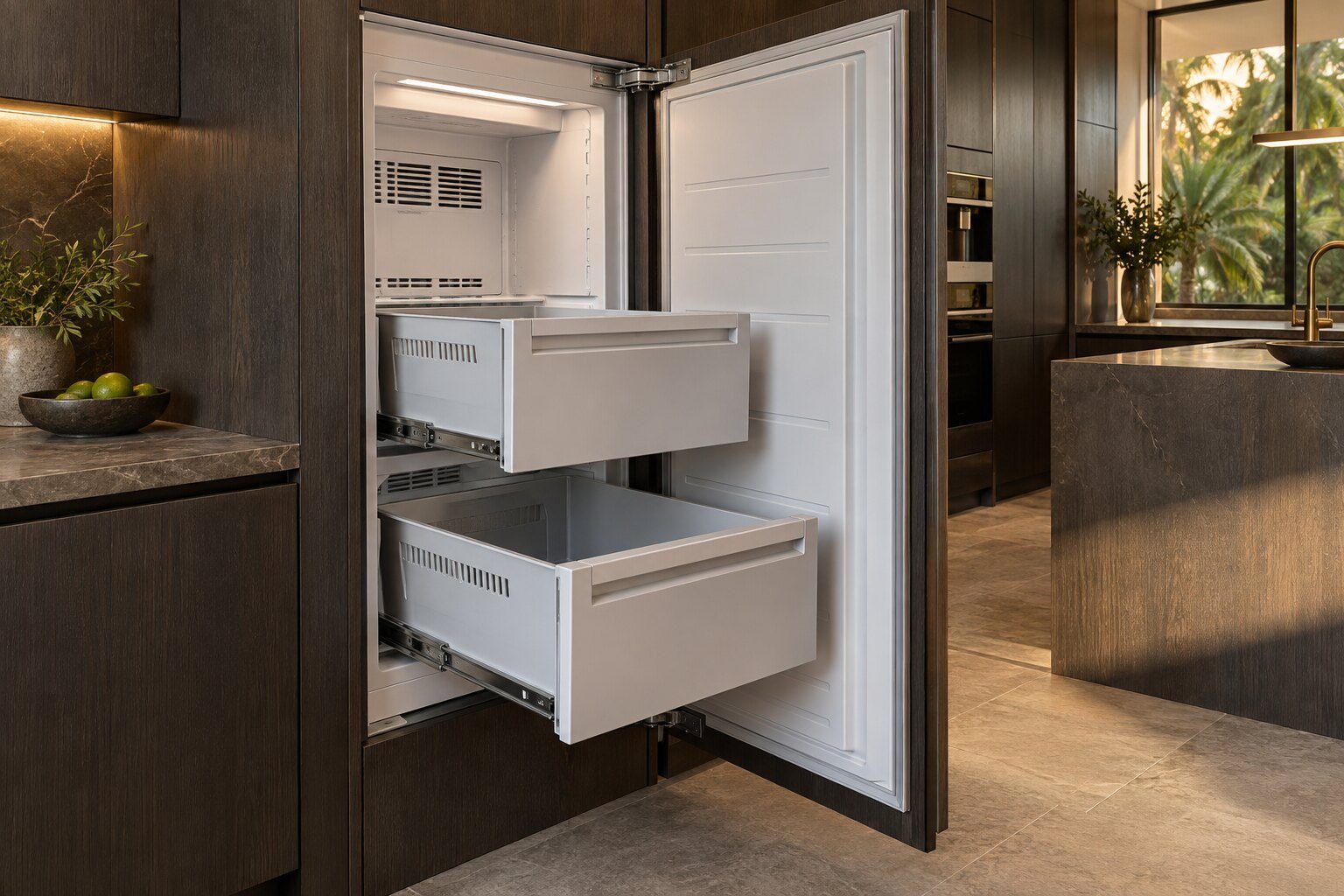
Troubleshooting
A Dacor Freezer Column Running Warm: Two Free Checks First
Every freezer Dacor builds is a column — 18, 24, 30 or 36 inches, panel-ready, designed to stand beside a refrigerator column. There is no chest and no upright in the line, which means there is no second compartment to carry the load while a part is ordered, and a problem here empties a cabinet that often holds a great deal. Two free checks come first and account for a large share of these calls. Inside: a column loaded past its internal vents cannot circulate air, and the symptom is a cabinet cold at the top and soft at the bottom. Outside: the base grille, which is the one route the cabinet has to shed heat, and which closes up with dust and grease or gets covered when a floor is laid or a kick panel refitted. After those, the defrost system and the evaporator fan are the ordinary causes — and Power Freeze running is a mode rather than a problem, though it makes the cabinet loud and hard-working.
The full guide
A column freezer is a great deal of machine in a narrow cabinet, and it fails differently from a freezer that stands in a garage.
Dacor freezer not freezing: why this one is urgent
On a French-door refrigerator a freezer problem leaves you a working refrigerator. On a column pair it leaves you a warm cabinet with everything in it, and in most of these kitchens the contents are worth more than the repair.
That changes how the visit is planned: around getting the cabinet back down to temperature the same day wherever the part allows it, and around telling you honestly at the diagnosis when it will not.
The load, and the vents nobody sees
Inside a column there are vents at the back and near the top that move air down through the drawers. A cabinet packed to the ceiling covers them, and the result is precisely characteristic: cold at the top, soft at the bottom, and a machine running constantly to fix something it cannot reach.
This is a conversation rather than a repair, and it is the single most common finding on this complaint.
The grille, and what covers it
The other free check is outside. A column sheds heat through a grille at the base or the top, and that route closes with dust, cooking grease and pet hair — or gets covered entirely when a new floor goes in, a kick panel is refitted tight, or a rug arrives.
A blocked path imitates a failing sealed system exactly, and nothing on the appliance tells you which you have.
Two ice makers in eighteen inches
The narrow column carries two ice modules, two drawers and its own sealed system in 9.4 cubic feet, which is genuinely a lot of mechanism in a small space. It is also why ice complaints on this cabinet are so diagnostically useful: both modules stopped points at the water supply, one stopped points at that module, and neither necessarily means the freezer itself is failing.
Power Freeze is not a problem
It drives the compartment down hard for a set period after a door has been open or a warm load has gone in, and while it runs the cabinet is louder and the fans faster than usual. People call about it, reasonably. If it was triggered deliberately or by a full load it ends on its own; if it never ends, that is a real symptom.
What we plan around
Getting the cabinet back to temperature the same day where the part allows it, and telling you at the diagnosis where it does not. That is not a courtesy; on a column it is the whole difference between a repair and a loss, because everything the household has frozen is in the one cabinet.
So the questions on the telephone are about the contents as much as the problem: how full it is, how long it has been drifting, and whether there is anywhere to move things to. A cabinet that has been at 15 °F for two days needs a different plan from one that started this morning.
If it turns out to be a repair
What this leads to, and what it costs
Every job on this site is priced the same way: an on-site diagnostic first, the figure agreed in writing before anybody starts.
-
from $185 Freezer column repair
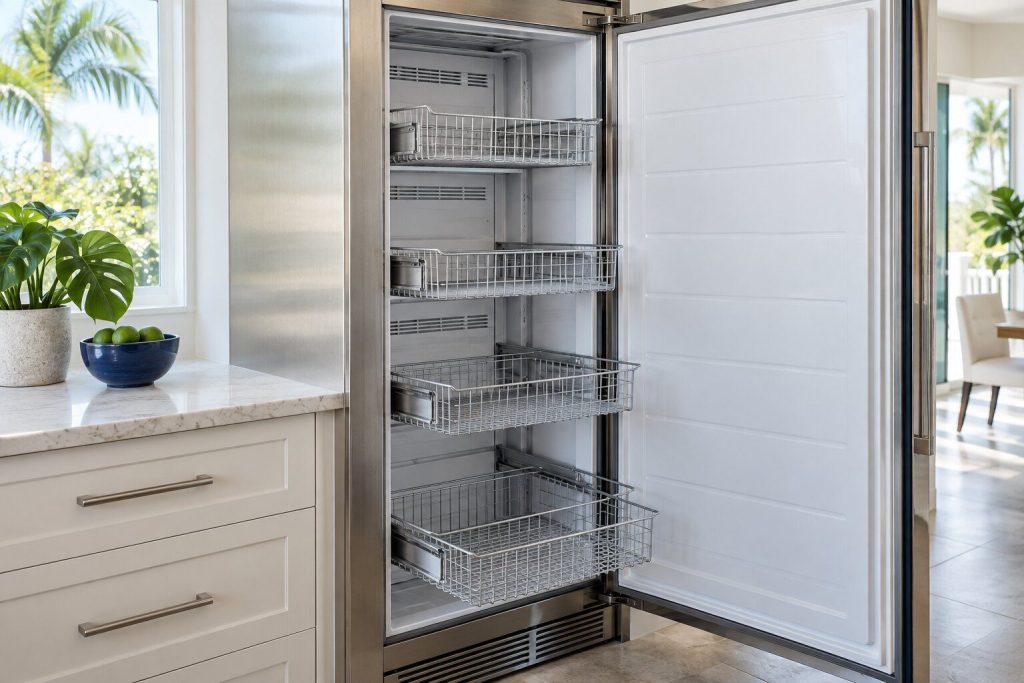
Every freezer this make builds is a column, which changes both the problems and the stakes. There is no second compartment to carry the load while a part is ordered, so a failure here empties a cabinet that often holds a great deal. The narrow column packs two ice makers, two drawers and its own sealed system into eighteen inches, and that density is why so many calls about it are really calls about airflow: drawers overloaded past the vents, or a base grille covered after a floor was laid. We check that before anything is opened.
- No second compartment — a problem here empties the cabinet
- Two ice makers and two drawers inside eighteen inches on the narrow column
- Overloaded drawers and covered grilles imitate a failing system
-
from $175 Defrost system repair
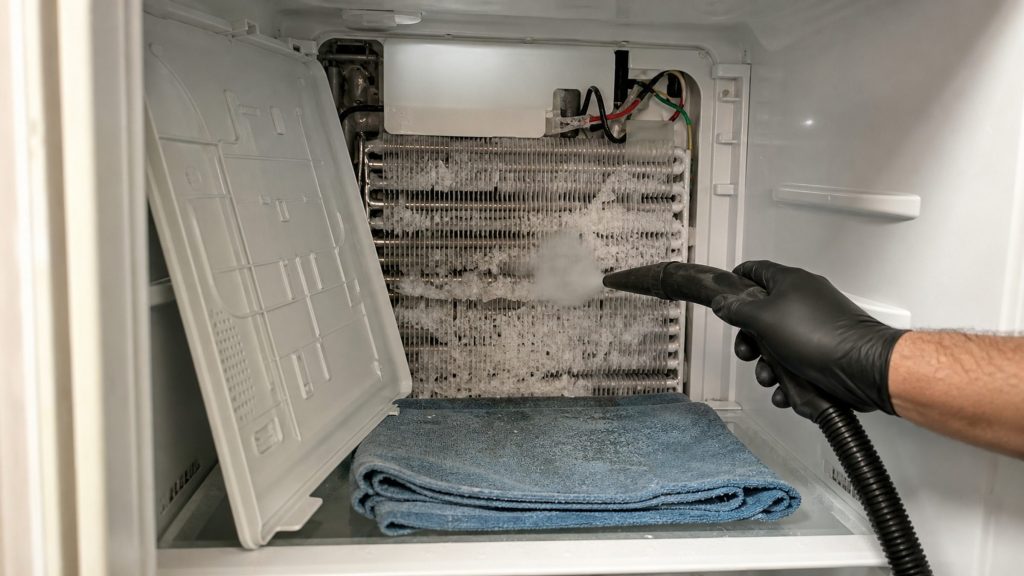
Frost where there should be none is a system problem rather than a mystery: a heater, a sensor, a thermostat and the control that decides when to run them. On these cabinets the symptom arrives slowly — a compartment that drifts a couple of degrees, then a fan that sounds like it is scraping, then ice visible at the back wall — and the cheapest moment to catch it is the first of those. On a column the whole load lives in one cabinet, so the same failure empties a freezer that a French door would have carried through.
- Heater, sensor, thermostat and the control that times them — checked as a system
- The early symptom is a two-degree drift, not visible ice
- On a column there is no second compartment to carry the load
-
Soft ice cream, frost on the packets, and a cabinet that never rests Freezer column running warm
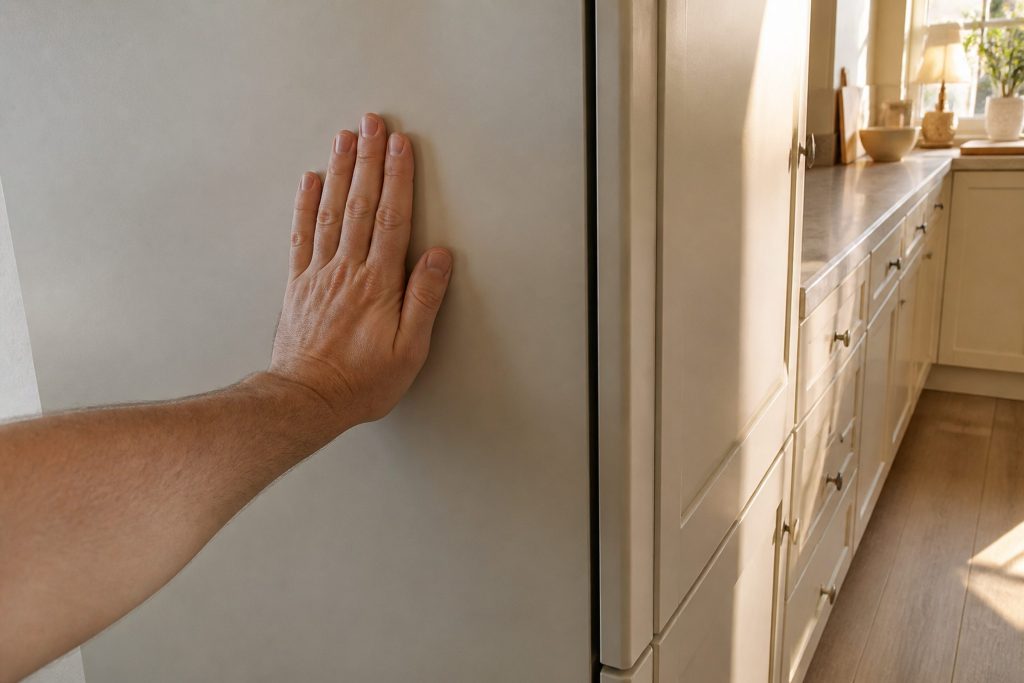
Every freezer this make builds is a column, and there is no second compartment to carry the load while a part is ordered — so this complaint is treated as urgent in a way the same problem on a French-door cabinet would not be. Before anything is opened, two free things are worth ruling out, and between them they account for a large share of these calls: a load pushed past the internal vents so air cannot circulate, and a base grille covered after a floor was laid or a kick panel refitted.
- No second compartment — this one empties the cabinet if it is left
- Overloaded drawers and a covered grille imitate a failing sealed system
- Power Freeze running hard is a mode, not a problem

Questions people ask about this
How long before the food is at risk?
A full column that has just begun to drift holds for hours rather than minutes, and a full one holds far longer than a half-empty one. If the middle drawer is above 10 °F and climbing, start moving what matters. Keep the door shut meanwhile — every opening costs recovery the cabinet may not have.
Can I replace it with a normal freezer?
Not like for like. This make does not sell a freestanding freezer, so the opening in the cabinetry decides the options rather than the appliance catalog. It is a joinery question before it is an appliance one, and it is worth knowing before a delivery is booked.
It has started making a lot of noise as well.
If it followed a door being left open or a warm load going in, that is probably Power Freeze recovering the cabinet, and it ends on its own. If it never ends, or the noise is a scrape or a knock rather than a hum, that is mechanical and worth the call.
Troubleshooting
More guides like this one
-
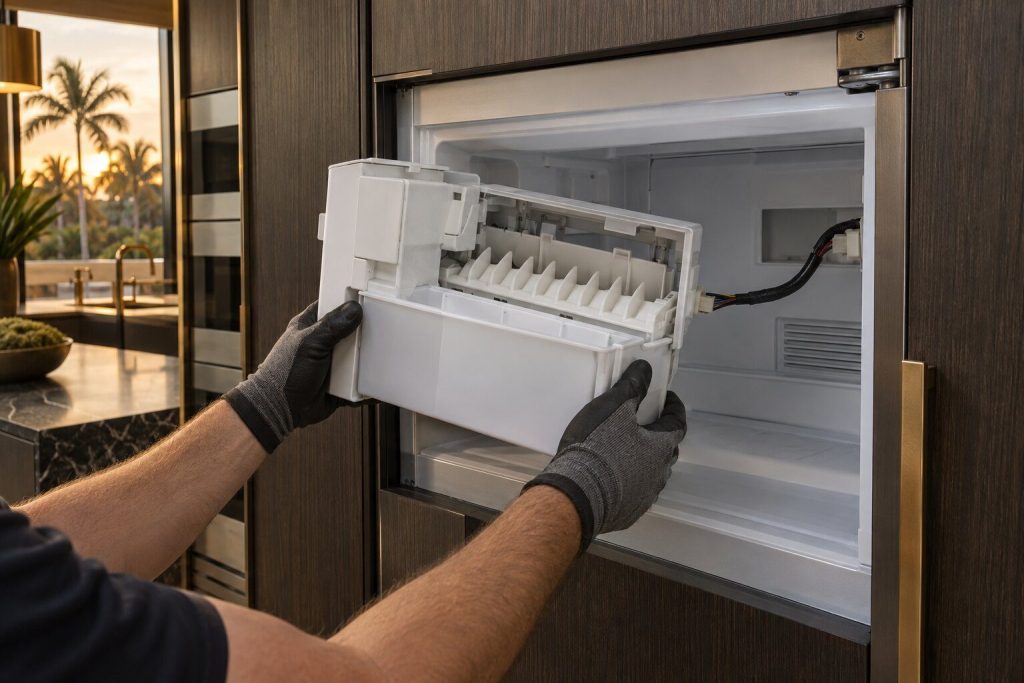
Two Ice Makers, One Water Problem: Reading a Dacor Freezer Column
The narrow freezer column carries two ice makers, and that second module is the most useful diagnostic tool in the kitchen. Both stopped is a water problem. One stopped is that module.
Read more -

The Simmer That Went Away After You Cleaned the Rangetop
The sear is perfect and the low end has gone. On a sealed brass burner that is nearly always ports, a cap seated wrong, or a simmer valve that has drifted — and it very often dates from the week the hob was scrubbed.
Read more -
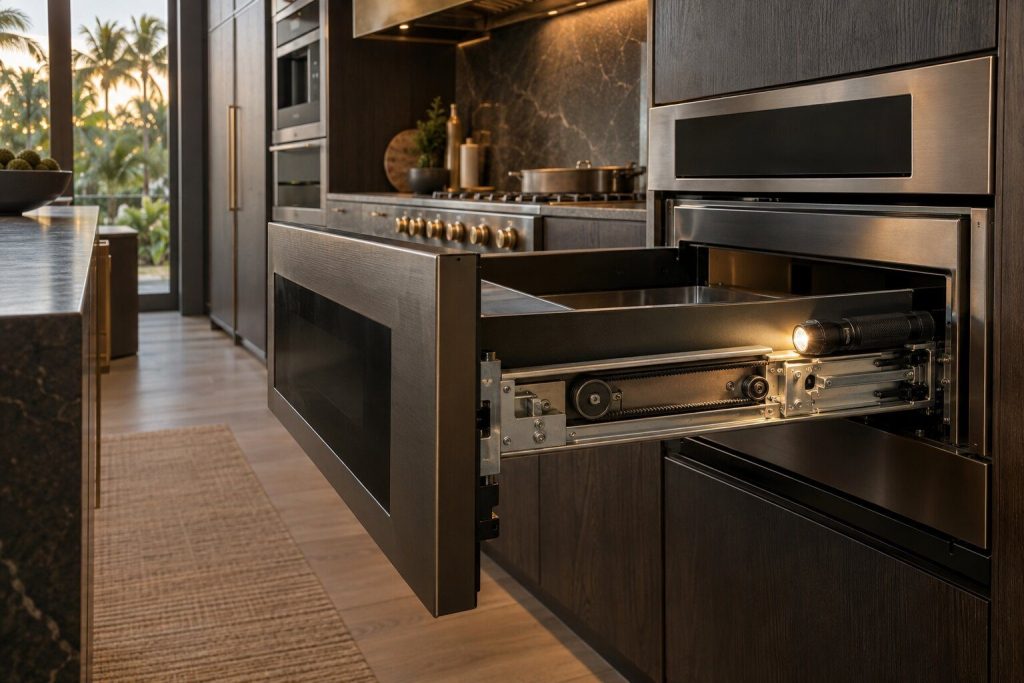
A Dacor Microwave Drawer That Will Not Open Is Not a Dead Oven
The mechanism fails far more often than the oven does, and while the drawer is not closed the oven refuses to heat — which reads as a dead appliance and is the machine being careful.
Read more
Tell us the model number and what it is doing.
This article is based on:
- Official manufacturer documentation
- Internal repair procedures
- Technician repair history
- Company quality standards