Cost Expectations
The Cheapest Dacor Visit Prevents the Most Expensive One
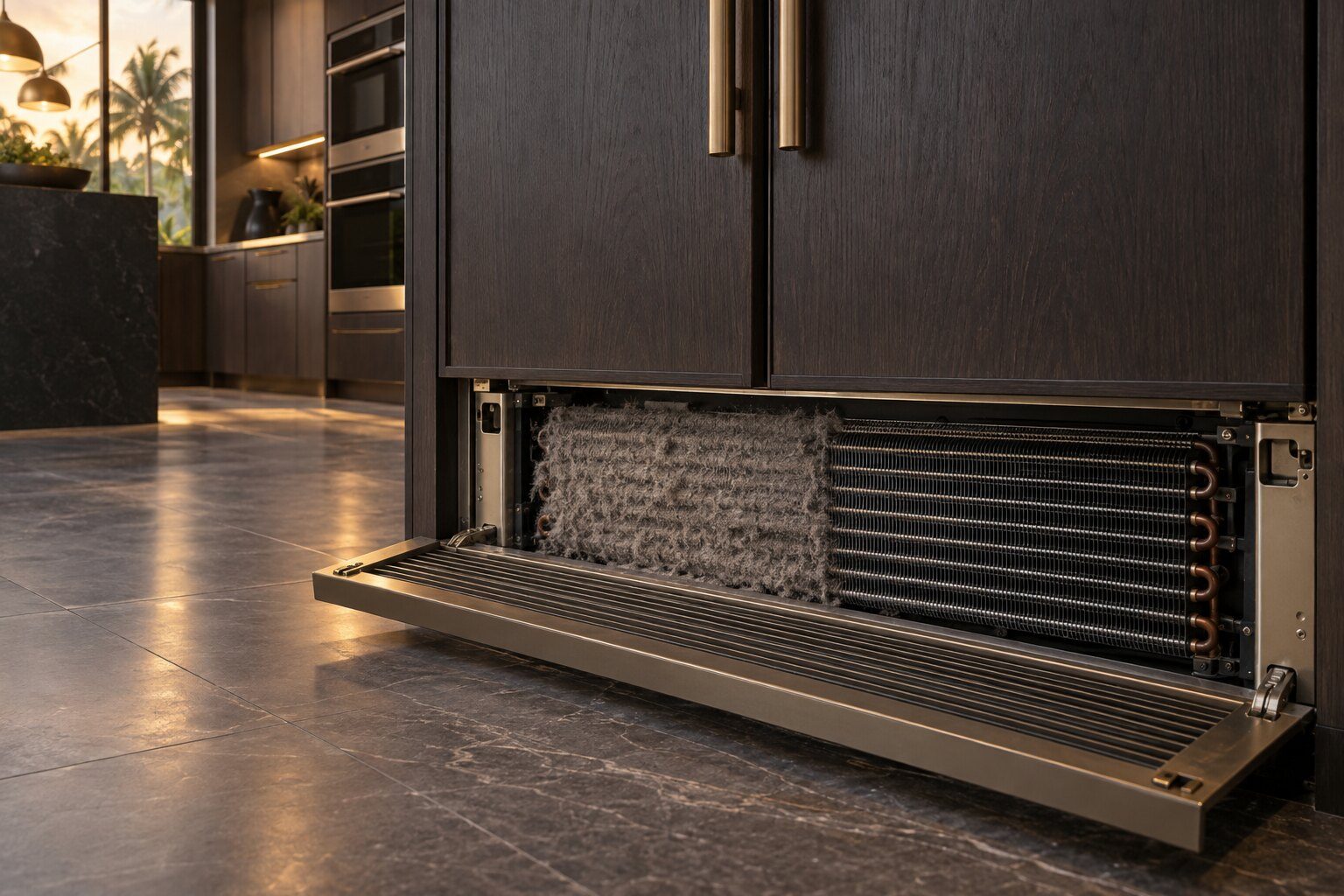
Built-in refrigeration sheds heat through a single defined route, usually a grille at the base of the cabinet, and on a Dacor almost the whole line is built in. In a Miami kitchen that route fills with dust, cooking grease and pet hair — and it does it quietly, over about four years, behind a piece of trim nobody has ever opened. The consequence is not a dramatic failure: the compressor runs longer, the cabinet sits two or three degrees above where it should, ice softens, and every component downstream ages faster than it was designed to. Clearing the coil and the fan housing takes twenty minutes on a cabinet serviced yearly and an hour on one that has never been touched, and it is the single highest-value maintenance available on this equipment. It is also the first thing checked on any not-cooling call, because a blocked path imitates a failing sealed system exactly.
The full guide
Nobody photographs a condenser. That is exactly why this happens.
Dacor refrigerator maintenance: one route in, one route out
A freestanding refrigerator stands in a room and sheds heat into it from all sides. A built-in cabinet cannot: it is surrounded by joinery, and everything it needs happens through a grille the installer left clear.
That grille is trim. It looks like part of the kitchen rather than part of the appliance, and in ten years most of them are opened exactly once — by us.
What actually blocks it here
Not dust, mostly. Cooking grease that has drifted down and gone tacky, pet hair stuck to it, and salt air working on both. In a kitchen that cooks and has a dog, four years is enough to close a coil to half its capacity.
Why nothing ever seems wrong
Because nothing is, at first. A refrigeration system with a restricted condenser simply runs longer to do the same work. The temperature holds. Then it holds a degree high. Then two. Then the ice goes soft and somebody finally calls, by which point the compressor has been doing double duty for two summers.
What twenty minutes buys
A coil and a fan housing cleaned, a path checked for whatever has been put against it since, and a cabinet that goes back to resting between cycles. It is the cheapest thing on our price list and the one that prevents the items at the other end of it.
It is also the first check on any not-cooling call, because a blocked path produces every symptom of a failing sealed system and the difference is free to establish.
The thing that blocks it again
We say where the next blockage will come from before leaving, because it is almost always predictable: a kick panel refitted tight after a floor was laid, a rug that now sits across a base vent, a cabinet added beside the column, or a box stored in the plinth space.
None of that is carelessness. It is simply that nobody thinks of a refrigerator as breathing.
Doing it with several appliances at once
A designed kitchen rarely holds one machine from this badge. A refrigerator column, a freezer column, a wine cabinet and a dishwasher in one run share an age, a room and frequently an air path, and they can all be serviced in a single visit.
That matters to the figure more than it might seem: the journey, the setup and the paperwork are paid once, and everything after the first cabinet costs a fraction of it. It is also the visit where the hood filters and the dishwasher softener get done, which are the two other things nobody was told about on delivery.
If it turns out to be a repair
What this leads to, and what it costs
Every job on this site is priced the same way: an on-site diagnostic first, the figure agreed in writing before anybody starts.
-
from $129 Condenser cleaning
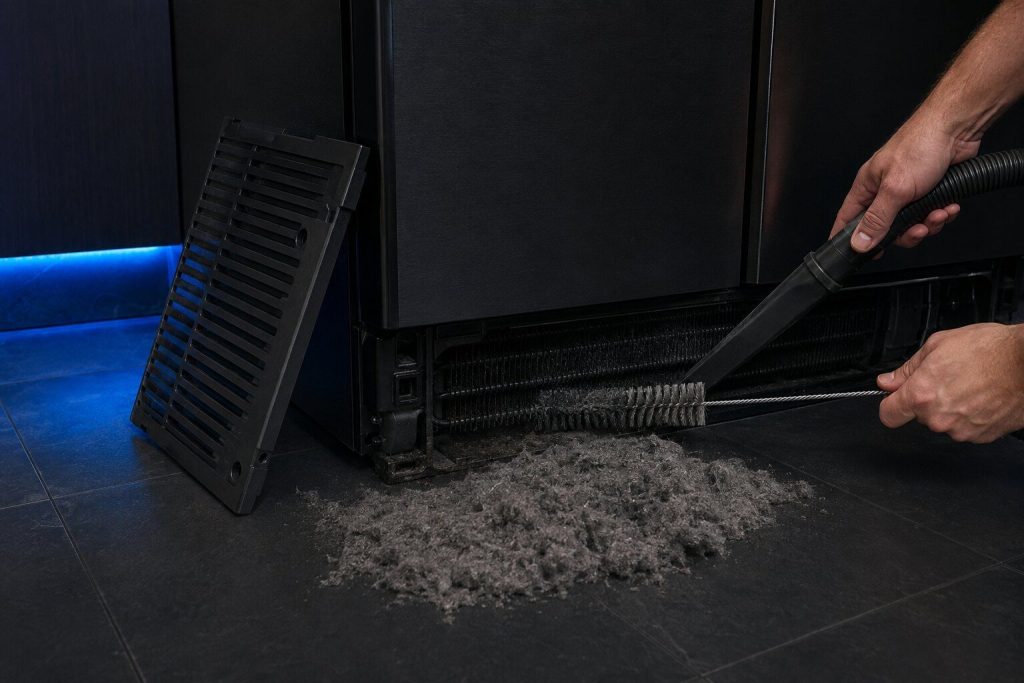
The least glamorous visit on the list and the one that prevents the most expensive ones. A condenser rejects heat, and in a Miami kitchen it does that through a grille that collects dust, cooking grease and pet hair until the cabinet is running against itself. On built-in refrigeration it matters more than on freestanding, because the coil sits in a defined air path that the cabinetry controls: when that path is restricted, the compressor runs longer, the temperature drifts, and everything downstream ages faster than it should.
- Built-in refrigeration lives on a defined air path — restrict it and everything ages
- Grease and pet hair, not dust, are what actually block a Miami coil
- Cheapest visit here, and the one that prevents the dear ones
-
from $165 Appliance maintenance
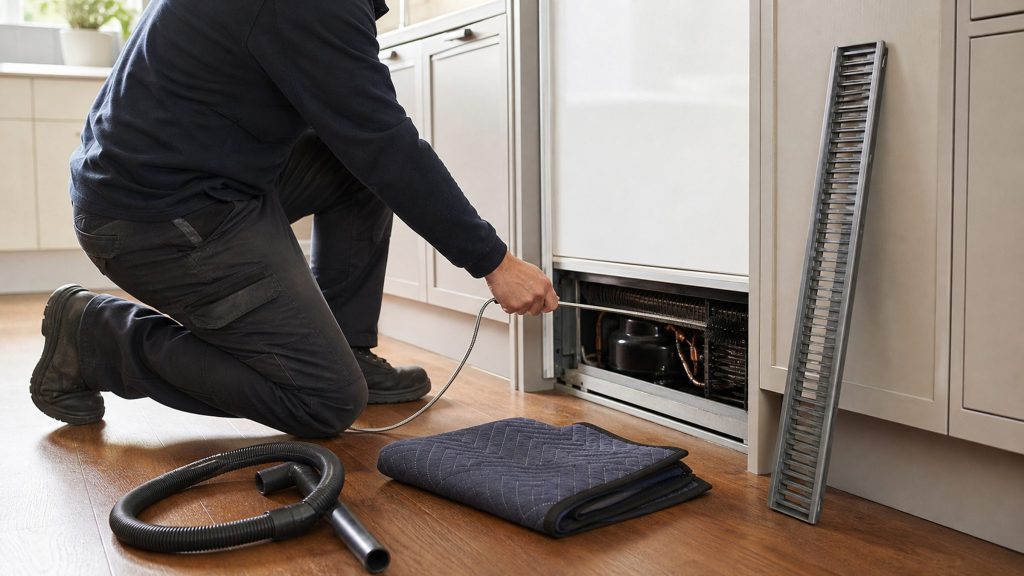
The visit that keeps a built-in kitchen out of trouble, which on this make is mostly about air and water. Columns and panel-ready cabinets breathe through grilles that joinery and rugs slowly cover; the dishwasher softens its own water and that softener has a service interval; a steam oven has a reservoir and a descaling cycle; a hood liner fills with grease where nobody can see it. None of that is dramatic and all of it is cheaper than the failure it prevents. We do the lot in one visit rather than returning for each.
- Air paths first: column grilles, condenser coils, hood filters and blower
- Water next: the dishwasher softener, the steam reservoir, the coffee system's path
- One visit across the kitchen, not one visit per appliance
-

It is running, the light works, and the food is warm Refrigerator not cooling
The cabinet is clearly alive and the food is clearly not cold. Two pieces of evidence settle most of what follows and neither needs tools. The first is a thermometer in each compartment, read twice an hour apart. The second is which cabinet you have: on a French door one sealed system serves both compartments, so a single warm side is an airflow problem; on a column pair there are two independent systems and the cold cabinet beside the warm one is evidence rather than a symptom. This make publishes no error code for any of it, which is why the readings matter more here than on other badges.
- Freezer cold and fresh food warm means airflow, not refrigerant
- There is no code to read — the app's named alarms are all the appliance will say
- Check the grille before anything else: a captured column has one way to breathe

Questions people ask about this
Can I do this myself?
On most of these cabinets the grille comes off by hand and a soft brush and a vacuum do real good. What is worth leaving to us is anything that needs the cabinet moved, and anything behind a trim kit that was fitted by a joiner rather than clipped on.
How do I know it needs doing?
Open the grille and look. A photograph of a blocked coil explains a year of slowly rising temperatures better than any description, and in a kitchen with pets the answer is usually visible from across the room.
Does it really shorten the life of the appliance?
Yes, and not dramatically enough for anybody to notice at the time. A compressor running most of the day instead of half of it is doing roughly twice the work, in a hotter cabinet space, for years.
Cost Expectations
More guides like this one
-
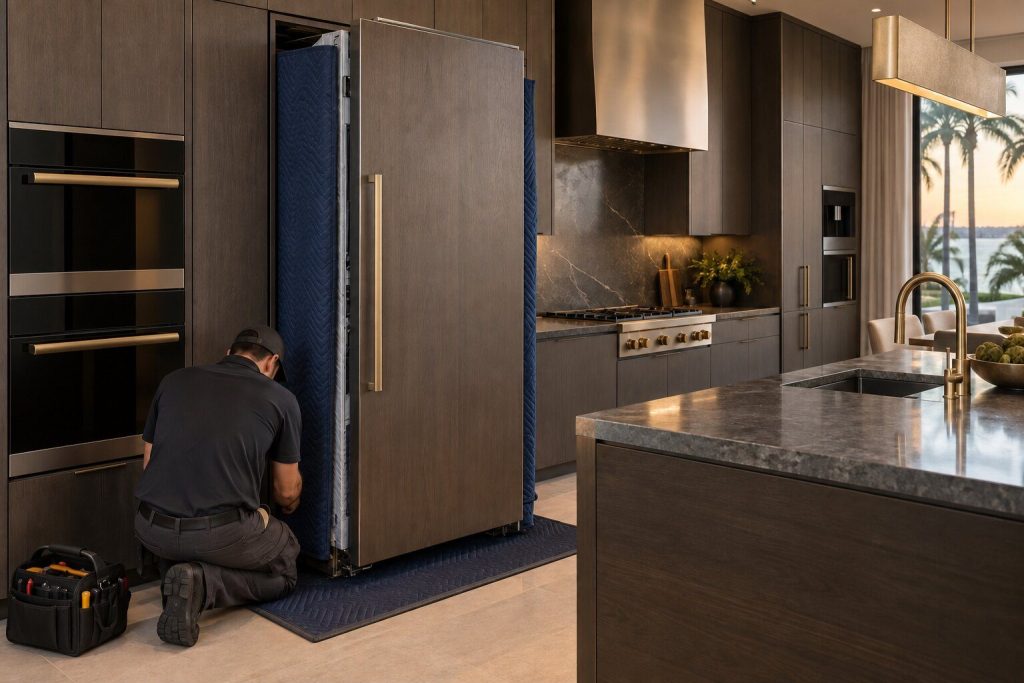
Why Built-In Access Is Quoted Separately on a Dacor
Bringing a captured column forward and putting the joinery back exactly as it was is real work with a real risk attached. Burying it inside a part price is how it becomes a surprise mid-visit.
Read more -

What a Dacor Diagnostic Buys That Other Makes Do Not Need
On most makes a diagnostic establishes a problem. On this one it has to establish a generation as well, because a correct diagnosis handed the wrong era buys the wrong part.
Read more -
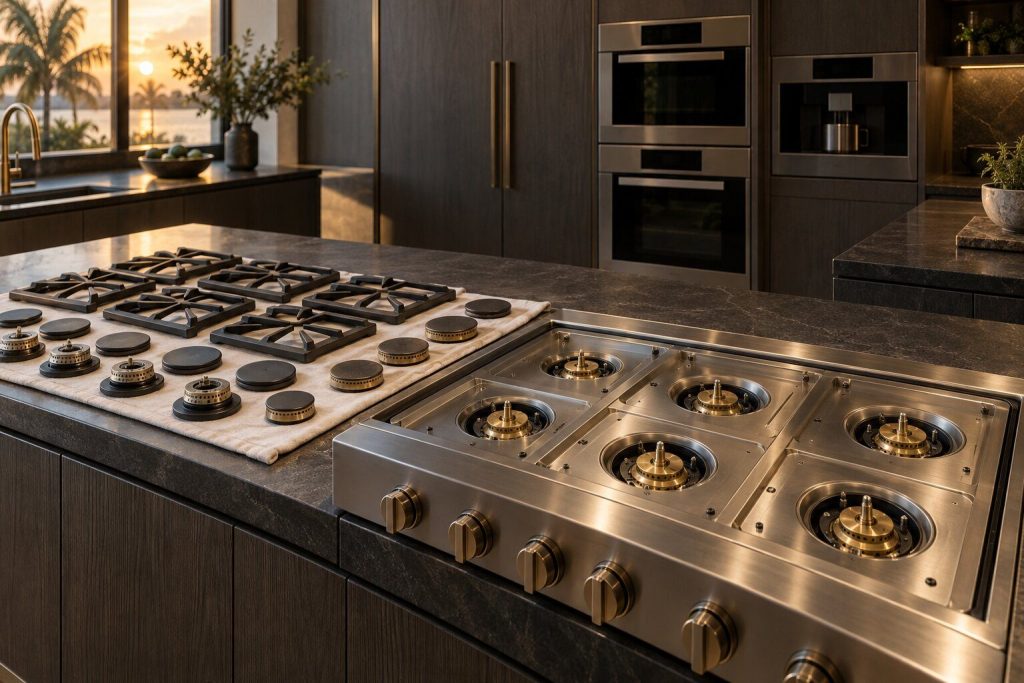
What a Dacor Rangetop Service Restores That a Part Cannot
On a hob that has been cooked on nightly for years, stripping and setting every burner brings back more than any component would — and it is the visit that makes an eight-year-old rangetop behave like a new one.
Read more
Tell us the model number and what it is doing.
This article is based on:
- Official manufacturer documentation
- Internal repair procedures
- Technician repair history
- Company quality standards