Cost Expectations
What a Dacor Rangetop Service Restores That a Part Cannot
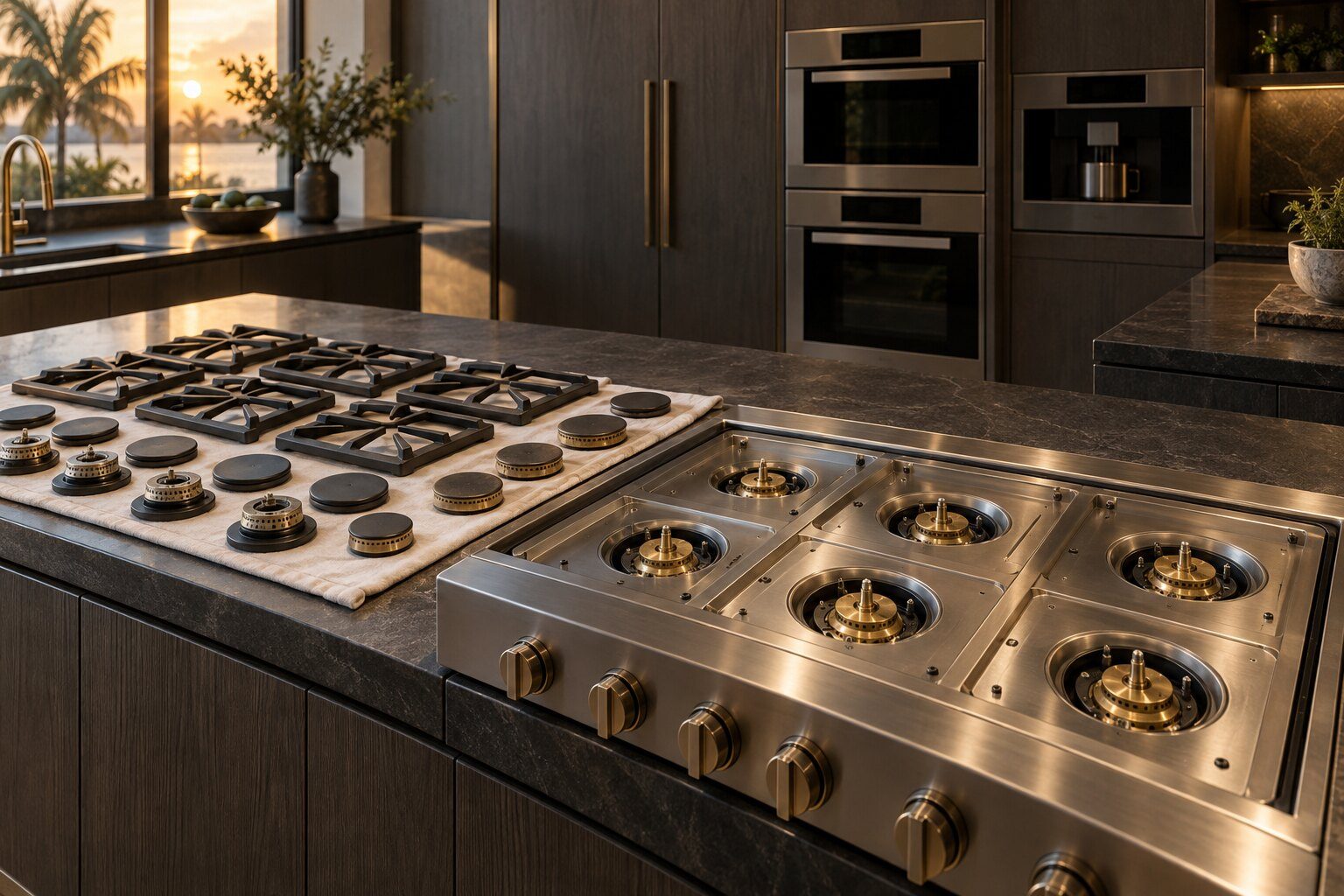
A Dacor rangetop service is priced as a strip-down rather than a repair, because on a hard-used hob what restores the appliance is not a component. Every cap and head comes off, every port is cleared — particularly the small inner ring that does the simmering and blocks long before anything else — and then each burner is set across its full range from a hard sear down to a genuine simmer. Illuminated knobs, the griddle plate's surface and the wok ring are checked in the same visit. The figure moves on the size of the top, on how hard it has been worked, and on whether the simmer valves need setting as well as cleaning. What it buys is a hob that does the thing it was bought for again: sealed brass burners that will hold a pot of stock all afternoon without going out.
The full guide
Some visits fit a part. This one gives an appliance back.
Dacor rangetop repair: what a hard-used rangetop actually needs
Not a component. Six sealed brass burners that have been cooked on nightly for five or eight years carry the residue of every boil-over in their ports, and the smallest openings — the inner ring that does the simmering — are the ones that close first.
The appliance does not announce this. It sears as well as it ever did, and the cook notices one evening that a pot of stock will no longer hold at a bare tremble.
What the visit involves
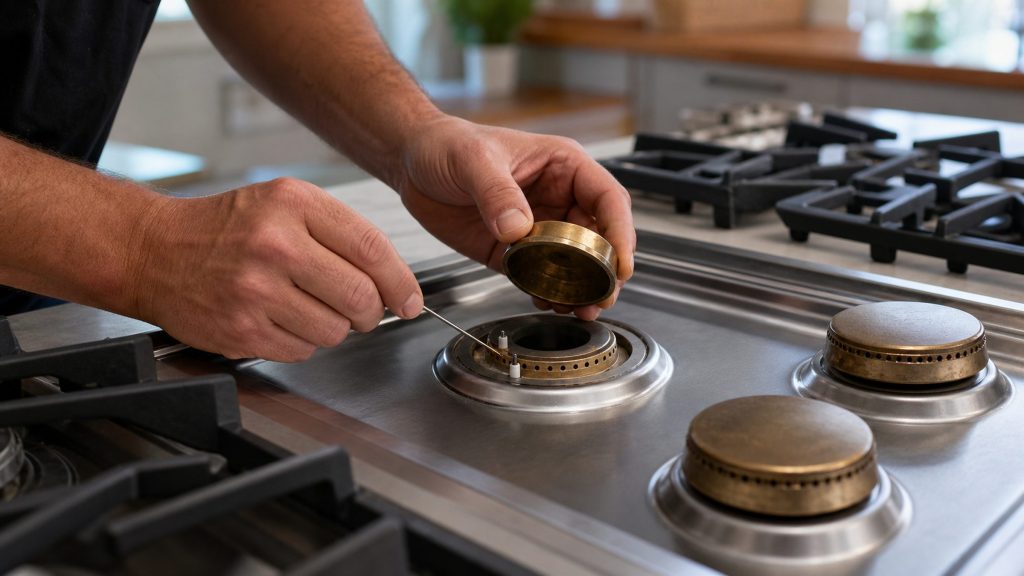
Every grate, cap and head off. Ports cleared with a fine wire — never anything harder, because enlarging a port permanently changes that burner. The heads seated back on their locating pins and the caps flat.
Then each burner lit and set across its full range, with the simmer valve adjusted where it has drifted. That last step is the one that is skipped most often and the one that makes the difference the customer can feel.
What else gets looked at while it is apart
Illuminated knobs, which fail one at a time and are a small part. The griddle plate and its surface. The wok ring seating. The ignition electrodes, which in a coastal kitchen crack in their ceramic and spark to the wrong place while looking perfect.
None of those is worth a visit on its own; all of them are worth doing while the hob is already open.
Why the figure is what it is
It is time rather than parts. A 48-inch top takes longer than a 36 because there is a griddle or a second simmer burner in it, and a hob in a house that cooks takes longer than one used at weekends.
Most of these visits end without a component being fitted at all, which is unusual on an appliance price list and worth saying plainly.
When a part is genuinely needed
A burner head that has corroded through, an igniter cracked past cleaning, a simmer valve that will not hold its setting. Those are ordinary and inexpensive, and they are quoted on top rather than assumed into the service figure.
What it does not cover
A burner head corroded through, an igniter cracked past cleaning, a simmer valve that will not hold its setting after adjustment. Those are parts, they are ordinary, and they are quoted on top rather than folded into the service figure.
It also does not cover the griddle's own heating — that is a separate element with a separate control and its own page. What the service does is return every burner to the range it had when the hob was new, which on a well-used top is more than most people expect from a visit with no parts in it.
If it turns out to be a repair
What this leads to, and what it costs
Every job on this site is priced the same way: an on-site diagnostic first, the figure agreed in writing before anybody starts.
-
from $195 Rangetop service
The professional rangetops are 36 and 48 inches of sealed brass burners, illuminated knobs and a griddle or wok ring in place of grates, and they are worked harder than any other appliance in these kitchens. Service is mostly about restoring the range of the burners rather than fixing failures: simmer settings that have drifted, ports partially blocked by years of boil-over, knob illumination that has died on one burner, and the griddle plate's surface. It is a heavy appliance and a satisfying one to bring back.
- Six sealed brass burners built to sear and to genuinely simmer
- Illuminated knobs fail one at a time and are a separate small repair
- The griddle and wok ring are accessories that live where grates would
-
The Simmer That Went Away After You Cleaned the Rangetop
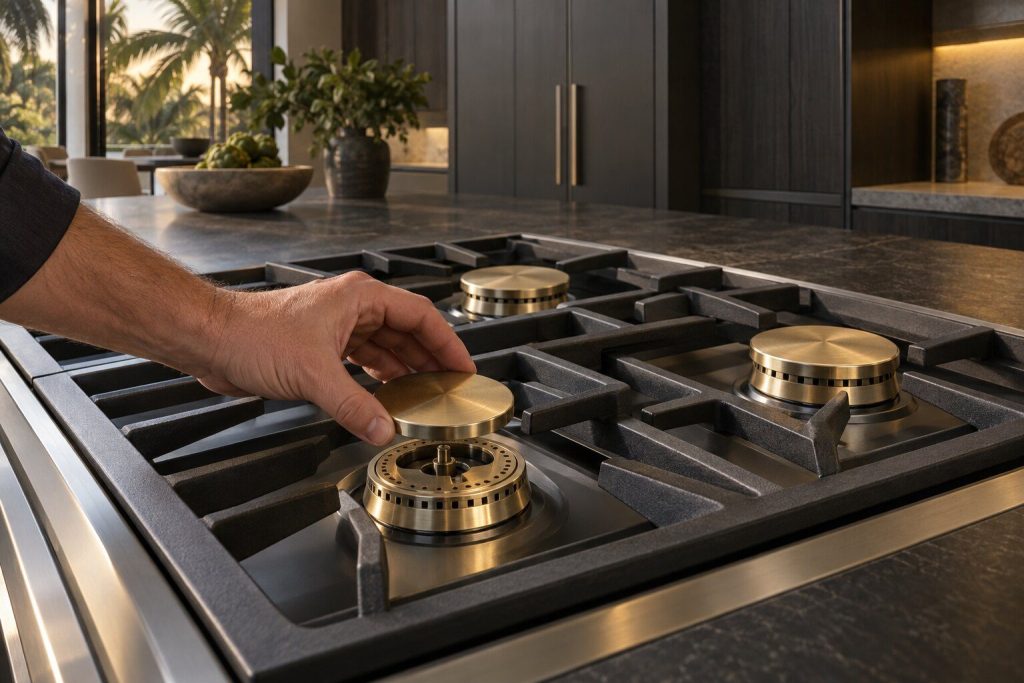
The sear is perfect and the low end has gone. On a sealed brass burner that is nearly always ports, a cap seated wrong, or a simmer valve that has drifted — and it very often dates from the week the hob was scrubbed.
Read more

Questions people ask about this
My burners look clean. Is this worth doing?
The ports that matter are the small inner ones and they are not visible from above. The usual evidence is a hob that sears beautifully and will not hold a simmer, and that is very common on a rangetop that has never been stripped.
How often should it be done?
On a hob that cooks most nights, every couple of years. On one used at weekends, considerably less often. It is not a calendar item so much as a response to the low end of the burners going, which is the symptom that arrives first.
Why does it cost more than a burner repair?
Because it is more work. A burner repair is one burner and a part; this is every burner off, every port cleared and every valve set. The time is the cleaning rather than the components, and that is where the result comes from.
Cost Expectations
More guides like this one
-

Why Built-In Access Is Quoted Separately on a Dacor
Bringing a captured column forward and putting the joinery back exactly as it was is real work with a real risk attached. Burying it inside a part price is how it becomes a surprise mid-visit.
Read more -

What a Dacor Diagnostic Buys That Other Makes Do Not Need
On most makes a diagnostic establishes a problem. On this one it has to establish a generation as well, because a correct diagnosis handed the wrong era buys the wrong part.
Read more -
Repair or Replace a Pre-2016 Dacor: the Honest Arithmetic
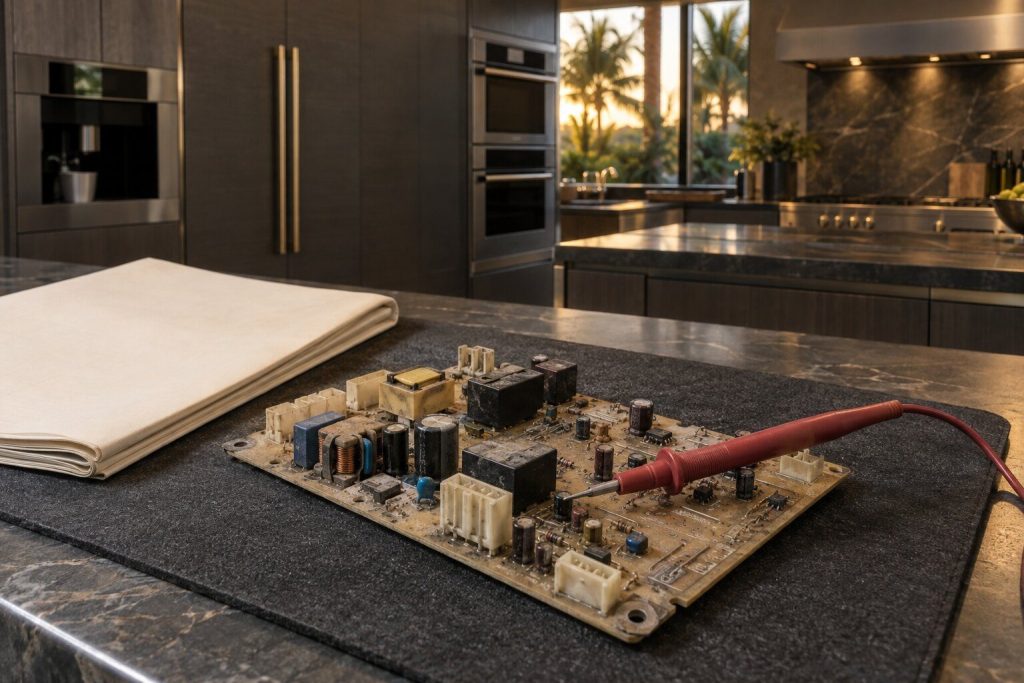
These are heavy, well-documented machines and the common failures are ordinary parts. What decides it is not age — it is whether the part still exists, and that question is answered before labor is booked.
Read more
Tell us the model number and what it is doing.
This article is based on:
- Official manufacturer documentation
- Internal repair procedures
- Technician repair history
- Company quality standards