Troubleshooting
A Dacor Induction Zone That Cuts Out Is Usually Defending Itself
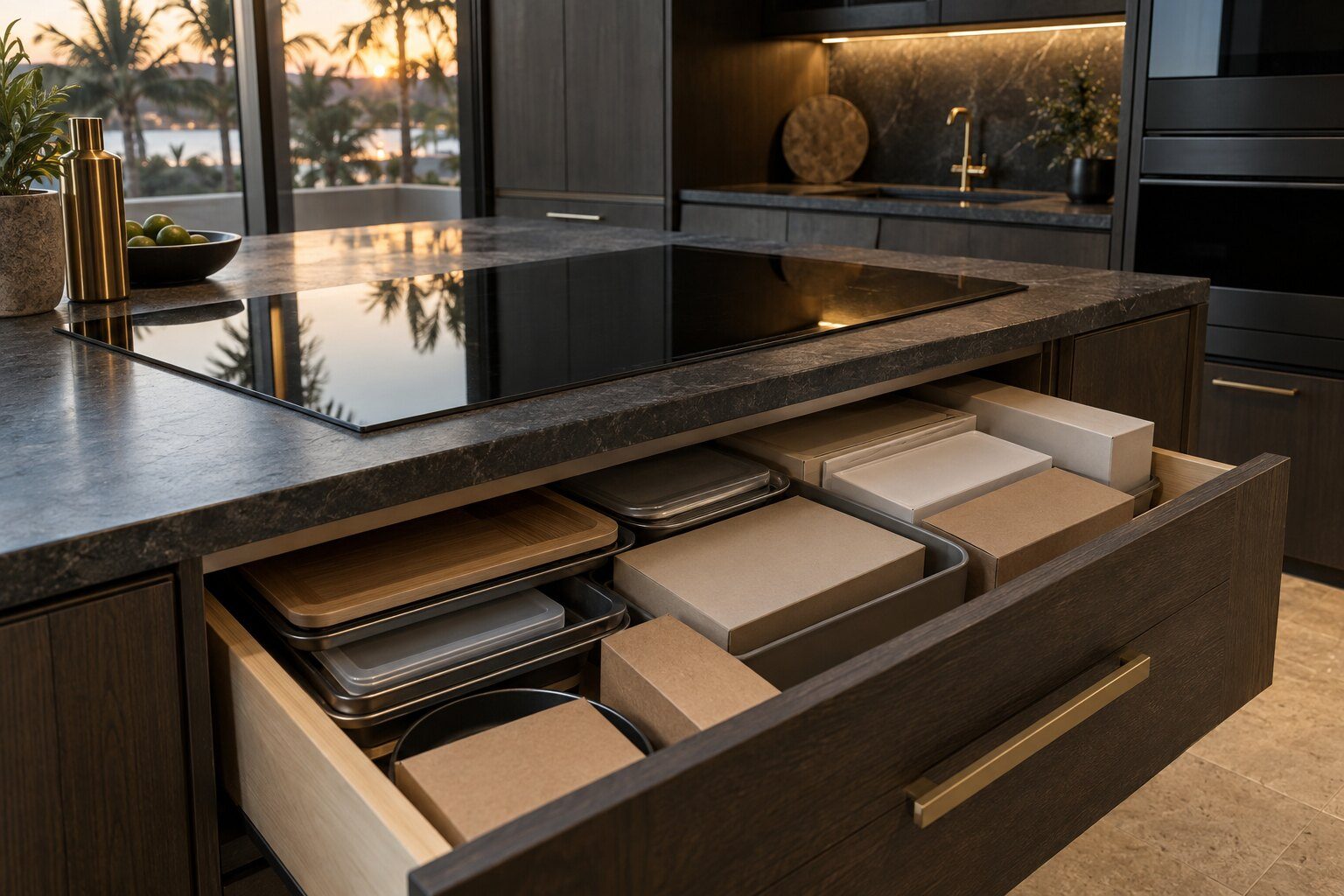
An induction zone that runs for a few minutes at high power and then stops is most often protecting itself rather than failing. The drive electronics under the glass shed a great deal of heat and rely on airflow through the cabinet beneath the worktop. When a renovation fills that space with insulation, when a drawer is stacked to the top, or when the installation clearances were never right, the cooktop reduces power or stops — and the symptom is indistinguishable from a failing zone. The cooling fan is the second question: a fan that has stopped or is obstructed produces the same behavior with a clear cabinet, and on the current cooktops that reports as A2. Only when the airway and the fan are proven does the zone's own coil and drive become the answer. Each zone has its own electronics, so one dead zone rarely means the surface is finished.
The full guide
The most misread problem on an induction surface is the appliance doing its job.
Dacor induction cooktop shuts off: what is actually happening under the glass
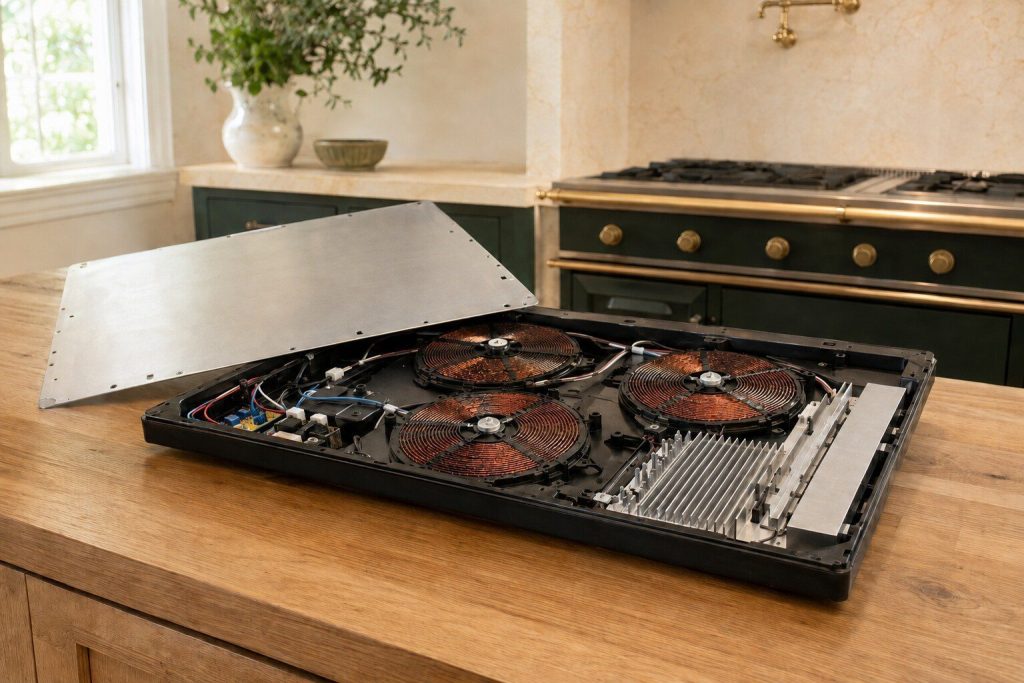
Each zone has a coil and a set of power electronics driving it, and those electronics are a real heat source in their own right. They are cooled by a fan drawing air from the cabinet beneath the worktop and pushing it out again.
That air path is part of the appliance as much as the coil is. Where it works, the cooktop runs at full power indefinitely. Where it does not, the drives reach their limit and the control steps the zone back or shuts it down — which is exactly what it is supposed to do, and exactly what a dying zone looks like.
What fills the space
Kitchens change after the appliance goes in. A drawer that was empty gets stacked to the top. A renovation adds insulation under the worktop. A new cabinet goes in beside it and the air that used to come from the side no longer does. None of it is careless — it is simply invisible, because nobody thinks of a cooktop as breathing.
Why the season is a clue
If the cooktop behaves in February and steps back in August, that is protection rather than failure. Nothing in the appliance changed; the air it uses to cool itself got fifteen degrees warmer, and a margin that was always small disappeared.
An intermittent failure that tracks the weather is not intermittent. It is a marginal installation.
The fan, and the one code this appliance does give
Unlike the refrigeration and the hoods, the current induction cooktops do publish a short table — C0, C1, C2, F0, F1, F2, A2, UP and d0 — and A2 is the fan motor. If that is showing, the airflow question has already been answered for you.
Note the trap on this make though: F0, F1 and F2 on an induction cooktop mean something entirely different from F0, F1 and F2 on a Classic ERC wall oven. Same characters, different tables.
When it really is the zone
Once the space below is clear and the fan is proven, the coil and its drive become the answer — and even then it stays local, because each zone has its own. A single dead zone on a five-zone surface is a repair rather than a replacement, and the glass is rarely the problem.
The measurement that settles it
Which zone, what power setting, how many minutes. Write those three down over a couple of days before calling, because they separate the two diagnoses better than anything we can do on site.
Thermal protection is repeatable: the same zone, at the same setting, after roughly the same time, every time. A failing drive is not — it fails at odd moments, sometimes immediately, sometimes not at all. A note on a phone for two days is more diagnostic than an hour in your kitchen, and it costs nothing.
If it turns out to be a repair
What this leads to, and what it costs
Every job on this site is priced the same way: an on-site diagnostic first, the figure agreed in writing before anybody starts.
-
from $205 Induction cooktop repair
An induction surface is an electronics repair under glass, and the good news is that each zone has its own coil and drive, so one dead zone rarely means the whole cooktop. What matters most is telling failure apart from protection: a zone that runs for a few minutes at high power and then stops is very often defending itself against heat it cannot shed, and the cause is a blocked vent or a cabinet packed tight underneath rather than a problem in the appliance. That distinction is worth making before anybody quotes for parts.
- Per-zone coils and drives — one dead zone is usually local
- Cutting out after minutes at high power is usually protection, not failure
- Pan compatibility is a magnet test, and no repair changes it
-
It works for a few minutes at high power and stops Induction zone cuts out during cooking
The most misread problem on an induction surface, because it looks like a zone dying and is usually a zone defending itself. The drive electronics under the glass shed a great deal of heat, and they rely on airflow through the cabinet beneath. Pack that space, add insulation during a renovation, or store a stack of trays against the underside, and the cooktop will run beautifully for five minutes at high power and then step back. Establishing that before anybody quotes for parts is the whole of this page.
- Cutting out after minutes at high power is usually protection, not failure
- The cause is under the worktop far more often than in the appliance
- Pan compatibility is a magnet test, and no repair changes it
Questions people ask about this
It only does it in summer.
That is the strongest evidence there is for thermal protection. The same cooktop in the same cabinet behaves perfectly in January and steps back in August, because the kitchen it is shedding heat into is fifteen degrees warmer. It is not a problem that comes and goes; it is a margin that has been too small all along.
Could it be the pan?
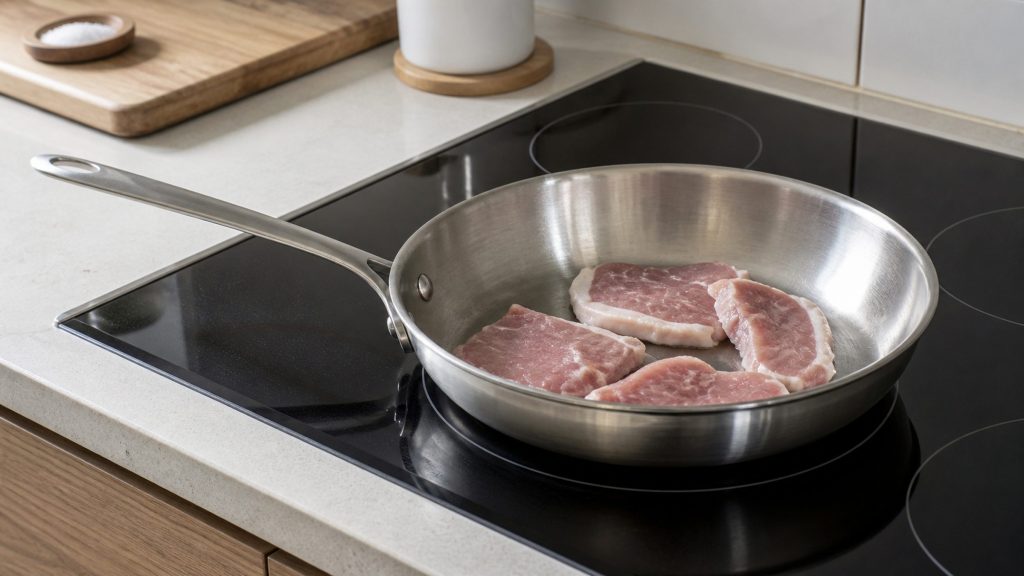
A pan the cooktop cannot read will not start at all rather than run and quit, so a zone that works for five minutes is not a pan problem. The magnet test settles it either way: if a fridge magnet does not stick to the base, no repair will make that pan work.
Will a more powerful extractor help?
No. The cooktop cools through the cabinet below it, not through the room above. What helps is clearing the space underneath and confirming the clearances the installation instructions specify.
Troubleshooting
More guides like this one
-
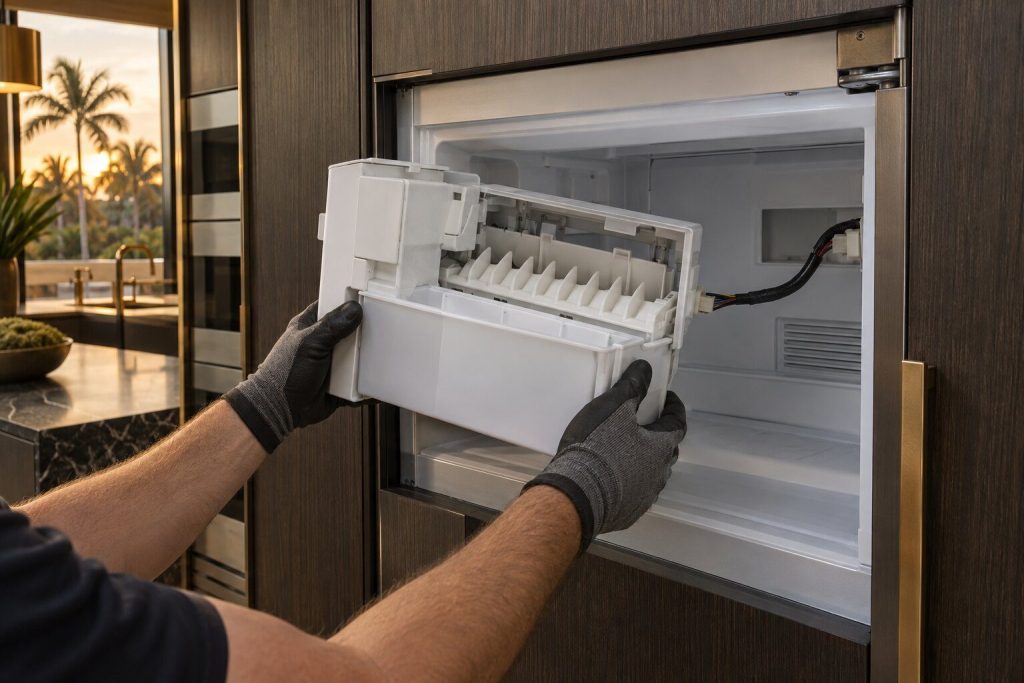
Two Ice Makers, One Water Problem: Reading a Dacor Freezer Column
The narrow freezer column carries two ice makers, and that second module is the most useful diagnostic tool in the kitchen. Both stopped is a water problem. One stopped is that module.
Read more -
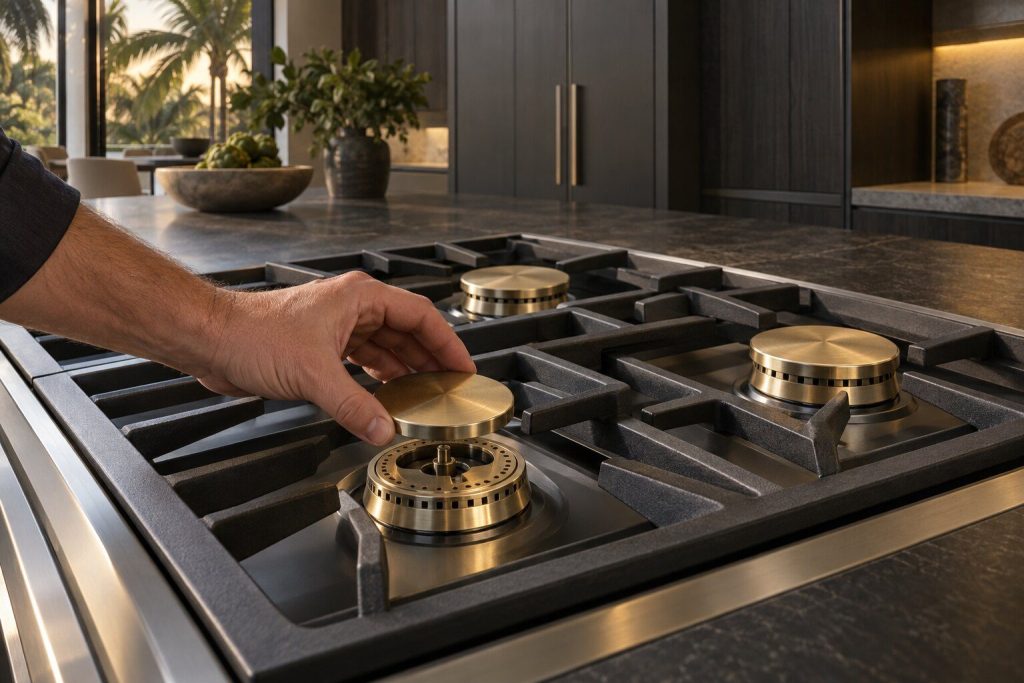
The Simmer That Went Away After You Cleaned the Rangetop
The sear is perfect and the low end has gone. On a sealed brass burner that is nearly always ports, a cap seated wrong, or a simmer valve that has drifted — and it very often dates from the week the hob was scrubbed.
Read more -
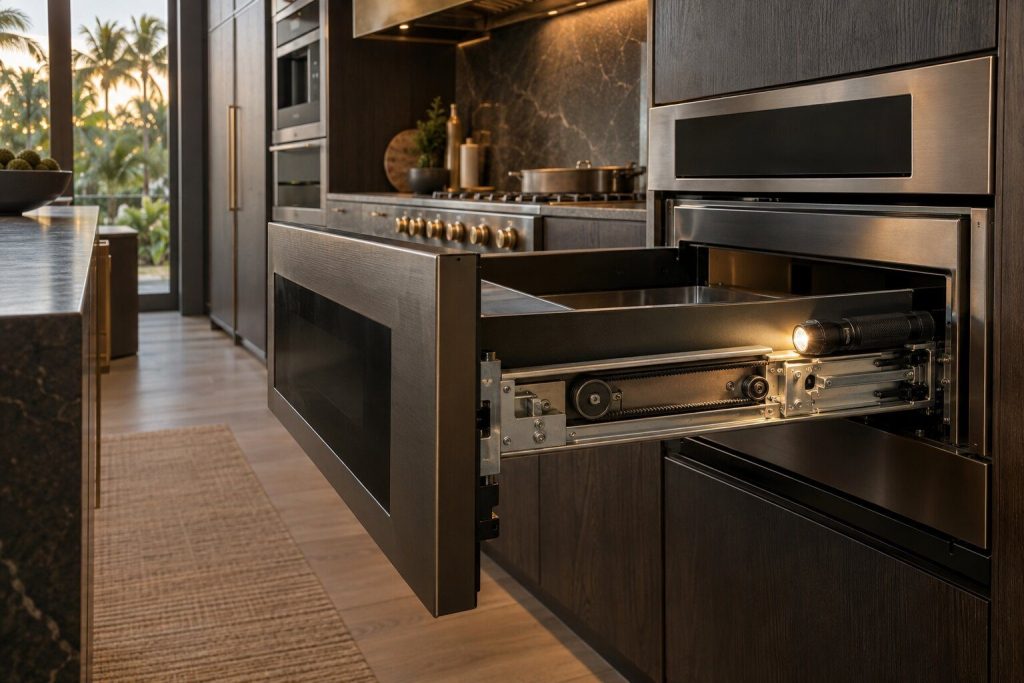
A Dacor Microwave Drawer That Will Not Open Is Not a Dead Oven
The mechanism fails far more often than the oven does, and while the drawer is not closed the oven refuses to heat — which reads as a dead appliance and is the machine being careful.
Read more
Tell us the model number and what it is doing.
This article is based on:
- Official manufacturer documentation
- Internal repair procedures
- Technician repair history
- Company quality standards