Troubleshooting
A Panel-Ready Dacor Door That No Longer Seals
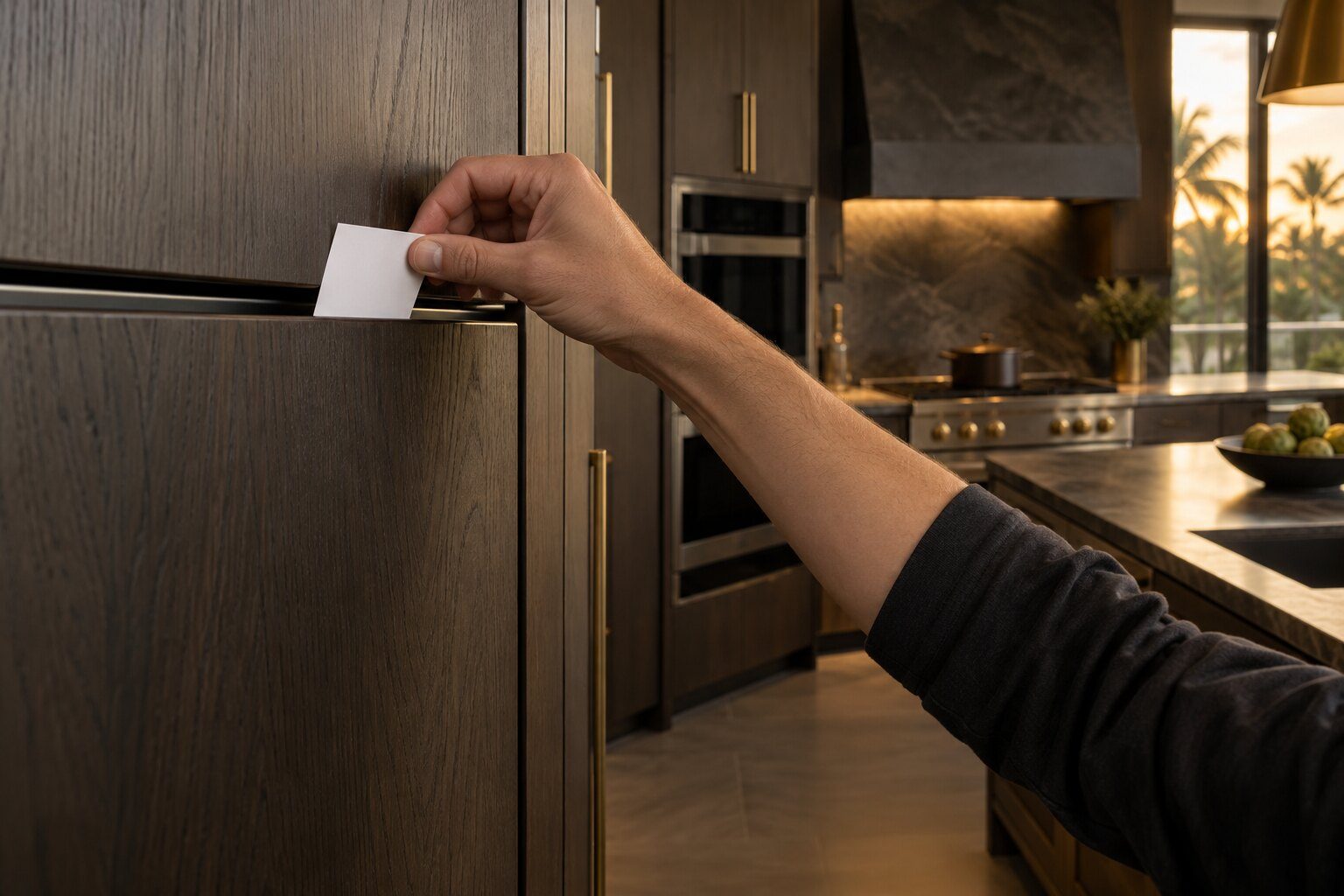
On a panel-ready Dacor, the door carries a cabinet front and its hardware, and hinges settle under that weight over years. The gasket then lifts away from the frame along one edge — usually the top on a tall column — and the cabinet runs continuously to replace what it is losing. In a Miami kitchen that also produces condensation where nobody expects it, and on a wine column it warms whichever zone is nearest the gap. The test is a slip of paper closed in the door and pulled at intervals all the way round: even drag everywhere is a sound seal, and one slack spot names the edge that has lifted. A gasket failing along one edge is a door problem; one perished all round is a gasket problem. Replacing the seal without correcting the door brings the same problem back within a year, so both are done together or neither is.
The full guide
An ordinary refrigerator door weighs what the manufacturer designed for. This one does not.
Dacor refrigerator door seal: what the panel changes
A panel-ready door carries a cabinet front chosen by whoever designed the kitchen, plus a handle that may be solid brass. The hinges were specified for that, and they hold it perfectly well — for years. Then they settle.
A settled hinge does not look like anything. The door still closes, the cabinet still runs, and the only evidence is a seal that has lifted a millimeter along one edge and a compressor that never quite rests.
The paper test, done properly
Most people test the door in one place, usually the handle side. The useful version is at intervals all the way round: top, both sides, bottom, several points on each.
Even drag everywhere means a sound seal. One noticeably light spot names the edge, and which edge it is tells you what the problem is — a tall column fails at the top, a range door at a bottom corner.
Why replacing only the gasket does not work
A new gasket on a door that has dropped is a new gasket held away from the frame in exactly the same place. It will seal for a few months while the rubber is at its softest and then do what the old one did.
So the hinges, the shims and the panel fixings are corrected first and the gasket is fitted to a door that sits square. That is the difference between a repair and a return visit.
What this costs in a humid kitchen
A cabinet losing cold air through a gap has to replace it, and in an open-plan kitchen at eighty per cent humidity the air it draws in carries a great deal of moisture. That means more running, more defrost work, more ice where ice should not be, and on a wine column a zone that never quite holds.
It is one of the problems where the consequential cost genuinely exceeds the repair.
The cheapest version of the same symptom
Before assuming the door: check nothing inside is holding it. A drawer not fully closed, a rack sitting proud, a bottle forward on a shelf. Any of those keeps the door a few millimeters off its seal and produces every symptom above, and all of them are free to correct.
Why this shows up first on a wine column
Because a wine column has the tightest specification in the kitchen and a glass door doing the hardest work. A gap that a freezer would absorb for months moves a wine zone within days, and the owner notices because the cabinet exists to hold a number.
So on a wine cabinet this problem arrives as a temperature complaint rather than a door complaint, and it is worth saying when you call whether the zone nearest the hinge or the zone nearest the handle is the one drifting. That single detail frequently names the edge before anybody has touched the door.
If it turns out to be a repair
What this leads to, and what it costs
Every job on this site is priced the same way: an on-site diagnostic first, the figure agreed in writing before anybody starts.
-
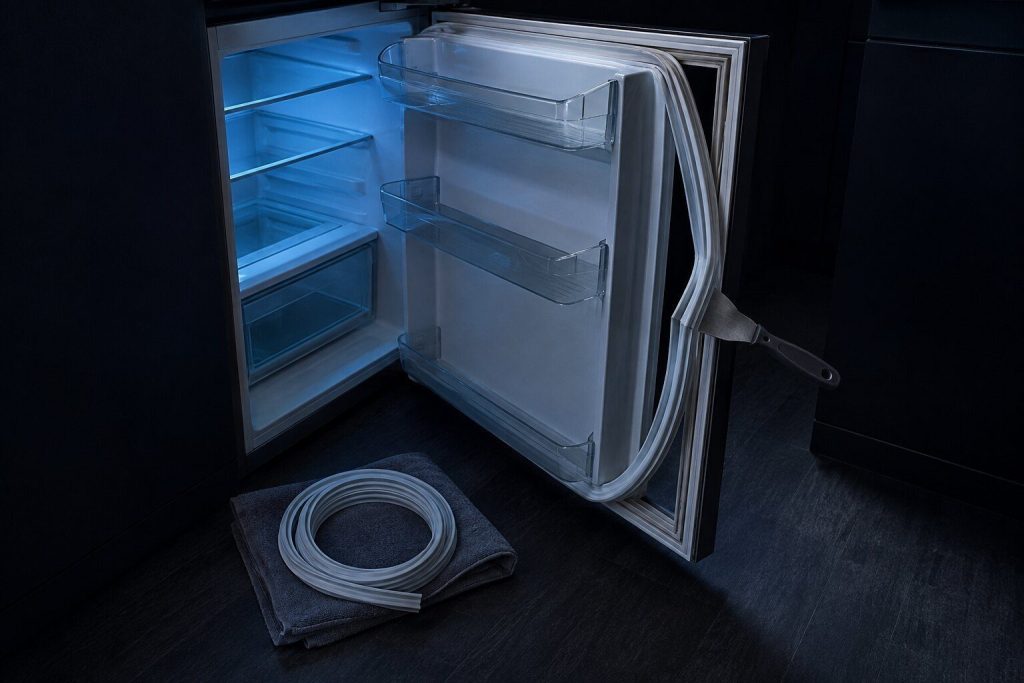
from $165 Door seal replacement
A gasket that no longer seals is a slow, expensive problem: the cabinet runs longer, the compartment nearest the leak drifts, and condensation appears where nobody expects it. Panel-ready doors make it likelier than on ordinary refrigeration, because the door carries the weight of a cabinet front and its hardware, and a hinge that has settled under that weight pulls the seal away from the frame along one edge. Replacing the gasket without correcting the door is how the same problem comes back within a year, so we do both or neither.
- Panel weight settles hinges — the seal is often the symptom, not the cause
- A dollar-bill test along all four edges, not a look at the worst corner
- Door alignment corrected at the same visit or the problem returns
-
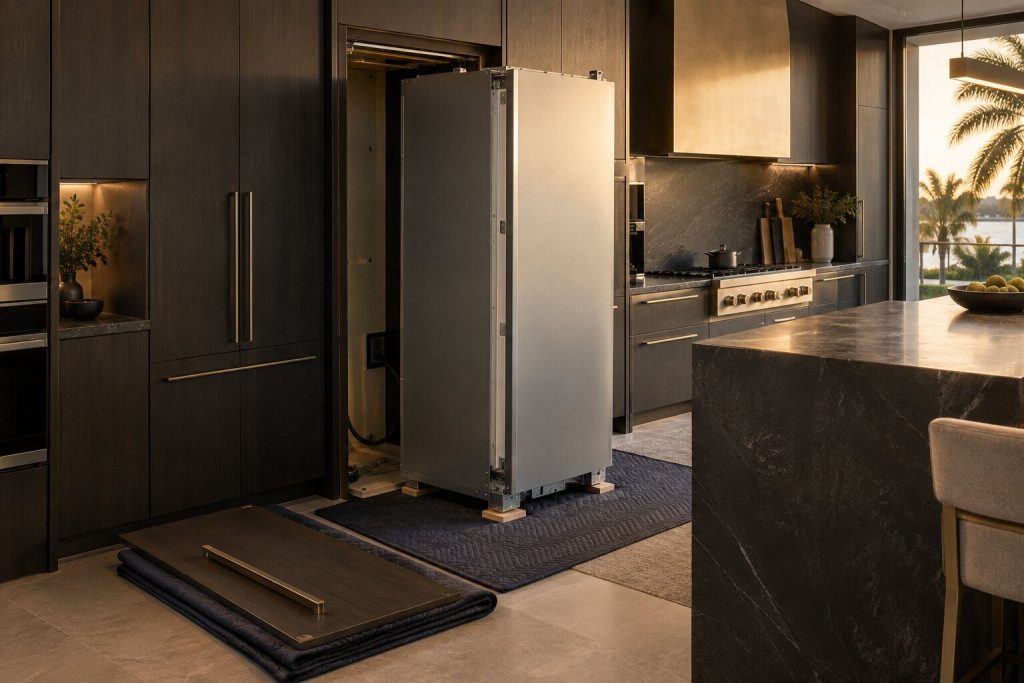
from $185 Built-in column access
The service that exists because of the shape of this line. A refrigeration column is captured by the cabinetry around it, held by trim, carrying a cabinet panel and a handle that belong to the kitchen rather than the appliance. Bringing it far enough forward to be worked on — and putting the joinery back exactly as it was — is real work with a real risk attached, and pretending otherwise is how a repair leaves a scratch down a walnut run. We price it as its own step so that nobody is surprised by it halfway through a visit.
- Panel, handle and trim removed and recorded before anything is moved
- The joinery is protected first — the risk here is the cabinetry, not the appliance
- Priced as its own step so it is never a surprise mid-visit
-
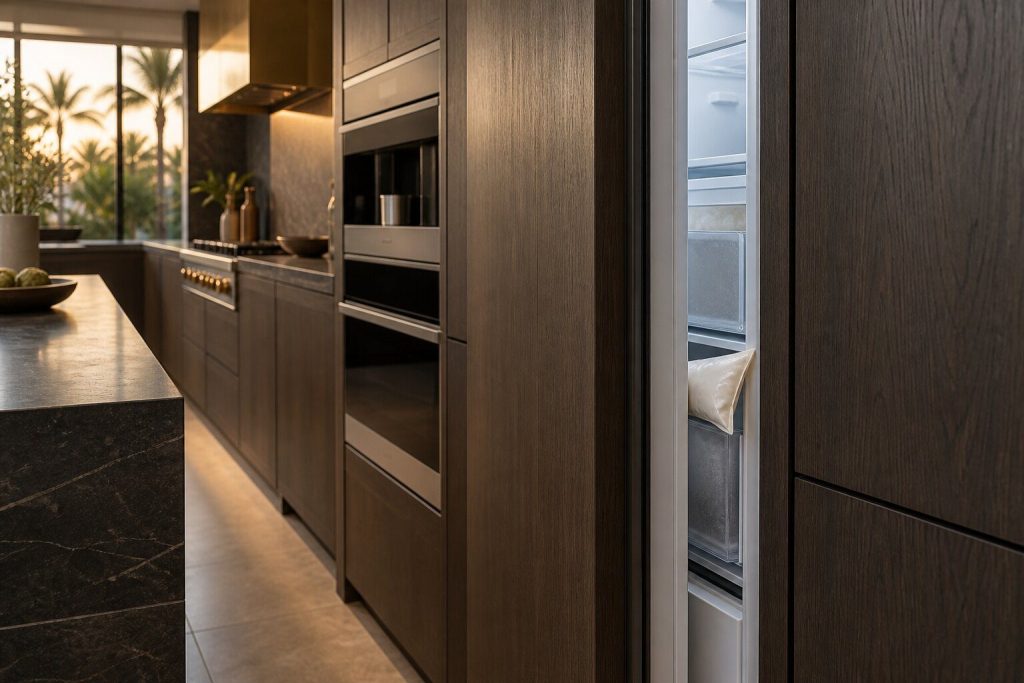
The cabinet insists the door is open and it plainly is not Door alarm chiming with the door shut
One of the four named alarms these cabinets have — there is no code behind it, just the chime and the app saying Door Open. When it sounds with the door visibly closed, the appliance is not confused: either the door is genuinely not sealing home, or the switch that reports its position has failed. The first is far more likely and often free to correct, and on a panel-ready door it is usually a hinge that has settled under the weight of a cabinet front.
- No code behind it — Door Open is one of only four named alarms on these cabinets
- A door that looks closed can still be a few millimeters off the seal
- Panel weight settles hinges, and the switch is the last suspect

Questions people ask about this
Can the door just be adjusted?
Often, and it is always tried first — hinges, shims and the panel's own fixings between them account for most of these. What cannot be adjusted back is a hinge that has bent or a spring that has lost tension, and on a heavy custom front that does happen.
How much does a leaking seal actually cost?
In this climate, more than people expect. A cabinet fighting a humid kitchen through a gap runs its compressor far more than the design assumes, and that is what shortens its life. The energy is the smaller half of it.
There is condensation on the outside of the cabinet.
That usually means warm humid air is meeting cold metal where it should not, which is the same problem seen from the outside. On a wine column with a glass door, condensation on the outer pane means the glazing cavity or the gasket, and both are worth acting on early.
Troubleshooting
More guides like this one
-
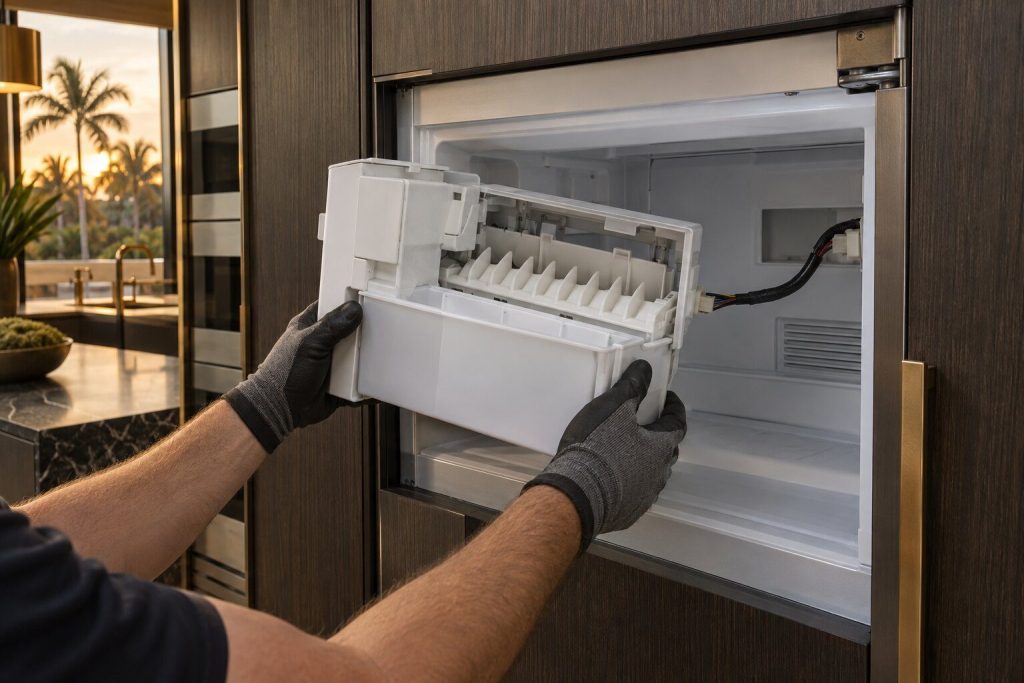
Two Ice Makers, One Water Problem: Reading a Dacor Freezer Column
The narrow freezer column carries two ice makers, and that second module is the most useful diagnostic tool in the kitchen. Both stopped is a water problem. One stopped is that module.
Read more -
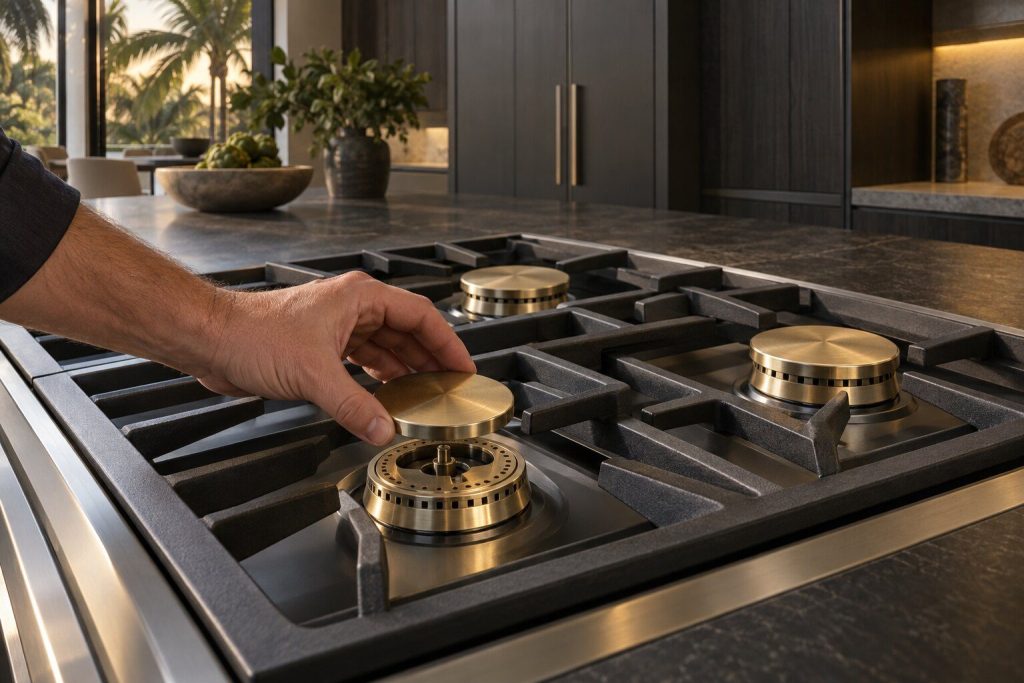
The Simmer That Went Away After You Cleaned the Rangetop
The sear is perfect and the low end has gone. On a sealed brass burner that is nearly always ports, a cap seated wrong, or a simmer valve that has drifted — and it very often dates from the week the hob was scrubbed.
Read more -
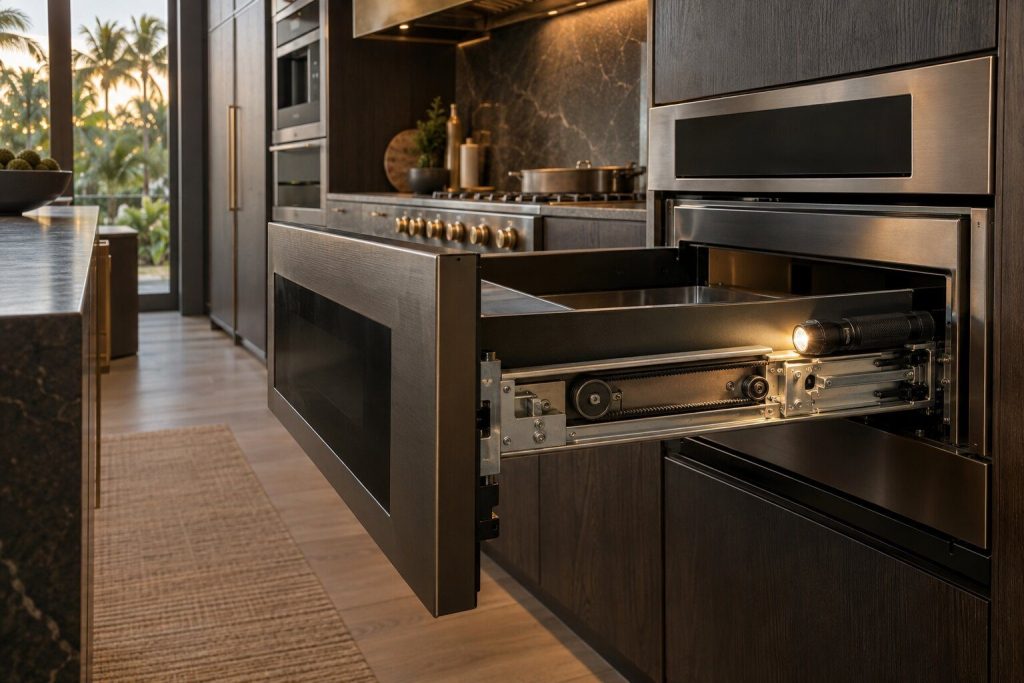
A Dacor Microwave Drawer That Will Not Open Is Not a Dead Oven
The mechanism fails far more often than the oven does, and while the drawer is not closed the oven refuses to heat — which reads as a dead appliance and is the machine being careful.
Read more
Tell us the model number and what it is doing.
This article is based on:
- Official manufacturer documentation
- Internal repair procedures
- Technician repair history
- Company quality standards