Safety & Risks
If Something Catches in a Dacor Oven, the Door Stays Shut
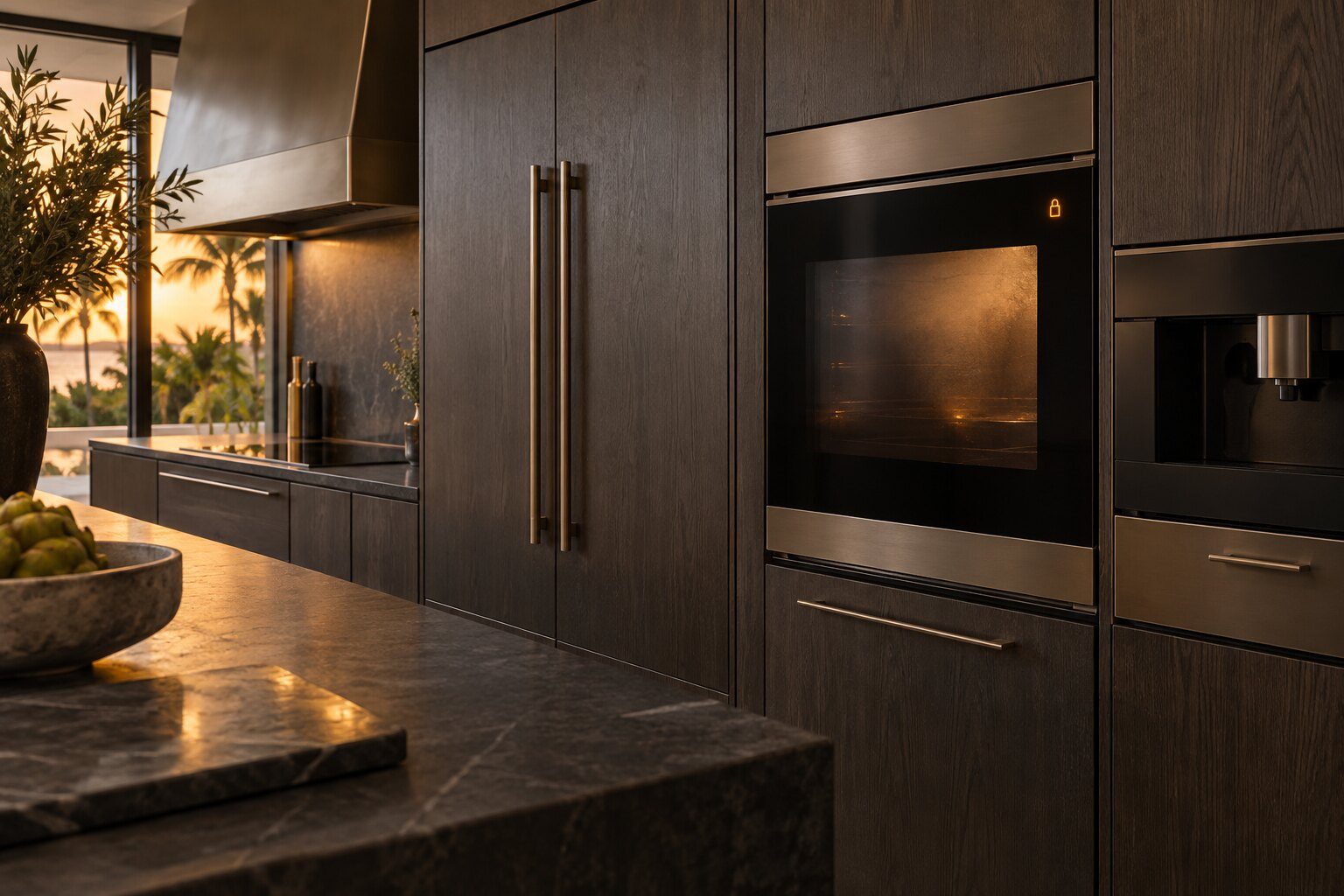
If something catches fire inside a Dacor oven, keep the door closed and switch the appliance off at the breaker. Opening the door feeds the fire the air it needs; a closed cavity starves it, and these ovens are built to contain that. Most oven fires on this make begin during or after a pyrolytic self-clean cycle, because that cycle runs the cavity far above any cooking temperature for an hour or more and is where accumulated grease and marginal parts both give up. Afterwards the door will frequently be locked, and that is the mechanism working rather than a second problem — it should be left to cool completely and never levered, because the hinges on these doors cost several times the lock. The repair that follows is ordinary: a lock motor, a switch, a thermal fuse and a cavity sensor are the usual four, and they are tested together rather than one at a time.
The full guide
There is one instruction on this page and everything else is context.
Dacor oven self cleaning problems: keep the door closed
A fire inside a closed oven cavity has a fixed amount of air and goes out. The same fire with the door opened has a kitchen's worth, and what was contained is no longer contained.
The instinct is to open it — to see, to reach in, to deal with it. That instinct is the thing this page exists to interrupt.
Why self-clean is where these start
A pyrolytic cycle runs the cavity far hotter than any cooking, for an hour or more, with the door locked. Two things happen. Accumulated grease that was harmless at roasting temperature is not harmless at cleaning temperature. And every marginal component in the oven is asked to work at the top of its range at once.
That is why problems cluster after this cycle rather than appearing out of nowhere, and it is why we sometimes recommend a manual clean on an older cavity.
The locked door afterwards
Expected, and not a second problem. The lock holds through the cycle and through the cool-down, and on this make the older ovens report it as F7 or F8 and the current ones as C-d1.
Let the cavity go completely cold. Then cut power at the breaker for a minute. A good share release at that point. What must not happen is a door levered while the latch is engaged — the hinges are heavy, expensive and easy to bend, and that turns a lock repair into a door rebuild.
What gets replaced afterwards
The thermal fuse, the cavity sensor, the lock motor and its position switch. Frequently more than one, which is why they are tested together. Replacing a single part after a cycle like this is the classic way to be back in a fortnight.
The honest note about the cycle itself
We are not against self-clean. On a sound, current oven it does a job nothing else does as well.
What we will say is that it is the hardest hour an oven ever has, that it is worth running when you do not need the oven the next day, and that on an appliance whose control board is no longer manufactured, the risk and the reward are not balanced the way they used to be.
Afterwards, before you use it again
An oven that has had a fire in it looks fine once it is cold and wiped out, and that appearance is the problem. The parts a cycle like that takes are the invisible ones: a thermal fuse that has opened, a cavity sensor that now reads low, a lock switch that no longer reports.
An oven running without its thermal protection works perfectly until the day it matters. So the honest advice is to have it looked at before the next use rather than after the next incident, and to say plainly when you book that there was a fire — it changes what we test rather than what we charge.
If it turns out to be a repair
What this leads to, and what it costs
Every job on this site is priced the same way: an on-site diagnostic first, the figure agreed in writing before anybody starts.
-
Self-clean and door lock repair
The self-clean cycle is the hardest thing an oven ever does to itself, and it is where marginal parts fail: the door lock motor, the thermal fuse, the sensor at full temperature, occasionally the control. A door locked shut after a cleaning cycle is the classic aftermath and it is a repair rather than a catastrophe. We are also honest about the cycle itself — on an appliance of this age and value, running a pyrolytic clean is a decision with a cost, and we will say when we think a manual clean is the wiser option.
- Self-clean is where marginal parts fail — that is why problems cluster after it
- A door locked shut afterwards is an ordinary repair
- We will tell you when not to run the cycle at all
-
A Dacor Oven That Locked Its Own Door After Self-Clean
The cycle finished, the oven cooled, and the door stayed shut. It is the commonest aftermath of pyrolytic cleaning on this make, it is an ordinary repair, and forcing the door is what turns it into an expensive one.
Read more -
Oven error code C-21
Dacor oven error code C-21: The cavity has gone hotter than it should and the control has intervened. Which machines can raise it, what the maker publishes about it, and what to do next.
What this one means
Questions people ask about this
Should I run self-clean at all?
On a sound oven, occasionally, and not the night before you need it. On an older cavity with a history of problems, or a legacy machine whose control board is no longer made, we will often recommend a manual clean instead — and that recommendation costs nothing.
The door locked after the cycle and the oven is cold now.
Cut power at the breaker for a full minute and restore it; the control re-reads the latch position on restart and that releases a good share of these. If it stays locked, the motor and its switch are tested as one assembly and it is a routine visit.
Is the oven ruined?
Usually not. What the cycle takes is the marginal parts — a thermal fuse, a sensor at full temperature, the lock motor. Replacing a single one of them is what sends people back for a second visit, so all four are tested together.
Safety & Risks
More guides like this one
-
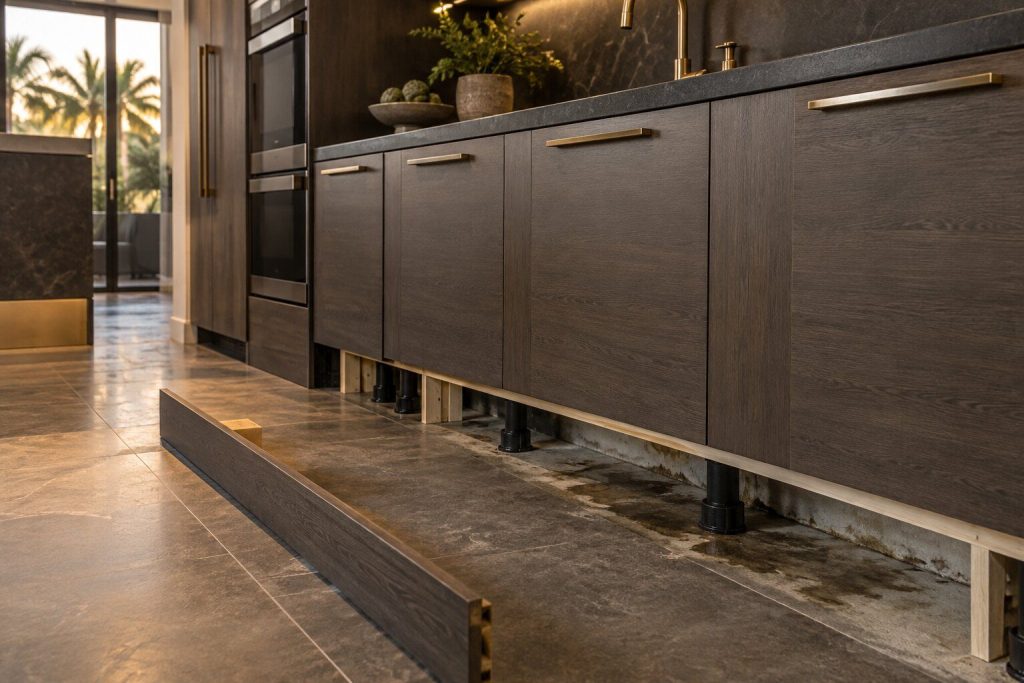
Water Behind Dacor Cabinetry Is a Building Problem Before It Is an Appliance One
Under a fitted appliance the water does not make a puddle. It goes into the cabinet base, the substrate and, in a building, sometimes the ceiling below — and it does that for weeks before anybody sees it.
Read more -
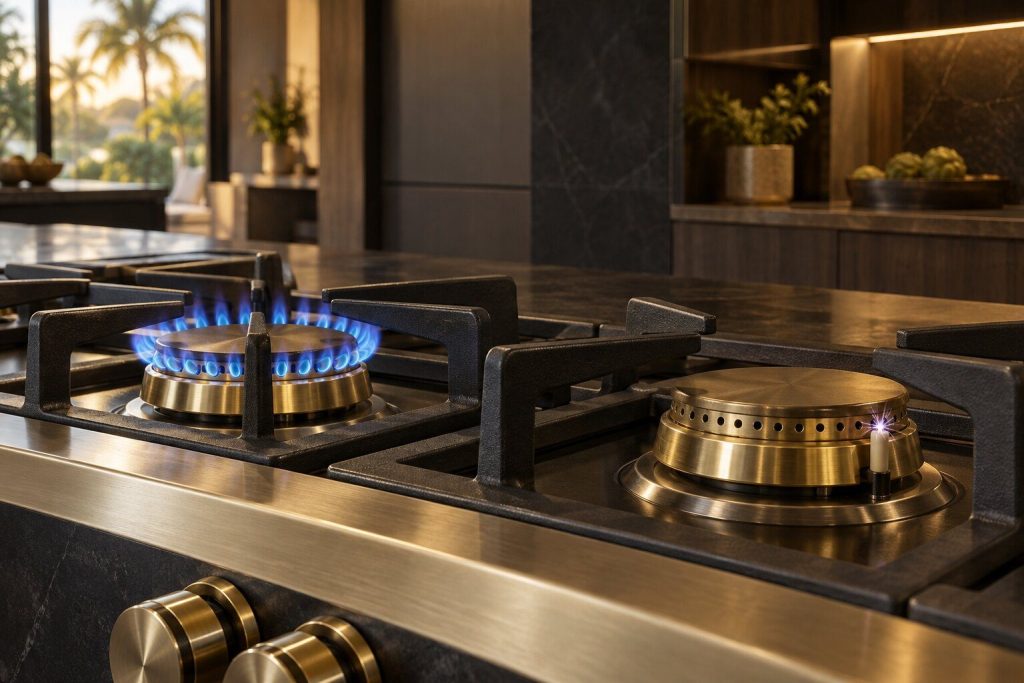
A Gas Smell at a Dacor Burner: What To Do in the First Minute
A smell while lighting and a smell with everything off are two different situations with two different answers. Only one of them is a repair, and it is not the urgent one.
Read more -
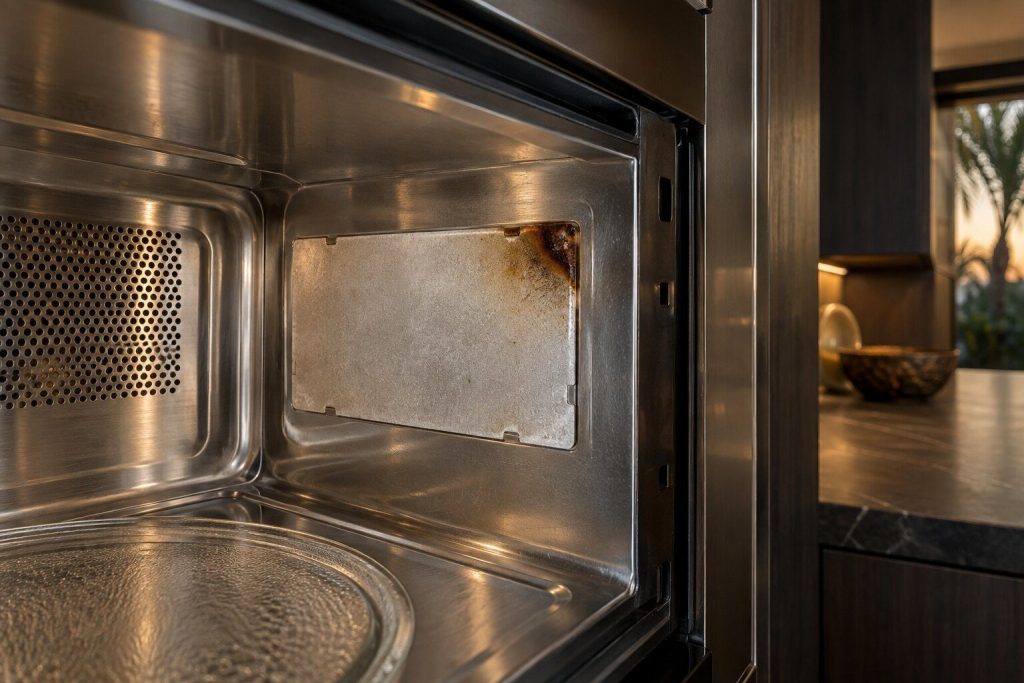
A Dacor Microwave Sparking Inside: Stop and Look Before You Run It Again
An arc inside a microwave has a short list of causes, and one of them gets worse quickly and takes the magnetron with it. The cheap part is cheap only if it is caught early.
Read more
Tell us the model number and what it is doing.
This article is based on:
- Official manufacturer documentation
- Internal repair procedures
- Technician repair history
- Company quality standards