Safety & Risks
A Gas Smell at a Dacor Burner: What To Do in the First Minute
Two situations wear the same symptom and they are not the same. A brief smell while a burner is being lit, which clears once the flame catches, is unburnt gas from an ignition that took a few attempts — an igniter cracked by salt air, a cap seated wrong after cleaning, or a burner still damp. That is a repair and it can wait for an appointment. A smell that is present with every knob fully off, or that persists after the room has been aired, is not an appliance question: turn the supply off at the valve behind or beneath the range if you can reach it safely, leave the property, and call the gas supplier before you call a repair company. On the professional rangetops there is a relighting system that can mask the first case, because a burner that goes out and comes back will release gas each time without anybody noticing the flame had failed.
The full guide
Most pages on this site are about saving somebody a call-out fee. This one is not.
Dacor gas cooktop igniter problems: the two situations, and the line between them
A burner that takes three clicks to light releases a little unburnt gas each time it fails. You smell it, the flame catches, and thirty seconds later the kitchen is normal again. That is an ignition problem: the appliance is doing something it should not, and it can wait for an appointment.
A smell that is there with every knob off is a different thing entirely. It does not clear, it is not related to cooking, and it is not ours to diagnose over a telephone.
Why the ignition version happens here
Salt air. The ceramic body of an igniter cracks, and a cracked body sparks to the nearest earth rather than across the gap where the gas is. It still clicks. It looks perfect. And the burner takes several attempts, releasing gas on each one.
The other reason is the week after a deep clean: a cap seated a fraction off its pins, a head not quite home, or a burner still damp. That version fixes itself overnight and comes back the next time the hob is scrubbed.
The thing the pro burners hide
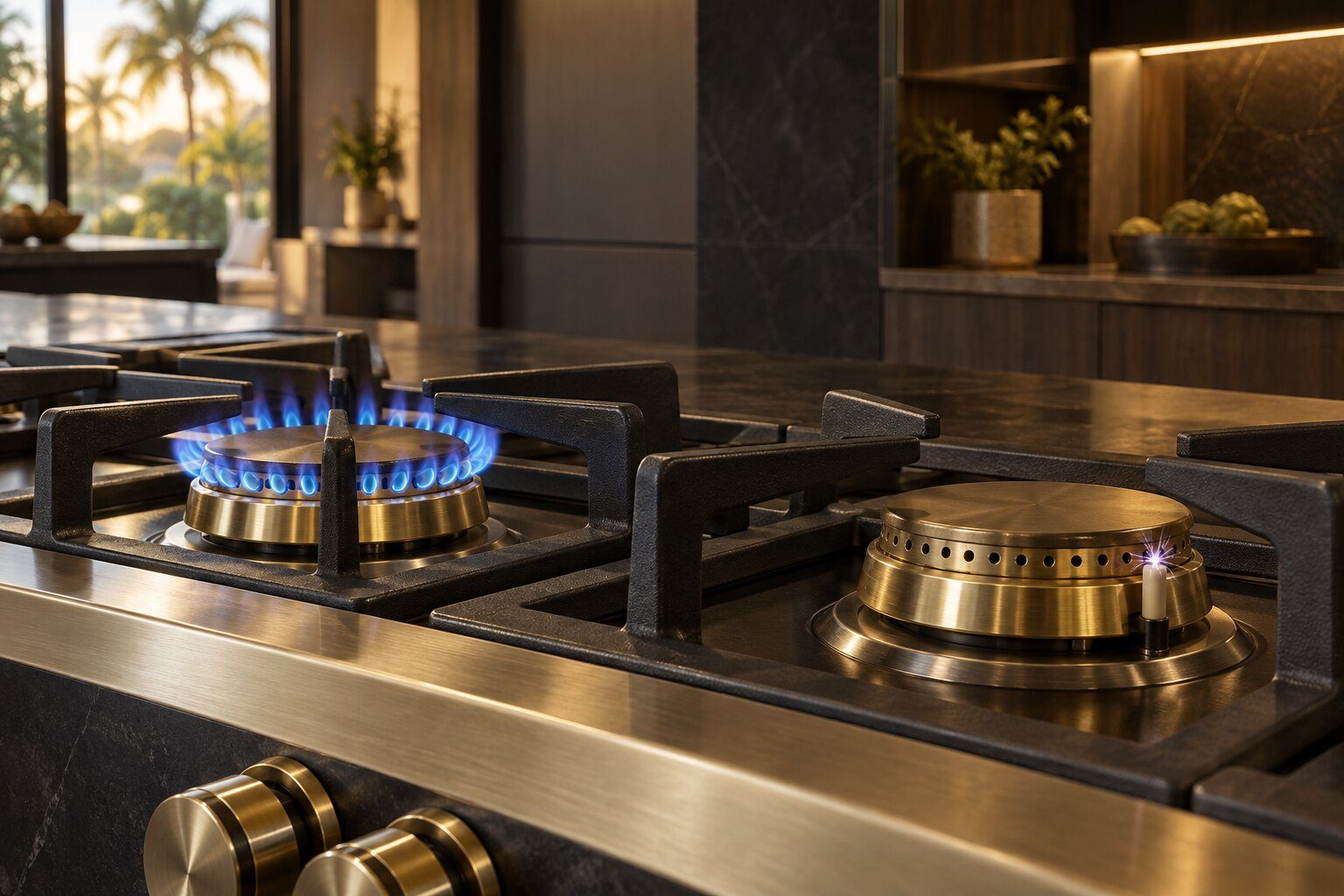
The sealed brass burners on the rangetops relight themselves after a draft or a boil-over. That is a good feature and it has a side effect: a burner that keeps failing and relighting is releasing gas each time, and the cook never sees the flame go out.
If a burner on a rangetop sounds like it is re-igniting during cooking, that is worth mentioning when you call.
What we do about it
Reseat and inspect every cap and head, test the ignition path — igniter, lead, switch and earth — and set the flame at both ends of the burner's range. On a hob where several burners misbehave, the supply pressure is measured rather than each valve adjusted to compensate.
The paragraph we would rather you read than the rest
If the smell is present with every knob off, stop. Do not look for a cause, do not run the extractor, do not switch anything on or off beyond the gas itself. Leave, and call the supplier. We would rather lose the job than have somebody investigate that in their own kitchen.
What we check, and in what order
Every cap and head off and back on its locating pins first, because that resolves a real share of these before any part is named. Then the ignition path end to end — igniter, lead, switch and earth — with a meter rather than by eye, since a cracked ceramic body looks perfect and sparks to the wrong place.
Then the flame itself, set at both ends of the burner's range. And where several burners misbehave at once, the supply pressure is measured rather than six valves adjusted to compensate for it — that is the difference between fixing a hob and hiding a supply problem.
If it turns out to be a repair
What this leads to, and what it costs
Every job on this site is priced the same way: an on-site diagnostic first, the figure agreed in writing before anybody starts.
-
from $155 Gas burner and igniter repair
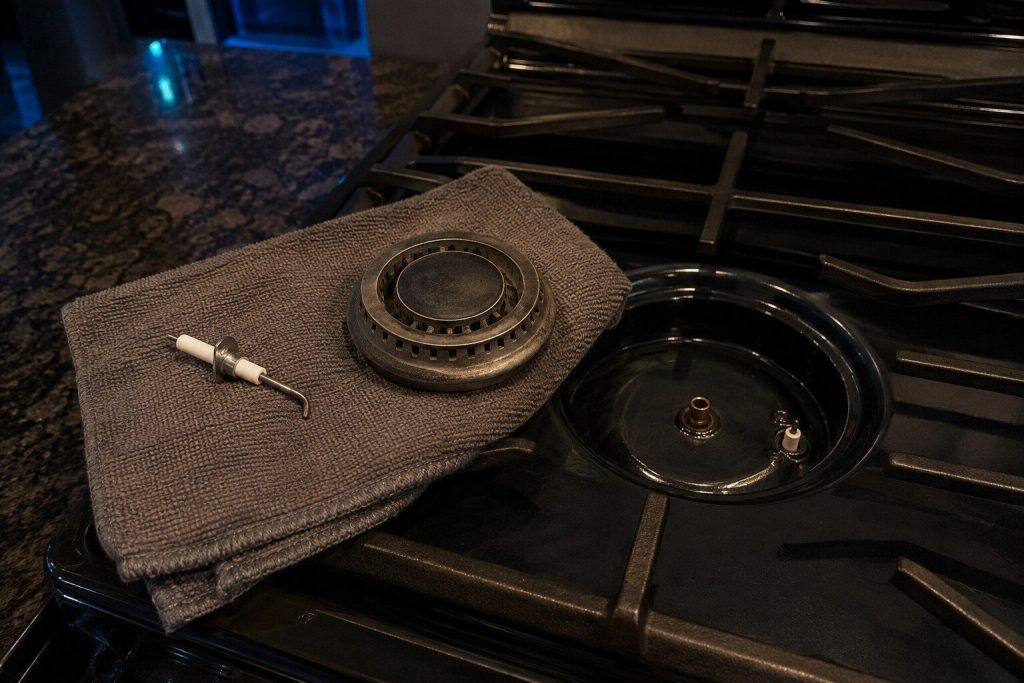
A burner that clicks without lighting, lights and goes out, or will not come down to a simmer. In Miami the usual culprits are salt air and humidity on the igniter, and a cap or head that went back slightly wrong after a clean — which is why so many of these calls date from the week the hob was scrubbed. The professional burners on the rangetops complicate it pleasantly: they are built to relight themselves after a draft or a boil-over, so a burner that keeps going out may be that system rather than the burner at all.
- Most of these problems begin the week the hob was deep-cleaned
- Salt air and humidity are what actually kill igniters here
- On the pro burners, repeated flame-outs may be the relight system
-
Sparking at the burner and no flame Burner clicks but will not light
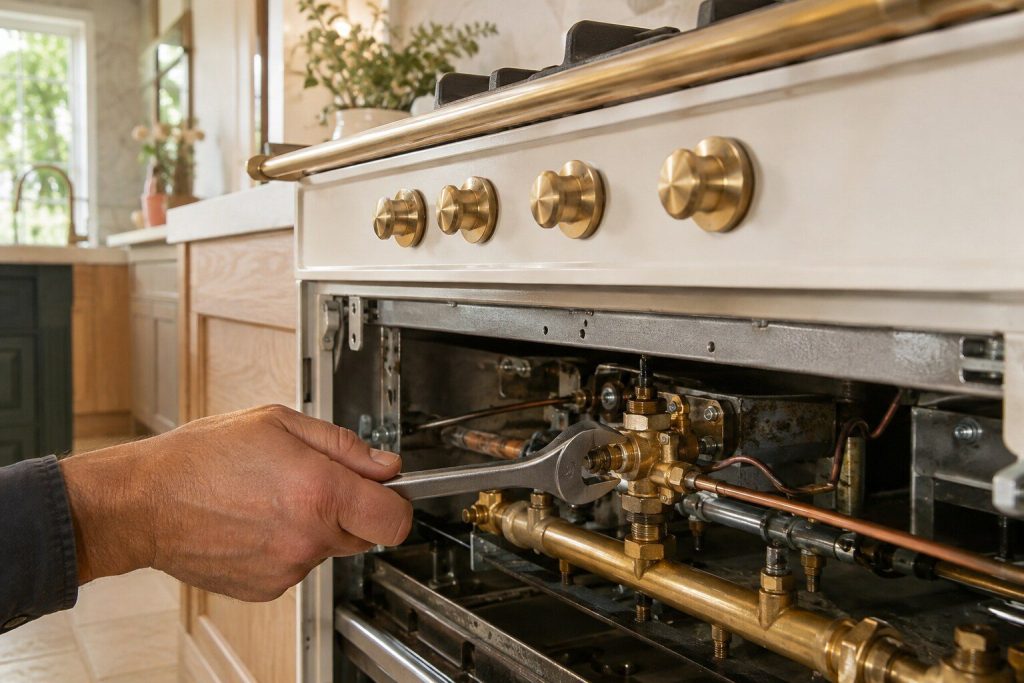
In this climate the two ordinary causes are salt air on the igniter and a cap that went back slightly wrong after a clean — which is why so many of these calls date from the week the hob was scrubbed. The professional burners on the rangetops complicate it pleasantly: they are built to relight themselves after a draft or a boil-over, so a burner that keeps going out may be that system rather than the burner. Neither is a code problem; the rangetops have no display to show one on.
- Most of these begin the week the hob was deep-cleaned
- Salt air and humidity are what actually kill igniters here
- One burner or all of them is the question that splits the diagnosis
-
from $195 Rangetop service
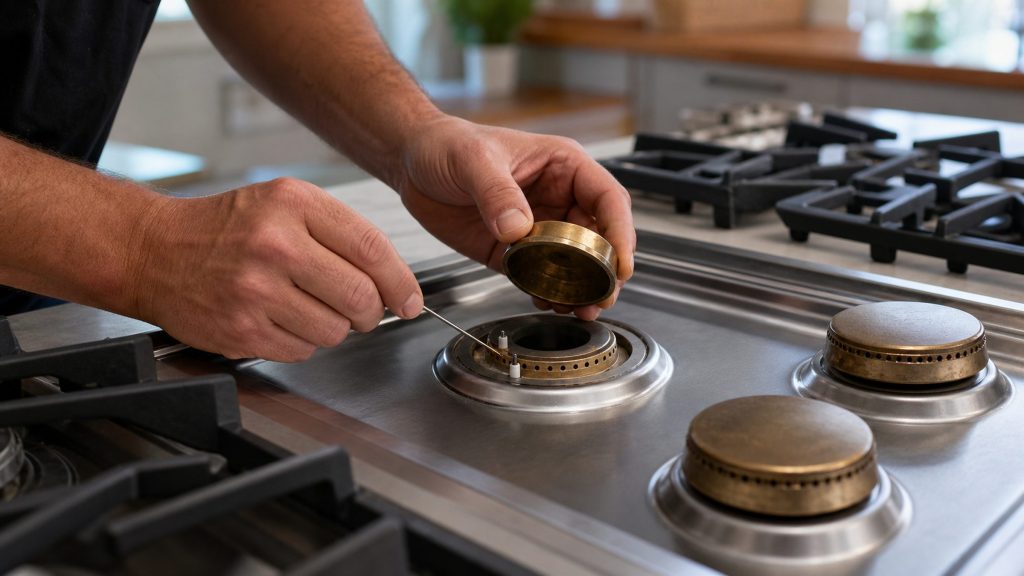
The professional rangetops are 36 and 48 inches of sealed brass burners, illuminated knobs and a griddle or wok ring in place of grates, and they are worked harder than any other appliance in these kitchens. Service is mostly about restoring the range of the burners rather than fixing failures: simmer settings that have drifted, ports partially blocked by years of boil-over, knob illumination that has died on one burner, and the griddle plate's surface. It is a heavy appliance and a satisfying one to bring back.
- Six sealed brass burners built to sear and to genuinely simmer
- Illuminated knobs fail one at a time and are a separate small repair
- The griddle and wok ring are accessories that live where grates would

Questions people ask about this
Can I light it with a match meanwhile?
On most of these burners yes, carefully, once any smell has cleared. It is a reasonable short-term measure and it also tells us something useful: a burner that lights by match and not by spark has an ignition problem rather than a gas one.
The clicking never stops, even after it lights.
Continuous clicking after the flame is established usually means a wet or contaminated electrode somewhere on the hob — often not the burner you are using. It is worth having looked at, because a spark module firing continuously does not last.
Should I turn the gas off at the meter?
If the smell is present with every knob off and does not clear with ventilation, yes, if you can do it safely — and then leave. That is the one scenario on this site where the instruction is to stop reading and get out.
Safety & Risks
More guides like this one
-
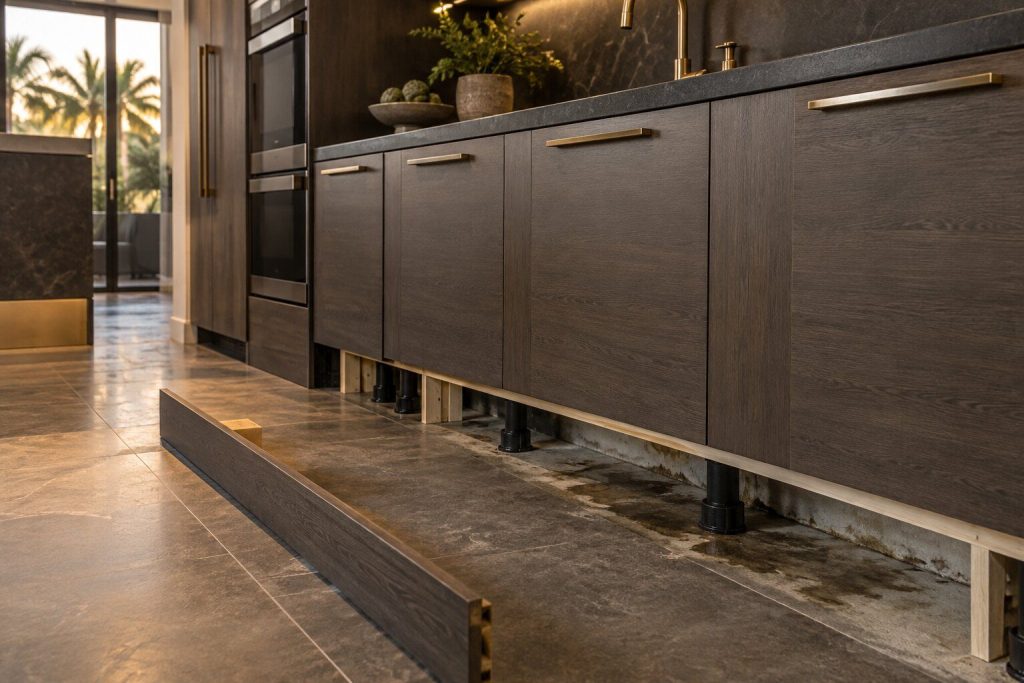
Water Behind Dacor Cabinetry Is a Building Problem Before It Is an Appliance One
Under a fitted appliance the water does not make a puddle. It goes into the cabinet base, the substrate and, in a building, sometimes the ceiling below — and it does that for weeks before anybody sees it.
Read more -
If Something Catches in a Dacor Oven, the Door Stays Shut
Opening the door feeds the fire air. The oven is designed to contain it, the self-clean cycle is where most of these begin, and the repair afterwards is ordinary — the door forced open is not.
Read more -
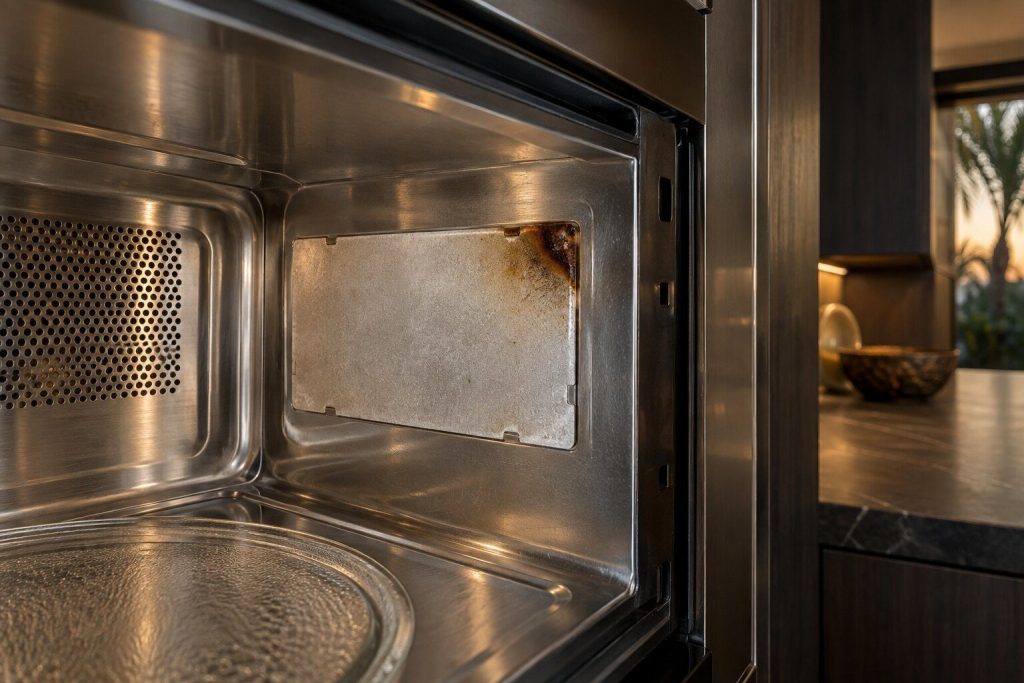
A Dacor Microwave Sparking Inside: Stop and Look Before You Run It Again
An arc inside a microwave has a short list of causes, and one of them gets worse quickly and takes the magnetron with it. The cheap part is cheap only if it is caught early.
Read more
Tell us the model number and what it is doing.
This article is based on:
- Official manufacturer documentation
- Internal repair procedures
- Technician repair history
- Company quality standards