Safety & Risks
Water Behind Dacor Cabinetry Is a Building Problem Before It Is an Appliance One
A leak under a freestanding appliance makes a puddle somebody notices. A leak under a fitted one goes into the cabinet base, along the substrate, into the base of the cabinet beside it and, in a condominium, sometimes into the ceiling below — and it does that quietly for weeks. That is why the first action on this equipment is never diagnosis: it is closing the supply valve. Machines with leak detection stop themselves and report it, which under a cabinet panel is worth a great deal, and the one thing not to do is clear that code and run another cycle to see whether it repeats. A cycle is twenty liters or more, and all of it goes wherever the first lot went. The consequential damage in a fitted kitchen is routinely larger than the repair that caused it.
The full guide
The appliance is rarely the expensive part of this.
Dacor dishwasher leaking: why fitted equipment changes the stakes
A freestanding dishwasher leaks onto a floor. Somebody stands in it, and the repair is booked that afternoon.
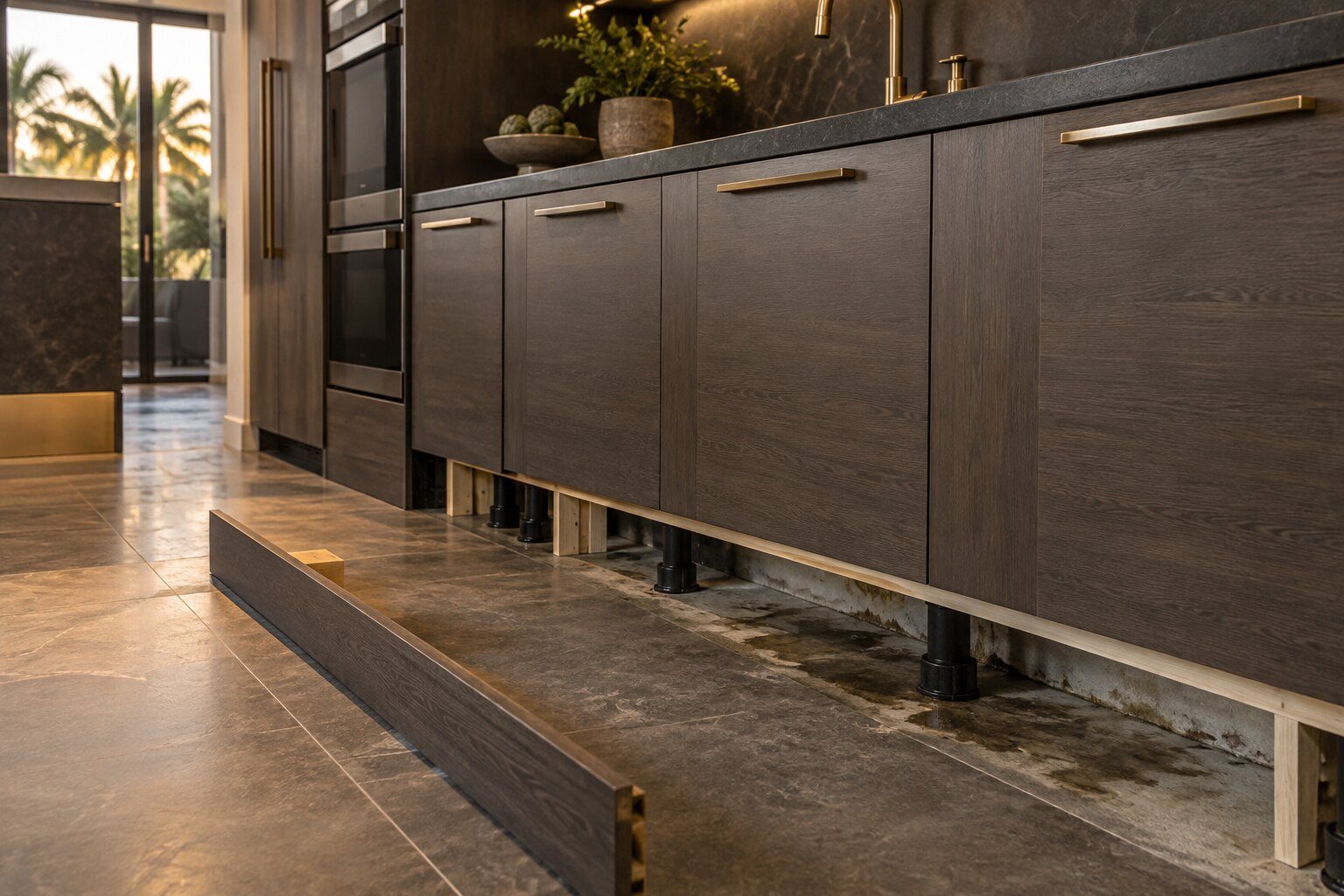
A panel-ready one leaks into the cabinet base. The water tracks along the substrate, reaches the carcass of the cabinet next door, wicks into whatever is behind the kickboard, and shows up at the front weeks later — if it shows up at the front at all. In a building it may show up in somebody else's ceiling first.
What the machine does about it
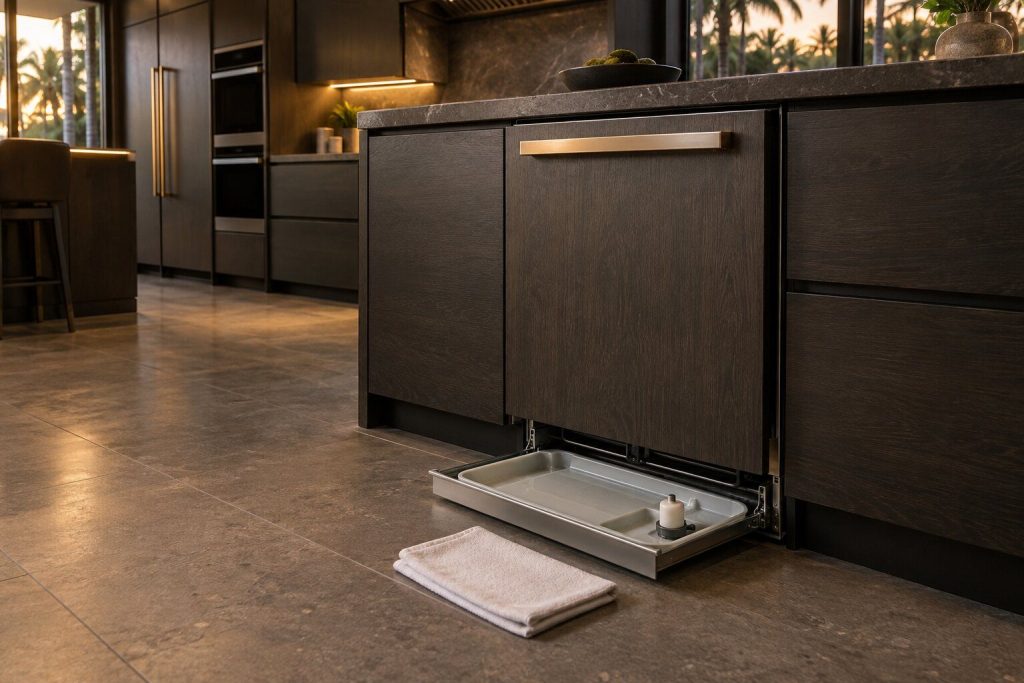
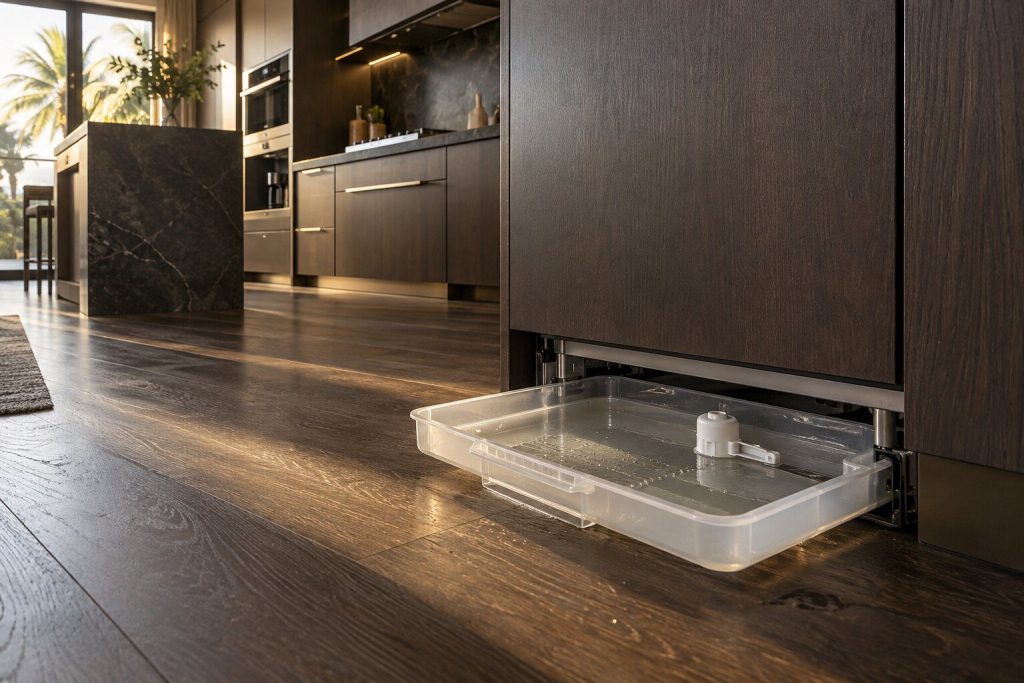
The current dishwashers carry a float in a tray under the tub. When water collects where it should not, the machine stops mid-cycle and reports LC. The pre-2016 EDW and IDW machines do the same and call it F-6.
That intervention is the best thing in this whole situation, and the instinct it provokes — clear it, run it again, see if it does it twice — is the worst.
Refrigeration leaks differently
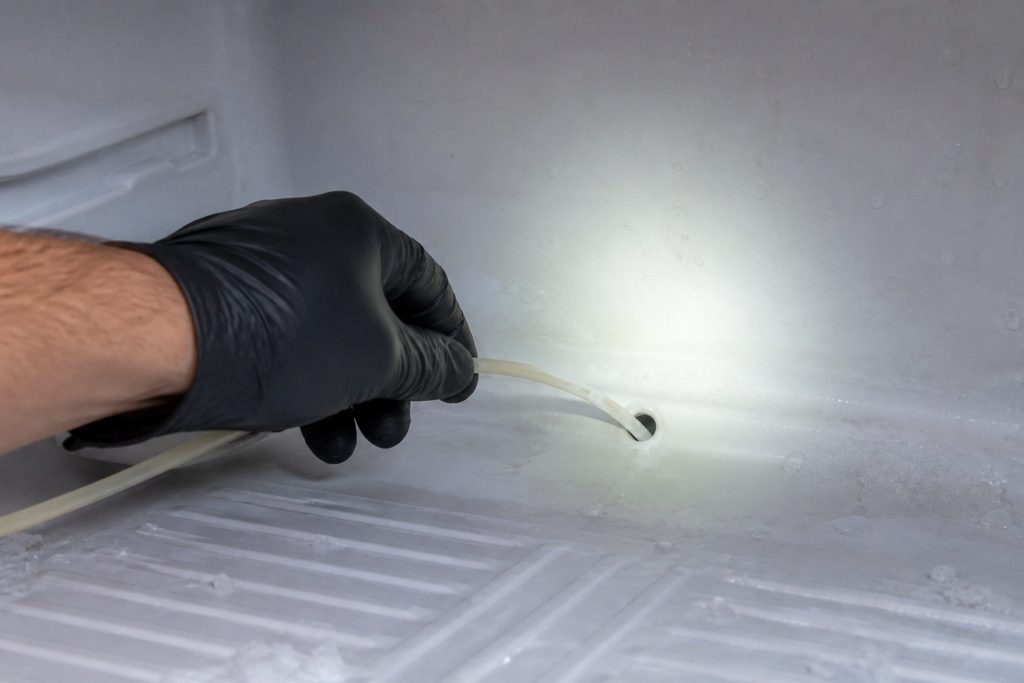
Four likely sources and they are told apart by where the water starts. A blocked defrost drain backs up into the cabinet base and over the front edge, usually with ice under the drawers. A supply line or fitting weeps behind the cabinet, invisible with the water off. The ice module's fill path does the same. A door that no longer seals condenses continuously in a humid kitchen.
Only one of those is dramatic. All four do the same damage given enough weeks.
What we do first when we arrive
Establish whether water is still present and where, then check the float and its switch — because a stuck float reports a leak on a completely dry machine, and that is the best possible outcome. Only when the ordinary sources have been excluded does anything get dismantled.
The base tray comes out and gets dried either way. A tray left wet re-triggers the same code days later and sends everybody back to the beginning.
The sentence worth keeping
Closing the valve costs nothing if you are wrong, and saves a floor if you are right. Every other step on this page can wait for us.
What it looks like when it has been running a while
Not water. A cabinet base that has darkened at the front edge, a kickboard that no longer sits flat, a faint smell near the dishwasher that nobody has placed, or a floor plank that has cupped slightly in one spot.
By the time any of those is visible the leak has been running for weeks, and the repair is the smaller half of the job. That is the argument for closing the valve on the first suspicion rather than the first puddle: on fitted equipment the puddle is a late symptom, not an early one.
If it turns out to be a repair
What this leads to, and what it costs
Every job on this site is priced the same way: an on-site diagnostic first, the figure agreed in writing before anybody starts.
-
from $159 Dishwasher leak repair
A panel-ready dishwasher leaks into cabinetry rather than onto a floor, which is why a small problem here is worth treating quickly. The sources are few — the door gasket, the detergent dispenser, a hose fitting, the sump seal, or a machine that is overfilling — and they are told apart by where the water appears and when in the cycle. Machines with a leak-detection system will often stop themselves and report it, and that is the appliance protecting the kitchen rather than a failure to be reset away.
- Behind a cabinet panel the water goes into joinery, not onto the floor
- Where and when in the cycle tells us which of five sources it is
- A machine that stops itself and reports a leak is working correctly
-
from $155 Refrigerator leak repair
Water in the base of a built-in cabinet is worse than water under a freestanding one, because it has somewhere to go: the floor under the joinery, the base of the cabinet beside it, and in a condominium sometimes the ceiling below. There are only a few sources — a blocked defrost drain, a split or loose water line, the ice module's fill path, a door that no longer seals in a humid kitchen — and finding which one it is takes less time than the damage takes to happen. If there is water on the floor in front of a column, turn the supply off at the valve and call.
- Under built-in cabinetry a leak reaches the floor and the neighbors, not a drip tray
- Four likely sources, and they are told apart by where the water is
- Supply off at the valve first — the diagnosis can wait, the joinery cannot
-
LC on a Dacor Dishwasher: the Machine Stopped Itself for a Reason
A leak has been detected and the appliance shut down. Behind a cabinet panel that intervention is the difference between a repair and a floor — so the water goes off and the code does not get cleared.
Read more

Questions people ask about this
There is no water on the floor. Is it really leaking?
Possibly, and that is exactly why the system exists. Under a fitted machine the water reaches the cabinet base and the substrate long before it appears at the front, and by the time it shows the damage underneath is usually the larger half of the problem.
Can I use it carefully until somebody comes?
No. There is no careful version of running water through something that is leaking into joinery. If you need the appliance, you need it repaired first.
Who pays if it reaches the apartment below?
That is between you, the building and your insurer, and it is the reason this page exists. The cost of a leak repair is small and predictable; the cost of a ceiling is neither, and the difference between them is usually one extra cycle run to check.
Safety & Risks
More guides like this one
-

A Gas Smell at a Dacor Burner: What To Do in the First Minute
A smell while lighting and a smell with everything off are two different situations with two different answers. Only one of them is a repair, and it is not the urgent one.
Read more -
If Something Catches in a Dacor Oven, the Door Stays Shut
Opening the door feeds the fire air. The oven is designed to contain it, the self-clean cycle is where most of these begin, and the repair afterwards is ordinary — the door forced open is not.
Read more -
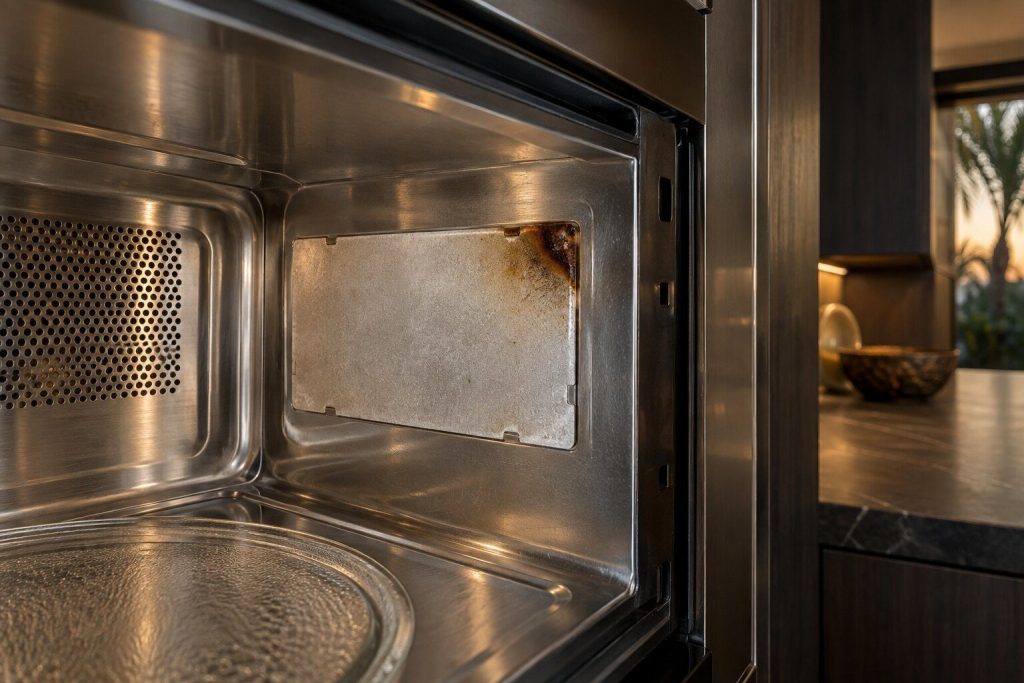
A Dacor Microwave Sparking Inside: Stop and Look Before You Run It Again
An arc inside a microwave has a short list of causes, and one of them gets worse quickly and takes the magnetron with it. The cheap part is cheap only if it is caught early.
Read more
Tell us the model number and what it is doing.
This article is based on:
- Official manufacturer documentation
- Internal repair procedures
- Technician repair history
- Company quality standards