Safety & Risks
A Dacor Microwave Sparking Inside: Stop and Look Before You Run It Again
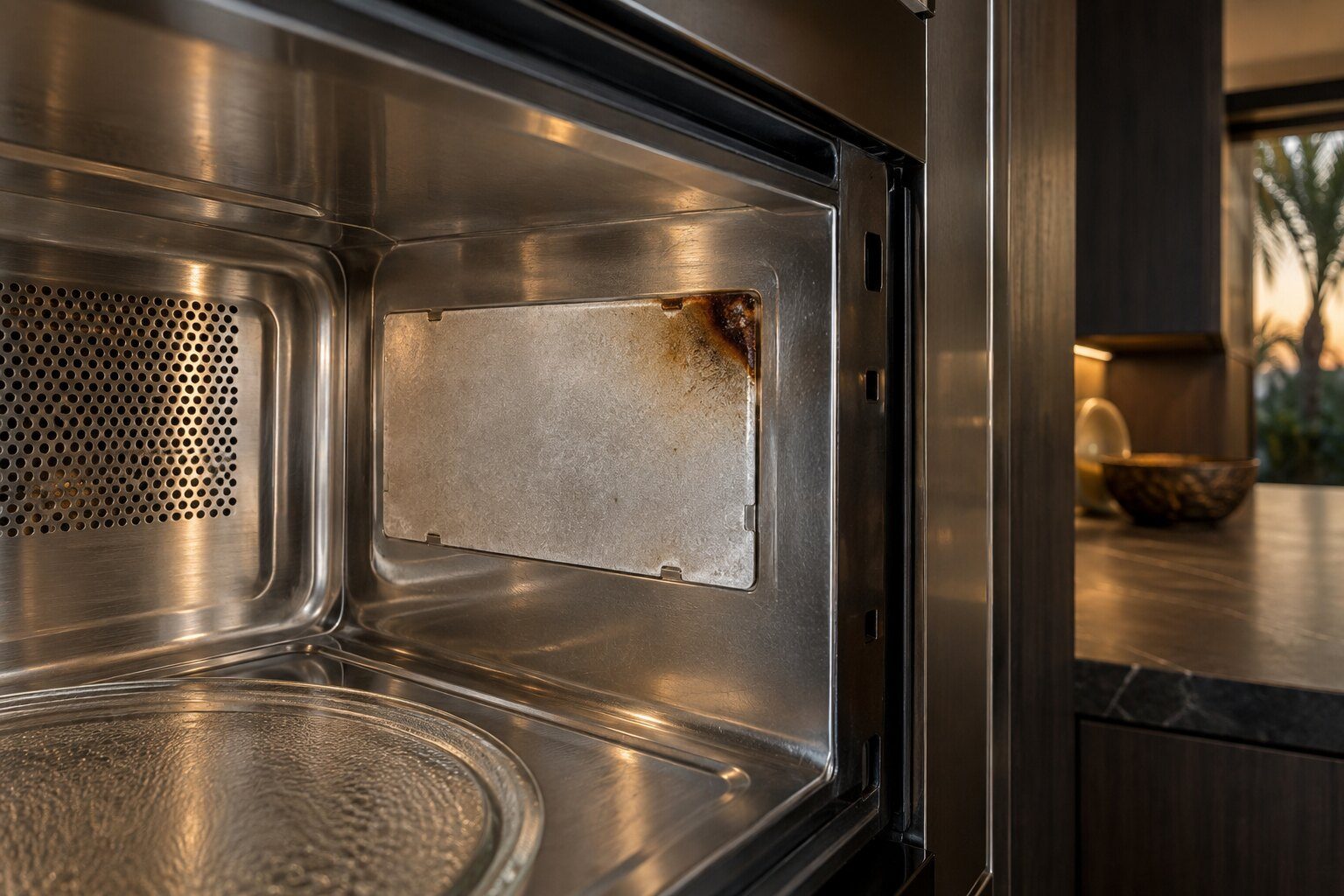
Stop the cycle and stop using the appliance. Arcing inside a microwave has a small number of causes. Metal in the cavity — foil, a trimmed plate, a twist tie, a rack touching a wall — is the commonest and is harmless once removed. A damaged or fouled waveguide cover is the one that matters: it is a small mica panel protecting the opening where the energy enters, it carbonizes where food has splashed onto it, and once it begins to arc it degrades quickly and can take the magnetron with it. The third case is the cavity coating worn through to bare metal, usually at the base or around the door frame, which on an older machine is the point at which repair economics need discussing honestly. There is no code to read: this make publishes no microwave code table in either era, so what was seen and where it was seen is the whole of the evidence.
The full guide
This is the one appliance page on this site that opens with an instruction rather than an explanation.
Dacor microwave sparking: why repeating it is the expensive mistake
The panel most often responsible costs very little and takes minutes to change. What makes it urgent is what sustained arcing does to the magnetron behind it — and that is the difference between a modest repair and a conversation about whether the appliance is worth keeping.
So the first instruction is not diagnostic. It is simply: stop.
Metal, which is the harmless answer
Foil over a dish. A plate with a gold rim. A twist tie left on a bag. A skewer. The rack touching a cavity wall because it was put back a centimeter out.
Any of those produces a flash, sometimes a loud one, and none of them means anything is wrong with the appliance. Remove it and carry on.
The mica cover, which is the answer that matters
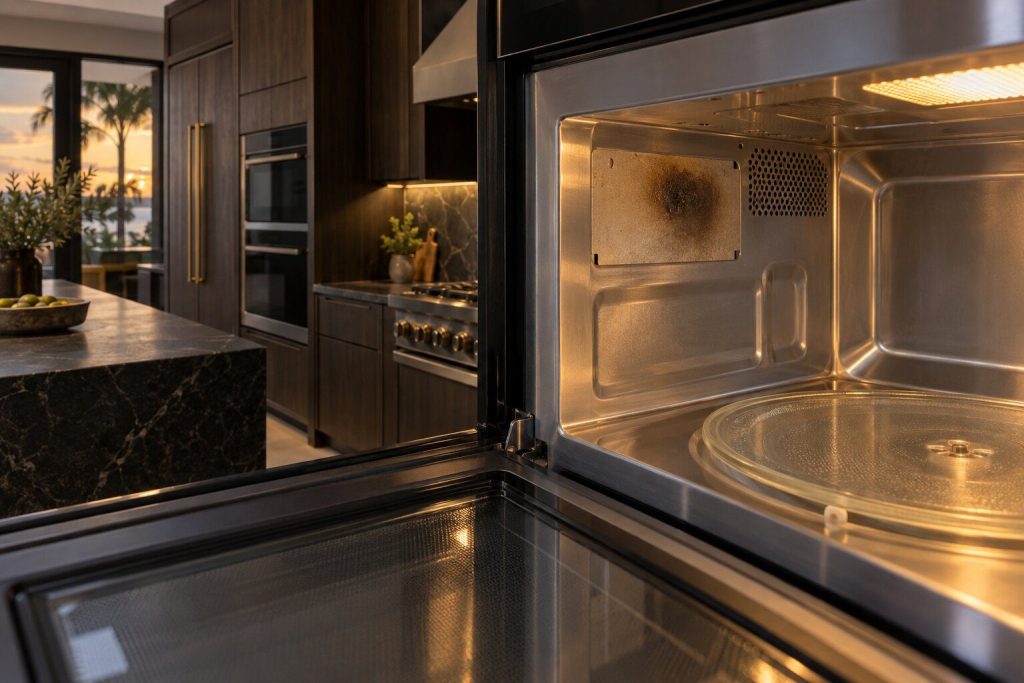
There is a thin panel on the side wall or the roof of the cavity, and its job is to protect the opening where the energy enters. Food splashes onto it, bakes on, and eventually carbonizes — and carbon arcs.
Once that starts it accelerates: each arc burns more of the panel, and the arcing moves closer to what the panel was protecting. Caught early it is one of the cheapest parts in the kitchen. Ignored, it is the magnetron.
The cavity itself
On an older machine the coating wears through, usually at the base where dishes slide or around the door frame. Bare metal arcs, and repainting a microwave cavity is not a repair anybody should offer you.
That is the case where the honest answer may be that the appliance has reached the end, and we will say so.
Why there is no code to look up
This make publishes no microwave problem table in either era — the manual uses a single generic word for several unrelated conditions. Two appliance sites list F0 and F1 for Dacor microwaves in wording taken verbatim from this maker's own wall-oven table, and we do not repeat them.
So what you saw, and where in the cavity you saw it, is the entire diagnosis. That is why this page asks you to look before you call rather than after.
What we bring to one of these
A mica sheet, cut to the cavity, and the clips or screws that hold it. That is the part in most of these visits and it costs very little.
What takes the time is the check afterwards: a measured load, timed, to confirm the magnetron behind the cover is still doing its job. A machine that arcs for months and is then given a new cover can come back heating weakly, and the owner reasonably assumes the repair failed. It did not — the damage was done before we arrived, and that is the whole argument for calling at the first flash rather than the tenth.
If it turns out to be a repair
What this leads to, and what it costs
Every job on this site is priced the same way: an on-site diagnostic first, the figure agreed in writing before anybody starts.
-
from $195 Built-in microwave repair
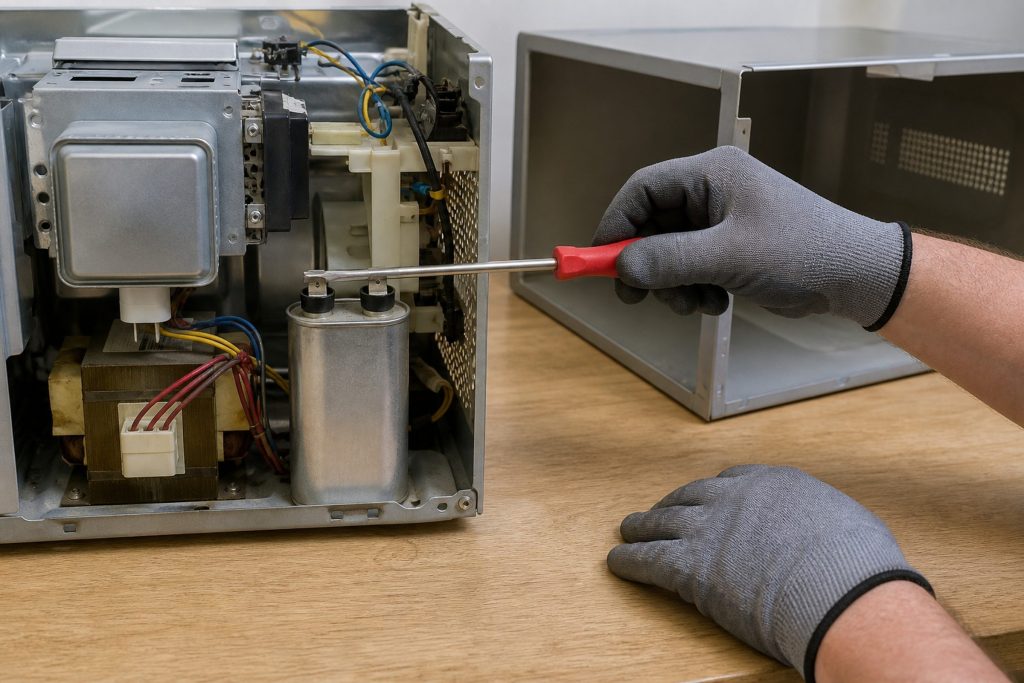
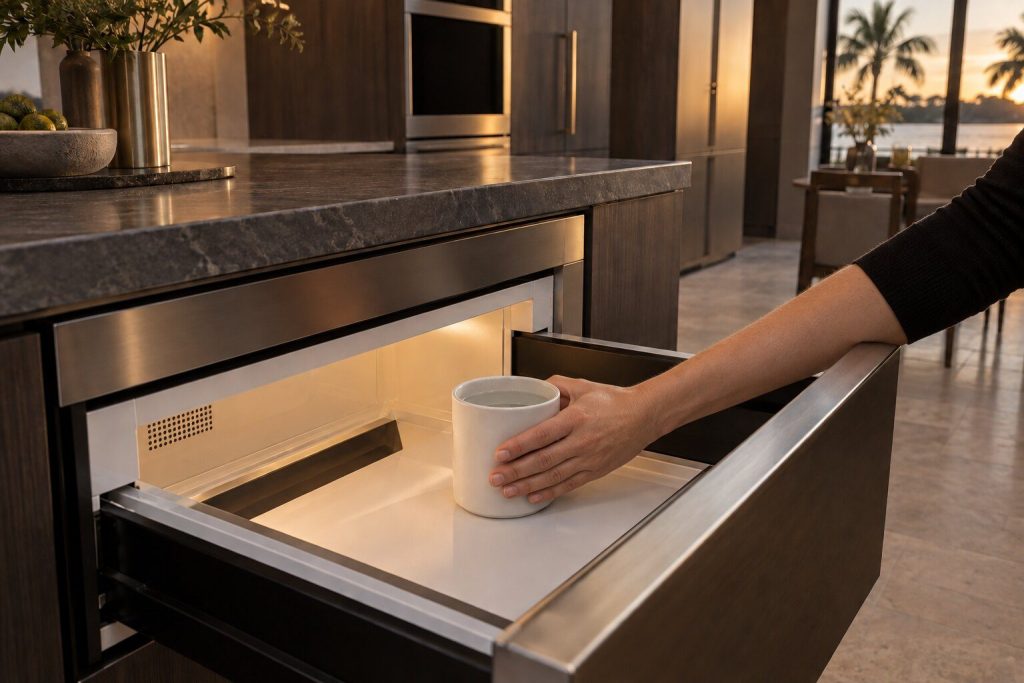
A built-in microwave is worth repairing where a countertop one is not: it is fitted, matched to the kitchen and expensive to replace, and the usual problems are ordinary. Doors and interlocks, control panels, turntable drives and cooling fans account for most calls. The one symptom we ask people to stop using the appliance for is a machine that runs, lights and turns while producing no heat — that is the high-voltage side, and it is a routine repair for somebody equipped for it and a genuinely dangerous one for anybody else.
- Fitted and matched — the economics are different from a countertop machine
- Doors, interlocks, panels, turntable drives and fans are most of the work
- Runs but does not heat: stop using it and call
-
Arcing, a flash, or a burning smell during a cycle Sparking inside the microwave
Stop the cycle and stop using the appliance. Sparking inside a microwave has a small number of causes and one of them — a damaged waveguide cover — will get worse quickly and can damage the magnetron, which is the expensive part. The others are usually harmless once found: metal in the cavity, a rack touching a wall, or food debris carbonized onto the cover. There is no code for this and no code table exists for these microwaves at all, so what the owner saw is the whole of the evidence.
- Stop the cycle and stop using it until it has been looked at
- A damaged waveguide cover gets worse fast and takes the magnetron with it
- Metal, a touching rack, or carbonized debris are the harmless causes
-
The light is on, the plate turns, and the food is cold Microwave runs but does not heat
This is the one symptom on a microwave where we ask people to stop using the appliance until it has been seen. A machine that lights, turns and counts down while producing no heat has a problem on its high-voltage side, and that is not a part of an appliance to investigate with a screwdriver and a video: the capacitor in it can hold a lethal charge long after the plug is out. It is a routine repair for somebody equipped for it. There is no code to read — this make's microwaves display a single generic word and nothing more specific.
- Stop using it. The high-voltage side is not a do-it-yourself repair
- There is no code table for this appliance in either era — just the word ERROR
- Built-in and drawer machines are worth repairing; a countertop one usually is not
Questions people ask about this
It happened once and never again.
Almost certainly metal in the cavity and nothing more. Have a look at the mica cover anyway — a small panel on the side wall or roof. If it is unmarked, carry on using the appliance.
There is a burning smell but nothing looks damaged.
Worth a visit. A smell without a visible mark usually means the arcing is happening behind the cover rather than on it, and that is not something to keep testing.
Is it dangerous to be in the room?
The arc itself is contained, and a microwave that arcs is not leaking — the two failures are unrelated. The reason to stop is that each repetition damages the appliance further, and a scorched cover eventually sets fire to what is on it.
Safety & Risks
More guides like this one
-
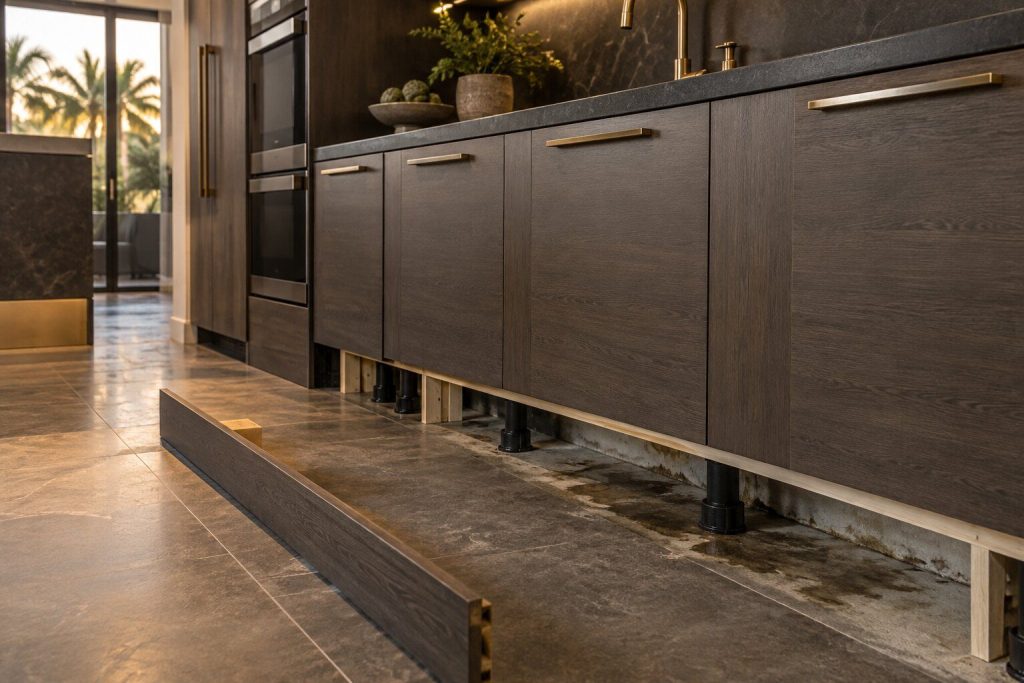
Water Behind Dacor Cabinetry Is a Building Problem Before It Is an Appliance One
Under a fitted appliance the water does not make a puddle. It goes into the cabinet base, the substrate and, in a building, sometimes the ceiling below — and it does that for weeks before anybody sees it.
Read more -
A Gas Smell at a Dacor Burner: What To Do in the First Minute
A smell while lighting and a smell with everything off are two different situations with two different answers. Only one of them is a repair, and it is not the urgent one.
Read more -
If Something Catches in a Dacor Oven, the Door Stays Shut
Opening the door feeds the fire air. The oven is designed to contain it, the self-clean cycle is where most of these begin, and the repair afterwards is ordinary — the door forced open is not.
Read more
Tell us the model number and what it is doing.
This article is based on:
- Official manufacturer documentation
- Internal repair procedures
- Technician repair history
- Company quality standards