
Miami-Dade · South Florida
Dacor repair in Pinecrest
Big kitchens, often with a second unit in a pantry or bar, and generators that ran during the last outage. Units that came back up unevenly after a power cut are a regular call here.
We cover Pinecrest and the rest of Miami-Dade: an on-site diagnostic first, the price agreed in writing before anything is opened, and the exact figure confirmed once we have seen the unit.
By unit
What we repair in Pinecrest, by Dacor unit
Start with whichever matches yours. How an appliance is installed shapes the visit as much as the repair does, which is why we ask about it when you book.
-
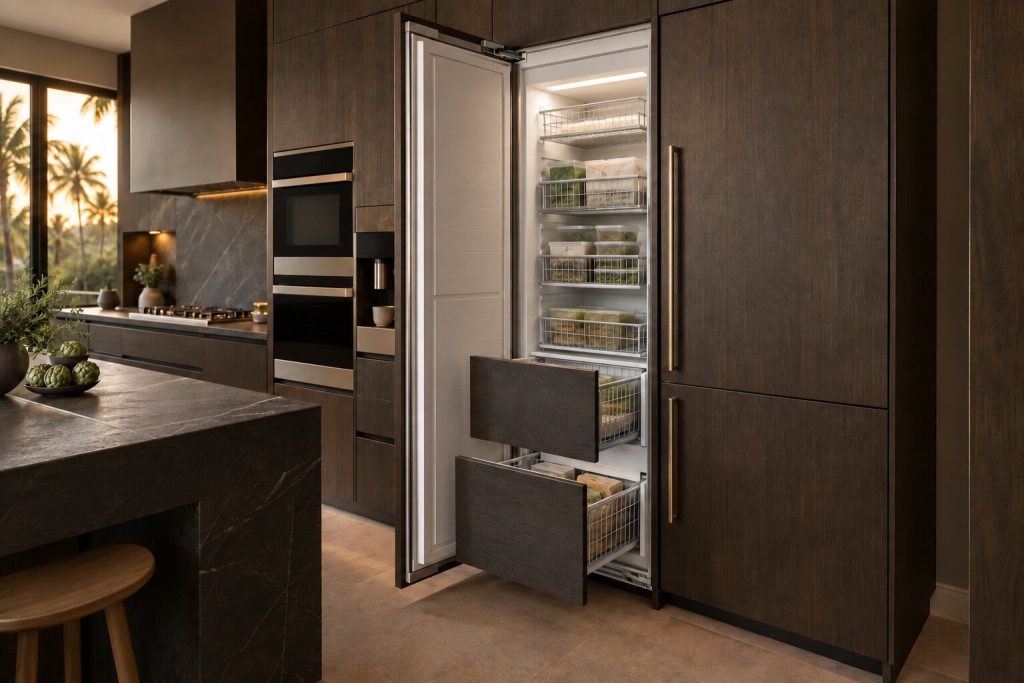
Column freezers · 18, 24, 30 and 36 inches Dacor freezer repair in Pinecrest
There is no chest freezer here, and no upright one standing in a garage. Every freezer this make builds is a column — 18, 24, 30 and 36 inches wide, panel-ready, designed to be installed beside a refrigerator column of matching height so the two read as cabinetry. The narrow one holds about nine and a half cubic feet and carries two ice makers of its own. That shape is the reason most calls about it are really calls about installation: a column has a defined air path through its base or top, and a blocked one imitates a failing sealed system exactly.
- Column-only: 18, 24, 30 and 36 inches, panel-ready, no freestanding cabinet in the line
- The 18-inch column carries dual ice makers and two freezer drawers in 9.4 cubic feet
- Power Freeze is a mode, not a problem — it will run the cabinet hard and sound wrong
-
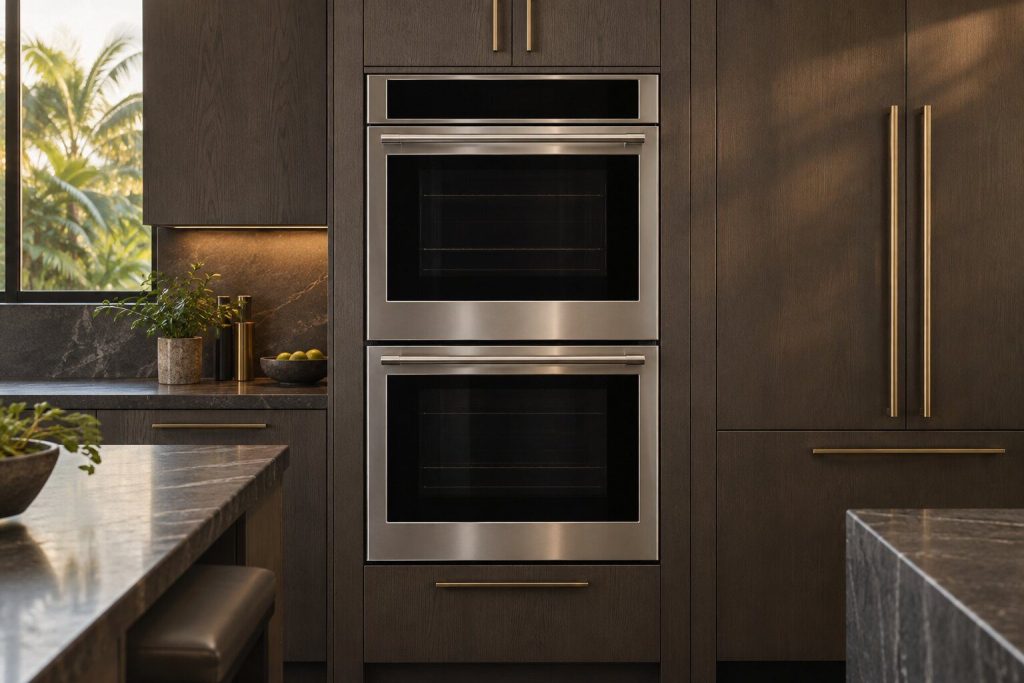
30-inch single and double · steam and non-steam Dacor wall oven repair in Pinecrest
Thirty inches, single or double, and the meaningful split is whether the cavity makes steam. The current ovens run a four-part convection arrangement, connect to the house network, and on the steam models add a water system that has to be filled, drained and descaled like any other. The style names — Contemporary, Transitional — change the hardware and the finish rather than the mechanism. Older kitchens hold the classic ERC ovens, and those report F0 through F8 from a board Dacor designed itself: a different oven, a different table, and a repair that begins with a different question.
- 30-inch single and double, with and without steam
- Four-part convection and a network connection on the current generation
- Classic ERC ovens report F0–F8 — and F1, F2 and F3 mean something else on a range
-
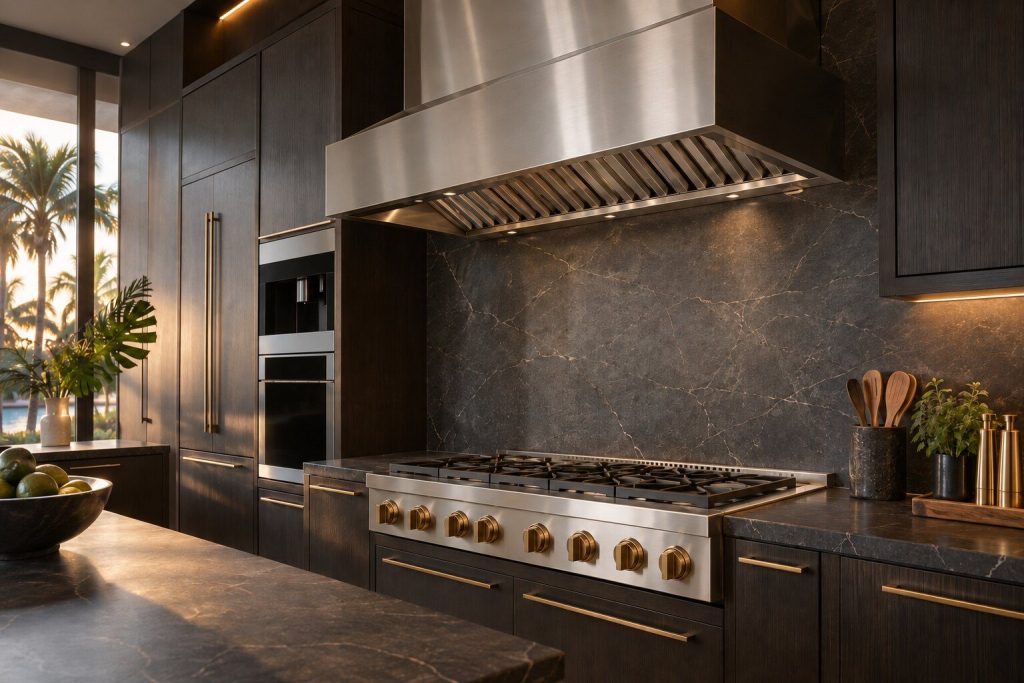
Pro-canopy at 36 and 48 · chimney and liner inserts Dacor range hood repair in Pinecrest
Three shapes, and which one is over the range decides everything about the repair. The pro canopies are 36 and 48 inches wide and about eighteen deep in the body, glass touch controls and LED light. The chimney hood is a 30-inch wall unit that extends up to the ceiling. The liners are inserts — five and a half inches tall — built to be hidden inside a joiner's custom hood, which means the appliance we are called to see is behind millwork nobody wants disturbed. Most hood calls are about the light, the fan speed control or the noise, and all three are reachable without touching the surround.
- Pro-canopy wall hoods at 36 and 48 inches; a 30-inch chimney hood
- Liner inserts at 30, 36 and 48 — about five and a half inches tall, built into custom millwork
- Light, speed control and noise are the three calls; none needs the joinery opened
-
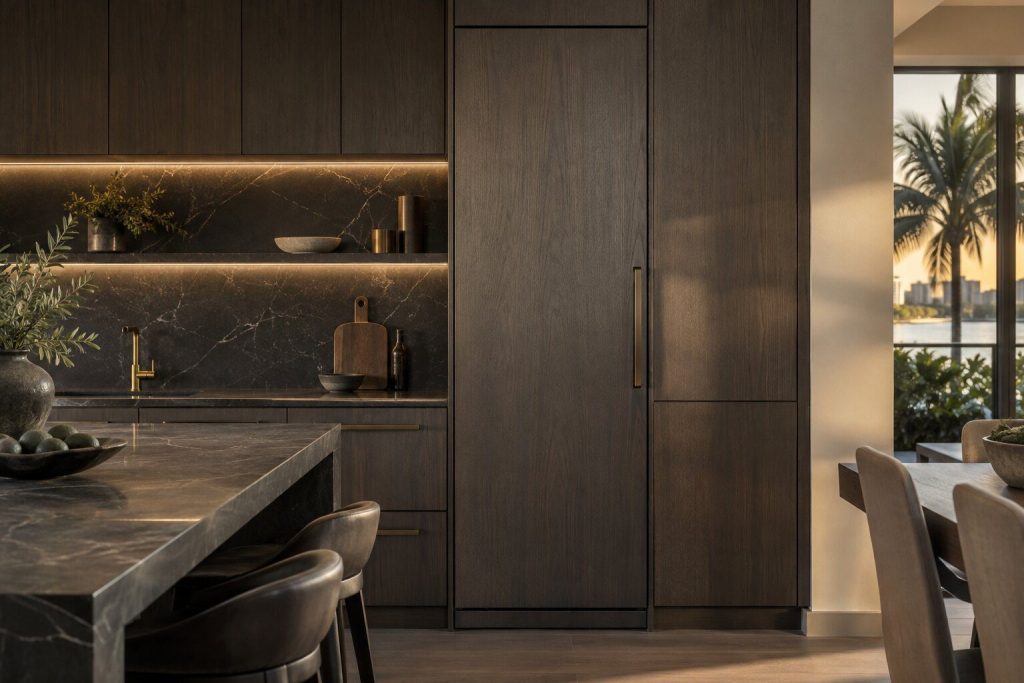
Panel-ready French door · 24, 30 and 36-inch columns Dacor refrigerator repair in Pinecrest
Two shapes, and the difference decides the visit. The French doors run 36, 42 and 48 inches wide and are built to take cabinet panels, so the box disappears into the joinery; the columns are 24, 30 and 36 inches of single-purpose refrigerator, meant to stand beside a freezer column of the same height and read as one run. Almost nothing here is freestanding in the ordinary sense. That changes the work before a part is named: the surround is tight, the panel and its handle come off first, and the air path the installer left is part of the diagnosis rather than a detail.
- French doors at 36, 42 and 48 inches; columns at 24, 30 and 36
- Panel-ready by default — the door furniture comes off before anything is opened
- PreciseCooling, the FreshZone drawer and iQ Remote View are the named parts people call about
-
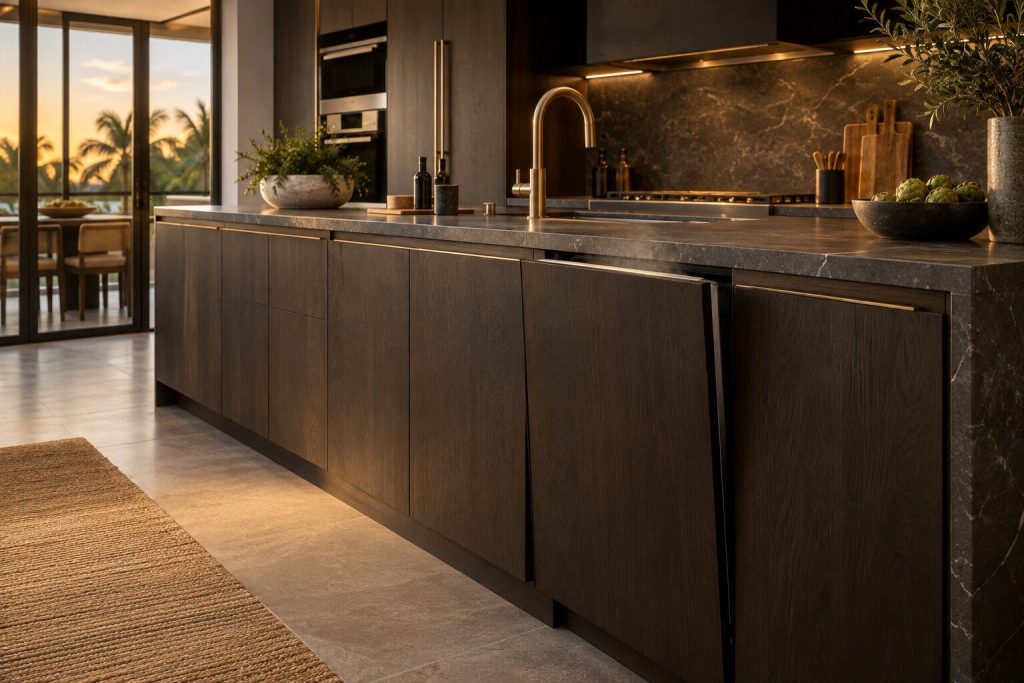
24-inch panel-ready · StormWash+ and AutoRelease Dacor dishwasher repair in Pinecrest
Twenty-four inches, panel-ready, and two generations of it in South Florida kitchens. The current machine carries StormWash+, a water softener built into the appliance itself and an AutoRelease door that pops open at the end of a cycle to dry; the generation before it is the WaterWall platform with a third rack, quiet enough to be rated at 44 decibels. Behind both sits the problem language that changed in 2016: the older EDW and IDW machines report F-1 through F-9, the current ones report letter codes ending in C. Knowing which of those two a kitchen has is most of a diagnosis.
- Current platform: StormWash+, built-in water softener, AutoRelease drying door
- Previous Samsung-era platform: WaterWall, third rack, 44 dBA
- Legacy EDW and IDW machines speak F-1–F-9 — a different language entirely
-
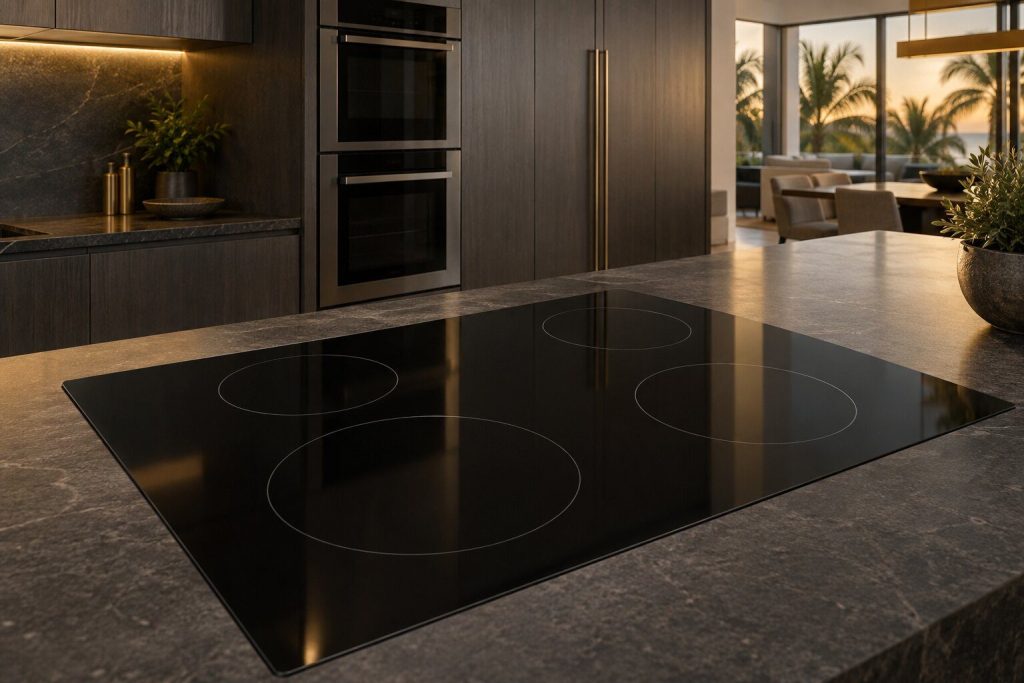
Induction and gas at 30 and 36 inches · rangetops at 36 and 48 Dacor cooktop repair in Pinecrest
Two families under one heading. The cooktops are induction or gas at 30 and 36 inches — the induction ones frameless black glass with a display in the surface, the gas ones sealed burners on stainless. The rangetops are the professional half: 36 and 48 inches, six sealed brass burners built to simmer as well as sear, illuminated knobs, and a griddle and wok ring that sit in place of the grates. They are different machines to work on. A glass induction surface is an electronics repair; a rangetop is burners, gas and heavy brass, and the two rarely fail for the same reason.
- Induction at 30 and 36 inches, frameless black glass with an in-surface display
- Gas cooktops at 30 and 36; rangetops at 36 and 48 with six brass burners
- The rangetop's griddle and wok ring replace grates — they are accessories, not fixtures
By job
The repairs we are called out for in Pinecrest
Starting figures for this equipment in South Florida. What moves them is the model, the access and the part — the exact cost is confirmed after the on-site diagnostic.
-
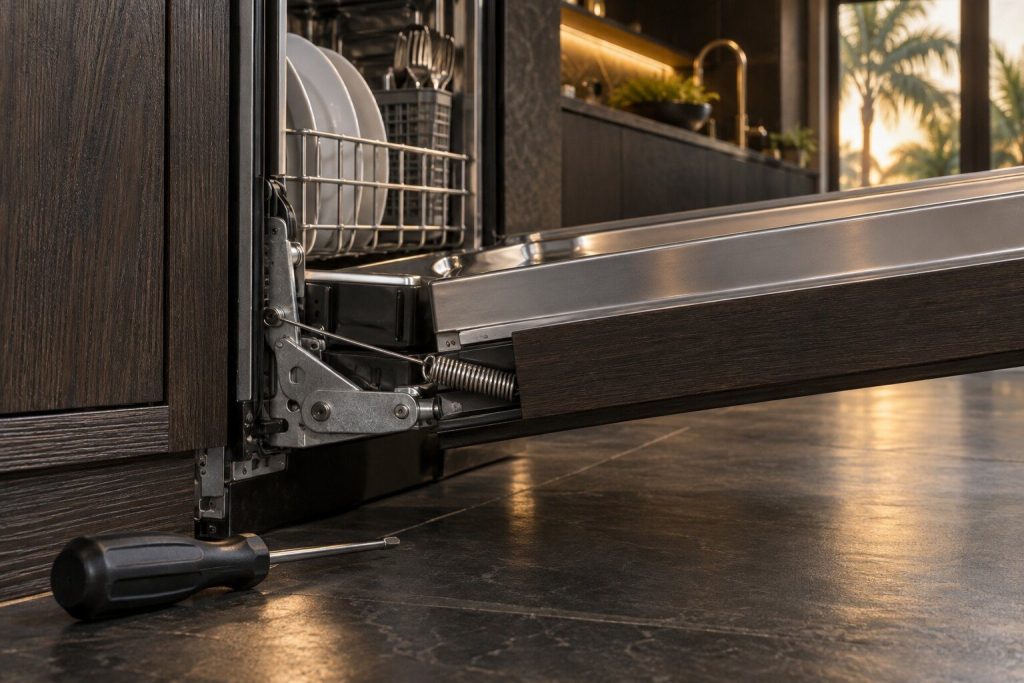
from $135 Door, latch and AutoRelease repair
The door of a panel-ready dishwasher carries a cabinet front, and the springs and hinges are tensioned for that weight. When a panel is changed, or a hinge cable frays, the door drops, the latch stops meeting the strike, and the machine refuses to start — which reads as an electrical problem and is entirely mechanical. On the current machines the door is also part of the drying system: it releases itself a few inches at the end of a cycle, and a door that never releases or releases mid-cycle is a genuine problem rather than a habit.
- A dropped door is mechanical, even though it presents as 'will not start'
- Hinge springs and cables are tensioned for the weight of the cabinet panel
- AutoRelease opening at the end of a cycle is correct behavior
-
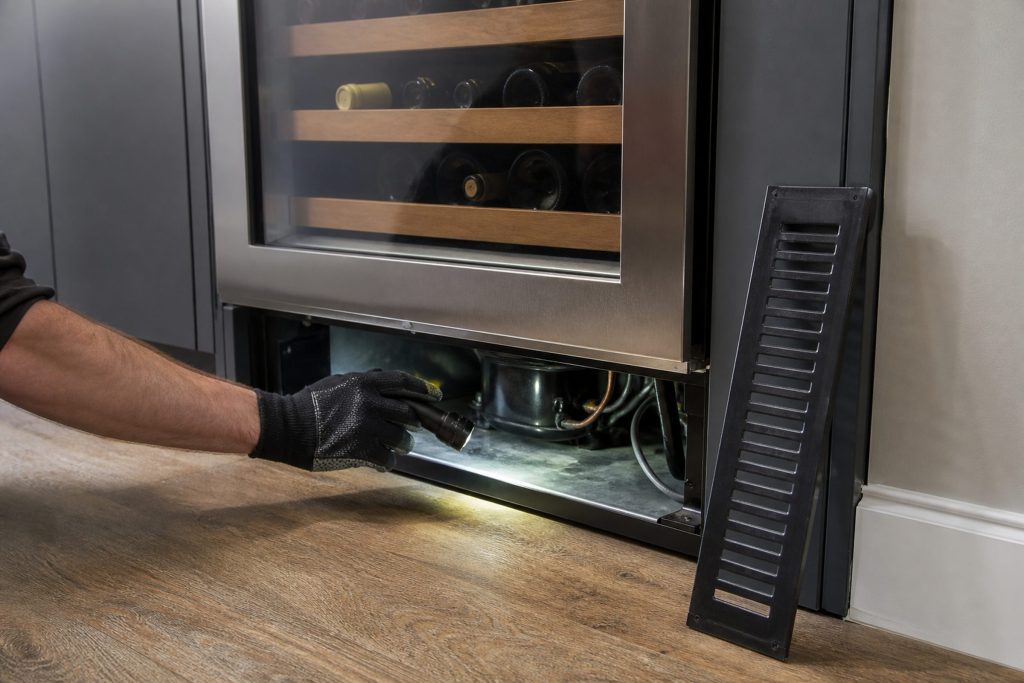
from $185 Wine column not cooling repair
A wine cabinet specified to hold within about a third of a degree is a machine where a two-degree drift counts as a failure, and the owner who calls about it is not being fussy. The useful question is how many zones are wrong. One zone adrift while the others hold is a division-of-airflow problem — that zone's sensor or damper — and stays a small repair. All three drifting together moves the diagnosis to the system feeding them, and that is where the cabinet's age and its condenser start to matter.
- One zone wrong is local; three zones wrong is the system
- Two degrees is a problem on a cabinet specified to a third of one
- A full cabinet holds temperature far better than an empty one during a visit
-
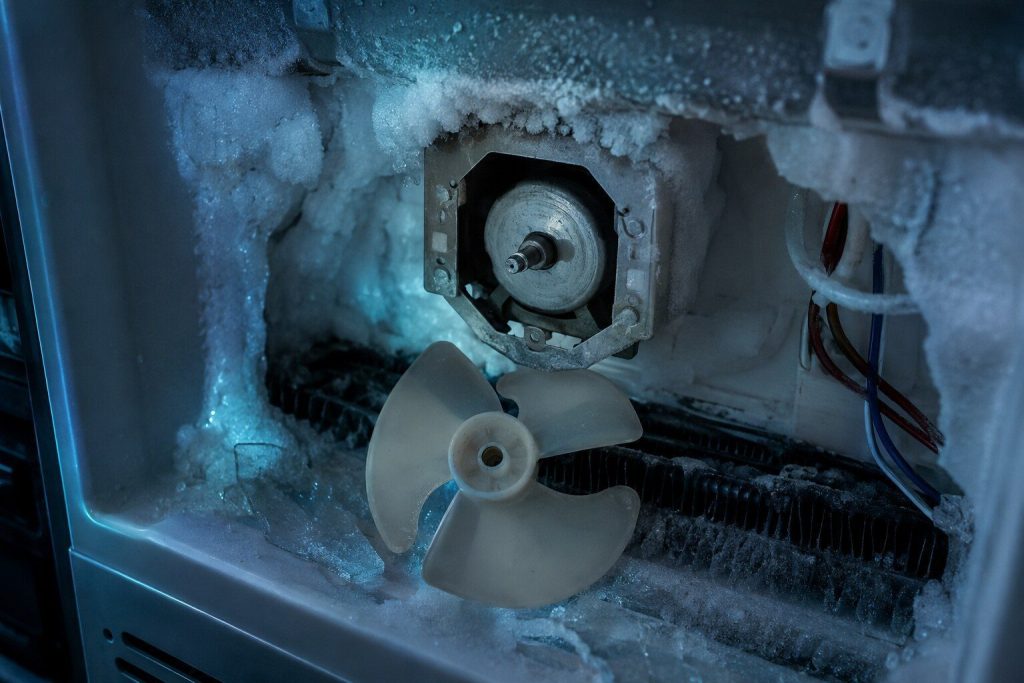
from $159 Evaporator fan repair
The fan that moves cold air is the part that most often explains a cabinet cooling unevenly. When it slows, stalls or is caught by ice, one compartment keeps its temperature and the other drifts, which reads as a refrigeration failure and is not one. It usually announces itself first as noise — a hum that rises with the door closed, a click, a scrape — and people reasonably wait for it to become worse. On a panel-ready cabinet it is worth not waiting: the fan is behind the back panel, and the visit is short while the cabinet is still cold.
- Uneven cooling with a healthy compressor is usually this
- Noise that changes with the door closed is the early warning
- Short visit while the cabinet still works — longer once it does not
-
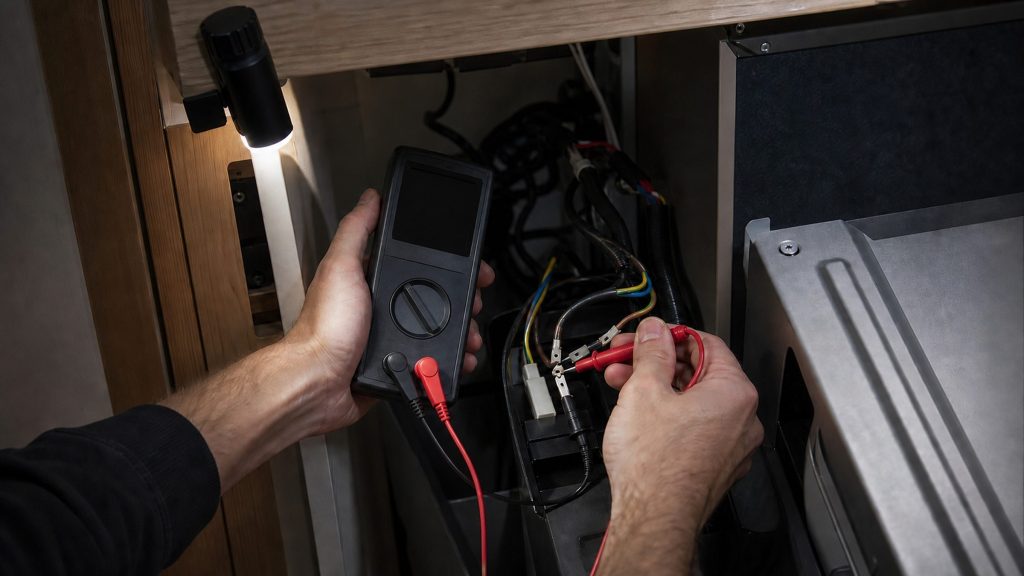
from $95 Diagnostic visit
Finding out what has actually gone wrong, before any part is named or priced. On this badge two questions come before the problem itself: how old the kitchen is, and how the appliance is held. The age decides which problem language the machine speaks — the pre-2016 boards and their F-codes, or the current platform and its letter codes — and the two share nothing. How it is held decides how long it takes to reach. The charge is credited against the repair if you go ahead, and if our honest recommendation is that the machine is not worth mending, you still get that recommendation and the charge does not change.
- The era comes first — it decides the code table, the board and the part number
- A written figure ahead of the work, credited against the repair
- If mending it is the wrong call we say so, rather than selling a part
-
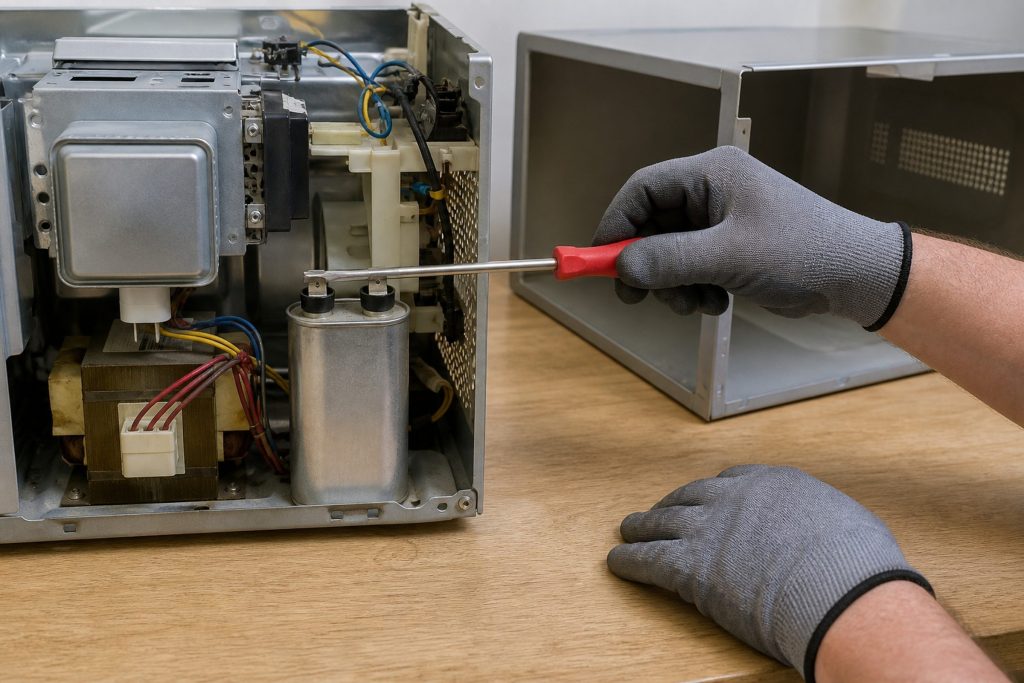
from $195 Built-in microwave repair
A built-in microwave is worth repairing where a countertop one is not: it is fitted, matched to the kitchen and expensive to replace, and the usual problems are ordinary. Doors and interlocks, control panels, turntable drives and cooling fans account for most calls. The one symptom we ask people to stop using the appliance for is a machine that runs, lights and turns while producing no heat — that is the high-voltage side, and it is a routine repair for somebody equipped for it and a genuinely dangerous one for anybody else.
- Fitted and matched — the economics are different from a countertop machine
- Doors, interlocks, panels, turntable drives and fans are most of the work
- Runs but does not heat: stop using it and call
-
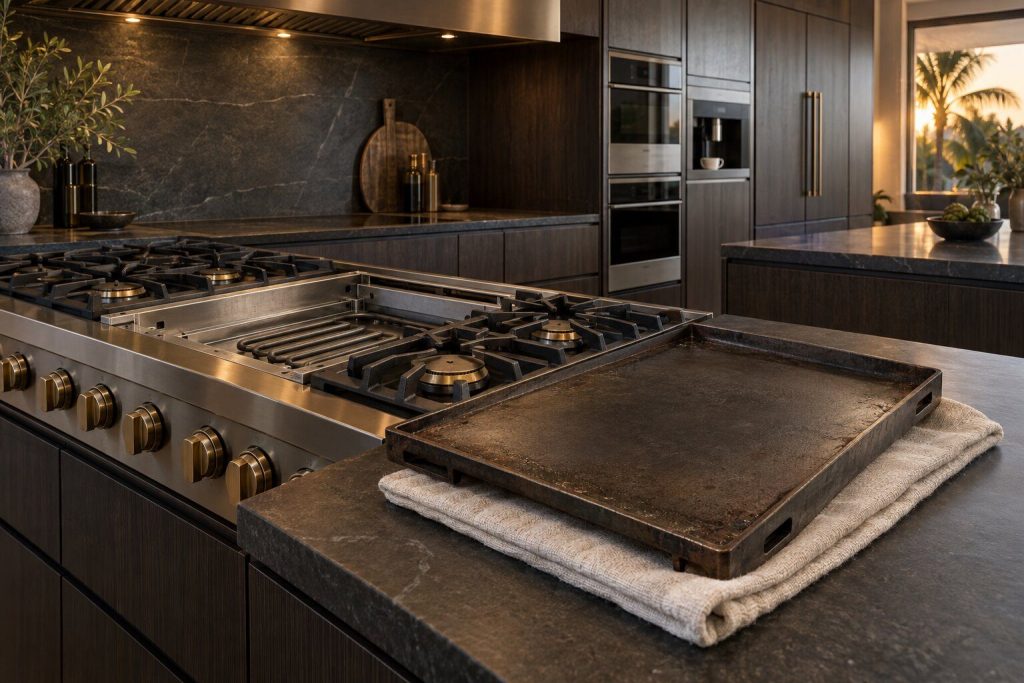
from $159 Integrated griddle service
The griddle built into the largest range is its own heated surface with its own control, which means it can be wrong while every burner beside it is right. The two failure patterns are quite different and worth telling apart before a visit: a griddle that never reaches temperature at all points at the element or its control, while one that gets there and then drifts away points at sensing or at a thermal cut-out doing its job. Surface condition matters too — a plate that has been cleaned with the wrong thing cooks unevenly and reads as a problem.
- Its own element and control — it fails independently of the burners
- Never heats and drifts after heating are two different repairs
- A mistreated plate surface cooks unevenly and imitates a problem
Nearby
Where else we work near Pinecrest
Every place below has its own page, with what the equipment and the access are like there.
Elsewhere in Miami-Dade
In more detail
Dacor repair in Pinecrest, in more detail
What Dacor equipment is like in Pinecrest
Big kitchens, often with a second unit in a pantry or bar, and generators that ran during the last outage. Units that came back up unevenly after a power cut are a regular call here.
Pinecrest sits in Miami-Dade County, and the equipment here follows the housing: older kitchens with appliances fitted into openings that were cut for something else, and newer ones where they were specified with the cabinetry. Both are Dacor work — coffee-machine, cooktop, dishwasher — and both are diagnosed on site before anything is priced.
Heat, dust and power cuts — what they do to a kitchen full of appliances
Inland the enemy is heat, dust and grease rather than salt. Condensers run hard for more months of the year here than almost anywhere else in the country, and grease that condenses in a hood liner instead of leaving through it comes back as a fan that labors. In Pinecrest the appliances we are called out to are usually working exactly as designed — in conditions nobody designed them for.
What that means for the appliances in Pinecrest
- Houses here often run more than one of the same appliance, and the second one is the one that goes unnoticed longest. If there is a second at the address, say so when you book — seeing both on one visit costs less than two visits.
- Condensation on the wine column glass
- Microwave drawer will not open
- Glassware coming out cloudy
- Refrigeration making a new noise
- Hood switching itself on
Which Dacor series we work on around Pinecrest
We publish the error codes for every Dacor series this site covers — ER platform, Modernist Pro, Transitional among them. Which one is in your kitchen changes the visit more than it changes the diagnosis: how the appliance was installed decides what has to come apart before anyone can reach it, and in Pinecrest that is a question about the room before it is a question about the appliance.
How a visit in Pinecrest is arranged
We ask for the model number from the plate inside the door and a line about what the appliance is doing. That decides which parts ride in the van, and it is the difference between one appointment and two.
- How the appliance is built in, and whether it has ever been pulled out before
- Whether there is a second one — a bar, a pantry, a garage or an outdoor kitchen
- Whether the doors are paneled to match the cabinetry, which changes how they come off and go back
- The diagnosis first, then the scope and the price in writing, and your approval before anything is opened
What it costs, and what moves the figure
Prices in Pinecrest are the same as everywhere else we cover: a diagnostic from $95 that is credited toward the repair, and starting figures per job rather than one number for "a repair". What moves it is the model, how the appliance is built into the cabinetry, which part it needs and how quickly that part can be sourced — none of which can be judged over the phone. The repairs we carry out lists what each job involves and the figure it starts at, and the unit pages covers what tends to go wrong on each type.
The exact cost is confirmed after the on-site diagnostic and agreed with you before any work begins. We are an independent repair company — not affiliated with, authorized by, or endorsed by any manufacturer — and our warranty covers the labor we performed.
Before you book
Questions about a visit in Pinecrest
Do you cover Pinecrest?
Yes. Pinecrest is in Miami-Dade County and inside the area we work every week. Give us the address when you book, and say how the Dacor is installed — what has to come apart to reach it matters as much as where it is.
How soon can you get to Pinecrest?
We will tell you the earliest slot we can genuinely keep rather than the earliest one that sounds good. Tell us the model number and what the unit is doing when you book: whether we can finish the same day depends on the part far more than on the drive.
Does it cost more because the job is in Pinecrest?
No. The diagnostic and the work are priced the same across Miami-Dade, Broward and Palm Beach. What moves the figure is the model, how the unit is built in and which part it needs — never the address. Where access takes longer, we say so before anything is agreed rather than after.
What do you need from me before the visit in Pinecrest?
The model number from the data plate, a photograph of the display if anything is showing on it, and a line about what the unit is doing. Those three decide which parts a technician brings, and they are the difference between one visit and two.
Booking a visit in Pinecrest
Tell us the model number and what the unit is doing. We will bring the parts that problem usually needs, and you will have a firm price before we start.
This article is based on:
- Official manufacturer documentation
- Internal repair procedures
- Technician repair history
- Company quality standards