Troubleshooting
Two Ice Makers, One Water Problem: Reading a Dacor Freezer Column
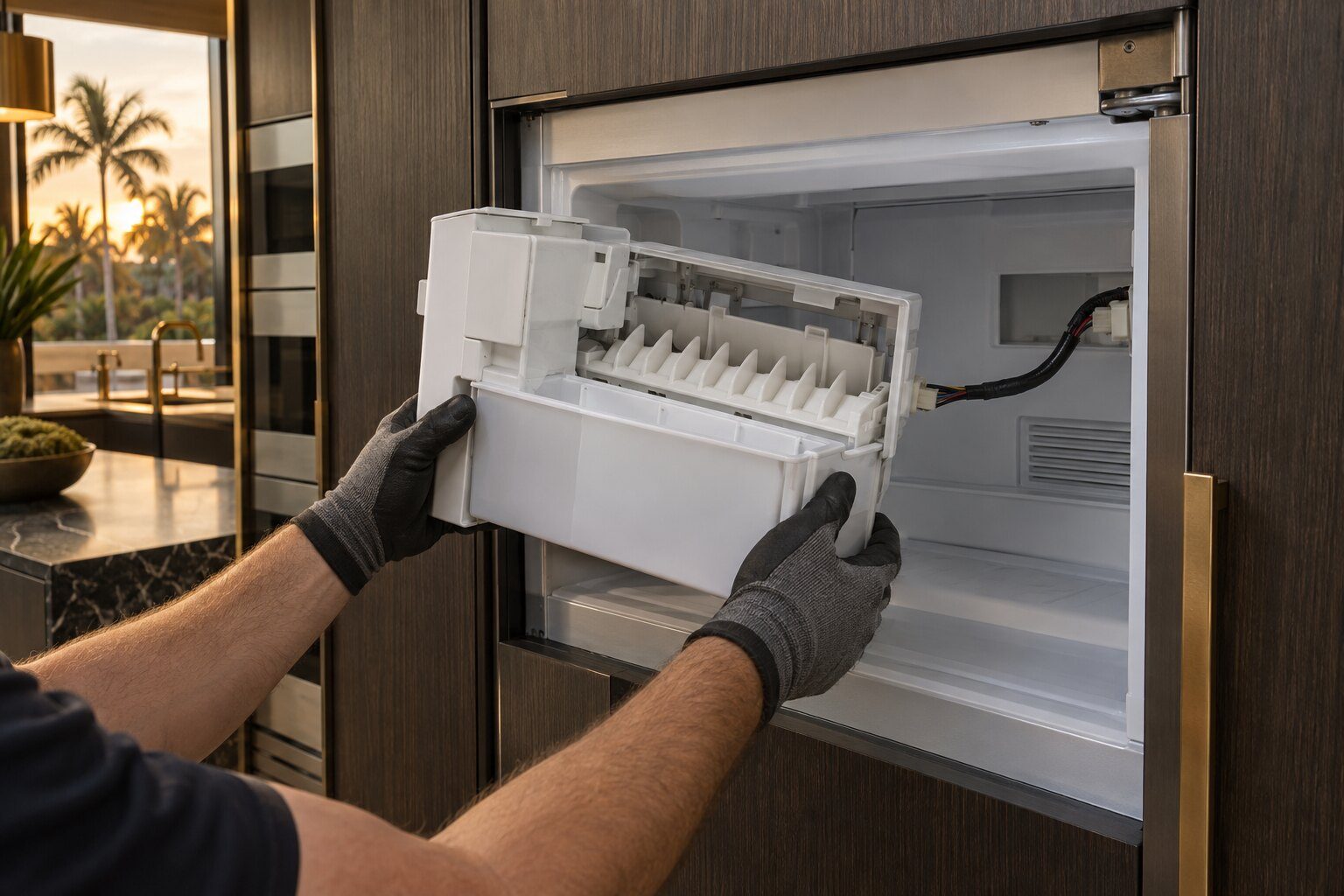
On a Dacor there is no standalone ice machine — ice is a module inside the refrigeration, and the freezer columns carry two of them. That makes the diagnosis unusually clean. If both modules have stopped, the problem is upstream of both: the supply valve, a scaled inlet valve passing a trickle, a partially frozen fill tube, or a water filter years past its change. If one has stopped while the other still works, the problem is in that module — the mold heater, the ejector, or the bin sensing. Small or hollow cubes on both modules at once are a third case, and in South Florida they usually mean a valve that hard water has narrowed rather than a mechanism that has failed. Ice production also falls off long before a freezer feels warm, so an ice complaint is sometimes the first sign of a cooling problem.
The full guide
An appliance that carries two of the same part is an appliance that can tell you where its problem is.
Dacor ice maker not working: the narrow column is a lot of machine
Nine and a half cubic feet, two drawers, its own sealed system and two ice makers, in eighteen inches of cabinet. That density is why so many calls about this appliance turn out to be airflow — a drawer loaded past the internal vents stops air moving entirely — and it is also why the ice diagnosis is so clean.
Both stopped: look upstream
Two modules failing on the same evening is not two failures. It is one cause feeding both: a supply valve somebody closed during other work and never reopened, an inlet valve that scale has narrowed, a fill tube frozen at its tip, or a filter that has quietly been restricting flow for a year.
In this water the valve is the interesting case. A valve fed hard water does not usually fail outright — it closes slowly and passes a trickle. The machine goes on making ice, smaller and hollower every month, in a decline gradual enough that nobody can say when it started.
One stopped: look at that module
The mold heater that releases the cubes, the ejector that sweeps them out, the sensing that tells the module the bin is full. A module that fills and never releases is a different repair from one that never fills at all, and saying which it is on the telephone puts the right part on the van.
Cubes that are small, hollow or cloudy
That is fill volume rather than mechanism, and it is measured rather than judged: water into a cup over a set time, against what the module should be getting. A valve passing half of what it should looks perfectly normal to the eye and is obvious on a measure.
When the ice is telling you about the freezer
Ice production is the first thing a refrigeration cabinet gives up when it starts to struggle, and it happens well before anything feels warm to the hand. If the cabinet is also drifting on a thermometer, the ice complaint is a symptom of the cooling problem rather than a problem of its own — and it is treated as the cooling problem, because fixing a module in a cabinet that cannot hold temperature achieves nothing.
The filter nobody counts as a part
Water filters have an interval, they are inexpensive, and in a kitchen where nobody was handed a manual they routinely run for three or four years. A filter that far past its change restricts flow enough to starve both ice modules while the water at the dispenser still looks perfectly normal.
It is the first thing worth ruling out on any ice complaint, and it is the reason we ask the date rather than whether it has been changed. Everyone answers yes to the second question and the real answer is usually in the first.
If it turns out to be a repair
What this leads to, and what it costs
Every job on this site is priced the same way: an on-site diagnostic first, the figure agreed in writing before anybody starts.
-
from $165 Ice maker repair
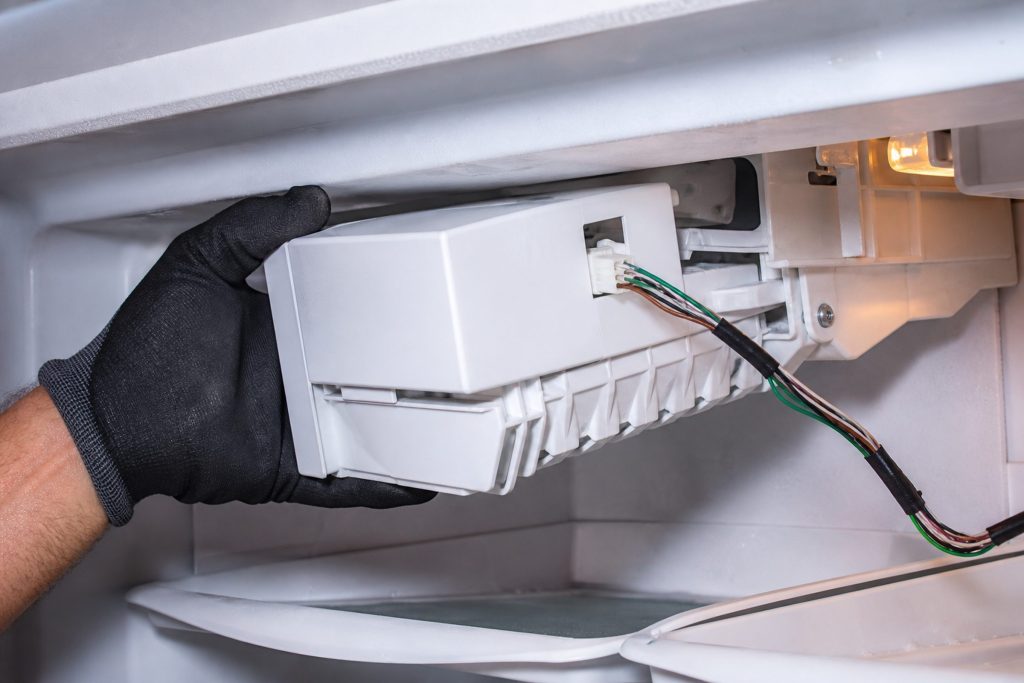
The ice maker is a module inside a cabinet rather than an appliance of its own on this badge — there is no standalone ice machine in the line. On the freezer columns there are two of them, which is genuinely useful for diagnosis: both stopped points upstream at the water supply, the inlet valve or the fill tube, while one stopped and one working points squarely at the module itself. Hollow or slow ice is a third case and usually a fill or a temperature problem rather than a mechanism that has failed.
- Two modules on the freezer columns — which one stopped is half the diagnosis
- Both stopped is a water problem; one stopped is a module problem
- Hollow or slow cubes are usually fill volume, not a broken mechanism
-
from $139 Water line and fill valve service
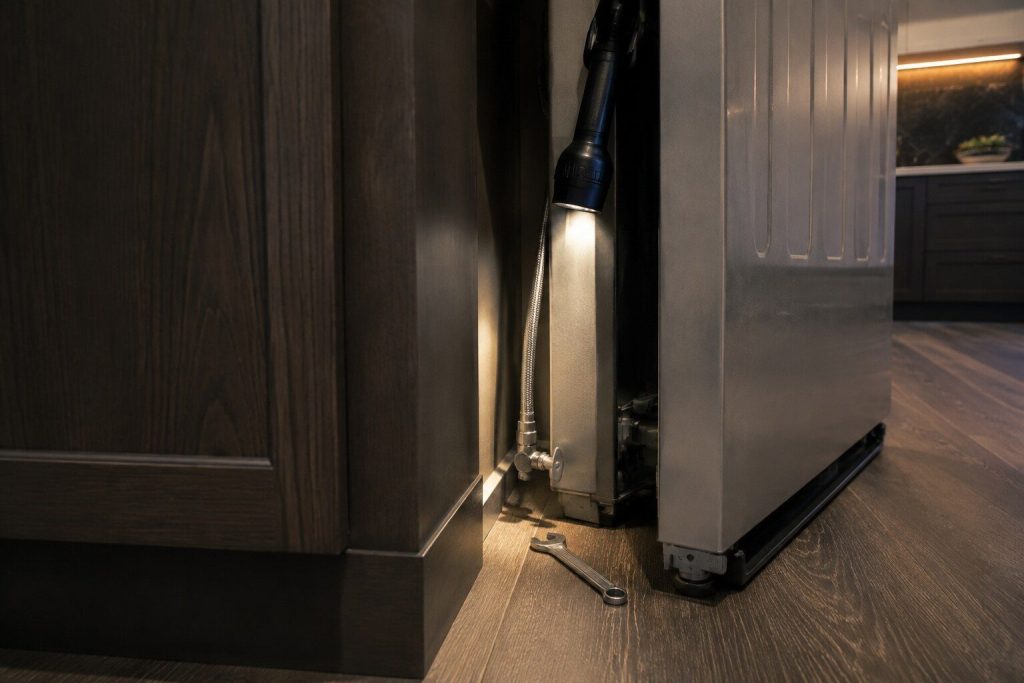
Everything upstream of the ice module, which is where most ice complaints actually live. The supply line runs behind cabinetry, the valve sits at the back of the machine, and the fill tube can partially freeze without ever stopping completely. In South Florida the additional factor is scale: a valve that has been fed hard water for years closes slowly and passes a trickle, which produces small hollow cubes on both modules at once — a symptom people reasonably read as two failed ice makers.
- Most ice problems are upstream of the module, not in it
- Scale makes a valve pass a trickle rather than fail outright
- Both modules affected at once is nearly always this
-
from $185 Freezer column repair
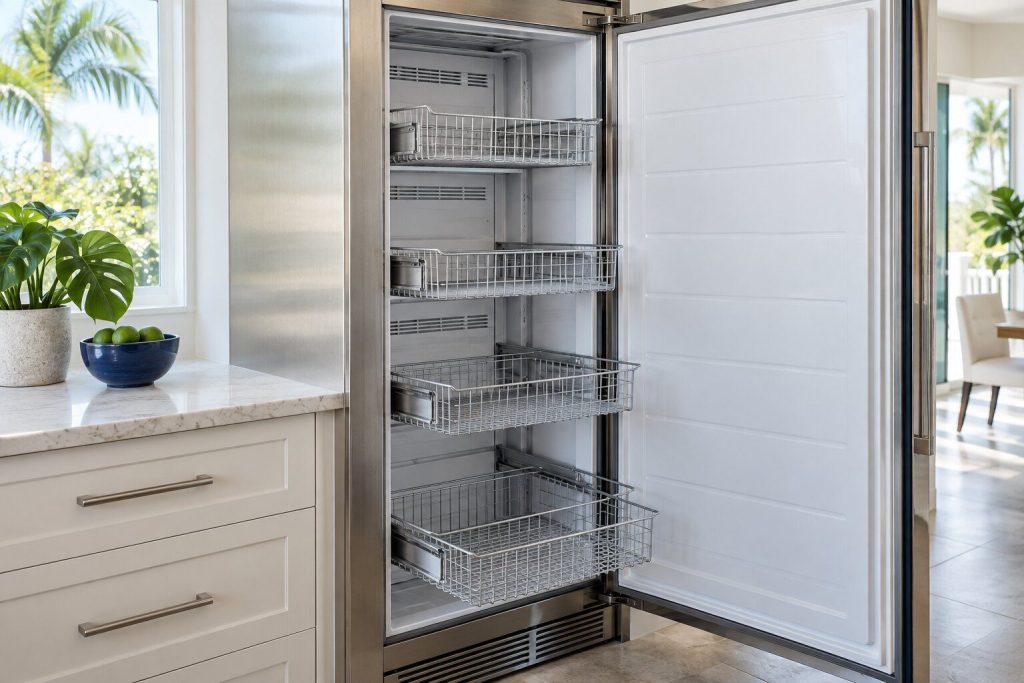
Every freezer this make builds is a column, which changes both the problems and the stakes. There is no second compartment to carry the load while a part is ordered, so a failure here empties a cabinet that often holds a great deal. The narrow column packs two ice makers, two drawers and its own sealed system into eighteen inches, and that density is why so many calls about it are really calls about airflow: drawers overloaded past the vents, or a base grille covered after a floor was laid. We check that before anything is opened.
- No second compartment — a problem here empties the cabinet
- Two ice makers and two drawers inside eighteen inches on the narrow column
- Overloaded drawers and covered grilles imitate a failing system
Questions people ask about this
Is there a reset for the ice maker?
Most modules have a test cycle, and running it is part of the diagnosis rather than a cure. A module that completes its test correctly and still makes no ice has a water problem, and that is a genuinely useful result to arrive at before anybody is called.
Should I keep using it while the ice is bad?
Yes. Nothing about hollow or slow cubes harms the cabinet, and continuing to use it keeps the symptom visible for the visit. What is worth avoiding is forcing the ejector arm by hand, which breaks the part that was still working.
Could the filter really stop both?
It can and it often does. A filter years past its change restricts flow enough to starve both modules, and it presents identically to a failing inlet valve at a fraction of the cost. It is the first thing worth ruling out.
Troubleshooting
More guides like this one
-
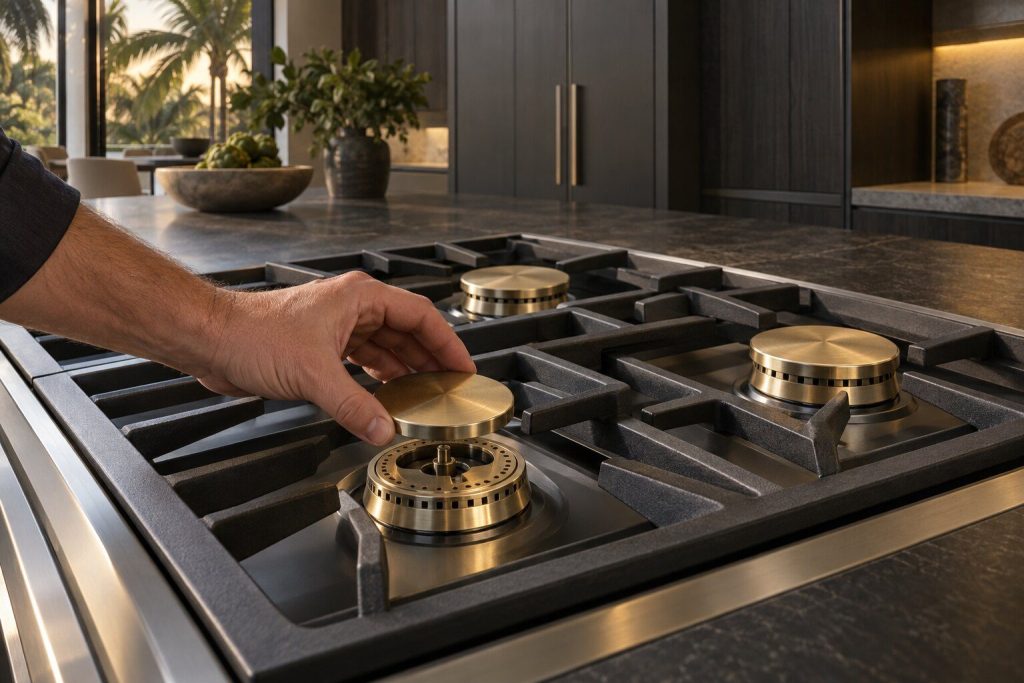
The Simmer That Went Away After You Cleaned the Rangetop
The sear is perfect and the low end has gone. On a sealed brass burner that is nearly always ports, a cap seated wrong, or a simmer valve that has drifted — and it very often dates from the week the hob was scrubbed.
Read more -
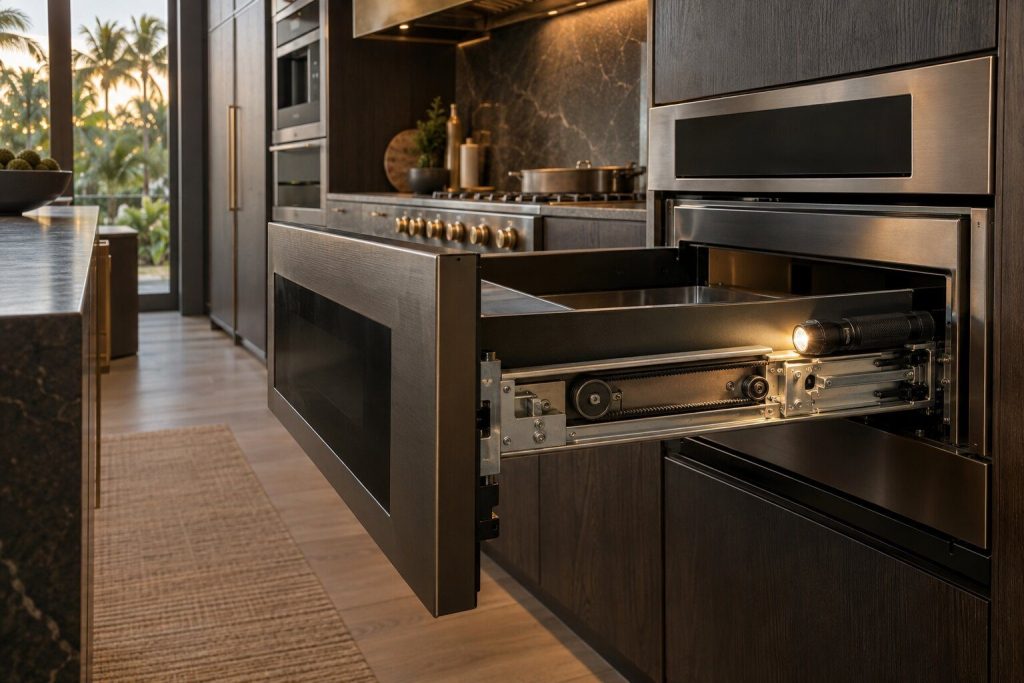
A Dacor Microwave Drawer That Will Not Open Is Not a Dead Oven
The mechanism fails far more often than the oven does, and while the drawer is not closed the oven refuses to heat — which reads as a dead appliance and is the machine being careful.
Read more -
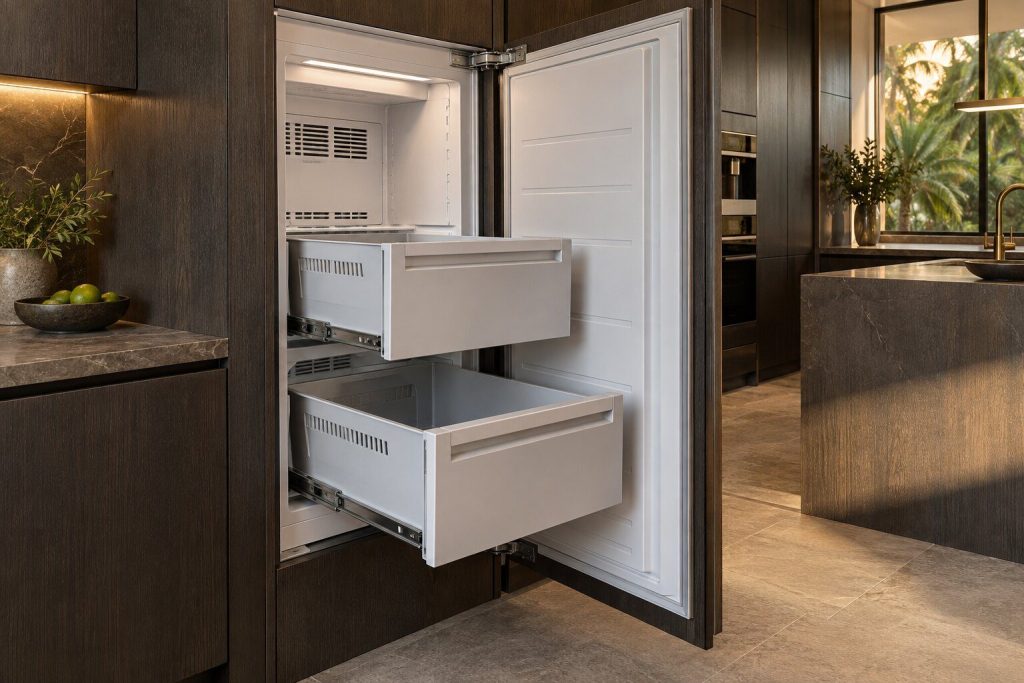
A Dacor Freezer Column Running Warm: Two Free Checks First
There is no second compartment to carry the load, so this one is urgent. Before anything is opened, two things that cost nothing account for a large share of these calls: how the drawers are loaded, and whether the base grille is covered.
Read more
Tell us the model number and what it is doing.
This article is based on:
- Official manufacturer documentation
- Internal repair procedures
- Technician repair history
- Company quality standards