Maintenance & Prevention
Cloudy Glass in a Dacor Dishwasher: Deposit or Etching
Cloudy glassware from a Dacor dishwasher is two different problems wearing the same appearance, and a ten-minute test separates them. Soak one affected glass in white vinegar and rinse it: if it comes out clear, the film is mineral deposit and the water is the problem; if it is unchanged, the glass is etched and nothing reverses that. Deposit is the version worth acting on, and on this make there is an unusually direct answer, because the dishwasher has a water softener built into the appliance. Set for water softer than what actually arrives, or running on resin past its life, it does a fraction of its job — which produces exactly the slow, even decline people describe as the machine getting worse over a year. The other two causes are a wash that no longer reaches temperature, and spray coverage that has fallen away.
The full guide
Two problems, one appearance, and ten minutes tells you which one you have.
Dacor dishwasher cloudy glasses: the test
A glass, some white vinegar, ten minutes. Rinse and look.
If it comes out clear, what you had was deposit: minerals sitting on the surface, which the acid dissolved. That is a water problem and it is fixable.
If it looks exactly the same, the glass is etched. The surface itself has been attacked over hundreds of cycles, and there is nothing that brings it back.
Why this machine has a softener at all
Most dishwashers take whatever water arrives. This one treats it, which in South Florida is the reason glassware in these kitchens stays clear for years longer than it otherwise would.
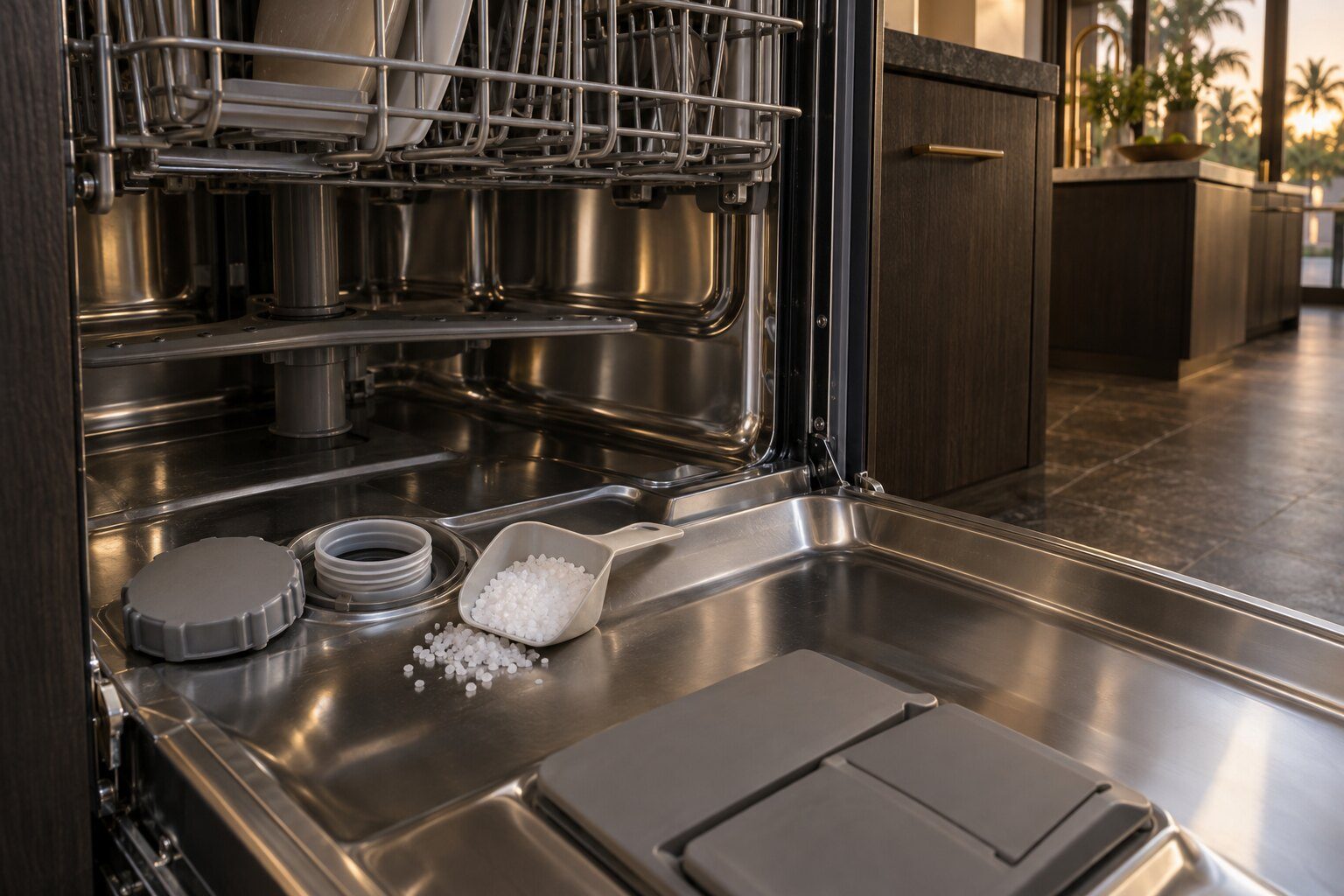
It is also something to maintain, and almost nobody is told: the chamber needs dishwasher salt, the setting has to match the hardness actually coming out of the tap, and the resin has a working life.
What a wrong setting looks like
Not a failure. A slow, even decline across every load — everything slightly worse than it used to be, nothing actually broken. People describe it as the machine getting tired, and it is usually a softener set for water softer than what arrives, doing a fraction of the work it could.
Measured rather than assumed is the whole of the fix.
The two other causes worth ruling out
Heat. Detergent needs temperature to work, and a heater that half functions leaves residue on everything. The complaint arrives as cloudiness rather than as a heating problem.
Coverage. A blocked jet leaves a repeatable pattern — the same dirty spot on the same plate in the same rack position — and it shows on glass before it shows anywhere else.
The mistake that costs the most
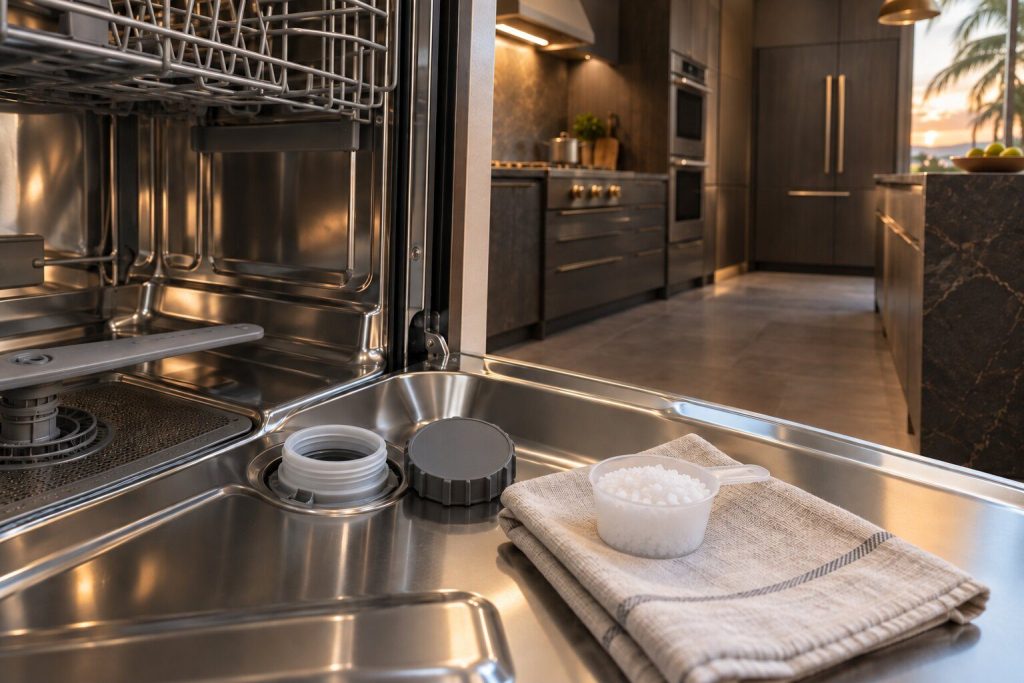
Table salt in the softener chamber. It contains anti-caking agents that damage the resin, and it turns a maintenance item into a replacement. Dishwasher salt costs very little and the machine uses barely any of it.
What a softener service actually involves
The salt level and the cap seal first, because a weeping cap puts brine somewhere it should not be and does slow chemical damage that outlasts the part. Then the hardness setting, measured against the water that actually arrives rather than assumed from a postcode. Then the resin itself, which has a working life and does eventually stop regenerating.
And then a cycle with known glassware, because the result of this service should be visible. If it is not, we say so rather than declaring it done — the point of the visit is clear glass, not a completed checklist.
If it turns out to be a repair
What this leads to, and what it costs
Every job on this site is priced the same way: an on-site diagnostic first, the figure agreed in writing before anybody starts.
-
from $129 Built-in water softener service
A dishwasher with its own softener is unusual, and in South Florida it is the reason glassware in these kitchens stays clear for years longer than it otherwise would. It is also a maintenance item that nobody is told about: the chamber needs salt of the right kind, the setting has to match the water actually arriving, and the resin does not last forever. The clearest sign it needs attention is a machine whose performance has declined slowly and evenly — everything slightly worse, nothing actually broken.
- The reason glass stays clear in a hard-water city
- Needs the right salt, the right setting, and eventually new resin
- The symptom is a slow, even decline rather than a failure
-
from $139 Wash performance service
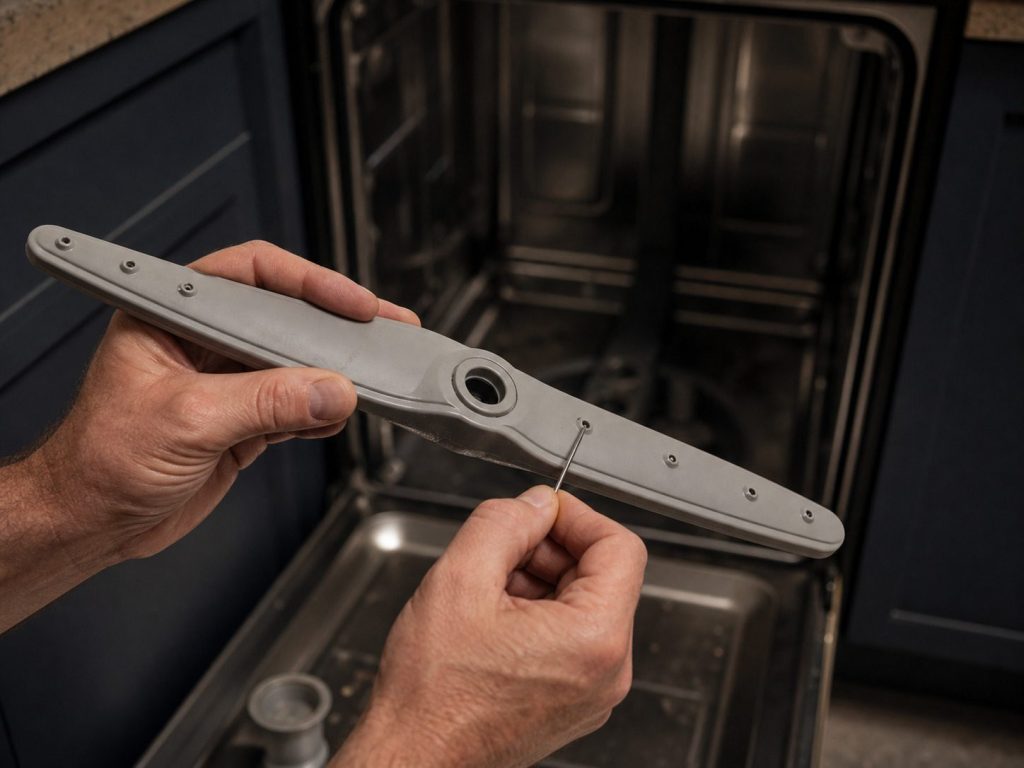
Dishes coming out gritty, cloudy or wet is usually not one problem but three small ones together: spray arms partly blocked, a filter left too long, and water that is harder than the machine was set up for. This badge is unusual in having a softener built into the appliance, which means there is something to service that most dishwashers do not have — and a machine that washed perfectly for years and then declined is very often that softener rather than anything mechanical.
- Gritty, cloudy and wet are three different problems with three different answers
- The built-in softener has a service interval — this is where a slow decline starts
- Spray arms and the third rack's feed are checked under pressure, not by eye
-

A film that will not wash off, and it is getting worse Glassware coming out cloudy
Cloudy glass is two quite different problems wearing the same appearance. One is deposit — hard-water scale sitting on the surface, which comes off with an acid rinse and comes back unless the water is treated. The other is etching, which is permanent damage to the glass itself and cannot be reversed by anything. Telling them apart takes a few minutes at the sink and decides whether this is a repair, a maintenance visit or a conversation about the glassware. This make helps: the dishwasher has a softener built into it.
- Deposit washes off. Etching does not — and the test takes five minutes
- This machine has its own water softener, and it is the usual answer
- A slow, even decline across everything points at the softener rather than a part

Questions people ask about this
Can etched glass be restored?
No. Etching is chemical damage to the surface of the glass itself, caused over hundreds of cycles by water that is too soft, too much detergent, or too high a temperature. No machine, no rinse aid and no repair brings it back — and any product claiming otherwise is selling something. What a correctly set softener does is stop it happening to the next set.
What salt does the softener take?
Dishwasher salt specifically. Table salt contains anti-caking agents that damage the resin, and it is a genuinely expensive mistake. The appliance uses very little of it, and the cap seal is worth checking at the same time — a weeping softener cap puts salt water where it should not be.
Nobody told me there was a softener.
That is the usual story, and it is why this page exists. It is a maintenance item that arrives undocumented in most kitchens, and in a hard-water city it is the single thing that decides whether glassware stays clear for years.
Maintenance & Prevention
More guides like this one
-
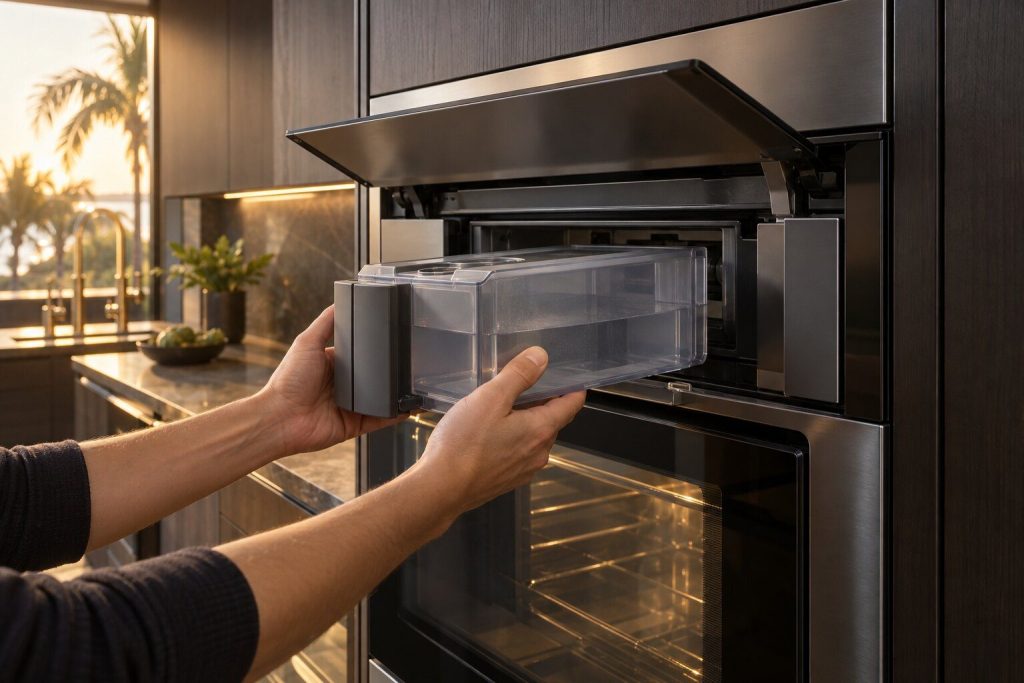
The Dacor Steam Oven Descale Nobody Mentions on Delivery
A reservoir, a pump and a water path that South Florida scales quickly. Descaled on schedule these systems last well; ignored, the scale takes the pump with it — and that is the repair this maintenance exists to prevent.
Read more -
The Dacor Maintenance Nobody Hands You on Delivery
A dishwasher softener, a steam reservoir, a coffee filter and a column air path. Four items with real intervals, none of them mentioned when the kitchen was handed over, and all four decide how long the equipment lasts.
Read more -
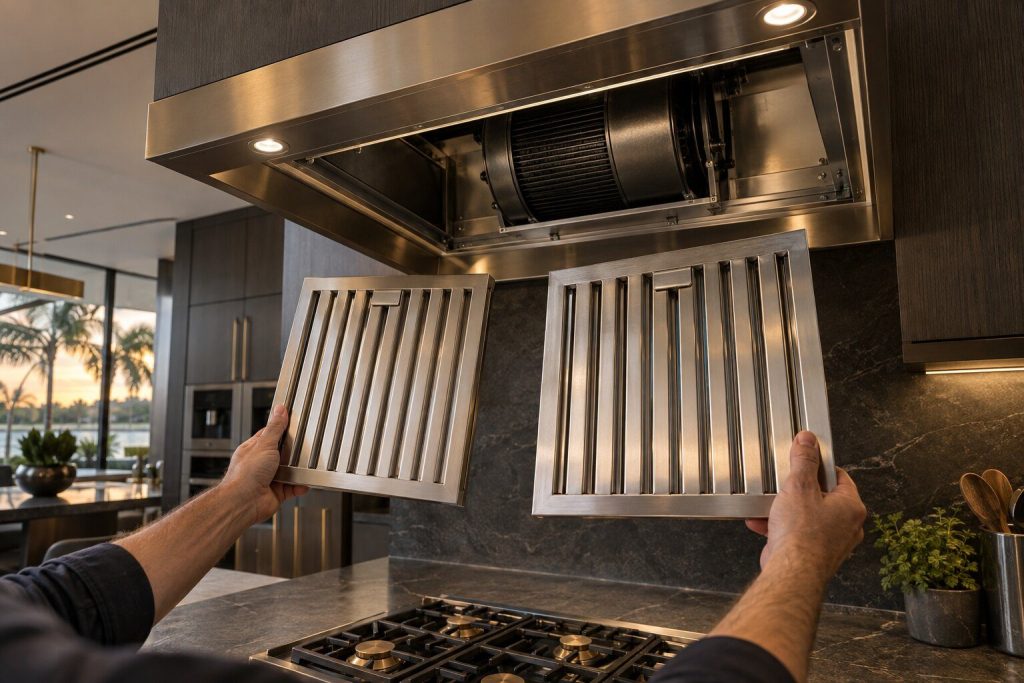
Dacor Hood Filters, Monthly: the Cheapest Maintenance in the Kitchen
Filters block gradually enough that nobody notices the week the kitchen stopped clearing. Baffles go in the dishwasher, mesh prefers hot water — and doing it monthly prevents the blower repair entirely.
Read more
Tell us the model number and what it is doing.
This article is based on:
- Official manufacturer documentation
- Internal repair procedures
- Technician repair history
- Company quality standards