Troubleshooting
LC on a Dacor Dishwasher: the Machine Stopped Itself for a Reason
LC on a current Dacor dishwasher means the leak-detection system has found water where it should not be and has shut the machine down. The pre-2016 equivalent on the EDW and IDW platform is F-6, the controller or floor-guard problem. In both cases the appliance is protecting the kitchen, and under a panel-ready door that matters more than it sounds: a fitted dishwasher leaks into cabinetry and the substrate beneath it rather than onto a floor where somebody would see it. The correct response is to close the supply valve to the dishwasher and switch off its breaker, then look under the adjacent cabinets before anything is reset. The incorrect one — and it is common — is to clear the code and run another cycle to find out whether it happens again. Either there is a leak, or the float or its switch has failed, and the first has to be excluded before the second is assumed.
The full guide
Some problems are the appliance failing. This one is the appliance working.
Dacor dishwasher lc code: what the system is doing
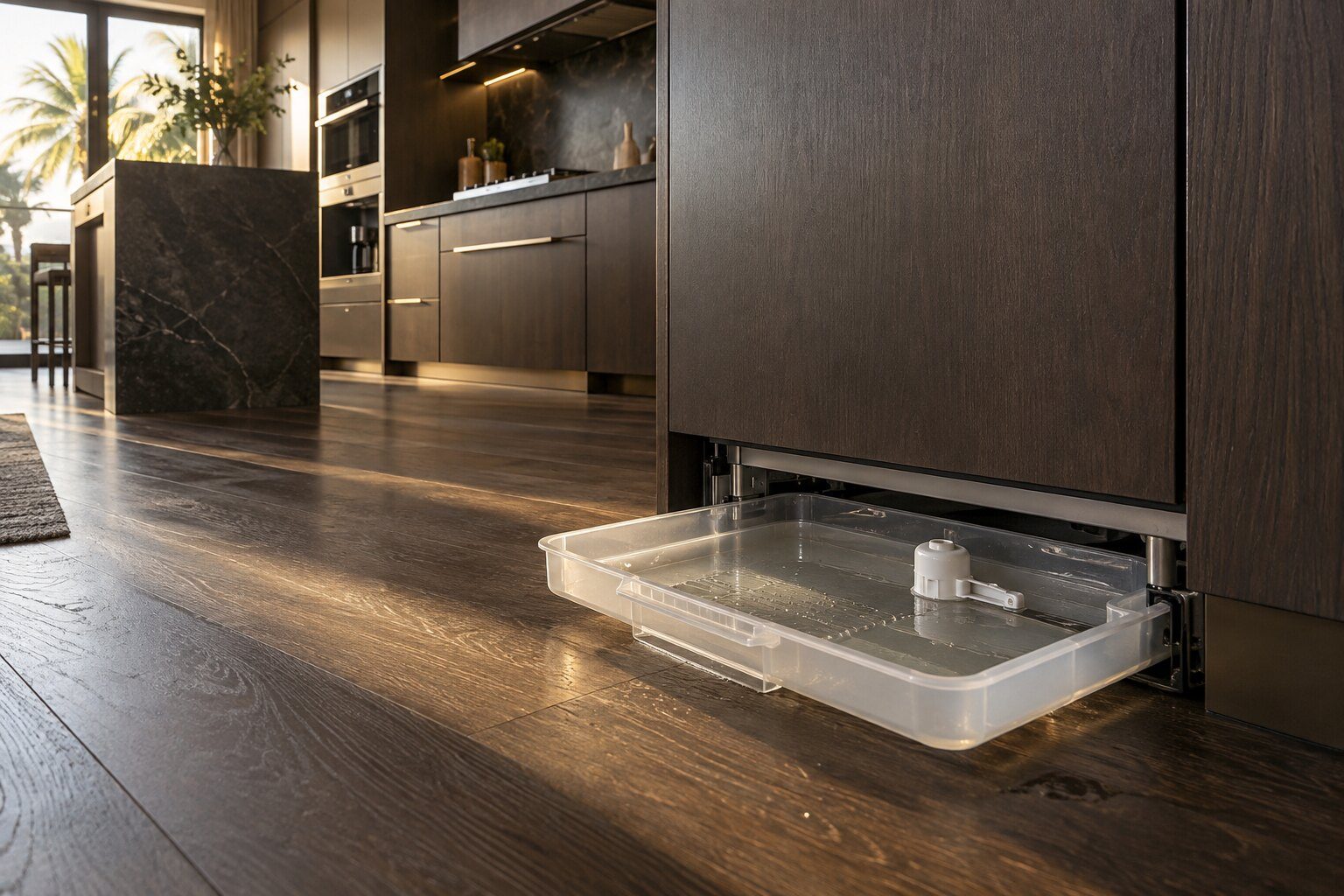
There is a tray under the machine and a float in it. When water collects where it should not, the float rises, the control sees it, and the dishwasher stops mid-cycle and reports.
On a freestanding dishwasher that saves a mop. Under a panel-ready door in a fitted kitchen it saves the cabinet base, the substrate, the flooring and — in a building — sometimes somebody else's ceiling.
Why resetting is the wrong instinct
It is a completely natural one. The machine is inconvenient, the code looks like an error, and clearing it is one button.
But a cycle is twenty liters or more, and if it is leaking, all of it goes into the same place the first lot went. The difference between a small repair and a floor is frequently a single extra cycle run to "see if it does it again".
The five sources, and how they are told apart
The door gasket, the detergent dispenser, a hose fitting, the sump seal, or a machine overfilling. Which one it is shows in where the water appears and when in the cycle — fill, wash or drain — and a leak confined to one phase names its own source before anything is dismantled.
On a panel-ready door the gasket is likelier than on a freestanding machine, because the door carries the weight of a cabinet front and the hinges settle under it.
The two code generations
LC on the current machines. F-6 on the EDW and IDW dishwashers from before 2016, where it is described as the controller or floor-guard problem.
Same behavior, two entirely different code families, because this make changed hands in September 2016 — and if you search LC against an older machine you will find nothing at all.
What we check first when we arrive
Whether there is still water present, and where. Then the float and its switch, because a stuck float produces this code with a perfectly dry machine and that is the cheapest possible outcome. Only when the leak sources have been excluded does the sensing become the answer.
What we check, in order
Whether water is still present, and where. Then the float and its switch, because a stuck float reports a leak on a completely dry machine and that is the best possible outcome. Then the five ordinary sources, in the order their evidence appears: the door gasket, the dispenser, the hose fittings, the sump seal, and the fill behavior itself.
The base tray comes out and gets dried either way. A tray left wet re-triggers the same code days later and sends everybody back to the beginning, which is a wasted visit on a problem that was already fixed.
If it turns out to be a repair
What this leads to, and what it costs
Every job on this site is priced the same way: an on-site diagnostic first, the figure agreed in writing before anybody starts.
-
Dishwasher leak repair
A panel-ready dishwasher leaks into cabinetry rather than onto a floor, which is why a small problem here is worth treating quickly. The sources are few — the door gasket, the detergent dispenser, a hose fitting, the sump seal, or a machine that is overfilling — and they are told apart by where the water appears and when in the cycle. Machines with a leak-detection system will often stop themselves and report it, and that is the appliance protecting the kitchen rather than a failure to be reset away.
- Behind a cabinet panel the water goes into joinery, not onto the floor
- Where and when in the cycle tells us which of five sources it is
- A machine that stops itself and reports a leak is working correctly
-
Dishwasher error code LC
Dacor dishwasher error code LC: The current platform's equivalent of the older F-6, and it is treated with the same respect. Which machines can raise it, what the maker publishes about it, and what to do next.
What this one means -
Dishwasher error code F-6
Dacor dishwasher error code F-6: The machine believes water is where it should not be and has stopped itself. Which machines can raise it, what the maker publishes about it, and what to do next.
What this one means
Questions people ask about this
There is no water on the floor. Is it a false alarm?
Not necessarily, and that is the point of the system. Under a fitted dishwasher the water reaches the cabinet base and the substrate long before it appears at the front, which is why the machine watches for it rather than waiting for you to notice.
Can I keep using it if I am careful?
No. A dishwasher that has detected a leak and been reset will run a full cycle's worth of water through whatever is leaking, and the consequential damage in a fitted kitchen is routinely worse than the problem causing it.
What if the float has just stuck?
That is one of the possible findings and it is the good one. It is established by looking, not by resetting — the base tray, the float, its switch and the five ordinary leak sources are checked as one job.
Troubleshooting
More guides like this one
-
Two Ice Makers, One Water Problem: Reading a Dacor Freezer Column
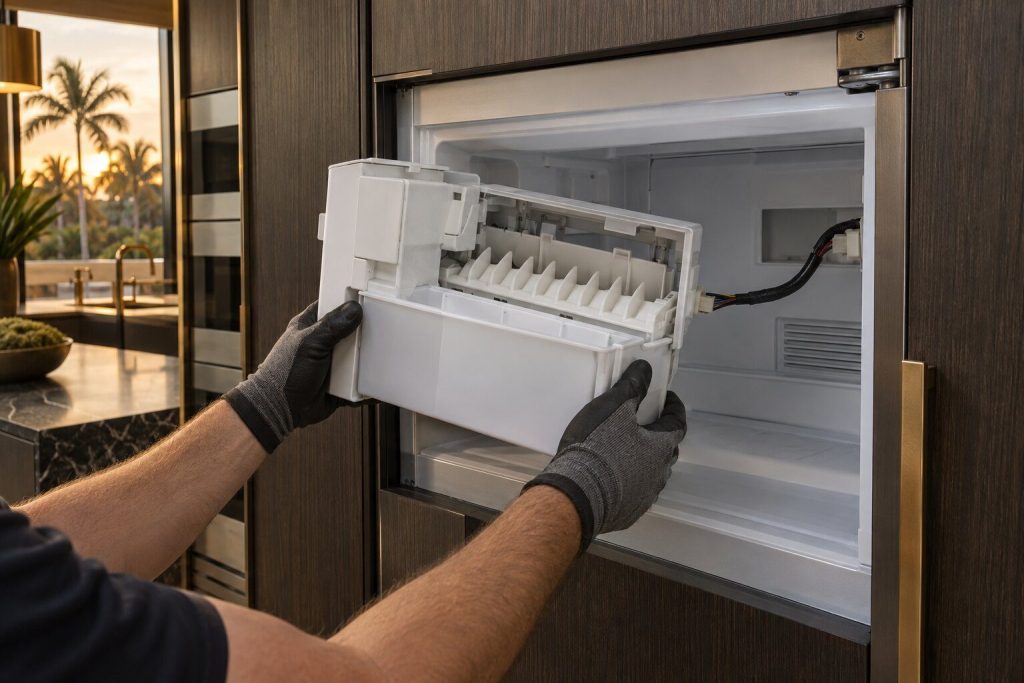
The narrow freezer column carries two ice makers, and that second module is the most useful diagnostic tool in the kitchen. Both stopped is a water problem. One stopped is that module.
Read more -
The Simmer That Went Away After You Cleaned the Rangetop
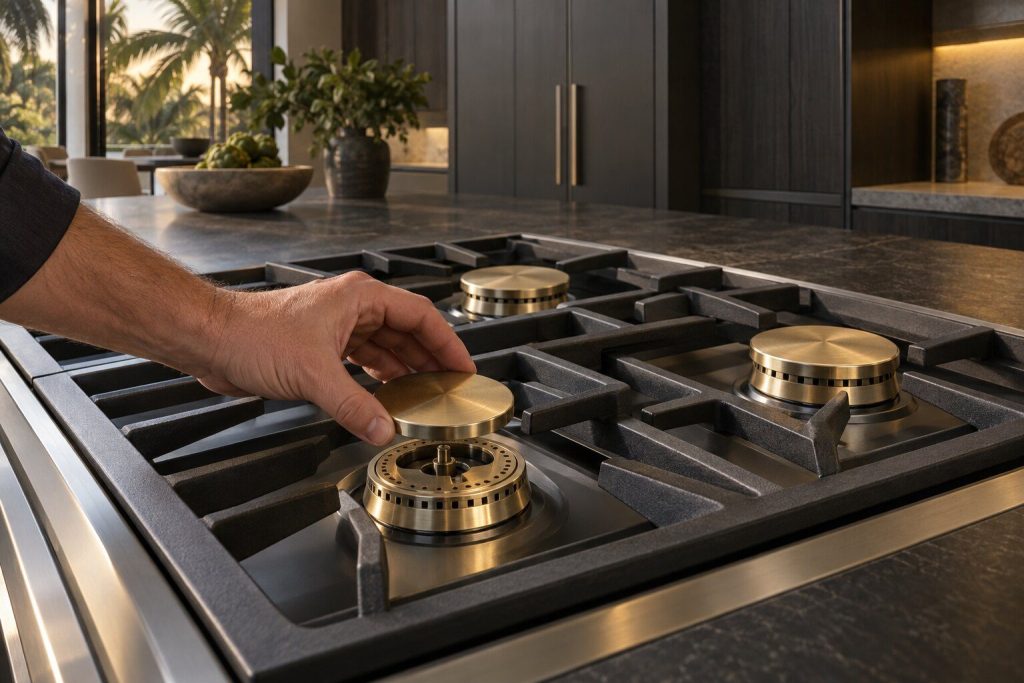
The sear is perfect and the low end has gone. On a sealed brass burner that is nearly always ports, a cap seated wrong, or a simmer valve that has drifted — and it very often dates from the week the hob was scrubbed.
Read more -
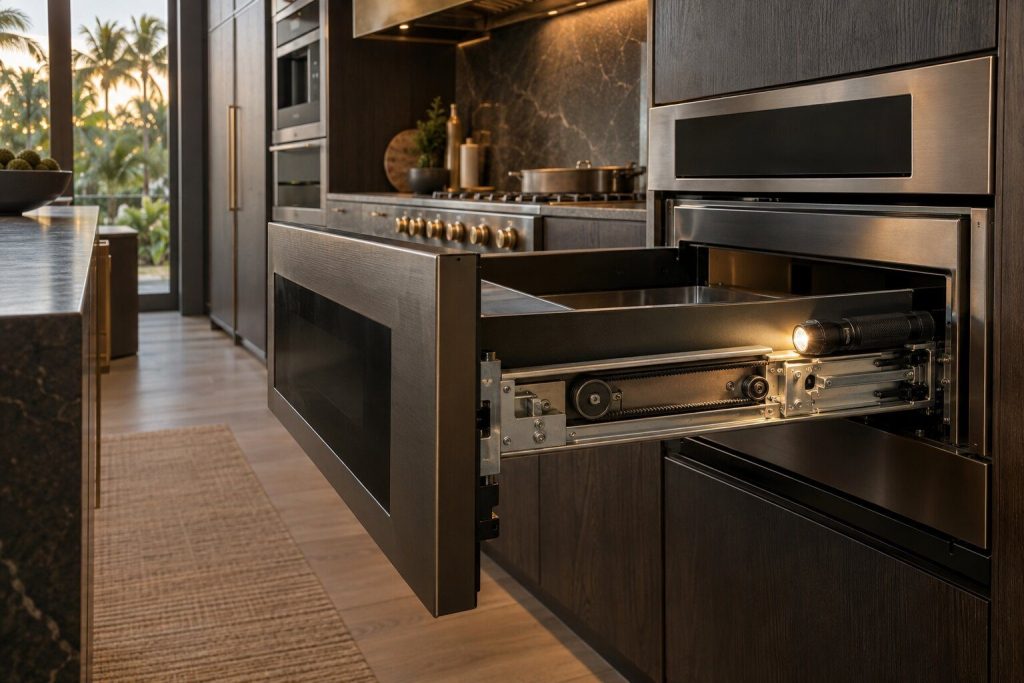
A Dacor Microwave Drawer That Will Not Open Is Not a Dead Oven
The mechanism fails far more often than the oven does, and while the drawer is not closed the oven refuses to heat — which reads as a dead appliance and is the machine being careful.
Read more
Tell us the model number and what it is doing.
This article is based on:
- Official manufacturer documentation
- Internal repair procedures
- Technician repair history
- Company quality standards