
Broward · South Florida
Dacor repair in Rio Vista
Older waterfront homes close to downtown, with kitchens of several vintages. We see original installations and recent replacements on the same street.
Rio Vista is a neighborhood of Fort Lauderdale, in Broward. We cover it on the same terms as the rest of the county: an on-site diagnostic first, the price agreed in writing, and the exact figure confirmed once we have seen the unit.
By unit
What we repair in Rio Vista, by Dacor unit
Start with whichever matches yours. How an appliance is installed shapes the visit as much as the repair does, which is why we ask about it when you book.
-
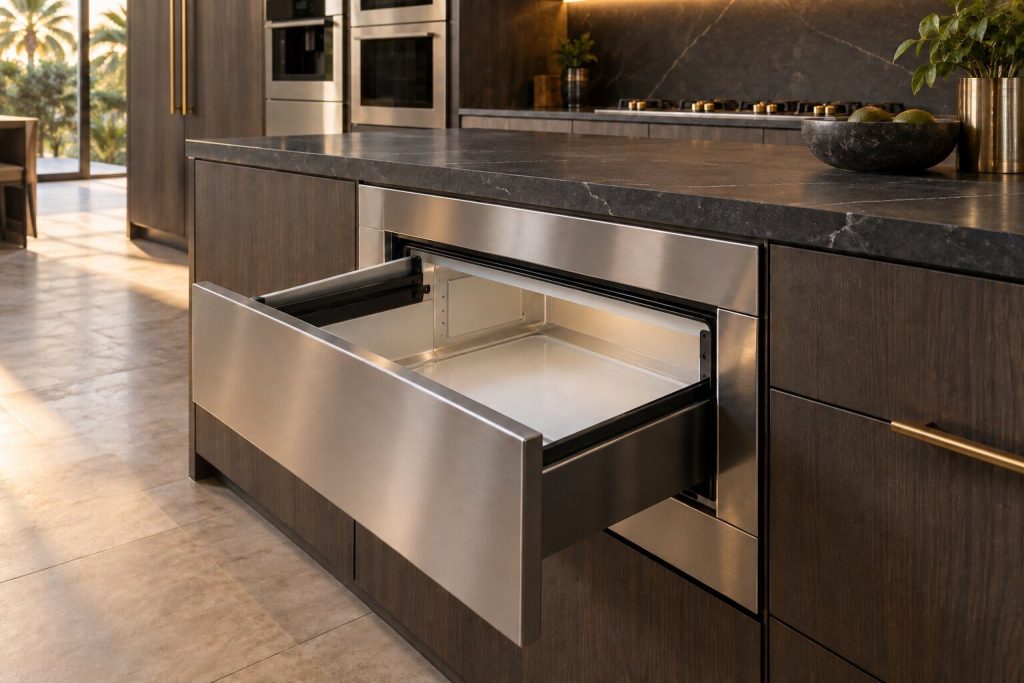
Drawer, over-range convection and countertop Dacor microwave repair in Rio Vista
Three quite different appliances share the word here. The drawer microwave sits below the worktop and opens downward — about 1.2 cubic feet and 950 watts, with sensor cooking. The over-range unit is a combination machine: a convection microwave and a ventilation hood in one 30-inch body, which means a problem in it can present as a cooking problem or a venting one. And there is a countertop machine, the one appliance in this catalog that can simply be replaced rather than repaired. Which of the three is in the kitchen decides whether this is a joinery job, a hood job, or neither.
- Drawer microwave: 1.2 cubic feet, 950 watts, sensor cooking, opens downward
- Over-range unit combines convection microwave and hood in one 30-inch body
- The countertop machine is genuinely replaceable — we will say so when it is
-
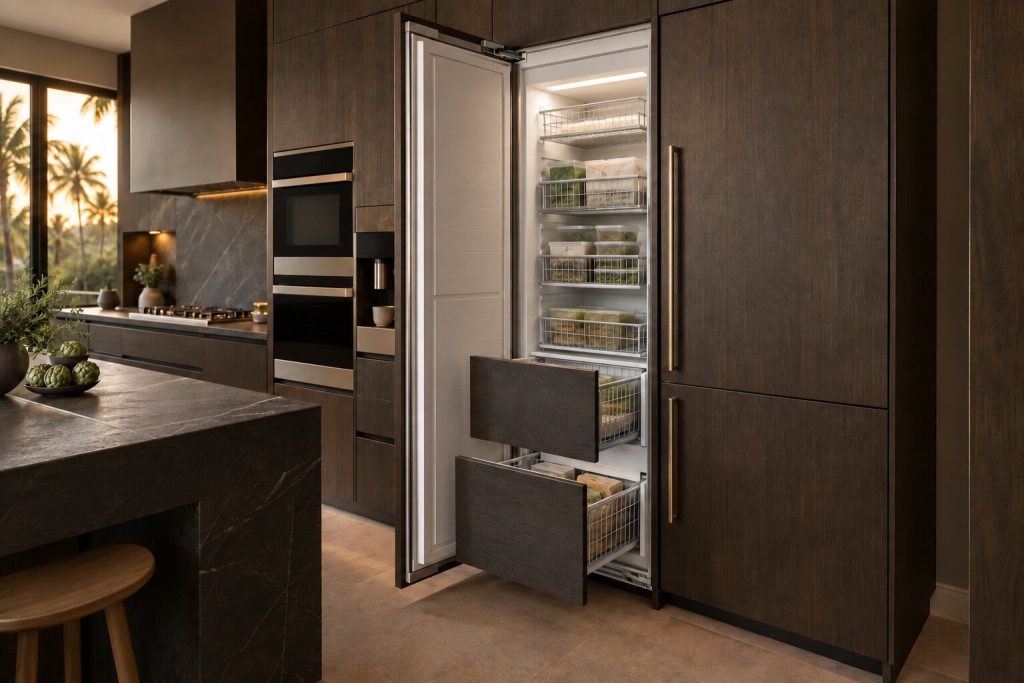
Column freezers · 18, 24, 30 and 36 inches Dacor freezer repair in Rio Vista
There is no chest freezer here, and no upright one standing in a garage. Every freezer this make builds is a column — 18, 24, 30 and 36 inches wide, panel-ready, designed to be installed beside a refrigerator column of matching height so the two read as cabinetry. The narrow one holds about nine and a half cubic feet and carries two ice makers of its own. That shape is the reason most calls about it are really calls about installation: a column has a defined air path through its base or top, and a blocked one imitates a failing sealed system exactly.
- Column-only: 18, 24, 30 and 36 inches, panel-ready, no freestanding cabinet in the line
- The 18-inch column carries dual ice makers and two freezer drawers in 9.4 cubic feet
- Power Freeze is a mode, not a problem — it will run the cabinet hard and sound wrong
-
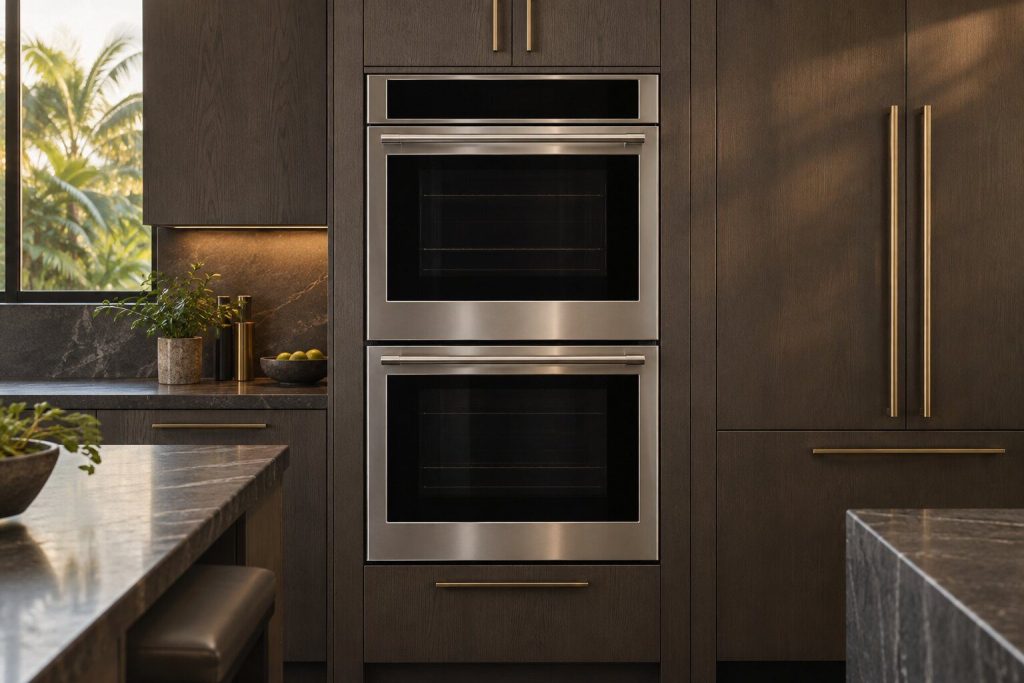
30-inch single and double · steam and non-steam Dacor wall oven repair in Rio Vista
Thirty inches, single or double, and the meaningful split is whether the cavity makes steam. The current ovens run a four-part convection arrangement, connect to the house network, and on the steam models add a water system that has to be filled, drained and descaled like any other. The style names — Contemporary, Transitional — change the hardware and the finish rather than the mechanism. Older kitchens hold the classic ERC ovens, and those report F0 through F8 from a board Dacor designed itself: a different oven, a different table, and a repair that begins with a different question.
- 30-inch single and double, with and without steam
- Four-part convection and a network connection on the current generation
- Classic ERC ovens report F0–F8 — and F1, F2 and F3 mean something else on a range
-
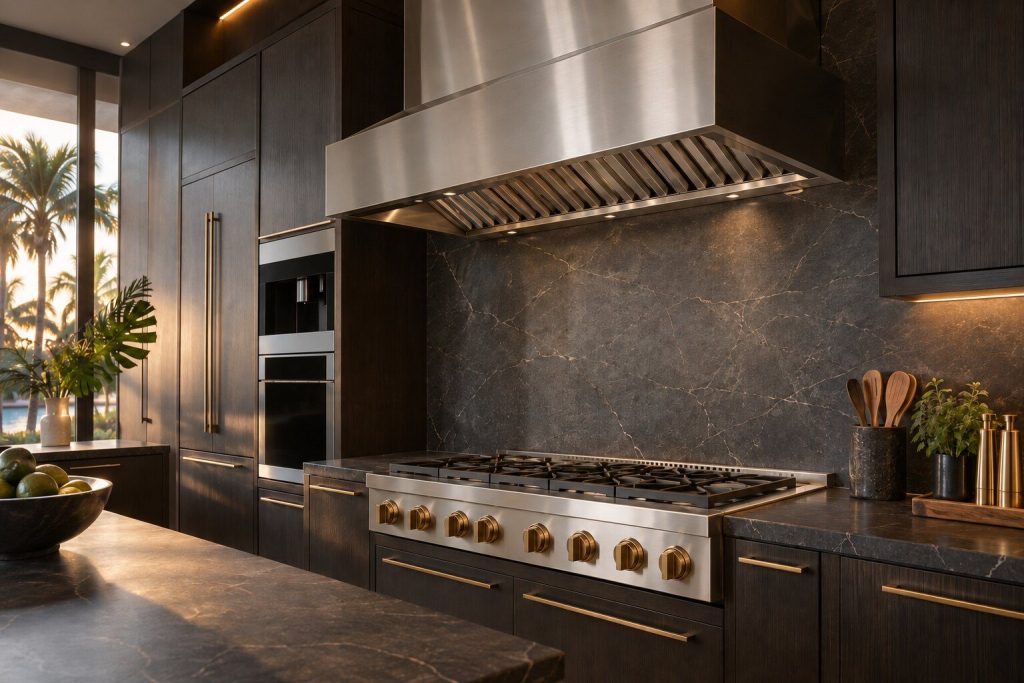
Pro-canopy at 36 and 48 · chimney and liner inserts Dacor range hood repair in Rio Vista
Three shapes, and which one is over the range decides everything about the repair. The pro canopies are 36 and 48 inches wide and about eighteen deep in the body, glass touch controls and LED light. The chimney hood is a 30-inch wall unit that extends up to the ceiling. The liners are inserts — five and a half inches tall — built to be hidden inside a joiner's custom hood, which means the appliance we are called to see is behind millwork nobody wants disturbed. Most hood calls are about the light, the fan speed control or the noise, and all three are reachable without touching the surround.
- Pro-canopy wall hoods at 36 and 48 inches; a 30-inch chimney hood
- Liner inserts at 30, 36 and 48 — about five and a half inches tall, built into custom millwork
- Light, speed control and noise are the three calls; none needs the joinery opened
-
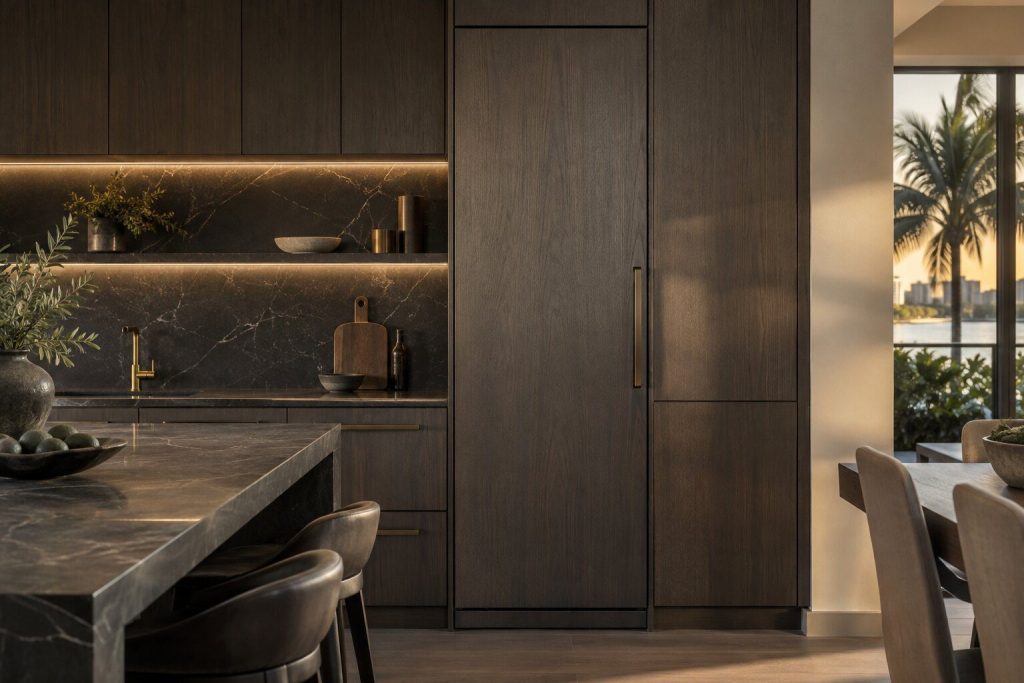
Panel-ready French door · 24, 30 and 36-inch columns Dacor refrigerator repair in Rio Vista
Two shapes, and the difference decides the visit. The French doors run 36, 42 and 48 inches wide and are built to take cabinet panels, so the box disappears into the joinery; the columns are 24, 30 and 36 inches of single-purpose refrigerator, meant to stand beside a freezer column of the same height and read as one run. Almost nothing here is freestanding in the ordinary sense. That changes the work before a part is named: the surround is tight, the panel and its handle come off first, and the air path the installer left is part of the diagnosis rather than a detail.
- French doors at 36, 42 and 48 inches; columns at 24, 30 and 36
- Panel-ready by default — the door furniture comes off before anything is opened
- PreciseCooling, the FreshZone drawer and iQ Remote View are the named parts people call about
-
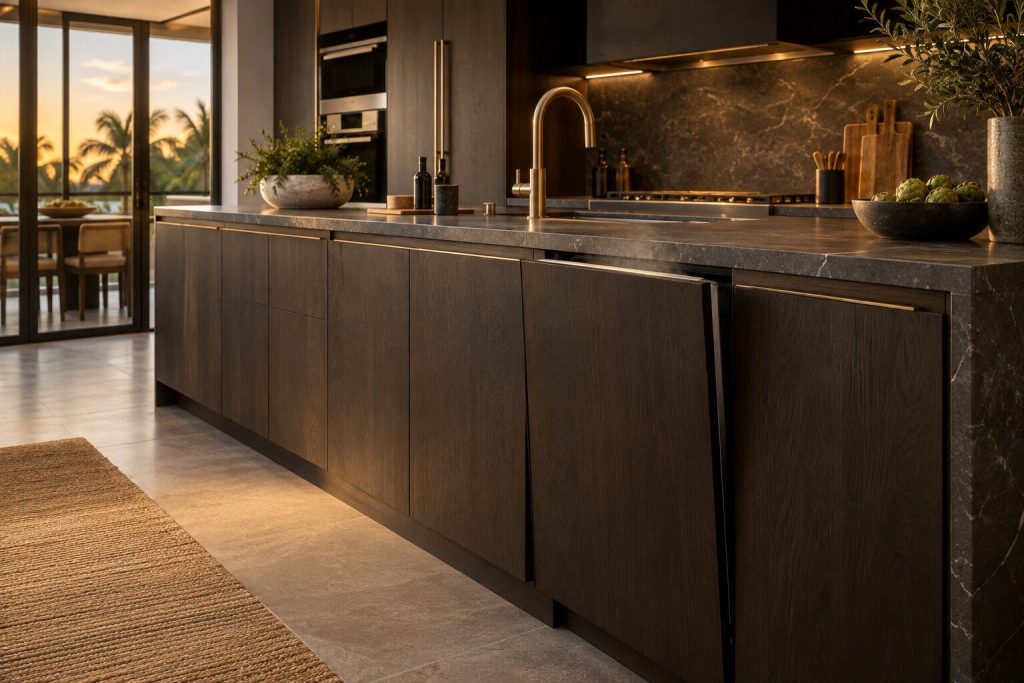
24-inch panel-ready · StormWash+ and AutoRelease Dacor dishwasher repair in Rio Vista
Twenty-four inches, panel-ready, and two generations of it in South Florida kitchens. The current machine carries StormWash+, a water softener built into the appliance itself and an AutoRelease door that pops open at the end of a cycle to dry; the generation before it is the WaterWall platform with a third rack, quiet enough to be rated at 44 decibels. Behind both sits the problem language that changed in 2016: the older EDW and IDW machines report F-1 through F-9, the current ones report letter codes ending in C. Knowing which of those two a kitchen has is most of a diagnosis.
- Current platform: StormWash+, built-in water softener, AutoRelease drying door
- Previous Samsung-era platform: WaterWall, third rack, 44 dBA
- Legacy EDW and IDW machines speak F-1–F-9 — a different language entirely
By job
The repairs we are called out for in Rio Vista
Starting figures for this equipment in South Florida. What moves them is the model, the access and the part — the exact cost is confirmed after the on-site diagnostic.
-
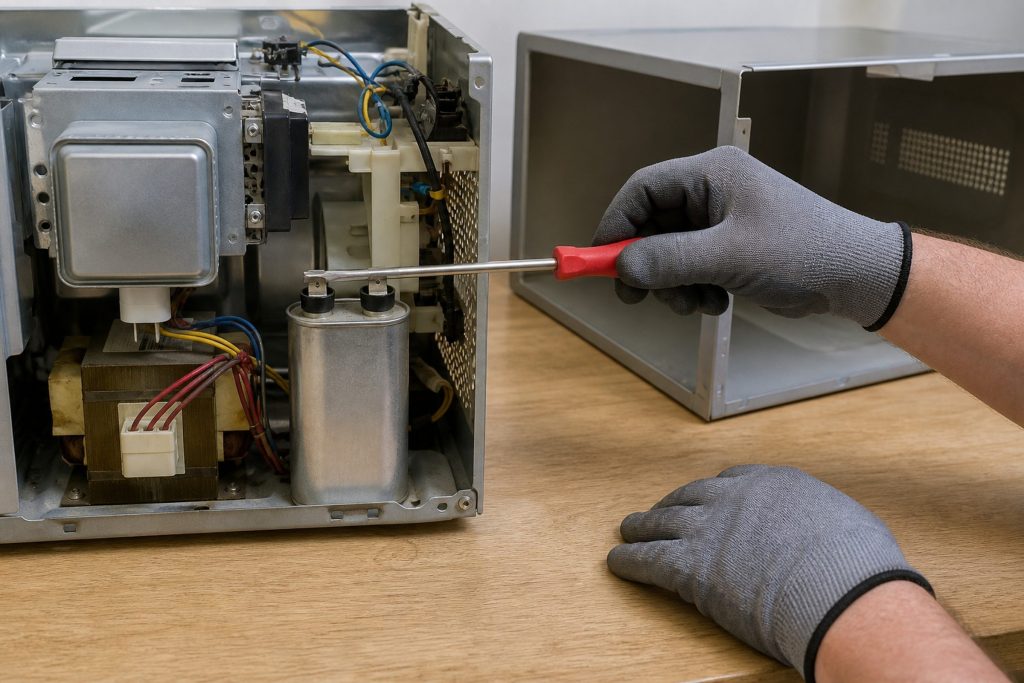
from $195 Built-in microwave repair
A built-in microwave is worth repairing where a countertop one is not: it is fitted, matched to the kitchen and expensive to replace, and the usual problems are ordinary. Doors and interlocks, control panels, turntable drives and cooling fans account for most calls. The one symptom we ask people to stop using the appliance for is a machine that runs, lights and turns while producing no heat — that is the high-voltage side, and it is a routine repair for somebody equipped for it and a genuinely dangerous one for anybody else.
- Fitted and matched — the economics are different from a countertop machine
- Doors, interlocks, panels, turntable drives and fans are most of the work
- Runs but does not heat: stop using it and call
-
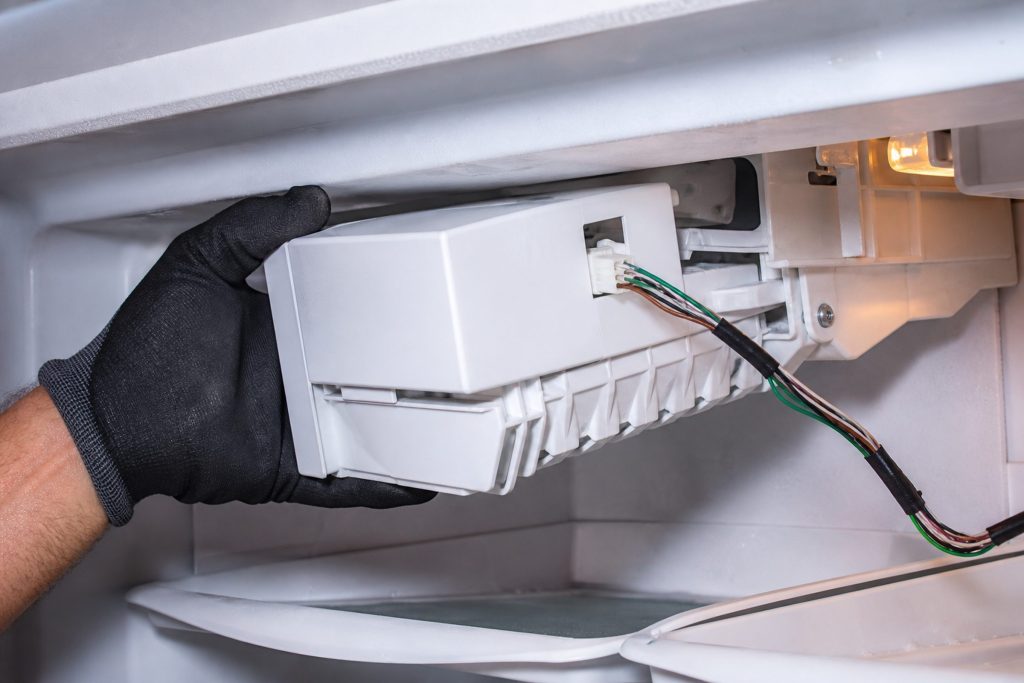
from $165 Ice maker repair
The ice maker is a module inside a cabinet rather than an appliance of its own on this badge — there is no standalone ice machine in the line. On the freezer columns there are two of them, which is genuinely useful for diagnosis: both stopped points upstream at the water supply, the inlet valve or the fill tube, while one stopped and one working points squarely at the module itself. Hollow or slow ice is a third case and usually a fill or a temperature problem rather than a mechanism that has failed.
- Two modules on the freezer columns — which one stopped is half the diagnosis
- Both stopped is a water problem; one stopped is a module problem
- Hollow or slow cubes are usually fill volume, not a broken mechanism
-
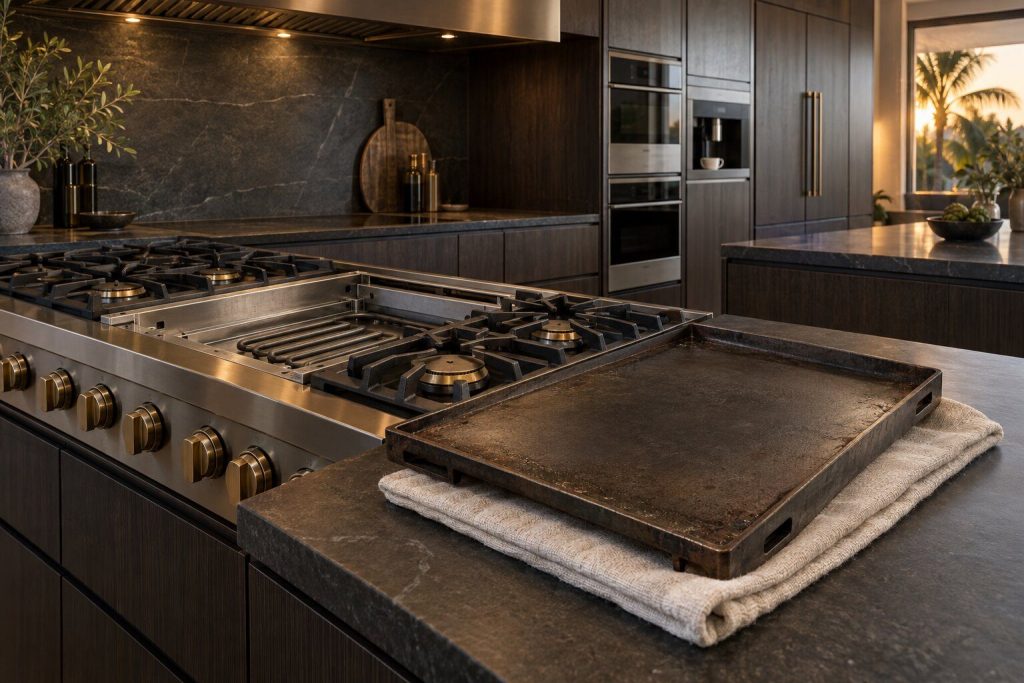
from $159 Integrated griddle service
The griddle built into the largest range is its own heated surface with its own control, which means it can be wrong while every burner beside it is right. The two failure patterns are quite different and worth telling apart before a visit: a griddle that never reaches temperature at all points at the element or its control, while one that gets there and then drifts away points at sensing or at a thermal cut-out doing its job. Surface condition matters too — a plate that has been cleaned with the wrong thing cooks unevenly and reads as a problem.
- Its own element and control — it fails independently of the burners
- Never heats and drifts after heating are two different repairs
- A mistreated plate surface cooks unevenly and imitates a problem
-
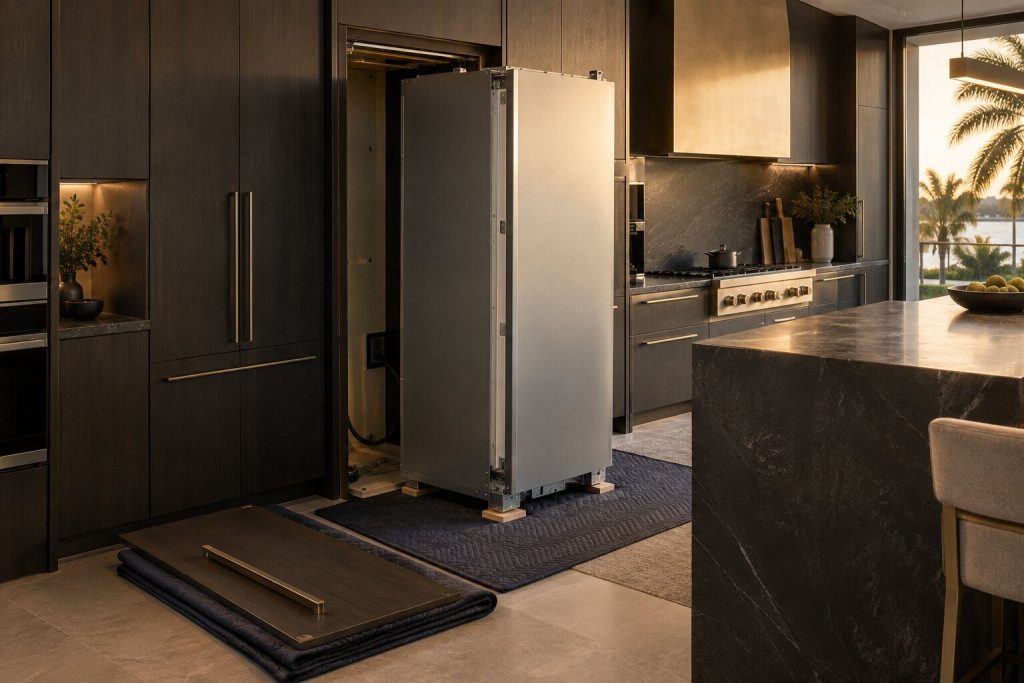
from $185 Built-in column access
The service that exists because of the shape of this line. A refrigeration column is captured by the cabinetry around it, held by trim, carrying a cabinet panel and a handle that belong to the kitchen rather than the appliance. Bringing it far enough forward to be worked on — and putting the joinery back exactly as it was — is real work with a real risk attached, and pretending otherwise is how a repair leaves a scratch down a walnut run. We price it as its own step so that nobody is surprised by it halfway through a visit.
- Panel, handle and trim removed and recorded before anything is moved
- The joinery is protected first — the risk here is the cabinetry, not the appliance
- Priced as its own step so it is never a surprise mid-visit
-
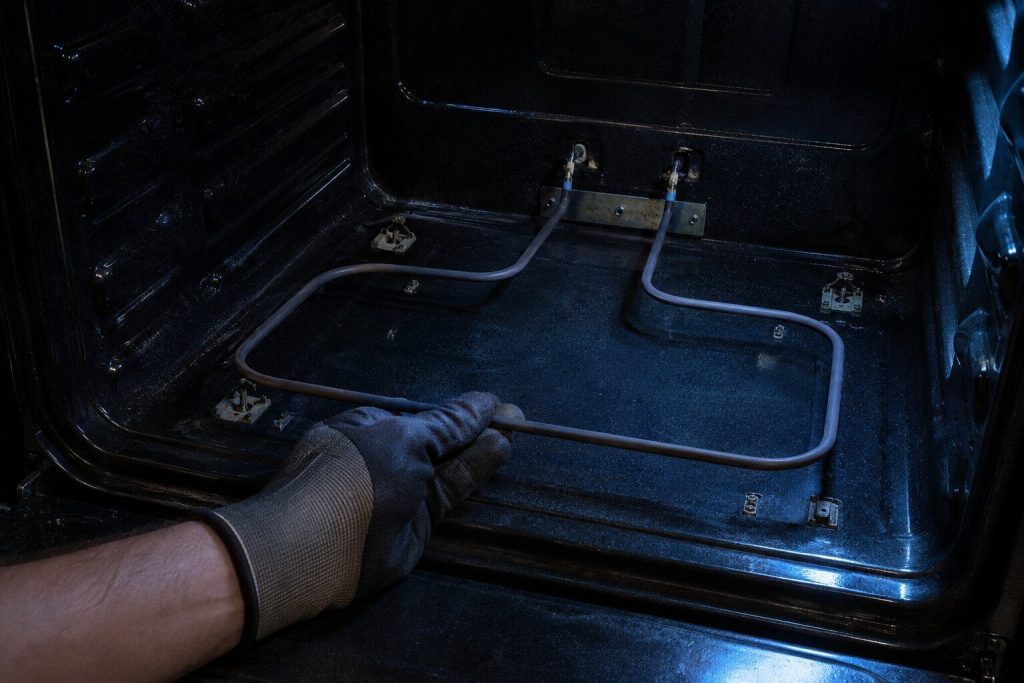
from $175 Oven not heating
An oven that will not reach temperature, or reaches it and cannot hold it, comes down to a short list: an element, a sensor reading wrong, a relay that no longer closes, or a control that has stopped asking. Which one it is takes measurement rather than opinion. On this badge the extra question is the era: a Classic ERC oven and a current one report entirely different codes for related problems, and F1, F2 and F3 in particular mean different things depending on whether the appliance is an older oven or an older range.
- Element, sensor, relay, control — decided by measurement, not by symptom
- F1, F2 and F3 mean different things on an old oven and an old range
- A double oven with one dead cavity keeps the repair on one side
-
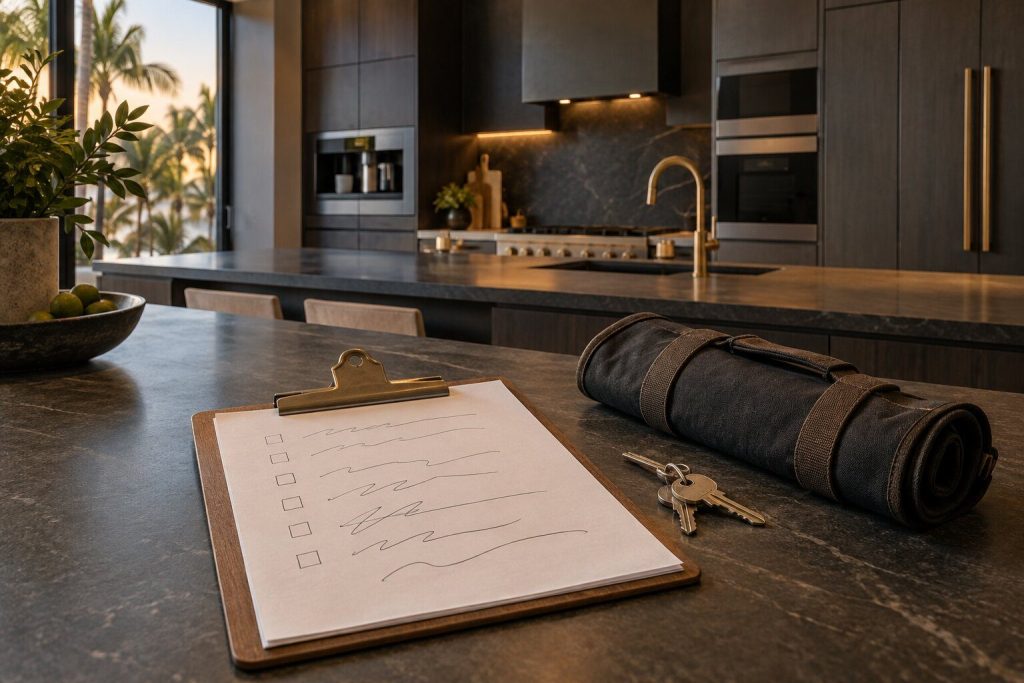
from $175 Rental turnaround service
A booked-out property with a designed kitchen has a narrow window between guests, and a Dacor in it needs somebody who will not spend the first hour working out what it is. This is one visit across the whole kitchen: every appliance run, the problems triaged by what stops a let and what merely annoys, and a written list of what was done and what is coming. Where a part is needed we say whether it arrives before the next arrival, because on a turnaround that is the only question that matters.
- One visit across the kitchen, inside the changeover window
- Triaged by what stops a let, not by what is most interesting
- A written list, and honest dates for anything on order
Nearby
Where else we work near Rio Vista
Every place below has its own page, with what the equipment and the access are like there.
Elsewhere in Broward
In more detail
Dacor repair in Rio Vista, in more detail
What Dacor equipment is like in Rio Vista
Older waterfront homes close to downtown, with kitchens of several vintages. We see original installations and recent replacements on the same street.
Rio Vista is part of Fort Lauderdale, in Broward County, and we treat it as its own call rather than a line on a map: the buildings, the access and the age of the installations differ enough from the rest of the city to change how a visit is planned. What does not change is the work — Dacor coffee-machine, cooktop, dishwasher, diagnosed on site before anything is priced.
Salt, heat and storms — what they do to a kitchen full of appliances
Close to the water everything ages from the outside in. Salt corrodes the condenser coils and fan motors on the cold side and reaches burner caps, grates and igniters on the hot side, and both fail in the same way: a part that still works, slowly, until the day it does not. In Rio Vista that turns a cleaning interval into a seasonal job rather than an annual one, on both halves of the kitchen.
What that means for the appliances in Rio Vista
- Cooktops and rangetops — Burner caps, grates and igniter electrodes take the salt here. An igniter sparking through corrosion is an igniter that clicks and does not light, and it happens on a shorter schedule near the water.
- Ranges — Stainless that would stay clean inland pits within sight of the water, and the parts that suffer are the ones nobody looks at — burner caps, grate feet, the fixings behind a control panel.
- Dishwashers — Hard water is the story inland and hard water plus salt is the story here, so a machine that publishes a scale code will publish it sooner in a house on the water than in one ten miles west.
- Sparking inside the microwave
- One side cold, the other warm
- Freezer column running warm
- Range hood fan will not start
- Microwave drawer will not open
Which Dacor series we work on around Rio Vista
We publish the error codes for every Dacor series this site covers — Heritage, ER platform, Automatic Coffee System among them. Which one is in your kitchen changes the visit more than it changes the diagnosis: how the appliance was installed decides what has to come apart before anyone can reach it, and in Rio Vista that is a question about the room before it is a question about the appliance.
How a visit in Rio Vista is arranged
We ask for the model number from the plate inside the door and a line about what the appliance is doing. That decides which parts ride in the van, and it is the difference between one appointment and two.
- In a building: the service elevator window, the loading bay and the hours contractors are allowed to work
- Behind a gate: how visitors are cleared, arranged before the appointment rather than at it
- Whether the doors are paneled to match the cabinetry, which changes how they come off and go back
- The diagnosis first, then the scope and the price in writing, and your approval before anything is opened
What it costs, and what moves the figure
Prices in Rio Vista are the same as everywhere else we cover: a diagnostic from $95 that is credited toward the repair, and starting figures per job rather than one number for "a repair". What moves it is the model, how the appliance is built into the cabinetry, which part it needs and how quickly that part can be sourced — none of which can be judged over the phone. The repairs we carry out lists what each job involves and the figure it starts at, and the unit pages covers what tends to go wrong on each type.
The exact cost is confirmed after the on-site diagnostic and agreed with you before any work begins. We are an independent repair company — not affiliated with, authorized by, or endorsed by any manufacturer — and our warranty covers the labor we performed.
Before you book
Questions about a visit in Rio Vista
Do you cover Rio Vista?
Yes. Rio Vista is part of Fort Lauderdale, in Broward County, and it is inside the area we work every week. Give us the address when you book, and say how the Dacor is installed — what has to come apart to reach it matters as much as where it is.
How soon can you get to Rio Vista?
We will tell you the earliest slot we can genuinely keep rather than the earliest one that sounds good. Tell us the model number and what the unit is doing when you book: whether we can finish the same day depends on the part far more than on the drive.
Does it cost more because the job is in Rio Vista?
No. The diagnostic and the work are priced the same across Miami-Dade, Broward and Palm Beach. What moves the figure is the model, how the unit is built in and which part it needs — never the address. Where access takes longer, we say so before anything is agreed rather than after.
Does being this close to the water shorten the life of a unit?
It shortens the life of the condenser and the fan motors, which is not the same thing. Salt corrodes them years ahead of the schedule written for a dry climate, and a condenser that cannot shed heat makes the compressor work longer for the same result. Cleaning here is seasonal rather than annual.
Booking a visit in Rio Vista
Tell us the model number and what the unit is doing. We will bring the parts that problem usually needs, and you will have a firm price before we start.
This article is based on:
- Official manufacturer documentation
- Internal repair procedures
- Technician repair history
- Company quality standards