Cost Expectations
Why Built-In Access Is Quoted Separately on a Dacor
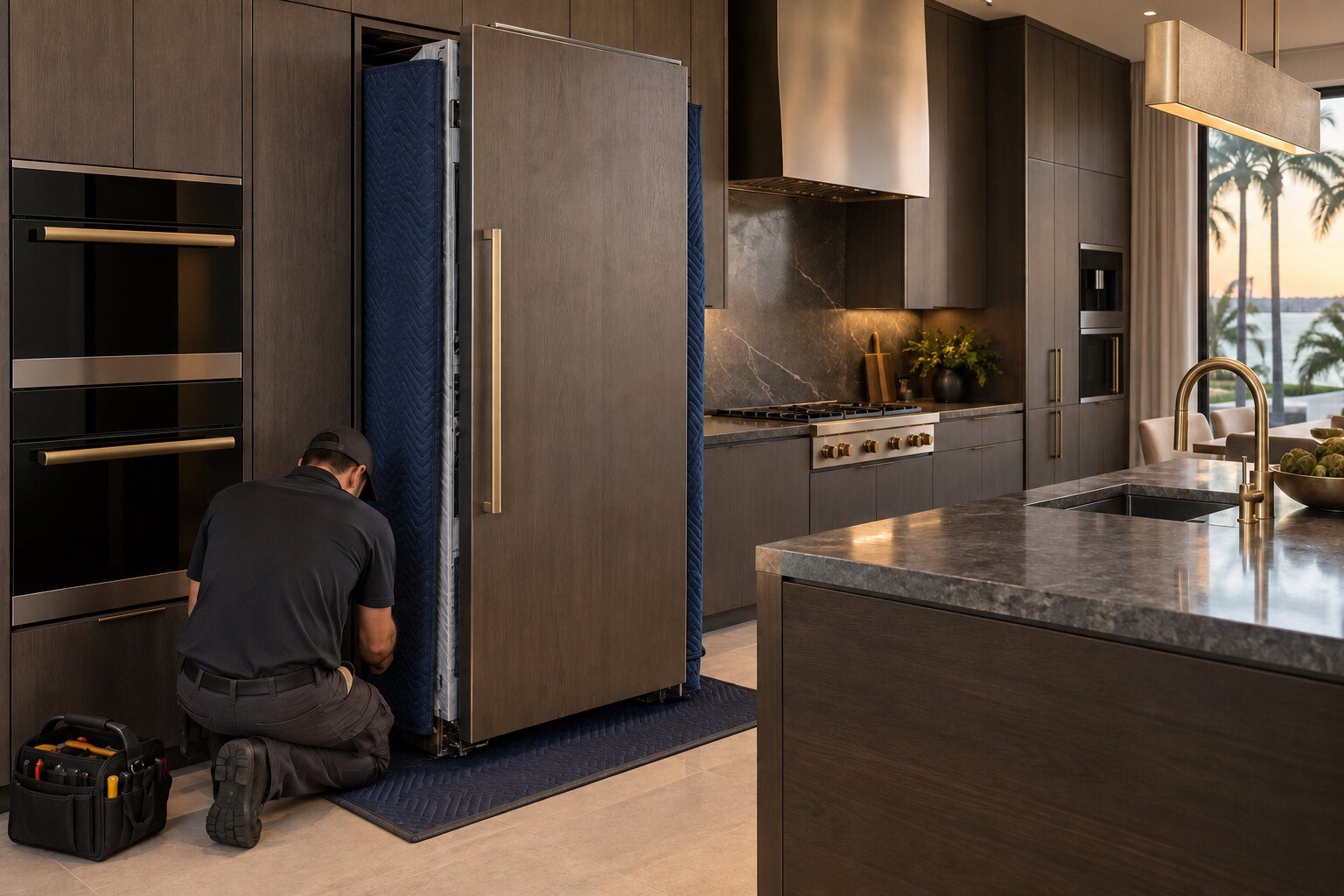
On a Dacor the appliance is usually captured by the kitchen around it: a refrigeration column held by trim and carrying a cabinet panel with a handle chosen by a designer, a wall oven in a tall unit, a hood liner inside millwork somebody built to match. Bringing one far enough forward to be worked on, and returning the joinery exactly as it was, is real work with a real consequence if it goes wrong — a scratch down a run of walnut costs more than most repairs. That is why access is quoted as its own step rather than folded into a component price. It is also why it is frequently avoided: sensors, dampers, fans, ice modules and door work are reachable from the front, so the access line appears only when the problem genuinely sits behind the cabinet.
The full guide
On most makes the appliance is the thing at risk during a repair. Here it is the kitchen.
Dacor built in refrigerator repair: what "captured" actually means
A panel-ready column is not standing in a gap. It is screwed to the cabinetry beside it, trimmed at the top, carrying a cabinet front and a handle that belong to the kitchen rather than to the appliance, and frequently scribed to a floor that is no longer flat.
Everything about that is deliberate — it is why the kitchen looks the way it does — and all of it has to come apart in the right order and go back in the same one.
Why it is a separate line
Because it is separate work, and because a figure that hides it is a figure that will change halfway through the visit.
A customer who is told a fan costs one number and then discovers that reaching the fan costs another has been quoted badly. On this make the second number is frequently the larger one, and it is better on the page than in a conversation in somebody's kitchen.
What we do before anything moves
Photograph the fit — panel, handle, trim kit, shim positions, screw pattern. A column that goes back a millimeter out of line is visible across a whole run of cabinetry, and a photograph is the only reliable record of where it started.
Then protection: floors and adjacent fronts covered. Most of the damage that happens on visits like this happens to the kitchen rather than to the machine.
When you will not see this line at all
Most of the time. The problems that fill our days on this refrigeration — a fan, a damper, a defrost heater, a door seal, an ice module, a blocked drain — are reachable with the panel off and the cabinet where it stands.
The access step appears when the problem is behind the cabinet: a sealed system, a compressor, a harness that runs down the back. That is a minority of visits, and it is quoted when it is one.
What it buys at the end
A column that goes back leveled, re-shimmed, with the panel and handle on their original fixings and the door sealing square. The test is that the run looks untouched — and on equipment specified into a kitchen, that is most of what the owner cares about.
What it looks like on the invoice
Two lines rather than one: the repair, and the access. The second appears only where the appliance genuinely had to come forward, and it is agreed in writing before anything moves.
Owners occasionally ask us to fold it in so the paperwork is tidier. We do not, and the reason is that a single number hides which half of the work was which — and on a kitchen where the same column may need attention again in five years, knowing that the access was most of the last bill is information worth having.
If it turns out to be a repair
What this leads to, and what it costs
Every job on this site is priced the same way: an on-site diagnostic first, the figure agreed in writing before anybody starts.
-
from $185 Built-in column access
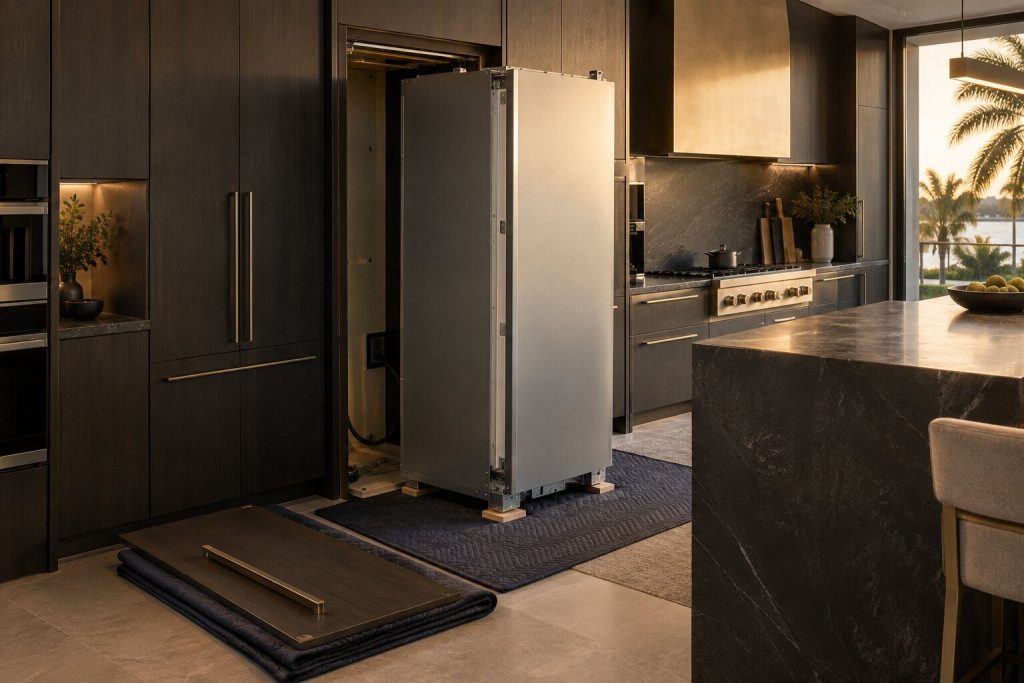
The service that exists because of the shape of this line. A refrigeration column is captured by the cabinetry around it, held by trim, carrying a cabinet panel and a handle that belong to the kitchen rather than the appliance. Bringing it far enough forward to be worked on — and putting the joinery back exactly as it was — is real work with a real risk attached, and pretending otherwise is how a repair leaves a scratch down a walnut run. We price it as its own step so that nobody is surprised by it halfway through a visit.
- Panel, handle and trim removed and recorded before anything is moved
- The joinery is protected first — the risk here is the cabinetry, not the appliance
- Priced as its own step so it is never a surprise mid-visit
-
from $225 Appliance installation
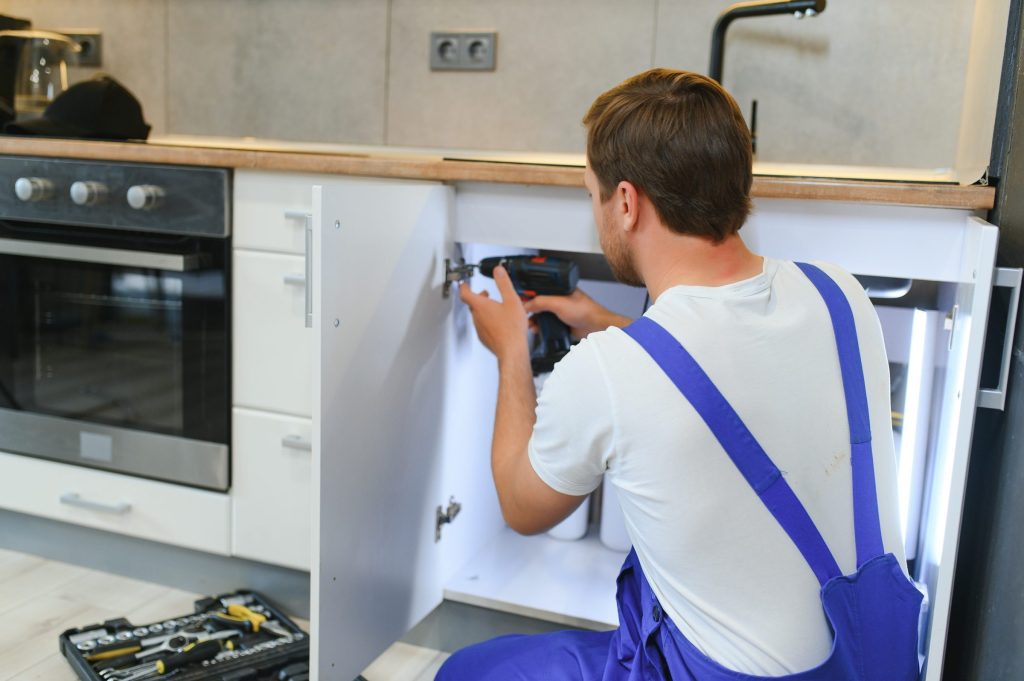
Fitting equipment that was designed to disappear into cabinetry, which is a joinery job as much as a connection. Panel-ready columns and French doors take cabinet fronts and their hardware; wall ovens sit in tall units cut to a size; hood liners hide inside millwork built by somebody else; a rangetop drops into a worktop that has to be right before the appliance arrives. We measure the opening before delivery rather than after, because a cabinet that is a quarter inch out is a carpentry problem discovered on the wrong day.
- The opening is measured before the appliance is delivered, not on the day
- Panels, trim kits and handles fitted so the doors sit square and stay square
- Air path, water feed and power checked as part of the fit, not as an extra

Questions people ask about this
Will my cabinetry be damaged?
It should not be, and the precautions are why it is priced as work rather than treated as incidental. Floors and adjacent fronts are covered before anything moves, the fit is photographed before the panel and trim come off, and the column goes back on the same fixings and shims.
Can the repair be done without moving the appliance?
Often, and we would rather it was. Sensors, dampers, fans, the ice module and door work are all reachable from the front on these cabinets. The access step is quoted only when the part genuinely sits behind them.
Who is responsible if a panel is damaged?
We are, and that is the honest reason this is a priced step rather than a free one. Work carrying that risk is done slowly, with protection down and a record of how the fit was before anybody touched it.
Cost Expectations
More guides like this one
-
What a Dacor Rangetop Service Restores That a Part Cannot
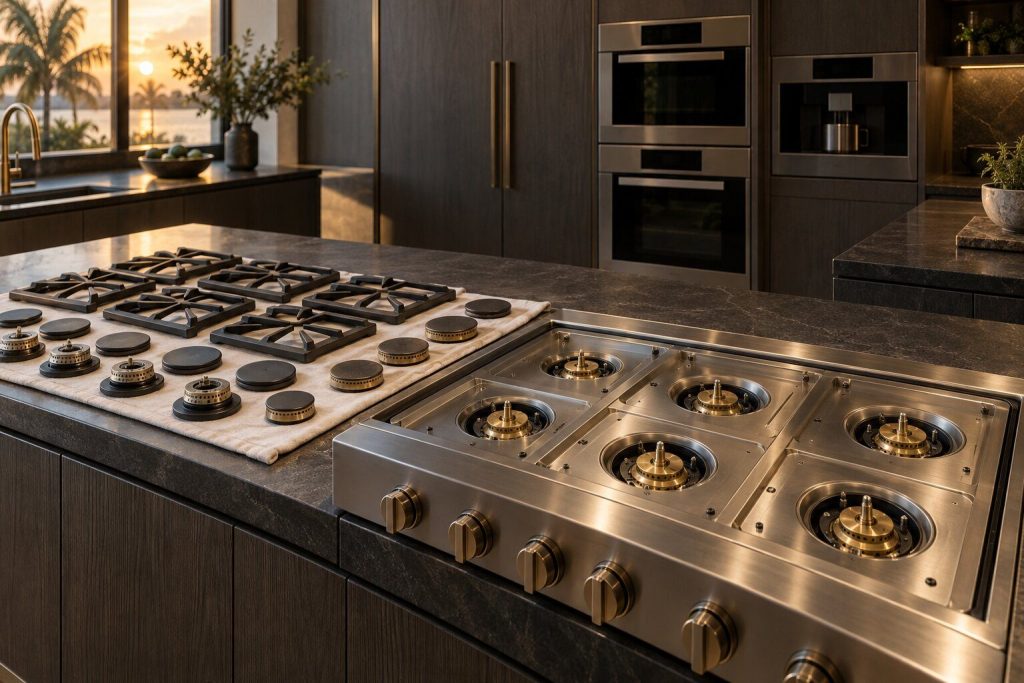
On a hob that has been cooked on nightly for years, stripping and setting every burner brings back more than any component would — and it is the visit that makes an eight-year-old rangetop behave like a new one.
Read more -

What a Dacor Diagnostic Buys That Other Makes Do Not Need
On most makes a diagnostic establishes a problem. On this one it has to establish a generation as well, because a correct diagnosis handed the wrong era buys the wrong part.
Read more -
Repair or Replace a Pre-2016 Dacor: the Honest Arithmetic
These are heavy, well-documented machines and the common failures are ordinary parts. What decides it is not age — it is whether the part still exists, and that question is answered before labor is booked.
Read more
Tell us the model number and what it is doing.
This article is based on:
- Official manufacturer documentation
- Internal repair procedures
- Technician repair history
- Company quality standards