Cost Expectations
What a Dacor Diagnostic Buys That Other Makes Do Not Need
A diagnostic visit on a Dacor is charged from $95 and credited toward the repair when you go ahead, and on this make it buys two answers rather than one. The first is the ordinary one: what has failed. The second is which generation of the appliance failed it, because Dacor changed hands in September 2016 and the machines built either side of that date run different control boards, report different codes and take different part numbers. A correct diagnosis handed the wrong generation buys the wrong board perfectly happily. The visit also establishes the access, which on this line is a real cost rather than a detail: a column in a trim kit carrying a cabinet panel has to be brought forward before it can be worked on. Where the honest answer is that the machine is not worth mending, or that a legacy part is no longer made, you have paid for that answer rather than for a part.
The full guide
Most service calls answer one question. On this badge the useful visit answers two.
Dacor service call cost: the first answer is the ordinary one
What has failed. A sensor out of range, a relay that has welded, a fan that has stopped, a valve passing a trickle. That is what any diagnostic on any make is for, and it is measurement rather than opinion: temperatures logged against setpoints, supply checked under load, the complaint reproduced rather than taken on trust.
The second answer is particular to Dacor
Which generation the appliance belongs to. Machines built before September 2016 run the maker's own control boards and report F-numbers; machines built after run the Samsung platform and report C-strings and letter pairs. The cabinet can look identical.
That matters because the part numbers do not translate. A supplier handed the wrong generation will sell you something that nearly fits, and the visit that follows is the second one you are paying for.
The third thing being measured is the access
Almost everything this make sells is fitted into something — a column in a trim kit, a wall oven in a tall unit, a hood liner inside somebody's millwork. Whether the appliance has to come forward, and how it is held, changes the hour before any part is named.
That is why access appears as its own line rather than buried inside a component price. It is real work with a real risk to the joinery, and burying it is how it becomes a surprise halfway through a visit.
What the fee is not
It is not a booking fee and it is not a call-out charge dressed up. It is charged for the work of finding out and credited in full when the repair follows.
And it is not conditional on our finding something to sell. Where the answer is that a machine is not worth mending, or that a legacy board no longer exists, that is the answer the fee bought — and we would rather give it at the diagnostic than after somebody has paid for labor on a part that was never coming.
Where the figure sits, and why
Between the luxury built-ins and the hand-built ranges. Three facts set it: almost the whole line is built in, so access is a measurable part of every visit; the parts channel after 2016 is a high-volume one, which holds component prices down; and the legacy era is genuinely a different machine, quoted rather than published.
Every figure on this site is a from, and the exact cost is agreed in writing before anything is opened.
What we ask you to have ready
The model and serial from the rating plate, photographed rather than copied by hand. Roughly when the kitchen was fitted, if the plate cannot be reached. What the display says, exactly, including any dash. And whether the appliance is one of a pair of columns, with the other one behaving.
Those four facts routinely take twenty minutes off a visit, and on this make the first two decide which parts list we are working from before anybody leaves the workshop.
If it turns out to be a repair
What this leads to, and what it costs
Every job on this site is priced the same way: an on-site diagnostic first, the figure agreed in writing before anybody starts.
-
from $95 Diagnostic visit
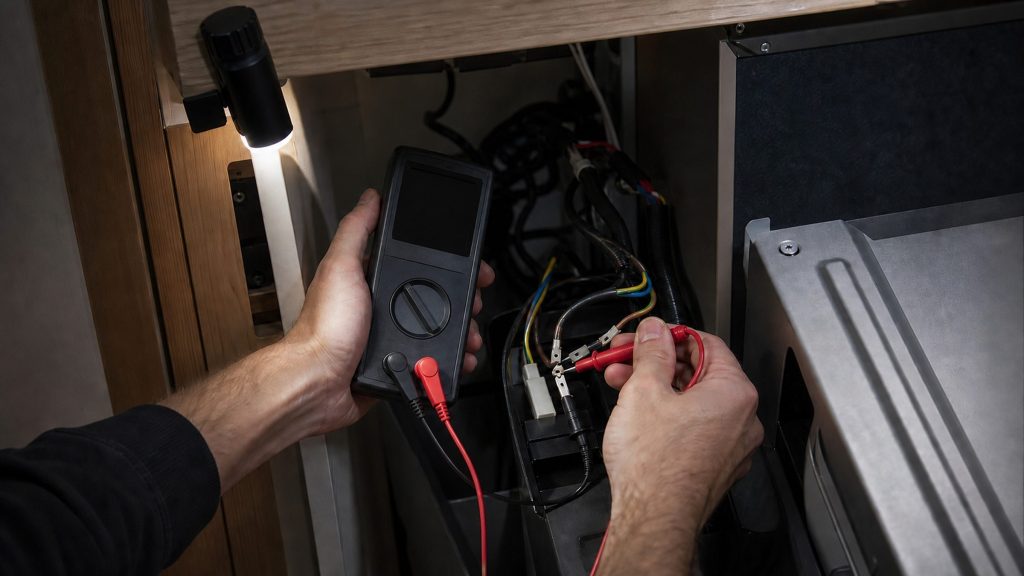
Finding out what has actually gone wrong, before any part is named or priced. On this badge two questions come before the problem itself: how old the kitchen is, and how the appliance is held. The age decides which problem language the machine speaks — the pre-2016 boards and their F-codes, or the current platform and its letter codes — and the two share nothing. How it is held decides how long it takes to reach. The charge is credited against the repair if you go ahead, and if our honest recommendation is that the machine is not worth mending, you still get that recommendation and the charge does not change.
- The era comes first — it decides the code table, the board and the part number
- A written figure ahead of the work, credited against the repair
- If mending it is the wrong call we say so, rather than selling a part
-
from $125 Legacy control diagnosis
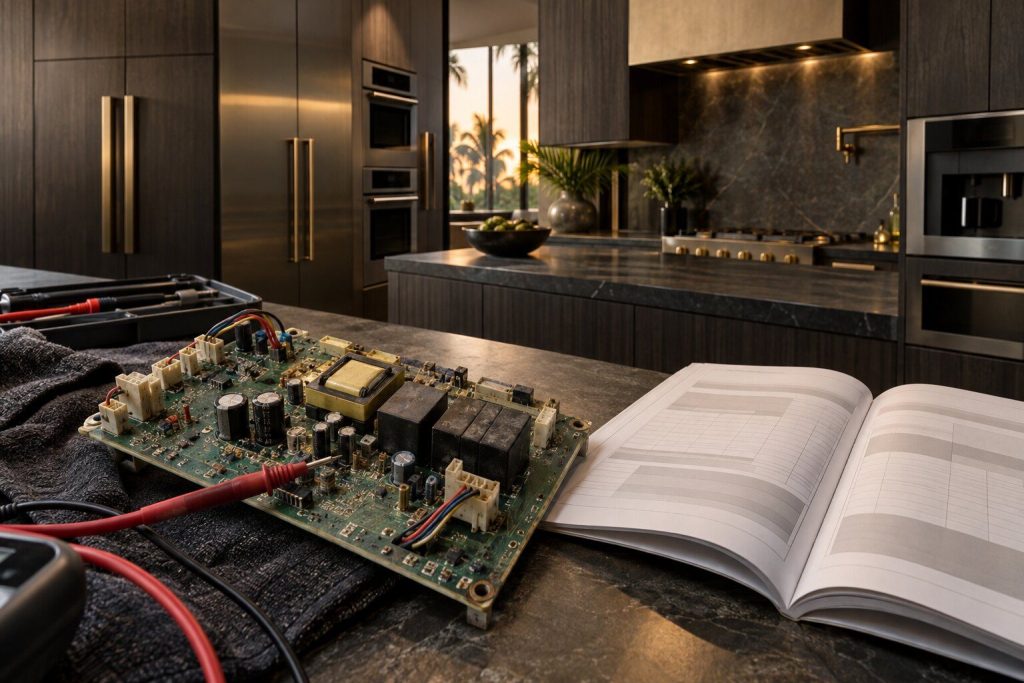
The service that exists because this badge changed hands in 2016. Appliances made before that run Dacor's own boards and report F-codes — F0 to F8 on a Classic ERC oven, F1 to F95 on an ER-series range, F-1 to F-9 on an EDW or IDW dishwasher — and none of those strings exist on the current platform. A technician who only knows the current machines will read them wrongly or not at all, which is why owners of these appliances are so often told their machine is unfixable. It usually is not. What it needs is the right table and an honest answer about parts.
- Pre-2016 codes share nothing with the current platform
- F1, F2 and F3 mean different things on a Classic ERC oven and an ER range
- The honest part of this service is the parts answer, given before the visit
Questions people ask about this
Why not quote over the telephone?
We will give you the starting figure for the job and tell you honestly which way we expect it to move. What we will not do is name a final price for an appliance nobody has seen. On equipment fitted into joinery, half the estimate is the installation — and on this make the other half depends on a date nobody has read off the plate yet.
Is the fee credited if I go ahead?
Yes, in full. It is a charge for the work of finding out, not a booking fee, and when the repair follows it comes off the bill.
What if you cannot get the part?
Then we say so at the diagnostic rather than after a visit that ends in an apology. On the legacy platform some control boards are genuinely no longer made, and the coffee system is a discontinued line entirely. Knowing that is worth the fee on its own.
Cost Expectations
More guides like this one
-
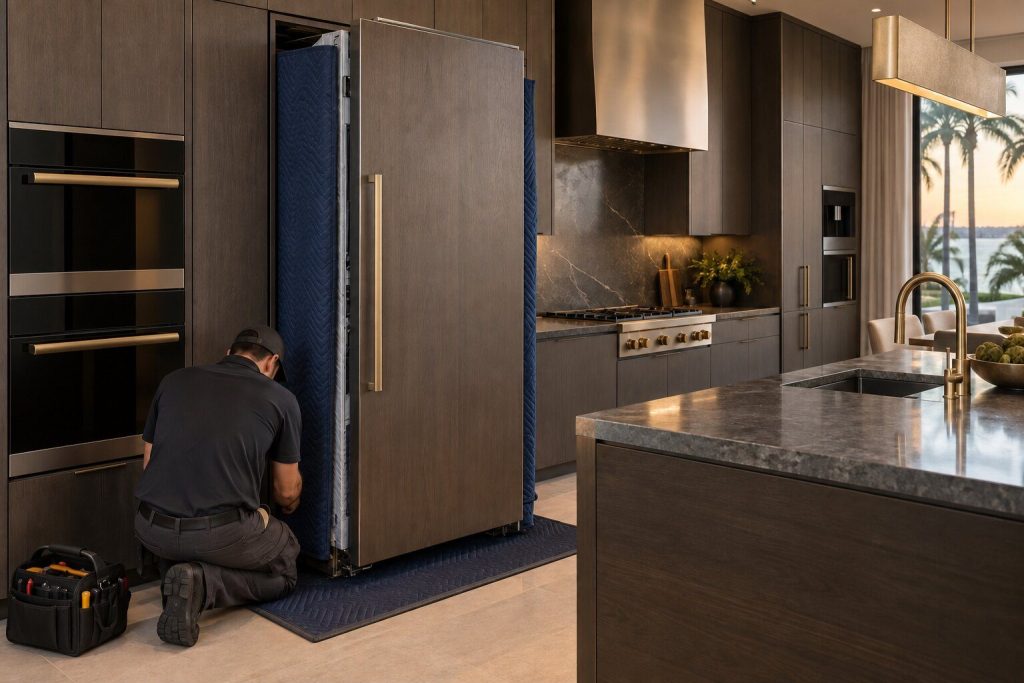
Why Built-In Access Is Quoted Separately on a Dacor
Bringing a captured column forward and putting the joinery back exactly as it was is real work with a real risk attached. Burying it inside a part price is how it becomes a surprise mid-visit.
Read more -
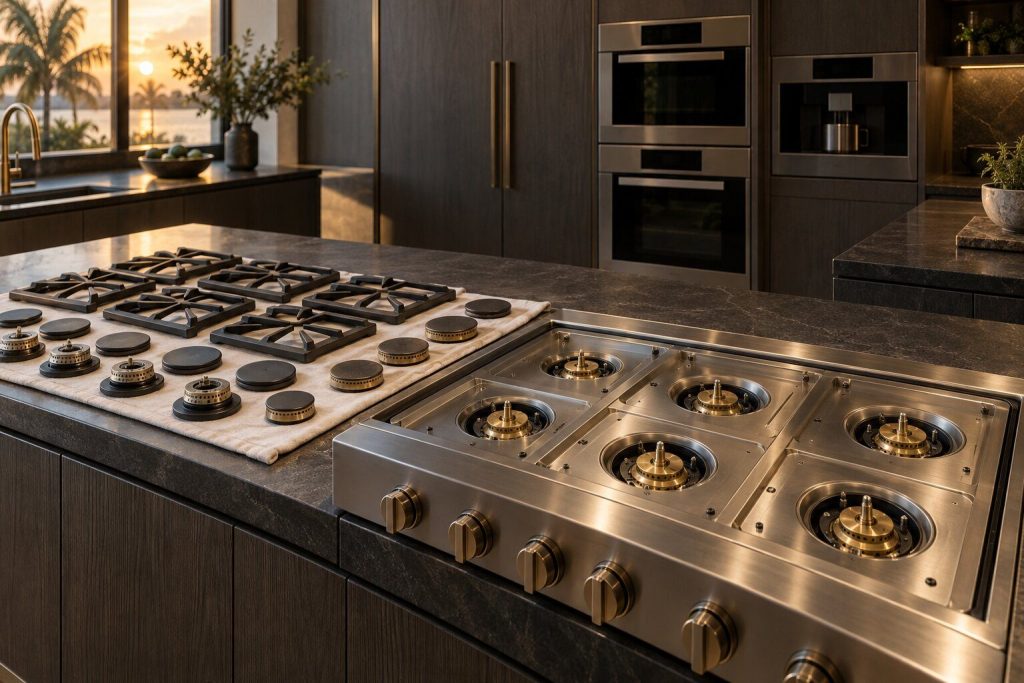
What a Dacor Rangetop Service Restores That a Part Cannot
On a hob that has been cooked on nightly for years, stripping and setting every burner brings back more than any component would — and it is the visit that makes an eight-year-old rangetop behave like a new one.
Read more -
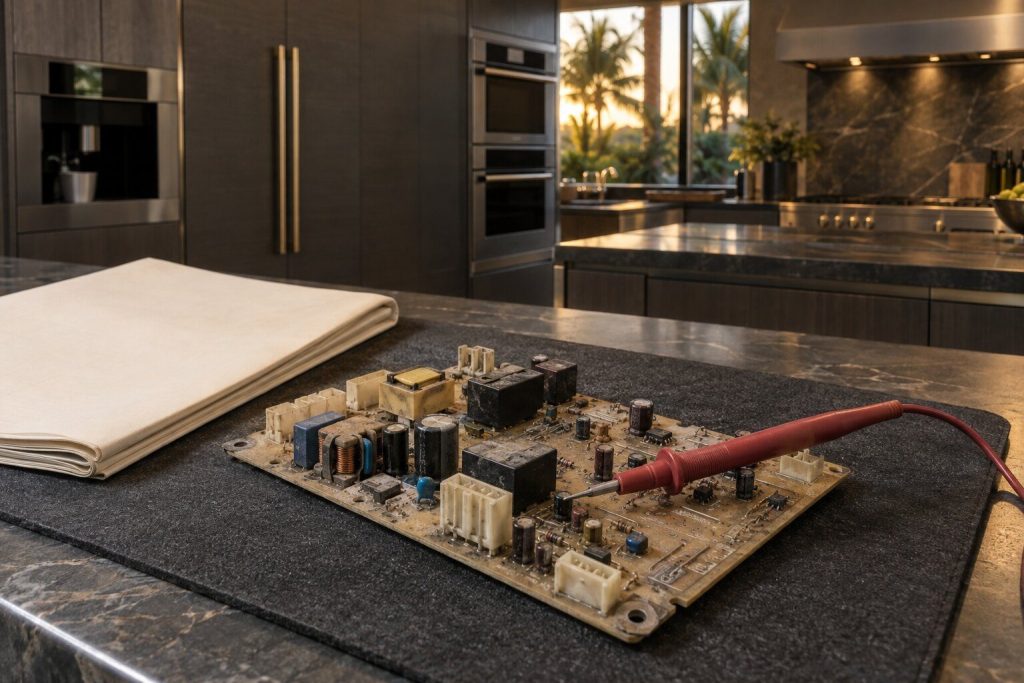
Repair or Replace a Pre-2016 Dacor: the Honest Arithmetic
These are heavy, well-documented machines and the common failures are ordinary parts. What decides it is not age — it is whether the part still exists, and that question is answered before labor is booked.
Read more
Tell us the model number and what it is doing.
This article is based on:
- Official manufacturer documentation
- Internal repair procedures
- Technician repair history
- Company quality standards