Troubleshooting
A Dacor Dishwasher That Will Not Drain: Which Era Is Talking
A Dacor dishwasher that will not drain reports 5C on the current machines and F-4 on the older EDW and IDW platform — the same problem, two entirely different code families, because this make changed hands in 2016. In both cases the appliance is frequently blameless. The path runs filter, sump, pump, hose and then whatever the kitchen fitter connected it to, and the last link is where a real share of these calls end: a garbage disposal whose knockout plug was never punched out, a drain hose that has lost its high loop, or a blocked standpipe. Clearing the filter and the sump by hand and running a drain-only cycle separates a blocked path from a failed pump in about ten minutes. Water still standing with the filter out means the blockage is past it.
The full guide
Two dishwashers, two code families, one complaint that is usually not the appliance's problem.
Dacor dishwasher not draining: bail it out first
Before anything else, get the standing water out with a cup and a sponge. It makes everything after this possible, and it stops the filter coming out with a quart of gray water behind it.
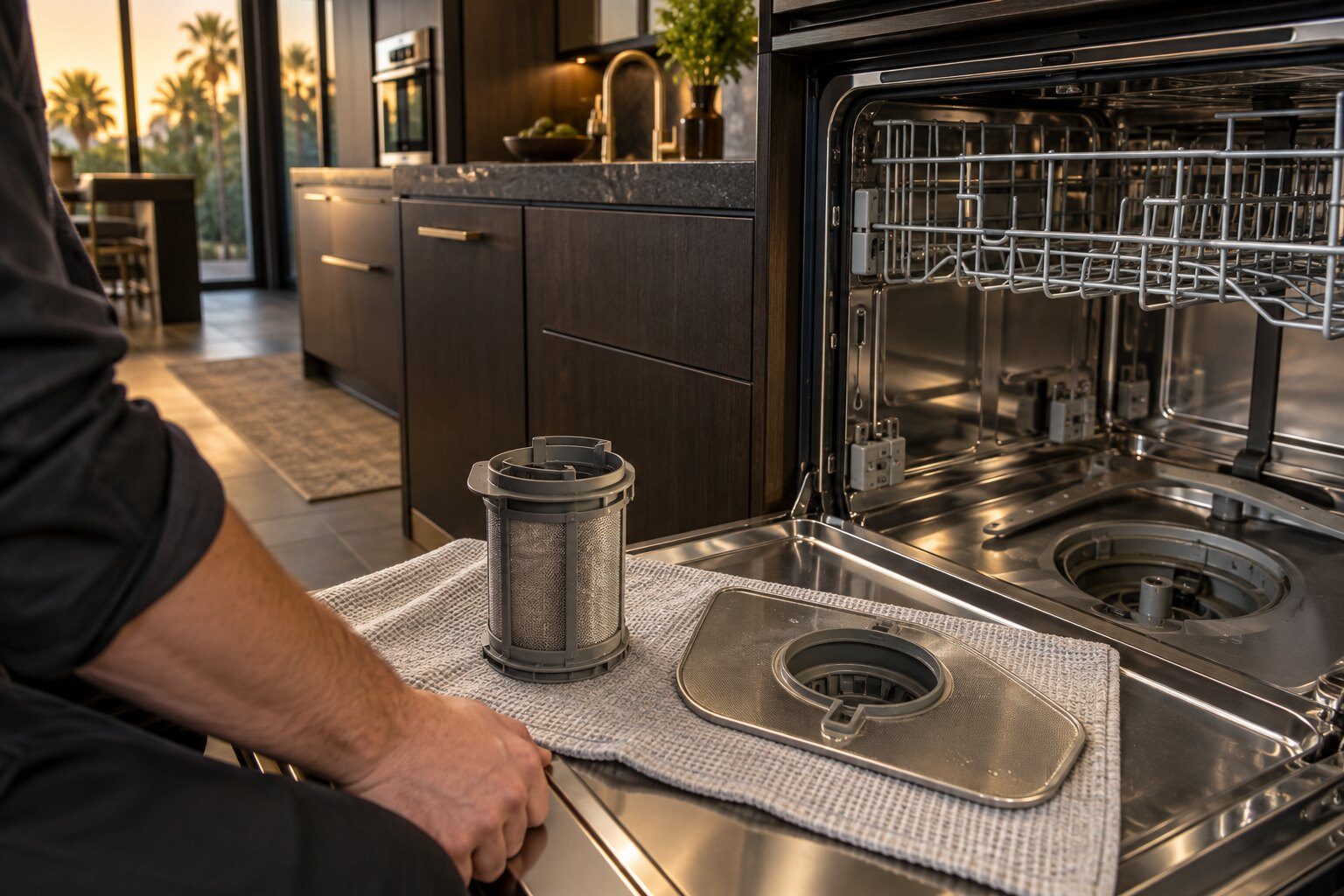
Clear the filter and the sump
Pull the lower rack all the way out. In the floor of the tub is a cylindrical filter that twists a quarter turn and lifts; beside it or under it is a flat trap. Both come out by hand with no tools.
Rinse them under a hot tap, then feel into the well underneath. A fruit stone, a shard of glass or a label that came off a jar will sit there quietly stopping the pump, and none of those is a repair.
Run one cycle with the filter out
This is the test that settles it. If the machine drains with the filter removed, the problem was maintenance. If water still stands, the blockage is past the filter — the pump, the impeller, the hose, or something outside the machine altogether.
The thing outside the machine
A dishwasher drains into a garbage disposal or a standpipe. New disposals ship with a knockout plug inside the dishwasher inlet, and if a plumber fits one without removing it, the dishwasher has nowhere to drain from the first day.
The other version is the high loop: the drain hose has to rise above the level of the tub before it falls again, or the machine siphons its own water back. Both are installation problems with a dishwasher in perfect health.
What the code tells you about the generation
A current Dacor dishwasher reports 5C for a drain problem, and letter pairs ending in C for everything else — LC for a leak, 4C for water not arriving, 3C for the pump, HC for heating.
An EDW or IDW from before 2016 reports F-4 for the same drain condition, out of a table running F-1 to F-9. The two share nothing, and reading one against the other is how a straightforward problem becomes a confident wrong answer.
When it is genuinely the pump
Water still standing with the filter out, the sump clear and the disposal connection proven is the point at which the appliance becomes the answer. Even then the pump itself is not automatically the part: a pump that hums and moves nothing is a different problem from one that is silent, and the first is frequently an impeller fouled by something that got past the filter.
On the current machines the display is helpful here — 3C is a pump operation check and 5C is the drain check, and they point at different halves of the same path. On the legacy machines you get F-2 for the circulation pump and F-4 for the drain, which is the same distinction in the older language.
If it turns out to be a repair
What this leads to, and what it costs
Every job on this site is priced the same way: an on-site diagnostic first, the figure agreed in writing before anybody starts.
-
Dishwasher drain and pump repair
Water standing in the base at the end of a cycle is the commonest dishwasher call and rarely the pump itself. The path runs filter, sump, pump, hose and then whatever the kitchen fitter connected it to — usually a disposal or a standpipe, and usually the actual cause. On the current machines a drain problem reports as a letter code ending in C; on the older EDW and IDW dishwashers it reports as an F-number that shares nothing with it. Reading us the display exactly as written saves the first ten minutes of the visit.
- Filter, sump, pump, hose, and the connection somebody else made
- Current machines say a #C code; legacy EDW and IDW say F-1 to F-9
- Standing water is usually downstream of the appliance
-
Dishwasher error code 5C
Dacor dishwasher error code 5C: Water is still where it should not be at the end of the drain phase. Which machines can raise it, what the maker publishes about it, and what to do next.
What this one means -
Dishwasher error code F-4
Dacor dishwasher error code F-4: The machine tried to empty and the sensor still found water. Which machines can raise it, what the maker publishes about it, and what to do next.
What this one means

Questions people ask about this
My display shows F-4 and nobody recognizes it.
Because it belongs to the other era. F-1 through F-9 are the pre-2016 EDW and IDW platform and those strings do not exist on any current Dacor at all, which is exactly why a search returns nothing useful and a general technician shrugs. It is a supported machine with a documented table; it simply speaks the older language.
The dishwasher was just installed and has never drained properly.
Then look at the disposal first. If a dishwasher drain was connected to a new garbage disposal and nobody removed the knockout plug inside the inlet, the machine has been draining into a wall since the day it was fitted. It is the single most common installation problem in this whole category.
Is it safe to keep running it?
Standing water will not damage the machine, but it will start to smell within days and a cycle run on top of it washes in dirty water. Bail it out, clear the filter, and leave it until the drain path is sorted.
Troubleshooting
More guides like this one
-
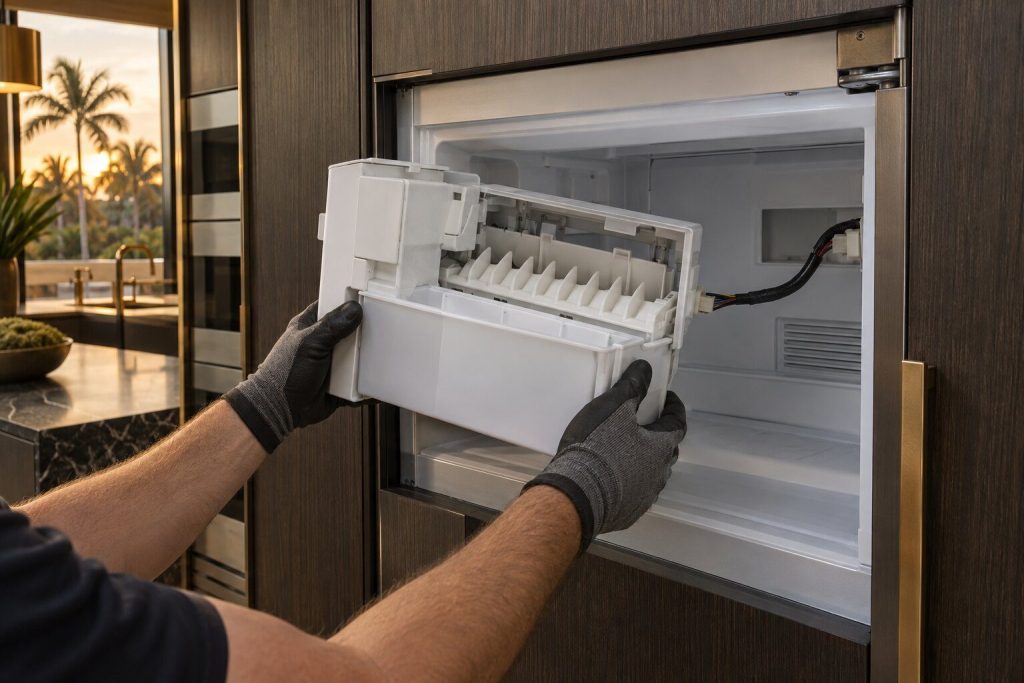
Two Ice Makers, One Water Problem: Reading a Dacor Freezer Column
The narrow freezer column carries two ice makers, and that second module is the most useful diagnostic tool in the kitchen. Both stopped is a water problem. One stopped is that module.
Read more -
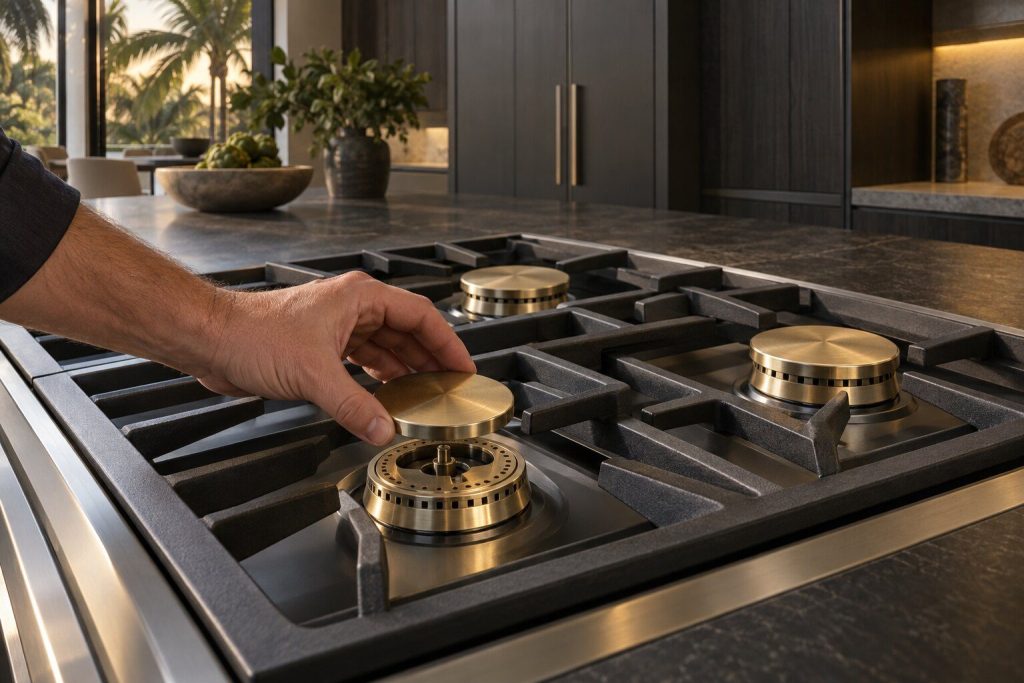
The Simmer That Went Away After You Cleaned the Rangetop
The sear is perfect and the low end has gone. On a sealed brass burner that is nearly always ports, a cap seated wrong, or a simmer valve that has drifted — and it very often dates from the week the hob was scrubbed.
Read more -
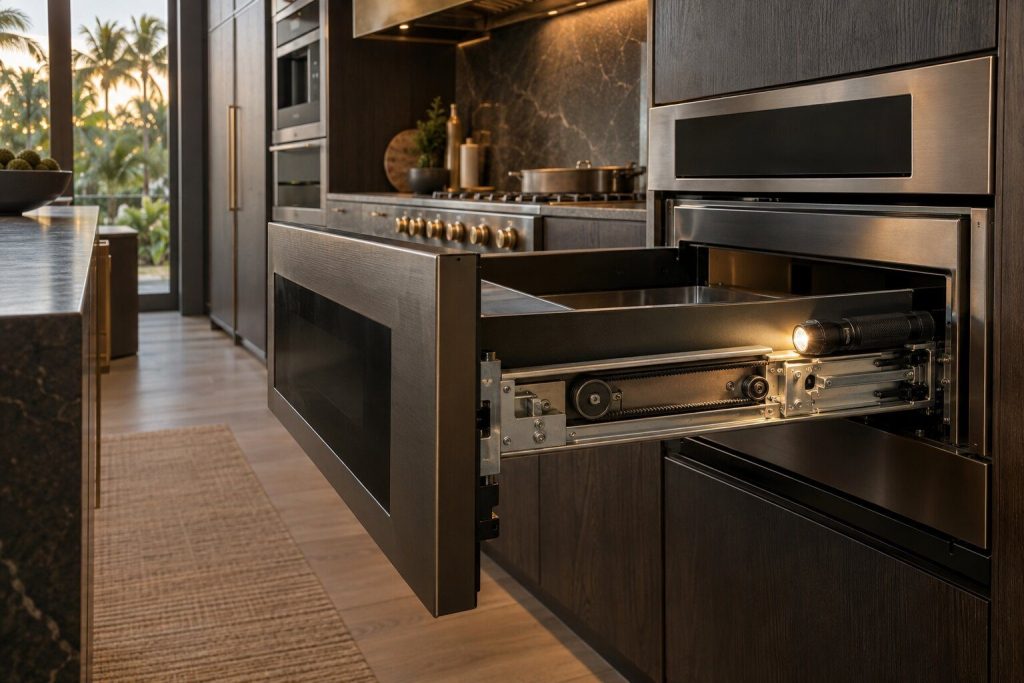
A Dacor Microwave Drawer That Will Not Open Is Not a Dead Oven
The mechanism fails far more often than the oven does, and while the drawer is not closed the oven refuses to heat — which reads as a dead appliance and is the machine being careful.
Read more
Tell us the model number and what it is doing.
This article is based on:
- Official manufacturer documentation
- Internal repair procedures
- Technician repair history
- Company quality standards