
Miami-Dade · South Florida
Dacor repair in Biscayne Park
Single-family homes, mostly older, with kitchens updated in stages. That usually means new appliances fitted into openings that were never designed for them — worth mentioning when you book, because it decides how much has to come apart.
We cover Biscayne Park and the rest of Miami-Dade: an on-site diagnostic first, the price agreed in writing before anything is opened, and the exact figure confirmed once we have seen the unit.
By unit
What we repair in Biscayne Park, by Dacor unit
Start with whichever matches yours. How an appliance is installed shapes the visit as much as the repair does, which is why we ask about it when you book.
-
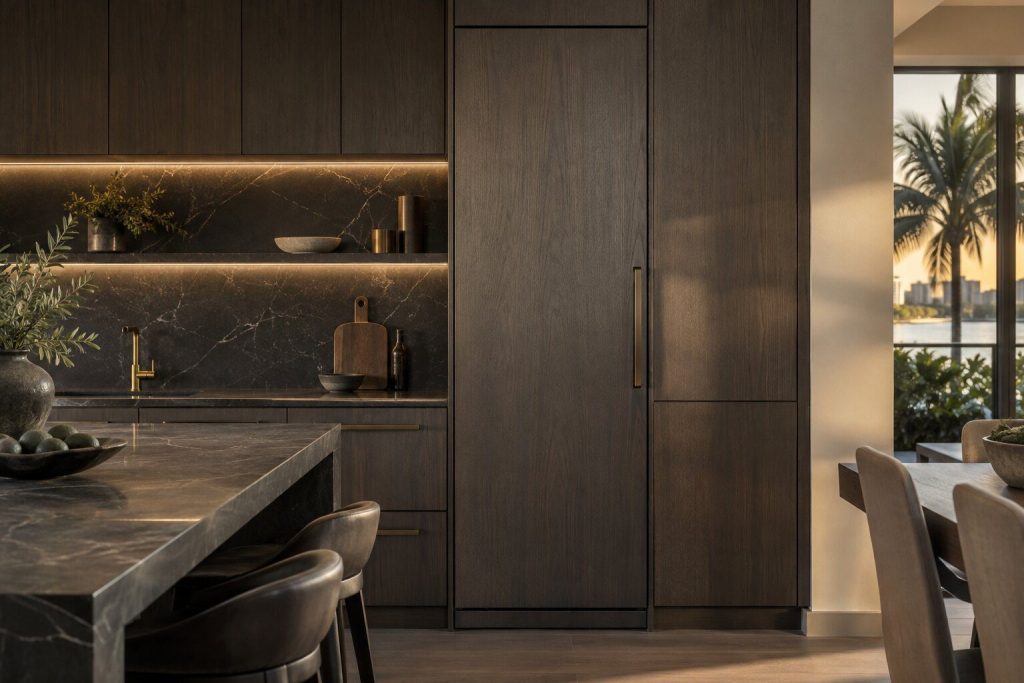
Panel-ready French door · 24, 30 and 36-inch columns Dacor refrigerator repair in Biscayne Park
Two shapes, and the difference decides the visit. The French doors run 36, 42 and 48 inches wide and are built to take cabinet panels, so the box disappears into the joinery; the columns are 24, 30 and 36 inches of single-purpose refrigerator, meant to stand beside a freezer column of the same height and read as one run. Almost nothing here is freestanding in the ordinary sense. That changes the work before a part is named: the surround is tight, the panel and its handle come off first, and the air path the installer left is part of the diagnosis rather than a detail.
- French doors at 36, 42 and 48 inches; columns at 24, 30 and 36
- Panel-ready by default — the door furniture comes off before anything is opened
- PreciseCooling, the FreshZone drawer and iQ Remote View are the named parts people call about
-

24-inch panel-ready · StormWash+ and AutoRelease Dacor dishwasher repair in Biscayne Park
Twenty-four inches, panel-ready, and two generations of it in South Florida kitchens. The current machine carries StormWash+, a water softener built into the appliance itself and an AutoRelease door that pops open at the end of a cycle to dry; the generation before it is the WaterWall platform with a third rack, quiet enough to be rated at 44 decibels. Behind both sits the problem language that changed in 2016: the older EDW and IDW machines report F-1 through F-9, the current ones report letter codes ending in C. Knowing which of those two a kitchen has is most of a diagnosis.
- Current platform: StormWash+, built-in water softener, AutoRelease drying door
- Previous Samsung-era platform: WaterWall, third rack, 44 dBA
- Legacy EDW and IDW machines speak F-1–F-9 — a different language entirely
-
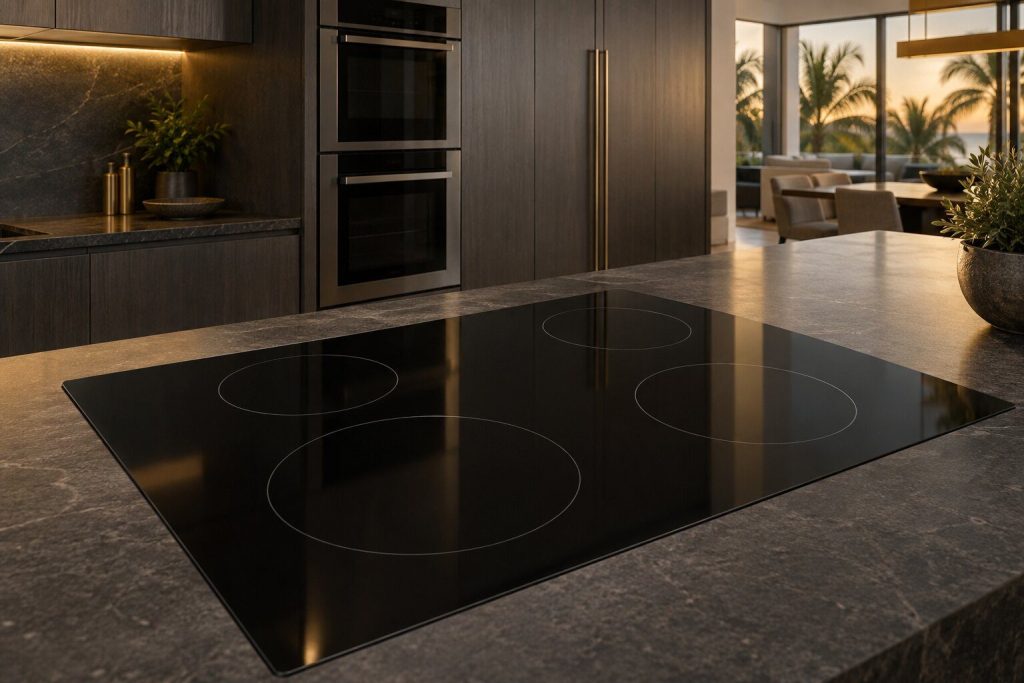
Induction and gas at 30 and 36 inches · rangetops at 36 and 48 Dacor cooktop repair in Biscayne Park
Two families under one heading. The cooktops are induction or gas at 30 and 36 inches — the induction ones frameless black glass with a display in the surface, the gas ones sealed burners on stainless. The rangetops are the professional half: 36 and 48 inches, six sealed brass burners built to simmer as well as sear, illuminated knobs, and a griddle and wok ring that sit in place of the grates. They are different machines to work on. A glass induction surface is an electronics repair; a rangetop is burners, gas and heavy brass, and the two rarely fail for the same reason.
- Induction at 30 and 36 inches, frameless black glass with an in-surface display
- Gas cooktops at 30 and 36; rangetops at 36 and 48 with six brass burners
- The rangetop's griddle and wok ring replace grates — they are accessories, not fixtures
-
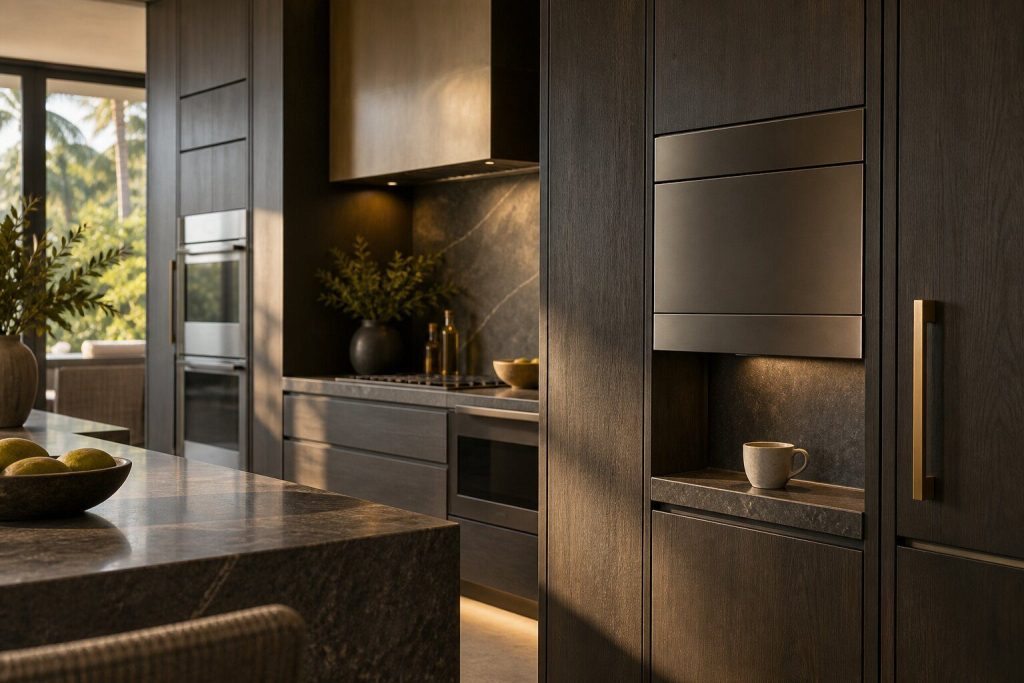
24-inch built-in · plumbed and tank-fed Dacor built-in coffee system repair in Biscayne Park
One platform, two ways of feeding it, and no longer in the catalog. The 24-inch built-in coffee system came plumbed to the water supply or with a tank behind the door, with a burr grinder, a steam wand and a hot-water tap; the machines in Miami kitchens today are from that generation and there is no successor. Two things follow. This appliance does not report error codes at all — it writes sentences on its display, which is genuinely more useful than a code — and every repair is a parts-availability question before it is a labor one. We answer that question before the visit, not after.
- One family: plumbed and tank-fed 24-inch built-ins, with a burr grinder and steam wand
- Discontinued — there is no current replacement in this make's line
- No error codes at all: the display writes a sentence, and that sentence is the diagnosis
-
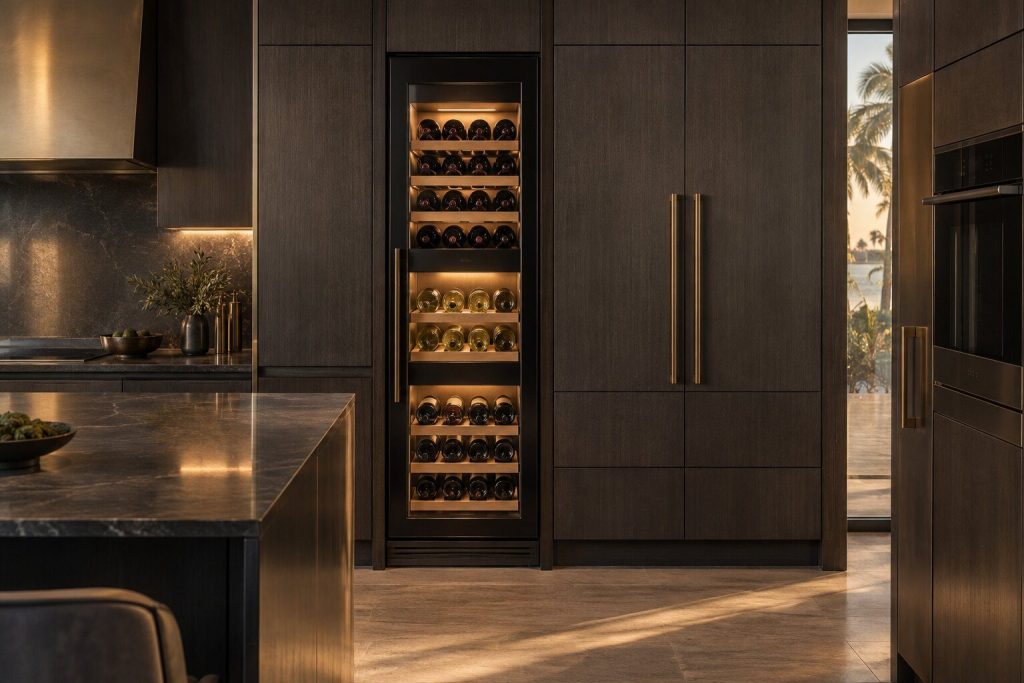
24-inch wine column · 100 bottles, three zones Dacor wine column repair in Biscayne Park
One cabinet, taken seriously. The 24-inch wine column holds about a hundred bottles across three independently held zones behind argon-filled triple glazing, on oak racks that glide out and doors that push to open. It is specified to hold within a third of a degree, and that specification is the reason people call: a cabinet built to that tolerance is expected to keep it, and a drift of two degrees in one zone is a problem here where it would be ordinary elsewhere. There is a smaller undercounter cellar too — 41 bottles, two zones — and it is a different machine with different expectations.
- 24-inch column: about 100 bottles, three zones, argon-filled triple glass, oak Glideracks
- PreciseCooling is specified to about a third of a degree — drift is a symptom, not a mood
- The undercounter cellar is a separate machine: 41 bottles, dual zone
-
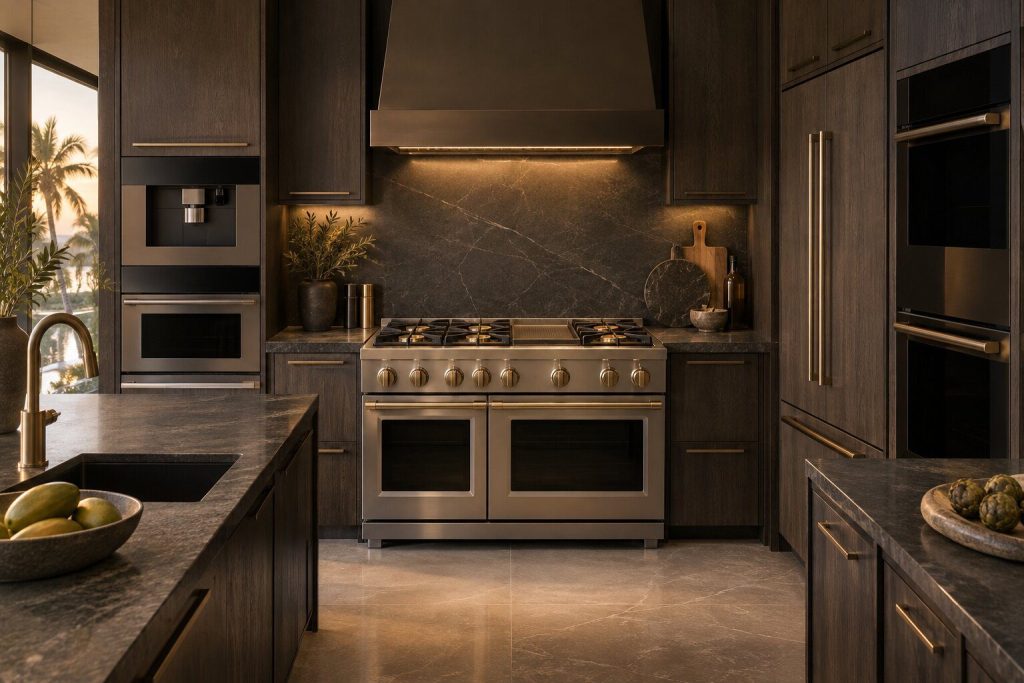
Dual-fuel at 30, 36 and 48 inches Dacor range repair in Biscayne Park
Thirty, thirty-six and forty-eight inches, and dual fuel almost throughout: gas on top, electric in the oven below. The forty-eight adds an integrated griddle and, on the steam models, a water system in the cavity. The professional range in this line carries six burners, a flame system designed to relight itself, and a seven-inch screen on the front. Beside all of that, South Florida kitchens still hold the ER-series ranges from before 2016 — a platform with its own diagnostic table running from F1 to F95, and one that a technician who only knows the current machines will read wrongly.
- Dual-fuel at 30, 36 and 48 inches; the 48 carries an integrated griddle
- The pro range: six burners, self-relighting flame, a seven-inch panel
- Legacy ER30D, ER36D and ER48D report F1–F95 — the widest table this make has
By job
The repairs we are called out for in Biscayne Park
Starting figures for this equipment in South Florida. What moves them is the model, the access and the part — the exact cost is confirmed after the on-site diagnostic.
-
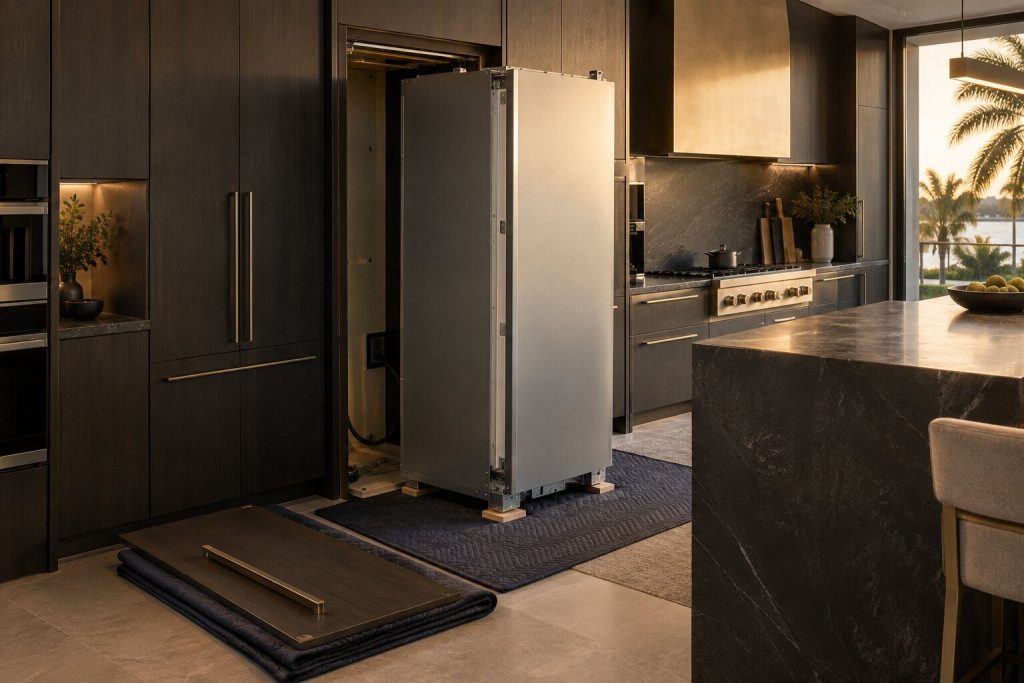
from $185 Built-in column access
The service that exists because of the shape of this line. A refrigeration column is captured by the cabinetry around it, held by trim, carrying a cabinet panel and a handle that belong to the kitchen rather than the appliance. Bringing it far enough forward to be worked on — and putting the joinery back exactly as it was — is real work with a real risk attached, and pretending otherwise is how a repair leaves a scratch down a walnut run. We price it as its own step so that nobody is surprised by it halfway through a visit.
- Panel, handle and trim removed and recorded before anything is moved
- The joinery is protected first — the risk here is the cabinetry, not the appliance
- Priced as its own step so it is never a surprise mid-visit
-
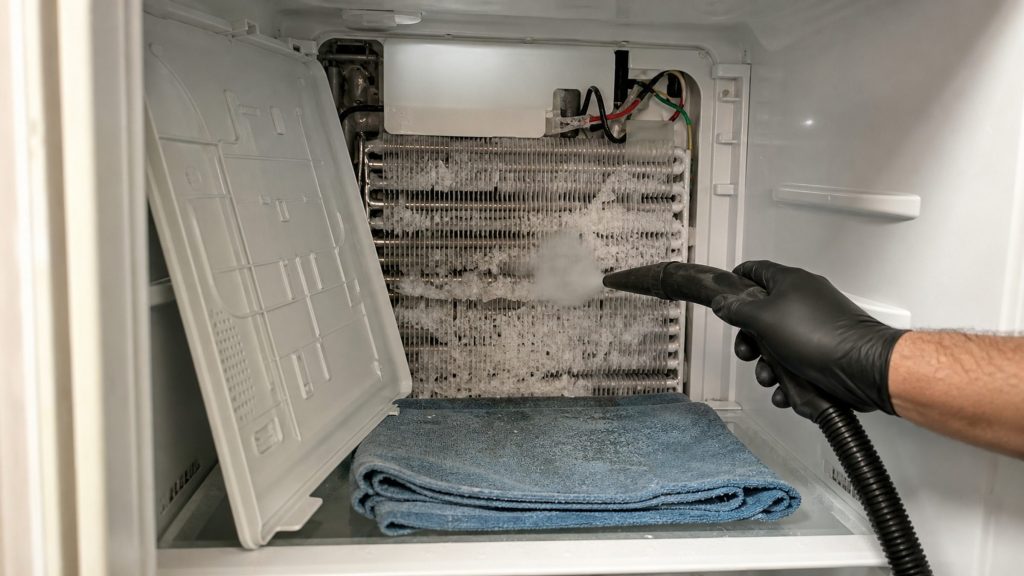
from $175 Defrost system repair
Frost where there should be none is a system problem rather than a mystery: a heater, a sensor, a thermostat and the control that decides when to run them. On these cabinets the symptom arrives slowly — a compartment that drifts a couple of degrees, then a fan that sounds like it is scraping, then ice visible at the back wall — and the cheapest moment to catch it is the first of those. On a column the whole load lives in one cabinet, so the same failure empties a freezer that a French door would have carried through.
- Heater, sensor, thermostat and the control that times them — checked as a system
- The early symptom is a two-degree drift, not visible ice
- On a column there is no second compartment to carry the load
-
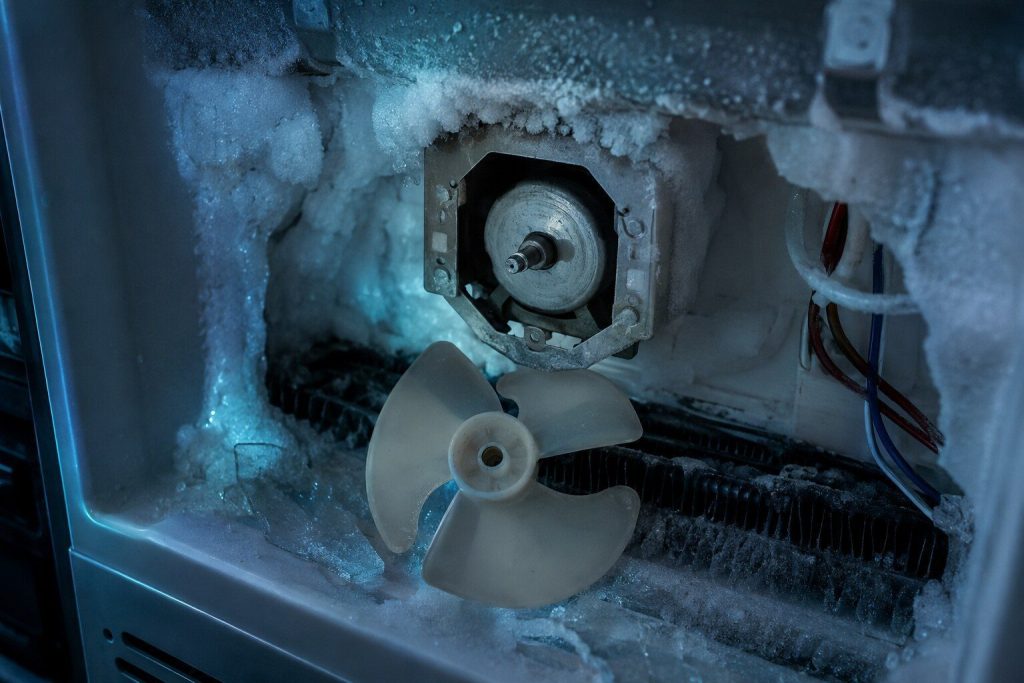
from $159 Evaporator fan repair
The fan that moves cold air is the part that most often explains a cabinet cooling unevenly. When it slows, stalls or is caught by ice, one compartment keeps its temperature and the other drifts, which reads as a refrigeration failure and is not one. It usually announces itself first as noise — a hum that rises with the door closed, a click, a scrape — and people reasonably wait for it to become worse. On a panel-ready cabinet it is worth not waiting: the fan is behind the back panel, and the visit is short while the cabinet is still cold.
- Uneven cooling with a healthy compressor is usually this
- Noise that changes with the door closed is the early warning
- Short visit while the cabinet still works — longer once it does not
-
from $129 Condenser cleaning
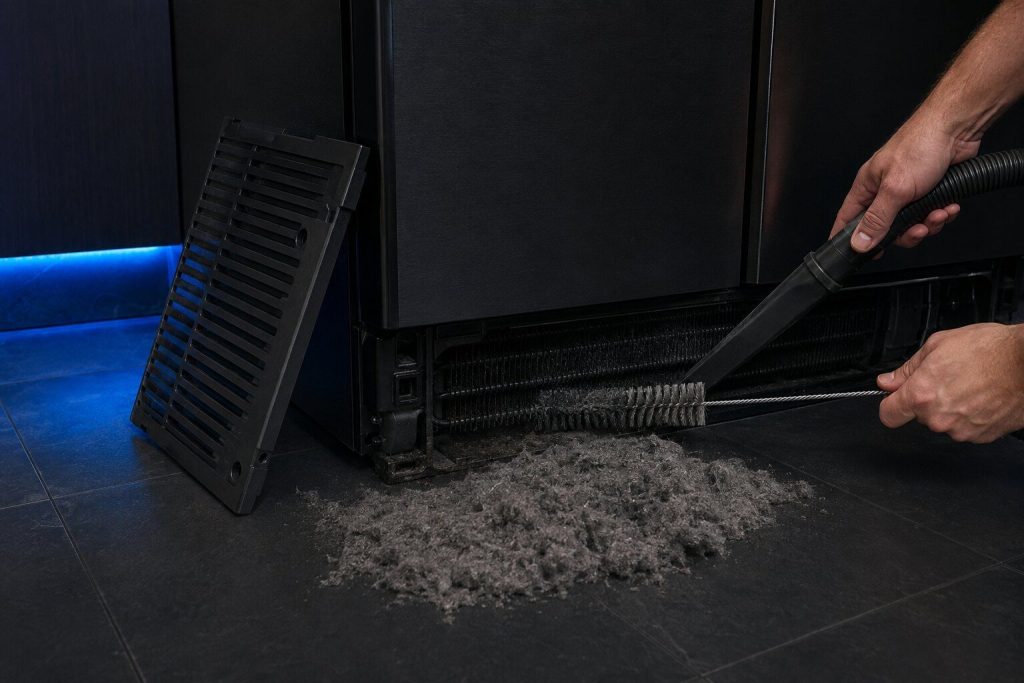
The least glamorous visit on the list and the one that prevents the most expensive ones. A condenser rejects heat, and in a Miami kitchen it does that through a grille that collects dust, cooking grease and pet hair until the cabinet is running against itself. On built-in refrigeration it matters more than on freestanding, because the coil sits in a defined air path that the cabinetry controls: when that path is restricted, the compressor runs longer, the temperature drifts, and everything downstream ages faster than it should.
- Built-in refrigeration lives on a defined air path — restrict it and everything ages
- Grease and pet hair, not dust, are what actually block a Miami coil
- Cheapest visit here, and the one that prevents the dear ones
-
from $165 Door seal replacement
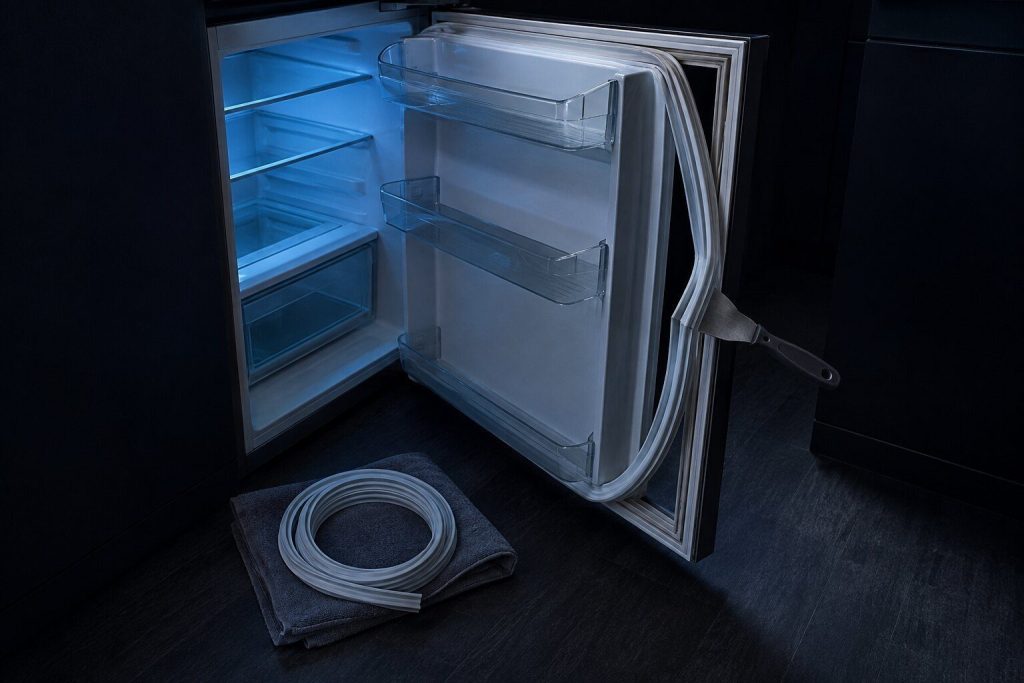
A gasket that no longer seals is a slow, expensive problem: the cabinet runs longer, the compartment nearest the leak drifts, and condensation appears where nobody expects it. Panel-ready doors make it likelier than on ordinary refrigeration, because the door carries the weight of a cabinet front and its hardware, and a hinge that has settled under that weight pulls the seal away from the frame along one edge. Replacing the gasket without correcting the door is how the same problem comes back within a year, so we do both or neither.
- Panel weight settles hinges — the seal is often the symptom, not the cause
- A dollar-bill test along all four edges, not a look at the worst corner
- Door alignment corrected at the same visit or the problem returns
-
from $155 Refrigerator leak repair
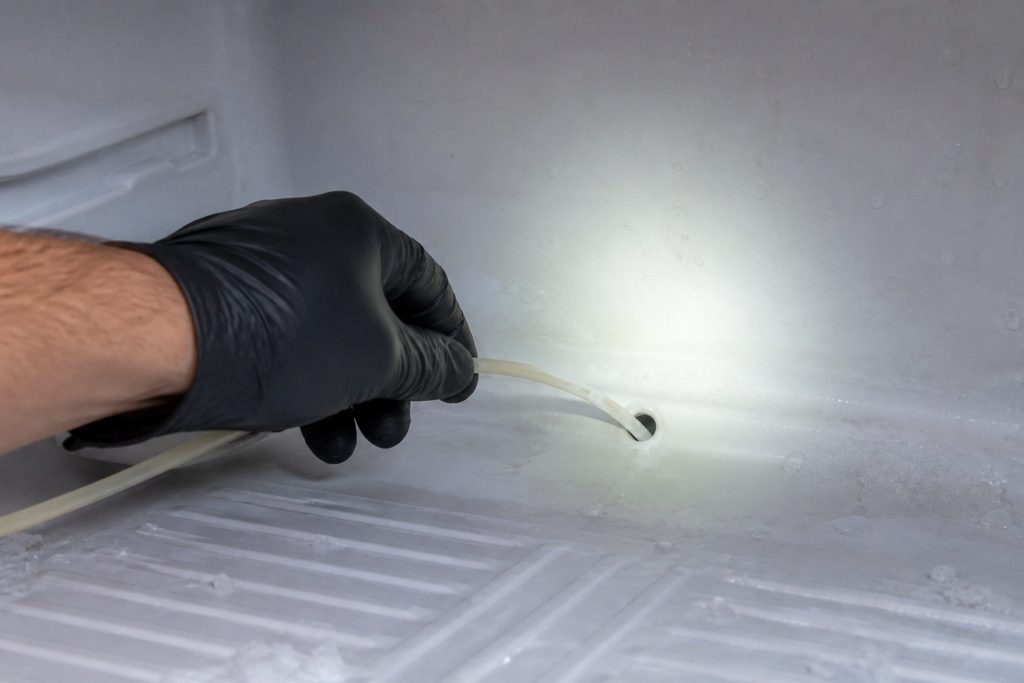
Water in the base of a built-in cabinet is worse than water under a freestanding one, because it has somewhere to go: the floor under the joinery, the base of the cabinet beside it, and in a condominium sometimes the ceiling below. There are only a few sources — a blocked defrost drain, a split or loose water line, the ice module's fill path, a door that no longer seals in a humid kitchen — and finding which one it is takes less time than the damage takes to happen. If there is water on the floor in front of a column, turn the supply off at the valve and call.
- Under built-in cabinetry a leak reaches the floor and the neighbors, not a drip tray
- Four likely sources, and they are told apart by where the water is
- Supply off at the valve first — the diagnosis can wait, the joinery cannot
Nearby
Where else we work near Biscayne Park
Every place below has its own page, with what the equipment and the access are like there.
Elsewhere in Miami-Dade
In more detail
Dacor repair in Biscayne Park, in more detail
What Dacor equipment is like in Biscayne Park
Single-family homes, mostly older, with kitchens updated in stages. That usually means new appliances fitted into openings that were never designed for them — worth mentioning when you book, because it decides how much has to come apart.
Biscayne Park sits in Miami-Dade County, and the equipment here follows the housing: older kitchens with appliances fitted into openings that were cut for something else, and newer ones where they were specified with the cabinetry. Both are Dacor work — coffee-machine, cooktop, dishwasher — and both are diagnosed on site before anything is priced.
Heat, dust and power cuts — what they do to a kitchen full of appliances
Inland the enemy is heat, dust and grease rather than salt. Condensers run hard for more months of the year here than almost anywhere else in the country, and grease that condenses in a hood liner instead of leaving through it comes back as a fan that labors. In Biscayne Park the appliances we are called out to are usually working exactly as designed — in conditions nobody designed them for.
What that means for the appliances in Biscayne Park
- The housing here spans decades and so does the equipment in it. The model number decides which conversation we are having, which is why it is the first thing we ask for.
- Refrigerators — The cabinetry in these houses is frequently worth more than the appliance inside it, so panels come off carefully and go back true — which is time, and we plan for it.
- Ranges — A family range is used harder than any other appliance in the house, and the parts that go are the ones handled every day — igniters, knobs, door hinges.
- Dishes coming out wet
- Burner will not stay at a simmer
- Hood runs but the kitchen does not clear
- The app will not connect to the appliance
- One side cold, the other warm
Which Dacor series we work on around Biscayne Park
We publish the error codes for every Dacor series this site covers — Contemporary, Professional, Modernist Pro among them. Which one is in your kitchen changes the visit more than it changes the diagnosis: how the appliance was installed decides what has to come apart before anyone can reach it, and in Biscayne Park that is a question about the room before it is a question about the appliance.
How a visit in Biscayne Park is arranged
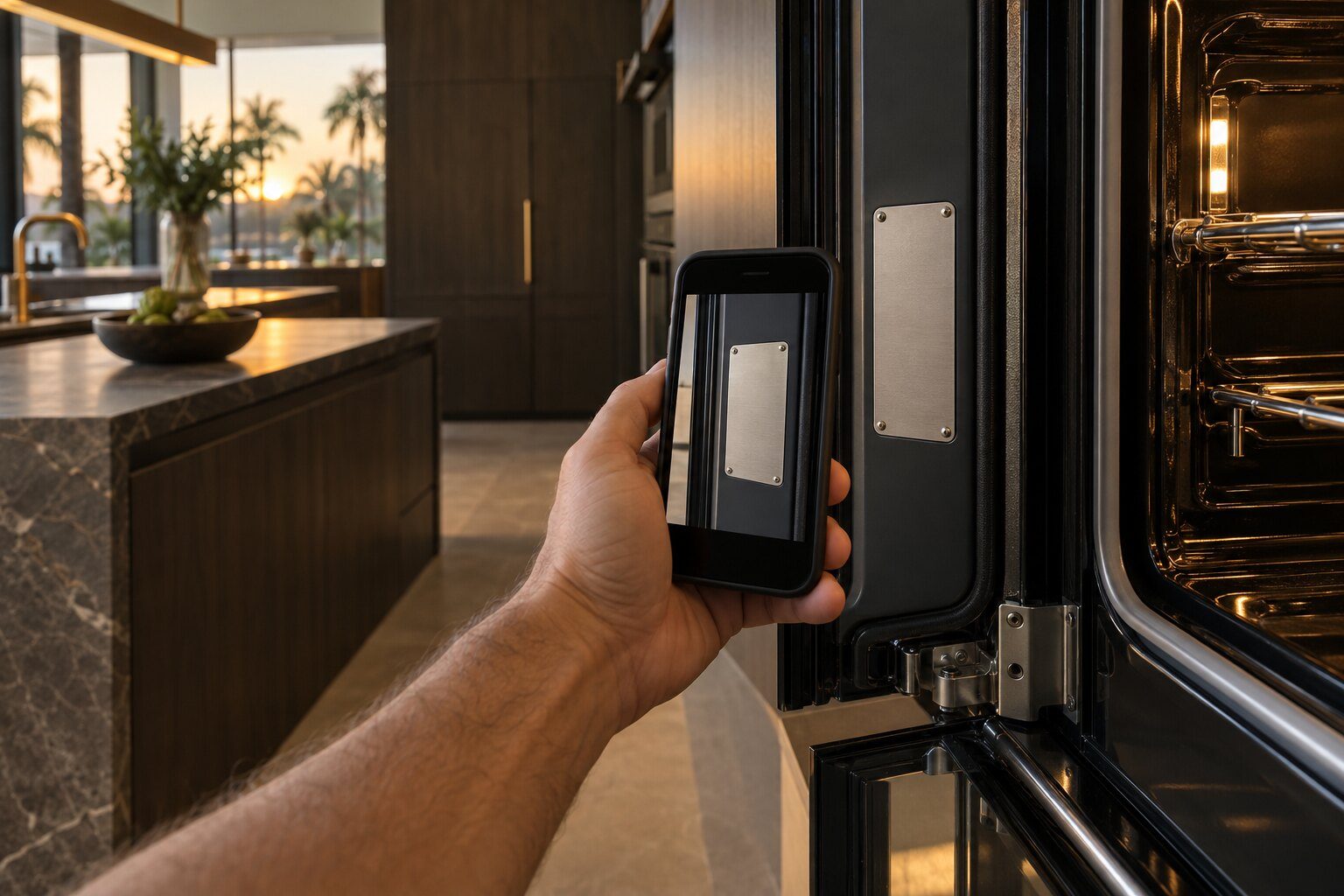
We ask for the model number from the plate inside the door and a line about what the appliance is doing. That decides which parts ride in the van, and it is the difference between one appointment and two.
- How the appliance is built in, and whether it has ever been pulled out before
- Whether there is a second one — a bar, a pantry, a garage or an outdoor kitchen
- Whether the doors are paneled to match the cabinetry, which changes how they come off and go back
- The diagnosis first, then the scope and the price in writing, and your approval before anything is opened
What it costs, and what moves the figure
Prices in Biscayne Park are the same as everywhere else we cover: a diagnostic from $95 that is credited toward the repair, and starting figures per job rather than one number for "a repair". What moves it is the model, how the appliance is built into the cabinetry, which part it needs and how quickly that part can be sourced — none of which can be judged over the phone. The repairs we carry out lists what each job involves and the figure it starts at, and the unit pages covers what tends to go wrong on each type.
The exact cost is confirmed after the on-site diagnostic and agreed with you before any work begins. We are an independent repair company — not affiliated with, authorized by, or endorsed by any manufacturer — and our warranty covers the labor we performed.
Before you book
Questions about a visit in Biscayne Park
Do you cover Biscayne Park?
Yes. Biscayne Park is in Miami-Dade County and inside the area we work every week. Give us the address when you book, and say how the Dacor is installed — what has to come apart to reach it matters as much as where it is.
How soon can you get to Biscayne Park?
We will tell you the earliest slot we can genuinely keep rather than the earliest one that sounds good. Tell us the model number and what the unit is doing when you book: whether we can finish the same day depends on the part far more than on the drive.
Does it cost more because the job is in Biscayne Park?
No. The diagnostic and the work are priced the same across Miami-Dade, Broward and Palm Beach. What moves the figure is the model, how the unit is built in and which part it needs — never the address. Where access takes longer, we say so before anything is agreed rather than after.
What do you need from me before the visit in Biscayne Park?
The model number from the data plate, a photograph of the display if anything is showing on it, and a line about what the unit is doing. Those three decide which parts a technician brings, and they are the difference between one visit and two.
Booking a visit in Biscayne Park
Tell us the model number and what the unit is doing. We will bring the parts that problem usually needs, and you will have a firm price before we start.
This article is based on:
- Official manufacturer documentation
- Internal repair procedures
- Technician repair history
- Company quality standards